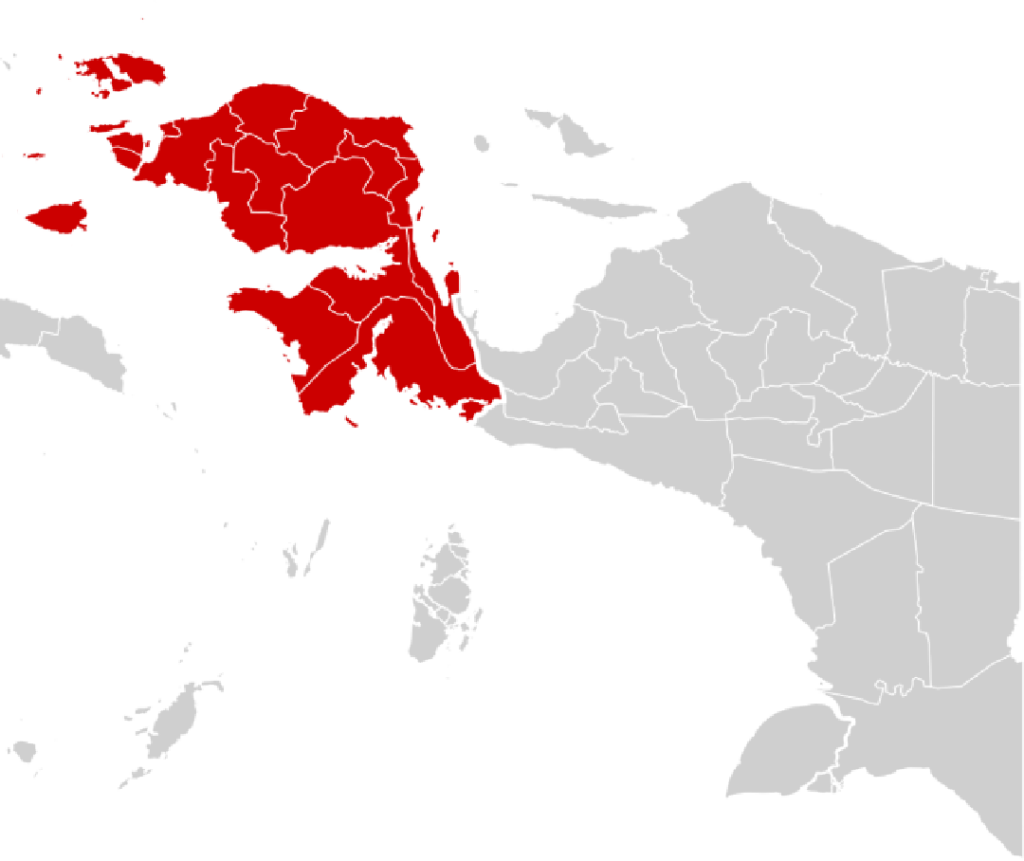
In the dense, forested interior of Tambrauw Regency, Papua Barat Daya (Southwest Papua) Province distance is measured not just in kilometers but in effort. Villages are separated by rough terrain. Communication can be slow. And when violence occurs, it often leaves behind more questions than answers.
That was the case on March 16, 2026.
On that day, four healthcare workers were attacked in Kampung Jokbu, a small settlement in Bamusbama District. Two of them were killed. The other two managed to escape, running through unfamiliar terrain until they reached safety.
For the community, the shock was immediate.
Healthcare workers are not outsiders in places like this. They are often known personally, trusted by families, and relied upon in moments of vulnerability. When they are targeted, the impact is deeply felt.
In the days that followed, authorities identified five individuals as suspects. Their initials were GY, YY, MY, EY, and KY. They were placed on a wanted list, and the search began.
At that point, the situation could have followed a familiar path.
But it did not.
A Choice That Changed the Direction
In many conflict situations, especially in remote regions, the response to violence tends to be direct.
Security forces are deployed. Operations are carried out. Suspects are pursued.
Sometimes this leads to arrests. Sometimes it leads to further clashes.
In Tambrauw, a different approach was chosen.
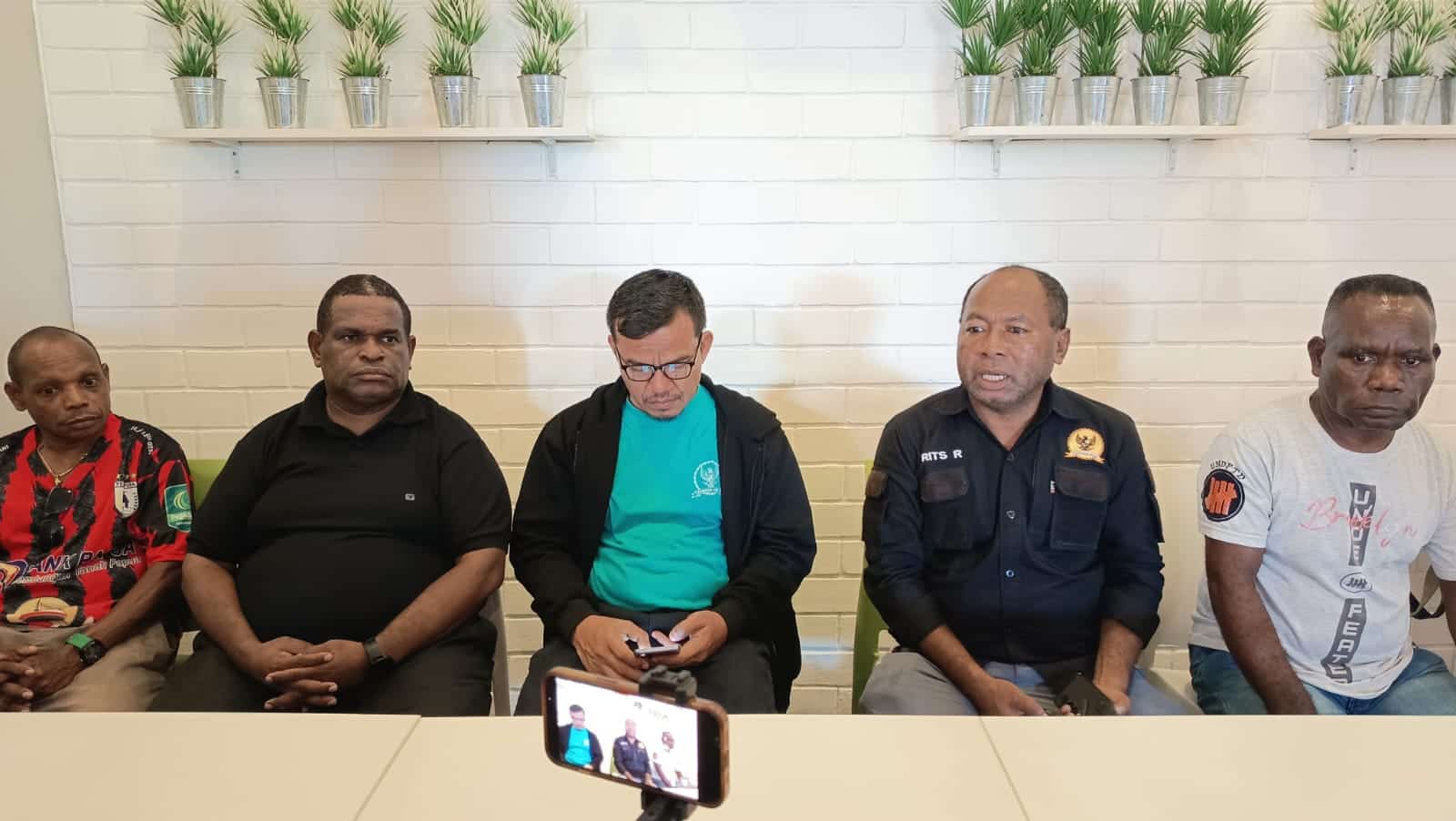
Authorities, including Regent worked with the National Commission for Human Rights (Komnas HAM) to open a channel of communication with the suspects and their communities.
It was not an easy decision.
Dialogue requires time. It requires trust. And it carries uncertainty.
But it also offers something that force cannot always provide.
A chance to resolve a situation without escalating it.
Starting With Conversation
The process began quietly.
Representatives from Komnas HAM, along with local government officials, reached out to community leaders. They listened first.
What were the concerns? What were the fears? What would it take for the suspects to come forward?
In regions like Tambrauw, relationships matter.
People do not respond only to formal authority. They respond to voices they recognize, to figures they trust.
This is where local leaders played a crucial role.
They acted as intermediaries, helping to bridge the gap between authorities and the suspects.
Building Enough Trust
Trust does not appear overnight.
It builds slowly, through repeated interaction.
For the suspects, surrendering was not just a legal decision. It was a personal one. It meant facing consequences. It meant stepping into uncertainty.
For authorities, the challenge was to ensure that surrender would lead to a fair and transparent process.
This is where the presence of Komnas HAM made a difference.
As an institution focused on human rights, it carries a different kind of credibility. It is seen not only as part of the system but also as a watchdog within it.
That distinction matters.
It creates space for dialogue.
The Day They Came Forward
On April 3, 2026, after weeks of communication, the five suspects (GY, YY, MY, EY, and KY) made their decision.
They surrendered.
There was no confrontation. No exchange of fire. No sudden escalation.
Instead, the process unfolded in a controlled and peaceful manner.
For those involved, it was a moment that carried both relief and significance.
Relief, because the immediate risk of further violence had been reduced.
Significance, because it showed that a different approach could work.
Why This Outcome Matters
At first glance, the surrender of five individuals might seem like a limited development.
But in the context of Papua, it carries broader meaning.
It demonstrates that even in areas with complex dynamics, dialogue can lead to tangible results.
It shows that law enforcement does not always have to rely on force to achieve its objectives.
And it reinforces the idea that human rights principles can be integrated into practical solutions.
For communities, these points are not abstract.
They affect how people perceive safety, authority, and justice.
The Human Side of the Story
Behind the process are real people.
Families who lost loved ones in the attack.
Survivors who are still processing what happened.
Communities trying to return to normal life.
For them, the surrender is not the end of the story.
It is the beginning of another phase.
One that involves legal proceedings, accountability, and, hopefully, a sense of closure.
Balancing Justice and Stability
One of the key challenges in situations like this is balance.
Justice must be served.
Those responsible for violence must face consequences.
At the same time, stability must be maintained.
Actions taken in response to one incident should not create new tensions.
The approach taken in Tambrauw reflects an attempt to balance these priorities.
By encouraging voluntary surrender, authorities were able to move the process forward without additional conflict.
A Broader Lesson
The events in Tambrauw offer a lesson that extends beyond this one case.
They highlight the importance of flexibility.
In complex environments, there is no single solution that works in every situation.
Sometimes, enforcement is necessary.
Other times, dialogue may be more effective.
The key is understanding which approach fits the moment.
Challenges That Remain
Despite the positive outcome, challenges remain.
Papua’s underlying issues are not resolved by a single incident.
Economic disparities, geographical isolation, and historical factors continue to shape the region.
There is also the need to ensure that the legal process that follows is fair and transparent.
Surrender is only the first step.
Accountability requires follow-through.
Looking Ahead
For now, the situation in Tambrauw is calmer.
Communities are beginning to move forward.
Authorities are preparing for the next phase of the process.
And Komnas HAM continues to play its role, monitoring and supporting efforts to ensure that human rights are respected.
Conclusion
The events in Tambrauw began with violence.
They could have continued that way.
Instead, they took a different direction.
Through dialogue, mediation, and a willingness to try a different approach, five suspects chose to surrender voluntarily.
It is not a dramatic story.
There are no large-scale operations or high profile confrontations.
But it is an important one.
Because it shows that even in places marked by tension, there are alternatives to escalation.
And sometimes, those alternatives can lead to outcomes that are both more effective and more humane.-profile