
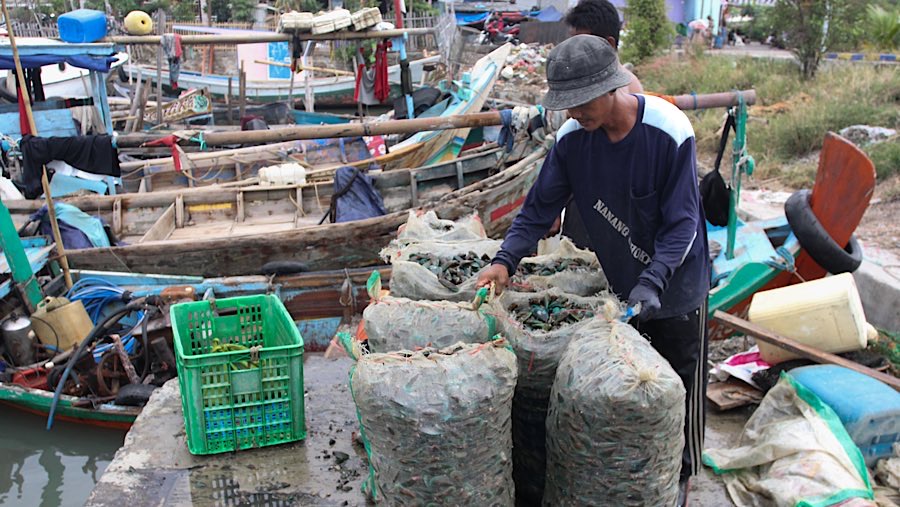
Before dawn, when the sky over Biak is still a dark blue, the fishermen start to show up.
Some come in quietly with nets on their backs. Others look at their engines in the dark and talk in low voices that can be heard along the shore. The sea looks almost kind right now because it is calm. But people who rely on it know better.
Fishing here hasn’t always been a sure thing for years.
One fisherman said, “You can work all day and still come back with nothing,” remembering the past. “Sometimes the sea gives, and sometimes it doesn’t.”
That uncertainty changed everything. The amount of money coming in and going out changed without warning. Without the right storage, fish went bad quickly. Buyers could pay any price they wanted because they knew fishermen had no other choice but to accept.
The system wasn’t made to be stable.
But something has started to change in the last year.
Not in a big, newsworthy way. There aren’t any big new buildings or loud announcements that can be heard all over the village. The change is more obvious in small things. More boats are leaving. More care is taken with fish. Talks that sound a little more hopeful than they did before.
The Kampung Nelayan Merah Putih program is a government program that is at the heart of it all. In Biak, it is quietly changing what it means to live by the sea.
A Morning That Feels Different
As the first light of day broke over the horizon, the village’s rhythm felt both familiar and new.
Fishermen still got their boats ready the same way they always did. The nets were untangled. The fuel was checked. The sea was still hard to predict.
But they had different plans for the day.
There were more of them leaving.
Fishermen used to spend about nine days a month at sea, but now many spend closer to thirteen days. It’s not enough to just work harder. It’s about having more faith in your work.
One fisherman said, “You feel it’s worth it now.” “Before, you sometimes stayed home because you weren’t sure you’d make any money.”
It didn’t happen overnight that way of thinking changed.
When Infrastructure Meets Reality
The Kampung Nelayan Merah Putih program made a number of changes to the village.
Places that make ice. Units for cold storage. Better places to dock. Better ways to handle and give out fish.
These might sound like technical improvements on paper. They have changed how fishing works in real life.
In the past, fishermen had to sell their catch right away. Fish would go bad quickly if they weren’t stored properly or with ice. The buyers knew this. Prices were often low, and there wasn’t much room to bargain.
That pressure is no longer there.
It is safe to store fish. It is possible to keep quality. Fishermen have more time to think about when and where to sell.
“It’s not only about catching fish,” said another fisherman. “What’s important is what happens next.”
That difference is very important.
The Numbers Tell Part of the Story
Since the start of the program, productivity has gone up a lot.
Fishermen used to bring in just over five tons of fish at certain times, but now they are bringing in more than ten tons. In some cases, the amount made has doubled.
But the numbers don’t tell the whole story.
The amount of money you make has also gone up.
For many families, monthly earnings that used to be around Rp4 million have gone up to more than Rp7 million. This is a big change for families who are used to not knowing how much money they will have.
It’s not just about making more money. It’s about being prepared for what will happen.
One resident said, “When you have a steady income, everything changes.” “You can plan your life.”
What Stability Looks Like
That stability shows up in small but important ways in real life.
You pay your school fees on time. Fixing up houses before problems get worse. You don’t have to worry about your daily expenses all the time.
For some families, this is the first time they’ve seen this kind of consistency.
A fisherman’s wife said, “You don’t feel as stressed.” “We didn’t know what would happen next month before.”
It’s hard to measure that feeling of safety, but it’s easy to see.
It makes people think differently about the future.
A Village That Is Growing Beyond Fishing
Fishing used to be the only way for people in the village to make a living, but now there are other ways.
With new buildings up, there are now more types of work available.
Some people who live there now work with fish. Some people take care of storage, transportation, or sales. There are now small businesses that have to do with seafood.
There used to be only a few job options, but now there are many more.
This variety is important.
It makes you less dependent on one thing. It gives people who might not have gone out to sea a chance to do so. It helps the local economy by bringing in more people.
A teacher from the area said, “It feels like the village is alive in a different way.”
The Importance of Systems
While infrastructure is important, many people say that something less obvious is the key to change.
The system.
People used to fish in Biak mostly by themselves. There wasn’t much coordination between the fishermen; they all worked on their own. There wasn’t much of a link between catching, storing, and selling fish.
These processes are now all part of one system.
Fish go through a system that keeps quality high and value high. It’s easier to find out about prices and demand. People make decisions with a better understanding of the market.
This coordination has made a big difference.
One fisherman said, “You’re not working alone anymore.” “You’re a part of something bigger.”
The Emotional Shift
The village is changing in a subtle emotional way, in addition to the economic effects.
People talk in different ways.
People are less focused on problems right now and more on what could happen. People talk about plans, ideas, and goals that go beyond the next fishing trip.
This change isn’t big, but it is important.
For communities that have lived with uncertainty for generations, even small changes in how they see things can have a big effect.
Challenges That Remain
Even though things are getting better, life in Biak is still hard.
The sea is still hard to predict. The weather can change quickly. Environmental issues, such as overfishing and changes in the weather, still have an effect on results.
Another thing to think about is sustainability.
As productivity rises, resource management becomes increasingly vital. To keep fish stocks healthy, we need to plan carefully and work together.
And even though the infrastructure has gotten better, it will still take work to keep it that way.
These are facts that can’t be ignored.
Looking Toward the Future
Because the program in Biak was so successful, people are interested in expanding it to other parts of Indonesia.
The goal is to copy what has worked and make it work in new places.
But it won’t be easy to scale up.
Every community is different in its own way. There are differences in geography, culture, and the economy. Things that work in Biak might not work the same way in other places.
Even so, this experience teaches us important things.
It shows that big changes don’t always need big actions. Sometimes, it comes from making current systems work better.
The End of the Day
The boats come back as the sun goes down over Biak.
The catch of the day is carefully handled, stored, and made ready for sale. There is still work to be done on land, and people are moving between tasks that didn’t exist before.
The village stays busy long after the boats leave.
This routine gives you a sense of continuity.
Fishing is still the most important thing in life here.
But the way it is done has changed.
Conclusion
The change in Biak didn’t happen overnight.
It’s a story about how things change slowly.
Better ways to do things. Better infrastructure. More coordination. Fresh chances.
Every part adds to a bigger change.
For the fishermen of Biak, the sea will always be full of surprises.
But now, that uncertainty is evened out by something else.
A growing feeling of security.
And maybe, for the first time in a long time, a belief that the future can be planned instead of just lived through.

