
In Papua, the presence of mountains, islands, and limited transport links can transform a relatively short journey into a complex logistical operation, making the delivery of basic food to households one of the most significant challenges for public policy. Bulog Papua food aid is now being distributed to 845,425 beneficiary families across six provinces in Papua, with a total allocation of more than 25,000 tons of rice for July, August, and September 2026.
The program is part of the Indonesian government’s broader effort to maintain food security and protect lower-income households from fluctuations in food prices. However, in Papua, we cannot measure the success of such a program solely by the quantity of rice procured or stored in warehouses. The more difficult question is whether the assistance can reach families living in highland settlements, remote villages, and areas where roads remain limited and transport depends heavily on small aircraft, ships, or other specialized modes of delivery.
For Bulog, the state-owned food logistics agency responsible for the distribution, that challenge is now central to the July to September allocation.
845,425 Families Targeted Across Papua
According to Perum Bulog’s Papua and West Papua regional office, the latest food assistance program covers 845,425 beneficiaries spread across six provinces: Papua, South Papua, Highland Papua, Central Papua, West Papua, and Southwest Papua.
Each beneficiary family is scheduled to receive 10 kilograms of rice per month for three months, giving each household a total of 30 kilograms during the July to September distribution period. Overall, Bulog has prepared approximately 25,362 tons of rice for the program.
The assistance is part of a national government program administered through the National Food Agency, or Bapanas. The beneficiaries are drawn from households registered in Indonesia’s National Single Socioeconomic Data system, known as DTSEN, with the program prioritizing lower-income households that are more vulnerable to food price pressures.
The approach is significant because food insecurity is not simply a question of whether food exists somewhere in the supply chain. Affordability and accessibility are equally important. For families with limited income, a reduction in household spending on staple food can provide room for other necessities such as school expenses, transportation, and healthcare.
That makes the program relevant beyond food distribution itself. It is also part of a wider social protection framework intended to reduce economic pressure on vulnerable households.
Geography Is Papua’s Biggest Distribution Challenge
The scale of the program becomes more complicated when Papua’s geography is taken into account.
Bulog Papua’s regional leadership acknowledged that the distribution environment is particularly challenging because of the territory’s varied geography. Some communities are located in mountainous areas, deep inland settlements, and remote locations that cannot be reached easily by conventional road transport.
ANTARA reported that some distribution routes require the use of pioneer aircraft, sea transportation, and specialized transport modes.
This logistical reality distinguishes Papua from many other parts of Indonesia. A government warehouse may have sufficient stock, but that does not automatically mean the food has reached the household that needs it.
In the highlands, weather can affect flights. In remote coastal and island communities, sea transportation can determine delivery schedules. In areas where roads are still under development, the final stage of distribution can become the most complicated part of the process.
For this reason, Bulog’s target of reaching all 845,425 beneficiaries by the end of September is both an administrative goal and a logistical test.
Lessons From Earlier Distribution
Bulog Papua is not approaching the latest distribution without experience from previous programs.
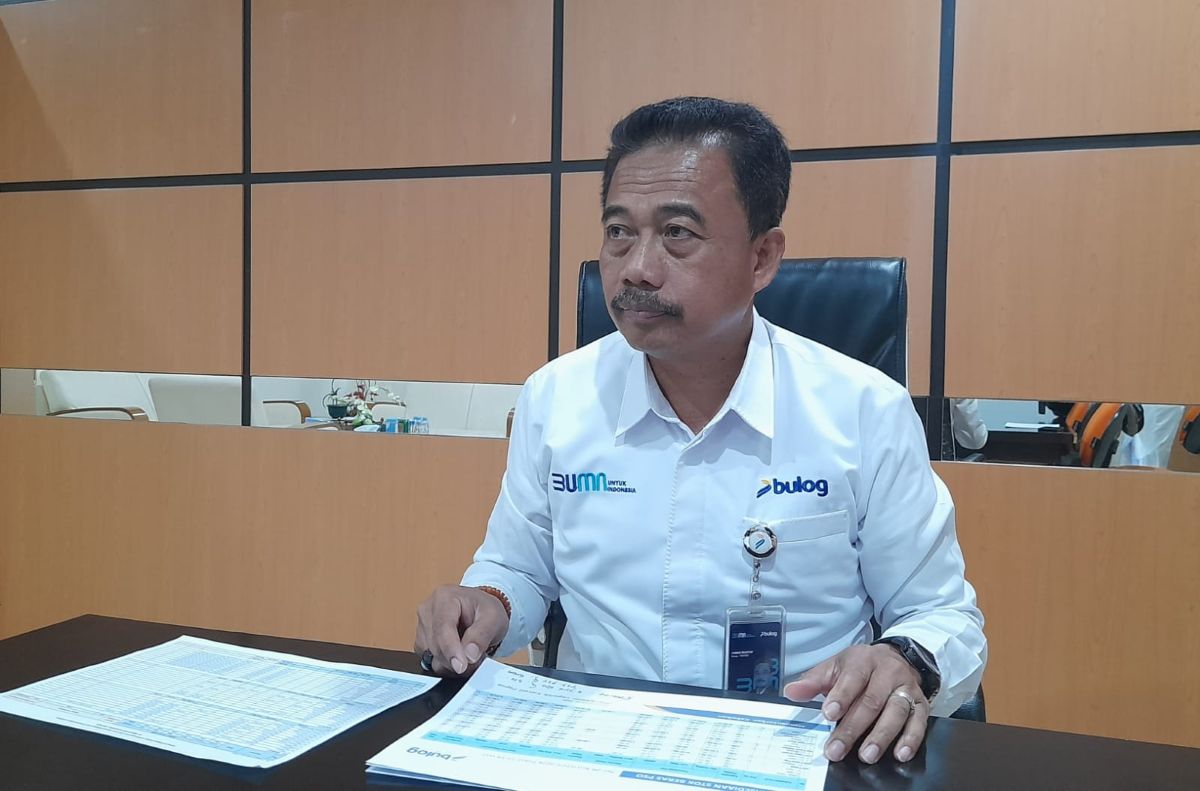
Ahmad Mustari, head of Bulog’s Papua regional office, said that difficulties encountered during the February and March 2026 allocation had been evaluated and would be used to improve the July to September distribution. Earlier difficulties were associated particularly with Papua’s geographical conditions.
The agency is therefore emphasizing stronger coordination with local governments and other relevant institutions in the areas targeted for assistance.
This coordination matters because food distribution in Papua involves more than a single institution. Local governments have knowledge of communities and transportation conditions, while Bulog manages the food supply and distribution system. Effective coordination can help identify bottlenecks before they become missed deliveries.
Maintaining Food Stocks While Protecting Households
The latest program also comes against the backdrop of efforts to maintain adequate rice reserves in Papua.
Earlier in August, Bulog Papua said available rice stocks were sufficient to meet needs for approximately three months. At the time, the agency reported a combined stock of around 38.67 million kilograms, consisting of rice already held in Bulog warehouses and supplies still in transit to Papua.
Bulog said around 20.6 million kilograms were stored in warehouses, while another 18.07 million kilograms were still in transit. The agency linked this supply position to its ability to support the three-month food assistance allocation.
The availability of stock is particularly important in Papua because transportation costs and supply disruptions can have a direct impact on retail prices. Ensuring that government rice reserves are available in multiple locations can reduce the distance between supply points and beneficiary communities.
At the same time, food assistance is only one component of food security.
Beyond Rice: The Larger Food Security Question
Papua’s long-term food security challenge cannot be solved entirely through rice assistance.
The region has considerable agricultural potential, but local food production, transportation infrastructure, market connectivity, and household purchasing power all influence food security. Strengthening these elements would allow social assistance to function alongside a stronger local food economy.
This initiative is particularly important because the Indonesian government has also been encouraging greater development of food production in Papua.
Bank Indonesia’s Papua office, for example, has previously identified strengthening the food sector and increasing production as important measures for mitigating economic pressures in Papua.
In July, Bulog also opened the possibility of cooperation with local Merah Putih cooperatives to strengthen food supply chains in Papua.
Such initiatives point toward a broader policy direction. Food assistance can protect households during periods of economic pressure, while local agricultural development can help strengthen the underlying supply system.
Connecting Assistance With Local Economic Development
The most sustainable outcome would be a food system in which assistance programs and local production reinforce each other.
Government food reserves can provide a safety net. Local farmers can increase production. Cooperatives can potentially help connect producers with consumers. Improved roads, ports, and air connections can reduce distribution barriers.
In this context, the current Bulog program should be viewed not simply as a rice distribution exercise but as one part of a wider effort to strengthen household resilience.
The immediate priority, however, remains straightforward: ensuring that the rice allocated for July, August, and September actually reaches the intended recipients.
The Race to Reach 100 Percent
On August 25, Bulog Papua expressed confidence that all 845,425 beneficiaries could be served by the end of September 2026, consistent with the government’s target.
Mustari said the agency was accelerating distribution through coordination with regional governments and other stakeholders in each target area.
The agency has also acknowledged that unforeseen obstacles could affect the schedule. If distribution problems prevent the assistance from being delivered within the allocated period, Bulog may request an extension from the central government. Any extension, however, would remain under the authority of the central government through Bapanas.
That provision reflects a practical understanding of Papua’s geographic realities. Administrative deadlines are necessary for accountability, but remote communities sometimes require more flexible logistics than communities connected to major road networks.
The challenge for policymakers is to maintain that flexibility without weakening transparency or delivery standards.
Why the Program Matters for Papua’s Development
Food security has a direct connection to economic stability.
For a household living on a limited income, food is one of the largest recurring expenses. Assistance that provides 30 kilograms of rice over three months can reduce some of that pressure, particularly when food prices rise.
The benefit can extend beyond the household. Money that would otherwise be spent entirely on staple food can potentially be directed toward transportation, education, healthcare, or other basic needs.
For Papua, where economic disparities between urban centers and remote communities remain an important development concern, reaching vulnerable households is therefore a crucial part of inclusive development.
The program also illustrates a broader principle of public service delivery in eastern Indonesia: national programs need to be adapted to local realities.
A policy designed in Jakarta may have the same objective in Papua, but implementation requires a different logistical approach because of the terrain, settlement patterns, and transportation network.
Building Public Trust Through Delivery
For international observers of Papua, social and economic development is an important part of understanding the region.
Infrastructure projects, healthcare programs, and food assistance rarely generate the same international attention as political or security issues. Yet they directly affect everyday life.
The delivery of food assistance is particularly visible at the community level. When the system works, households experience a tangible benefit from government policy. When distribution fails, the gap between policy announcements and everyday reality becomes equally visible.
For that reason, transparency in beneficiary data, distribution schedules, and local delivery outcomes will remain important as the program progresses.
The government’s use of DTSEN as the basis for identifying beneficiaries also highlights the growing importance of integrated social and economic data in targeting public assistance.
Better data can reduce duplication and improve targeting, although it must be accompanied by effective verification and local coordination, especially in remote communities.
Looking Ahead
The July to September food assistance program offers a clear test of the government’s ability to translate national food security policy into practical support across Papua’s diverse geography.
The numbers are substantial: 845,425 beneficiary families and approximately 25,362 tons of rice allocated over three months. But the more meaningful measure of success will be found at the community level.
If Bulog and local authorities can deliver the assistance to all targeted households, particularly those in remote and mountainous areas, the program will demonstrate that national social protection can reach communities despite Papua’s difficult logistics.
At the same time, the longer-term objective should be to move beyond dependence on emergency or periodic food assistance. Stronger local agriculture, better transportation infrastructure, improved market connectivity, and more resilient household incomes will be essential to building lasting food security.
Conclusion
Bulog Papua’s distribution of food assistance to 845,425 beneficiary families across six provinces represents a significant social protection effort and an important component of Indonesia’s food security policy in Papua. The allocation of 25,362 tons of rice for July, August, and September 2026 provides immediate support for lower-income households while helping reduce the impact of food price pressures.
The main challenge, however, lies not in the size of the allocation but in reaching people. Papua’s mountains, remote settlements, islands, and limited transportation links make distribution substantially more complex than simply moving rice from warehouses to markets. Bulog must therefore draw lessons from earlier distribution difficulties and strengthen coordination with regional governments to achieve its target of 100 percent delivery by the end of September.
In the longer term, the strongest food security strategy for Papua will be one that combines social protection with local agricultural production, improved infrastructure, and stronger regional supply chains. The current program can provide an important safety net, but sustainable prosperity will depend on ensuring that Papua’s communities are increasingly able to produce, access, and afford nutritious food through a resilient local economy.
For Indonesia, the effort also carries a broader development message. National programs become meaningful when they reach people in the country’s most geographically challenging areas. In Papua, successful food distribution is therefore not only about rice. It is about ensuring that distance and geography do not become permanent barriers to basic economic security.

