
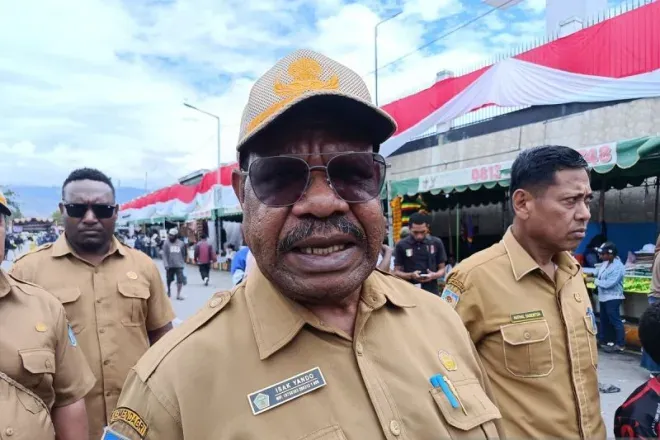
The Papua Pegunungan (Highland Papua) provincial government is strengthening its response to AIDS, tuberculosis, and malaria, collectively referred to as ATM, as health authorities work towards the ambitious goal of eliminating the three diseases by 2030. The strategy places greater emphasis on reliable disease data, coordination across government institutions, stronger partnerships, and practical action in priority areas.
The initiative comes amid a substantial public health challenge. Data presented by the Indonesian Association of Health Offices (Adinkes), as reported by the Papua Pegunungan AIDS Prevention Commission (KPA), recorded 8,074 cumulative HIV/AIDS cases as of October 2026, 119 tuberculosis cases as of July 2025, and 38,049 malaria cases as of August 2026.
The figures were presented by Yomi Kogoya, chairman of the Papua Pegunungan Provincial AIDS Prevention Commission, who said that eliminating ATM diseases by 2030 would require sustained cooperation between provincial and regency governments, health institutions, and other stakeholders.
“To achieve this, we need joint action, supportive budget allocations, and strict oversight. KPA Papua Pegunungan is ready to take a leading role in safeguarding this commitment together with all stakeholders,” Yomi said in a statement delivered in Wamena on November 20, 2026.
The provincial government is also seeking to make disease prevention and control a more integrated part of regional development planning. In a separate statement published by ANTARA on November 21, Isak Yando, the Governor’s Expert Staff for Economic, Financial, and Development Affairs, outlined four priorities: data-driven policymaking, cross-sector integration, stronger partnership coordination, and concrete action in six designated regencies.
Together, these measures reflect an effort to move beyond isolated health campaigns towards a more coordinated regional response. The challenge now is to translate policy commitments into accessible services and measurable improvements in communities across the highlands.
A Coordinated Strategy Led by the Provincial Government
Four priorities for stronger disease control
The provincial government, through its Health Office, has identified four measures to strengthen the prevention and control of AIDS, tuberculosis, and malaria.
The first is the use of reliable and up-to-date surveillance data as the foundation for policy decisions. Isak Yando said programs must be based on the latest available information, including real-time surveillance data, so that interventions can reach the communities and populations that need them.
“Data is very important so that the programs and policies adopted are genuinely aligned with the facts on the ground and the intended targets can be achieved,” he said following a workshop on technical guidelines for integrating ATM prevention and control across Papua Pegunungan.
The emphasis on data reflects a practical challenge in public health management. Disease control requires accurate information about where cases are being identified, how services are reaching patients, and which areas need additional resources. Without reliable reporting, authorities may struggle to direct medical personnel, diagnostic services, and prevention programs effectively.
The second priority is cross-sector integration. The provincial administration recognizes that the responsibility for controlling ATM diseases cannot rest solely with provincial and regency health offices. It must involve other government departments and become part of broader regional development planning.
The third priority is strengthening the regional partnership forum, which is intended to provide a platform for coordination among government agencies, development partners, academics, businesses, and civil society organizations.
The fourth is translating these commitments into concrete action in six designated regencies. These priorities are intended to ensure that the strategy moves from planning documents into implementation at the local level.
Six Regencies Identified for Integrated Action
The provincial government has identified six regencies as priority locations for integrated ATM prevention and control.
They are Jayawijaya, Mamberamo Tengah, Nduga, Pegunungan Bintang, Yalimo, and Yahukimo.
Isak urged the relevant authorities to prepare and implement integrated regional action plans in all six locations. These plans are expected to connect provincial policy with local implementation, allowing programs to respond more directly to conditions in each regency.
The six priority locations should be distinguished from the province-wide 2030 elimination target. Yomi Kogoya’s statement refers to the broader objective of eliminating ATM diseases across all eight regencies of Papua Pegunungan. The six regencies identified by Isak are the designated locations for the immediate integrated action described in the provincial government’s latest announcement.
This distinction is important for understanding the scope of the program. Priority interventions in six regencies do not mean that the other two regencies are excluded from the province’s overall public health ambitions.
For a region with difficult terrain and widely dispersed communities, setting clear implementation priorities can help authorities organize resources and coordinate local responsibilities. It can also make it easier to monitor whether programs are reaching the intended populations.
The 2030 Elimination Target and the Scale of the Challenge
Disease figures underline the need for sustained intervention
The KPA Papua Pegunungan has described 2030 as its target for eliminating AIDS, tuberculosis, and malaria, in line with the national public health objective cited by the organization.
However, the data presented by Adinkes show that substantial work remains.
According to Yomi Kogoya, the cumulative number of HIV/AIDS cases reached 8,074 by October 2026. The reported tuberculosis figure stood at 119 cases as of July 2025, while malaria cases reached 38,049 by August 2026.
These figures refer to different reporting periods and should not be interpreted as measurements taken on the same date. They nevertheless illustrate the scale of the public health issues facing the province.
Yomi said the data required serious attention and sustained intervention to prevent further transmission and reduce the impact of the diseases.
The figures also underline why a single approach cannot adequately address all three conditions. HIV/AIDS, tuberculosis, and malaria have different transmission patterns, prevention requirements, diagnostic procedures, and treatment pathways. Effective control therefore depends on disease-specific interventions supported by a coordinated health system.
For HIV/AIDS, access to testing, timely diagnosis, treatment continuity, and public education are important elements of the response. Tuberculosis control requires early detection, appropriate treatment, and consistent follow-up. Malaria prevention and control depend on timely diagnosis, access to effective treatment, and measures to reduce exposure to mosquito bites.
The provincial strategy’s emphasis on data and coordination provides a framework for connecting these different interventions without treating the diseases as if they were identical.
Malaria elimination remains a major task
Isak Yando also highlighted the status of malaria control across the province’s eight regencies.
He said none of the eight regencies had yet achieved malaria elimination status. All remained at the stage of working towards elimination.
His statement indicates that the 2030 target will require sustained efforts across the entire province, rather than isolated progress in a small number of locations.
Malaria control is particularly important in communities where geographical conditions and access to healthcare can complicate prevention, diagnosis, and treatment. Ensuring that residents can obtain testing and appropriate medical care is therefore central to reducing the burden of the disease.
The provincial government will need to maintain coordination between health authorities and local administrations so that prevention programs can be adapted to the needs of individual communities.
KPA Calls for Stronger Cooperation and Budget Commitments
Yomi Kogoya has stressed that the elimination target cannot be achieved by the health sector working alone.
He said the provincial KPA, regional governments, and Adinkes were working together to strengthen the response to ATM diseases. Cooperation between provincial and regency administrations was particularly important because implementation takes place across different local government areas.
His remarks also placed emphasis on the need for adequate financing and oversight.
The call for supportive budget allocations is significant because health programs require sustained resources. Surveillance systems, diagnostic equipment, medical supplies, trained personnel, community outreach, and treatment services all depend on reliable funding.
Yomi said KPA Papua Pegunungan was prepared to help safeguard the commitment alongside other stakeholders. The organization’s role includes encouraging coordination and ensuring that disease prevention remains part of regional policy discussions.
The provincial government’s approach also seeks to strengthen the partnership forum as a practical coordination mechanism. Isak said the forum should bring together government agencies, development partners, academics, businesses, and civil society organizations.
Such cooperation can help address gaps that individual institutions may not be able to resolve independently. Academic institutions can contribute research and technical expertise, and businesses can support community initiatives, while civil society organizations can help strengthen public awareness and engagement.
The effectiveness of the forum, however, will depend on whether discussions lead to clearly assigned responsibilities, funded activities, and measurable results.
Health Programs Must Become Part of Regional Development Planning
One of the central points in Isak Yando’s statement is that ATM prevention and control should be integrated into the province’s formal development planning and budgeting processes.
He said programs should be included in the Regional Medium-Term Development Plan, known as RPJMD, the Regional Government Work Plan, or RKPD, and the Regional Budget, or APBD, at both provincial and regency levels.
This approach is intended to ensure that disease prevention does not depend solely on short-term campaigns or temporary initiatives.
By integrating health priorities into regional planning documents, local governments can establish clearer program responsibilities and provide a basis for allocating resources over successive budget cycles.
The approach also links public health with wider development objectives. Healthy communities are better positioned to participate in education, employment, local economic activities, and social life. Conversely, untreated or poorly controlled diseases can place pressure on households, reduce productivity, and affect the long-term welfare of families.
Isak warned that the impact of ATM diseases extended beyond the health sector, affecting social and economic conditions as well as the future of younger generations in Papua Pegunungan.
His remarks underline why health programs need to be considered part of the province’s broader development agenda.
The Importance of Community Participation
Government planning and institutional coordination are essential, but the success of disease prevention also depends on public participation.
Community awareness can help residents understand the importance of early testing, medical consultation, and following prescribed treatment. It can also reduce misconceptions that discourage people from seeking healthcare.
For people living in remote communities, access to reliable information and health services can be as important as the availability of medical supplies. Local health workers, community leaders, and civil society organizations can help connect public health programs with everyday community needs.
HIV/AIDS prevention also requires a respectful approach that protects the privacy and dignity of patients. Reducing stigma is important because fear of discrimination can discourage people from seeking testing or continuing treatment.
For tuberculosis, public awareness of symptoms and the importance of completing treatment can support early intervention and reduce the risk of further transmission. Malaria prevention requires community participation in measures that reduce mosquito exposure and encourage residents to seek timely diagnosis when symptoms appear.
The partnership model proposed by the provincial government could provide a platform for strengthening these efforts, provided that community involvement is maintained throughout program design and implementation.
Measuring Progress Towards 2030
The 2030 target provides a clear timeframe for Papua Pegunungan’s ATM response, but progress will need to be assessed through transparent and consistent indicators.
The government’s emphasis on real-time surveillance offers a starting point. Updated data can help authorities monitor trends, identify areas requiring additional intervention, and evaluate whether public health programs are reaching their intended beneficiaries.
The next stage will require clear regional action plans, defined institutional responsibilities, and adequate funding. The six priority regencies identified by the provincial government will need to translate the integrated strategy into practical programs, while the broader elimination objective must remain relevant to all eight regencies.
Regular monitoring will also be important to determine whether improvements in testing, treatment access, and prevention are producing measurable results.
The reported disease figures should serve as a baseline for continued assessment while recognizing that the HIV/AIDS, tuberculosis, and malaria data cover different reporting periods. More consistent reporting will help decision-makers evaluate changes over time and make better-informed adjustments to policy.
For residents, the most meaningful measure of progress will be improved access to healthcare, earlier diagnosis, continuity of treatment, and a reduced risk of infection.
Conclusion
The Papua Pegunungan government’s strengthened response to AIDS, tuberculosis, and malaria reflects an effort to place public health more firmly within the region’s development agenda. The four priorities outlined by Isak Yando, together with KPA’s call for cross-sector cooperation, provide a framework built around reliable data, integrated planning, partnership, and practical action.
The reported figures underline the scale of the challenge, while the 2030 elimination target gives provincial and regency authorities a common objective. Achieving it will require more than policy declarations. Adequate budgets, effective surveillance, accessible health services, sustained treatment, and active community participation must be maintained over time.
The six priority regencies identified for integrated action offer a focus for implementation, while the wider target extends across all eight regencies of Papua Pegunungan. Continued coordination between government institutions, health professionals, development partners, and communities will be essential to closing gaps in prevention and treatment.
Ultimately, the success of the ATM program should be measured by improvements in people’s lives: more residents receiving timely diagnosis, patients maintaining access to treatment, communities gaining better health information, and fewer families facing the consequences of preventable disease. A healthier Papua Pegunungan by 2030 will depend on turning today’s commitments into consistent action across the region.
Read Also
Malaria Elimination Initiative Turns Cocoa Waste into Mosquito Repellent
Australia Backs KITA SEHAT in Papua Barat Daya

