
For many communities across Papua, access to electricity is about far more than switching on a light at night. It can determine whether children can study after sunset, whether health facilities can preserve medicines, whether small businesses can operate reliably, and whether remote communities can participate more fully in the regional economy.
That is why Papua electrification has emerged as a central priority in Indonesia’s national push to achieve a 100 percent electrification places Papua at the centre of the electrification ratio within the next four to five years. The Ministry of Energy and Mineral Resources, working with electricity providers including the State Electricity Company (PLN), is seeking to extend reliable power to remote villages and isolated areas, including communities where conventional grid expansion remains difficult.
The initiative comes as Indonesia’s national electrification ratio has already reached about 98 per cent, according to the Ministry of Energy and Mineral Resources. The remaining gap is concentrated disproportionately in remote and geographically challenging areas, making Papua one of the most important testing grounds for the government’s final phase of universal electricity access.
Papua Becomes a Priority for Universal Electricity
The geography of Papua makes electrification fundamentally different from expanding a power network in densely populated parts of Indonesia.
Mountainous terrain, vast distances, scattered settlements and limited road connectivity can make the construction of conventional transmission and distribution networks expensive and technically complicated. In some communities, connecting a village to a large centralised grid is not necessarily the most practical solution.
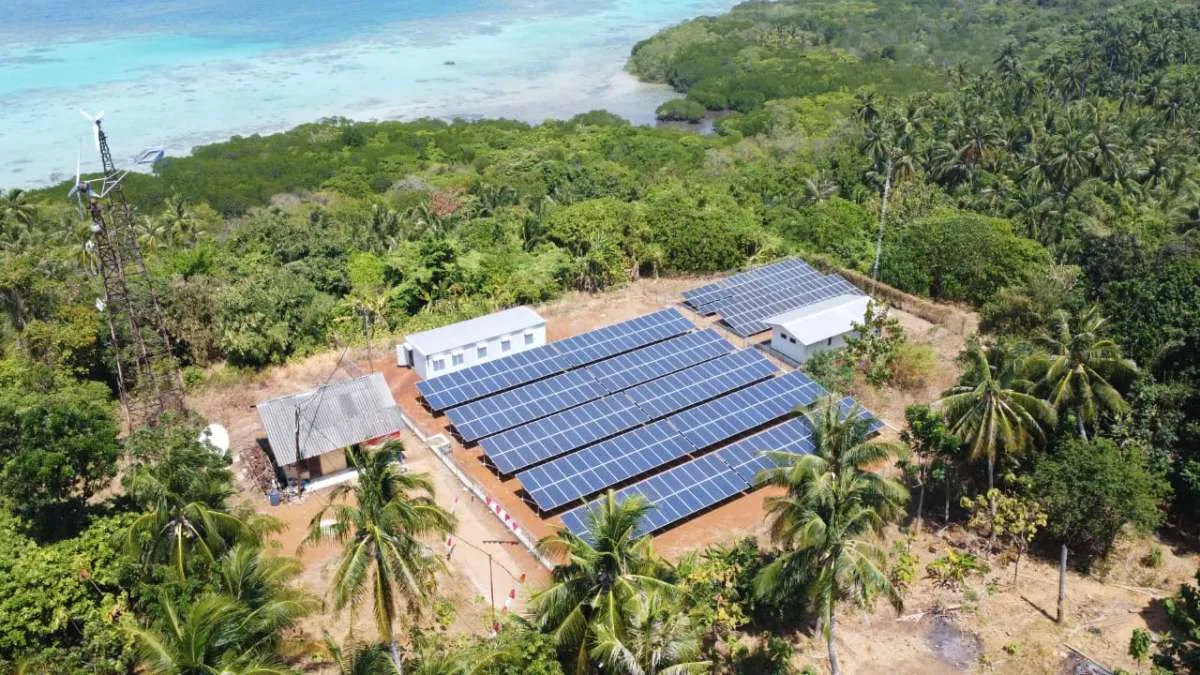
The government, therefore, plans to combine conventional electricity distribution with decentralised renewable energy systems, particularly communal solar power plants (PLTS). The approach is intended to make electrification more adaptable to the realities of remote communities.
The policy is significant because electricity access is increasingly regarded as basic infrastructure for economic and social development rather than simply a utility service.
For Papua, where many communities remain separated by difficult terrain, reliable electricity can also help reduce the disadvantages created by geographic isolation.
The Numbers Reveal the Challenge
PLN’s 2025 statistics illustrate why Papua remains a major priority.
The electricity ratio recorded for the wider PLN Papua and Papua Barat operating area was 67.05 per cent. Within that figure, substantial differences existed between provinces. Papua’s electrification ratio stood at 90.55 per cent, while Papua Tengah (Central Papua) recorded 53.01 per cent, Papua Selatan (South Papua) 77.52 per cent and Papua Pegunungan (Papua Highlands) only 16.66 per cent. Papua Barat Daya (Southwest Papua) recorded 89.22 per cent, while Papua Barat (West Papua) stood at 90.09 per cent.
These figures indicate that the national 100 per cent target cannot be achieved simply by expanding existing urban electricity networks.
The challenge lies primarily in reaching communities where the physical and economic conditions for conventional grid development are much more difficult.
For that reason, the government’s rural electrification programme is expected to play an important role in closing the gap.
PLN’s Role in Reaching Remote Communities
PLN is expected to remain a key part of Indonesia’s effort to expand electricity infrastructure, particularly through rural electrification and renewable energy projects.
The company’s planning documents show that Papua is already included in a number of electricity development projects using different technologies. These include solar power systems, solar and battery installations, mini-hydropower plants, biomass and larger hydropower projects.
This diversified approach matters because Papua does not have a single electricity solution.
A community close to an existing distribution network may benefit from a conventional grid connection. A settlement located far from the network may be better served by a solar and battery system. Areas with suitable rivers and water flows could potentially utilise mini-hydropower systems.
The objective is therefore not simply to build more power plants. It is to match the electricity solution with the geography and needs of each community.
PLN’s planning documents also identify rural electrification and renewable energy development as important components of electricity expansion in the Maluku and Papua region.
That makes coordination between the central government, provincial administrations, local communities and PLN particularly important.
Electricity as an Investment in Human Development
The most visible impact of electrification may begin inside homes, but its consequences can extend across entire communities.
A household with dependable electricity can use lighting for children’s education and access digital communications. A school can extend learning activities beyond daylight hours. A health post can operate equipment more reliably and preserve temperature-sensitive medicines when appropriate infrastructure is available.
Electricity also creates opportunities for economic activity.
Small shops can operate refrigeration equipment. Food producers can improve storage. Workshops can use electrical machinery. Internet connectivity becomes more useful when communities have dependable power to charge devices and operate communications equipment.
For Papua’s rural economy, these changes can be particularly meaningful.
The government’s electricity strategy therefore has implications beyond the energy sector. It is closely connected to education, health, telecommunications, agriculture, fisheries, small businesses and public administration.
This is why we should view the push towards universal electricity access as part of a broader development strategy.
From Electricity Access to Local Economic Growth
Reliable Power Can Change the Cost of Doing Business
One of the persistent challenges facing businesses in remote Papua is the cost of logistics.
When communities are separated from major urban centres, transporting goods and equipment can be costly. Limited infrastructure can also restrict the ability of local entrepreneurs to process products locally.
Electricity can help change that equation.
Instead of selling agricultural products or other commodities in an unprocessed form, local businesses may eventually gain opportunities to undertake basic processing, packaging, refrigeration and storage closer to the source.
That does not mean electricity alone will solve Papua’s economic challenges. Roads, telecommunications, transportation, education, and access to finance and markets remain essential.
But without reliable electricity, many of those other investments cannot reach their full potential.
Supporting Papua’s Small Businesses
The economic value of electrification is particularly relevant for micro, small and medium enterprises.
A reliable electricity supply can allow small businesses to remain open longer, use modern equipment and improve productivity. In rural areas, even relatively simple technologies can make a difference.
For example, refrigeration can reduce spoilage of food products, while electric machinery can reduce the physical workload involved in processing agricultural commodities.
Over time, the combination of electricity and better transportation could help communities move from dependence on raw commodity sales to greater local value creation.
That would establish electrification a direct connection to the government’s broader objective of improving welfare in Papua.
Renewable Energy Offers a Practical Option
The government’s decision to combine conventional distribution networks with communal solar power is particularly relevant to Papua.
Building long transmission lines through difficult terrain can take considerable time and require significant investment. Decentralised solar systems can provide another pathway for communities that are geographically distant from major electricity infrastructure.
The Ministry of Energy and Mineral Resources has specifically identified communal PLTS as part of the electricity strategy for remote areas of Papua.
PLN’s own project pipeline also includes remote-area solar projects in Papua and Papua Barat, alongside mini-hydropower, biomass and solar-plus-battery projects.
This approach could become increasingly important as Indonesia seeks to combine electrification with its wider energy transition.
For Papua, renewable energy can also offer an opportunity to design smaller, locally appropriate systems rather than relying entirely on large centralised infrastructure.
Building Local Technical Capacity
Infrastructure can only deliver long-term benefits if there are people capable of operating and maintaining it.
The Ministry of Energy and Mineral Resources has therefore linked rural electrification with the development of local technical skills. In 2026, the Directorate General of Electricity is targeting competency certification for 480 students across 12 provinces, including Papua, Papua Barat, Papua Barat Daya, and Papua Selatan.
The policy is important for Papua because remote electricity infrastructure can face unique maintenance challenges.
A technical problem in a major city may be resolved relatively quickly because technicians and equipment are nearby. In an isolated village, the same problem can take considerably longer if trained personnel are not available locally.
Developing certified local technicians can therefore strengthen the reliability of electricity systems while also creating employment opportunities.
It offers a second dividend from infrastructure investment: communities can gain both electricity and human capital.
A National Target with a Strong Papua Dimension
Indonesia’s national target is ambitious.
The government aims to raise the country’s electrification ratio from around 98 per cent to 100 per cent by 2029. The broader rural electricity programme is expected to reach around 10,000 villages by then.
The remaining two percentage points may appear small at the national level. In practice, however, reaching those final communities could be among the most difficult parts of the entire programme.
Papua demonstrates why.
The region’s geography means that a national statistic can conceal substantial local differences. A province with an electrification ratio above 90 percent may still have isolated settlements without reliable access to electricity.
This is why the government’s focus on Papua is strategically important.
Universal access will ultimately be measured not only by national averages but also by whether people living in the most remote communities can actually use reliable electricity in their daily lives.
Industry and Local Participation
The electrification programme is also expected to create demand for electrical equipment and related services.
The government has encouraged domestic industries to participate in supplying equipment needed for the expansion of Indonesia’s electricity infrastructure. According to the Investor Trust, the national programme could involve around 10,000 villages receiving electricity access by 2029, creating substantial demand for electrical infrastructure and technology.
For Papua, local participation could add another dimension.
Where possible, local businesses and workers can become part of construction, installation, maintenance and supporting services. Such participation could help ensure that infrastructure spending produces economic benefits within the communities where projects are located.
This is particularly important in a region where development policy increasingly emphasises the connection between physical infrastructure and local economic opportunity.
Why Electricity Matters for Papua’s Future
The significance of electrification should also be considered in the wider context of Papua’s development.
Infrastructure investment can contribute to greater connectivity between communities and public institutions. Electricity can support schools, health facilities, communications networks and government services. It can also make other infrastructure investments more effective.
In this sense, electrification can serve as an enabling infrastructure.
A new health facility without dependable power cannot provide the same level of service as one with reliable electricity. A school with digital equipment requires power to make meaningful use of it. A small enterprise cannot fully benefit from modern machinery without a stable electricity supply.
The government’s approach therefore reflects a broader understanding of development: infrastructure works best when different systems reinforce one another.
A Long Road Towards Universal Access
The target of universal electricity access is encouraging, but implementation will require sustained attention.
Papua’s terrain will remain a major logistical challenge. Equipment must be transported, infrastructure must be maintained and communities must be involved. Renewable energy systems require batteries and technical support, while grid-connected areas need reliable distribution networks.
Affordability is another consideration.
Access to electricity does not automatically mean that every household or business can afford to consume large amounts of it. Development policies therefore need to consider both physical access and the ability of communities to use electricity productively.
The quality of service also matters.
For households, businesses and public facilities, reliable electricity is ultimately more valuable than nominal connection statistics. The long-term measure of success will be whether power is available consistently and whether communities can use it to improve their lives.
Looking Ahead
Papua’s electrification challenge is no longer simply about bringing power to a remote location. It is about creating the foundation for a more connected and productive regional economy.
The government’s four-to-five-year timeframe provides a clear direction, while PLN’s existing renewable energy and rural electrification projects offer some of the infrastructure needed to move towards that goal. Official data also makes clear that the task remains substantial, particularly in Papua Pegunungan and Papua Tengah.
If implemented effectively, the programme could have effects that reach well beyond electricity consumption. Better access to power can support education, healthcare, communications, entrepreneurship and public services, while locally trained technicians can strengthen the sustainability of the infrastructure itself.
For Papua, where geography has long made infrastructure delivery unusually difficult, achieving universal electricity access would represent more than a national statistic. It would be a practical measure of whether remote communities are gaining a stronger connection to Indonesia’s broader development and economic opportunities.
The next four to five years will therefore be critical. The real test will not simply be how many villages receive electricity, but whether reliable power becomes a lasting platform for better services, stronger local businesses and improved quality of life across Papua.
Conclusion
Indonesia’s push towards 100 per cent electrification places Papua at the centre of one of the country’s most important infrastructure challenges. With the national target set for 2029, the government and PLN face the difficult task of reaching communities separated by mountains, forests and long distances.
The combination of conventional networks, communal solar power, renewable energy projects and local technical training offers a practical framework for addressing those challenges. Official PLN data shows that significant gaps remain, particularly in Papua Pegunungan, Papua Tengah and Papua Selatan.
For Papua’s communities, however, the meaning of electrification is ultimately measured in everyday life. It is the ability of a child to study after sunset, a health worker to provide better services, a farmer or small business owner to preserve and process products, and a remote village to participate more fully in the modern economy.
If the national strategy can translate its targets into reliable electricity on the ground, Papua’s electrification drive could become an important foundation for inclusive development. The success of the programme will depend on sustained investment, effective coordination, local participation and, above all, ensuring that the most geographically isolated communities are not left behind.

