
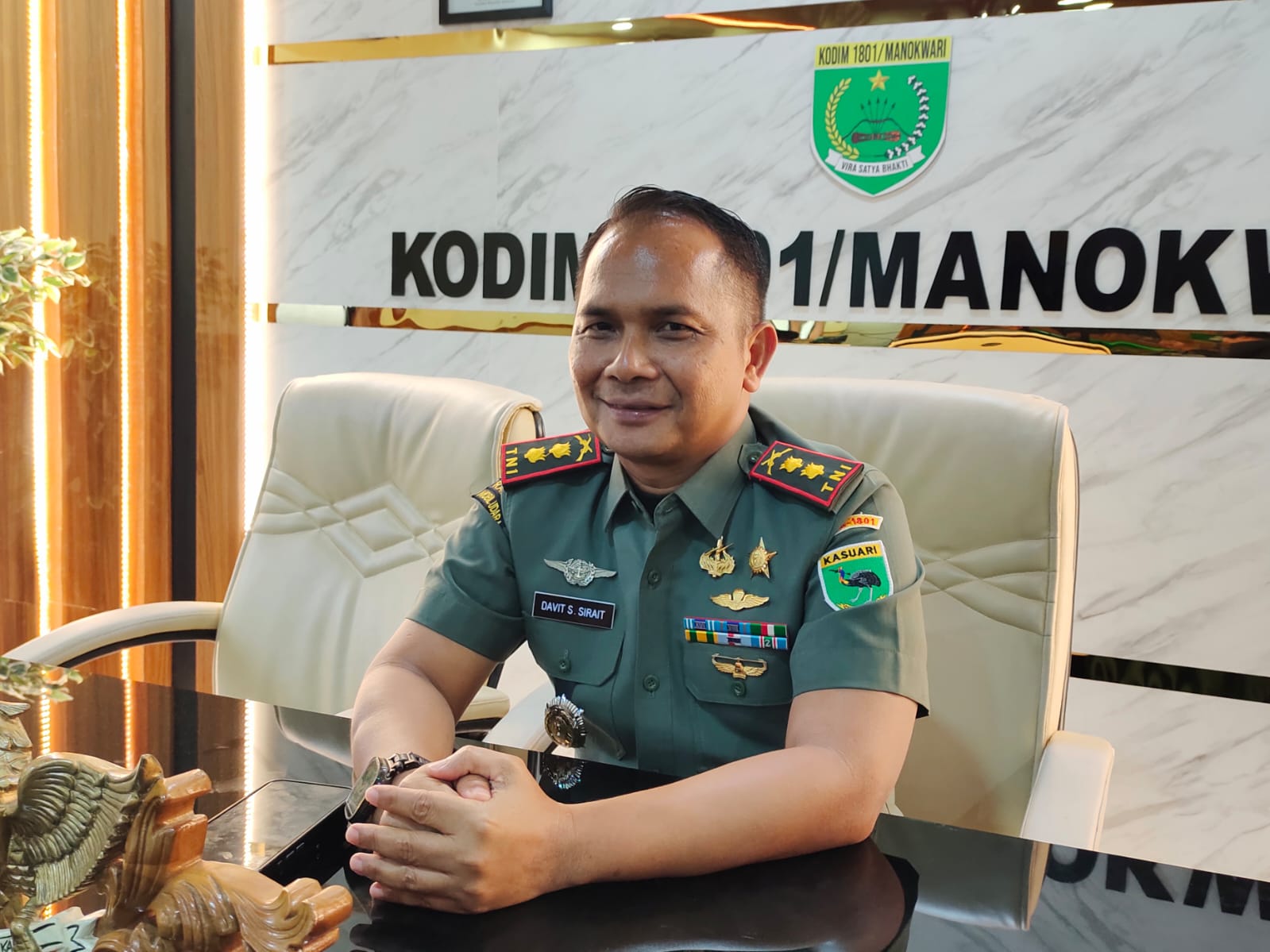
The completion of 75 Red and White Village and Urban Village Cooperative (Koperasi Desa dan Kelurahan Merah Putih, or KDKMP) outlets in Manokwari marks a significant step in Indonesia’s efforts to strengthen grassroots economic activity in Papua. The construction, carried out with the support of the Indonesian Military’s District Military Command (Kodim) 1801/Manokwari, has reached its physical target, with attention now shifting towards equipment, transport vehicles and management arrangements before the cooperatives begin serving local communities.
The Red and White Village Cooperative programme reached this milestone on November 9, 2026, when the Commander of Kodim 1801/Manokwari, Lieutenant Colonel Infantry Davit Sutrisno, confirmed that all 75 designated sites had completed construction. The announcement represented a major change from the programme’s progress in July, when only 26 outlets had been completed and 49 were still under construction.
While the buildings are now ready, they have not yet started operating. The remaining preparations include the arrival of operational trucks, the completion of shop facilities and the appointment of cooperative managers. The military command is coordinating with PT Agrinas Pangan Nusantara and relevant government institutions to accelerate this next stage.
The initiative is part of a wider national effort to establish village and urban village cooperatives as local economic centres. In Manokwari, the programme is expected to improve access to basic goods, create opportunities for local micro, small and medium-sized enterprises (MSMEs), and strengthen the economic role of communities beyond the main urban centre.
From 26 Completed Outlets to a Full 75-Site Network
The progress achieved in November followed several months of construction work across Manokwari.
In a report published on July 21, 2026, Tabura Pos stated that construction had been completed at 26 of the 75 planned KDKMP locations. At that point, 49 sites remained under development.
Davit Sutrisno said the Kodim was working to complete the remaining buildings by August. He also explained that the next stage would involve the distribution of shop equipment and operational vehicles by the central government.
The logistical challenge was particularly relevant to Papua. Equipment destined for eastern Indonesia, including the region’s remote areas, had to be transported by sea. Shipping schedules and geographical distances meant that delivery could take longer than in other parts of the country.
Davit acknowledged that these conditions could slow the process but said the government remained committed to accelerating implementation.
The July report also outlined the intended benefits of the cooperatives. Residents living far from the city centre were expected to gain easier access to essential goods at more affordable prices, reducing the need to travel long distances to purchase household necessities.
By November 9, the construction target had been achieved. ANTARA reported that all 75 physical outlets had been completed in accordance with the target set by the central government for Manokwari.
The development demonstrates the progress made by the Kodim’s construction teams over the intervening months. It also marks a transition from building infrastructure to preparing the institutions and supply arrangements needed to make the cooperative network functional.
Davit Sutrisno: Construction Is Complete, Operations Must Follow
Speaking to journalists in Manokwari on November 9, Davit confirmed that the 75 cooperative buildings had been completed. He said the immediate priority was to accelerate the provision of supporting facilities so that the outlets could begin operating.
“All 75 locations that we worked on have been completed. We are now accelerating the operational process by completing the remaining facilities and infrastructure,” Davit said, as quoted by ANTARA.
The preparation involves several components. One of the most important is the availability of transport vehicles to distribute goods and support daily cooperative activities.
According to Davit, 38 of the 75 operational trucks had arrived in Manokwari. The vehicles were being delivered in stages by the supplier through sea transport, making the process dependent on shipping schedules.
He said the delivery of shop furniture, including shelves and other equipment, had also begun.
“The trucks are being delivered in stages. In addition, furniture such as shelves and other equipment has also arrived in Manokwari,” he said.
The vehicles will play an important role in connecting cooperative outlets with suppliers and distribution points. In areas where residents live far from major commercial centres, reliable transport can help ensure that essential goods reach local shops more consistently.
The arrival of 38 trucks therefore represents progress, but it also indicates that the logistical preparation is not yet complete. The remaining vehicles and other operational requirements must be delivered before the full network can function as intended.
Preparing Managers and the Cooperative Operating System
Physical buildings and equipment are only part of the requirements for a functioning cooperative. Each outlet also needs capable management, a reliable supply chain and clear arrangements for handling transactions and distributing goods.
Davit said Kodim 1801/Manokwari was continuing coordination with PT Agrinas Pangan Nusantara regarding the placement of cooperative managers. The appointment of managers is considered essential to ensuring that each outlet can operate effectively once the facilities are ready.
According to ANTARA, PT Agrinas Pangan Nusantara will provide direct management assistance during the first two years of operation. The support is intended to help establish the cooperatives and strengthen their capacity before responsibility is gradually transferred to local communities.
“The initial management will certainly receive assistance from Agrinas and the Cooperatives Office. Once the cooperatives become independent, the community will manage them,” Davit said.
This arrangement reflects the importance of building local management capacity rather than relying indefinitely on external support. Cooperatives need people who understand local demand, can manage stock and finances, and maintain relationships with suppliers and members.
The transition to community management will therefore be an important measure of the programme’s long-term success.
Local Products and Affordable Essential Goods
Beyond providing retail facilities, the KDKMP network is expected to create opportunities for local businesses and producers.
In a statement reported by Acemo on November 9, Davit said locally produced goods would receive priority in the commodities sold through the cooperative outlets. The intention is to give local MSMEs greater opportunities to participate in distribution and marketing networks.
This approach could provide small businesses with an additional channel to reach consumers. Instead of depending exclusively on individual shops or markets, local producers may be able to supply goods through a wider network of village and urban village cooperatives.
The outlets are also expected to distribute government-subsidised commodities, including cooking oil, rice and other basic necessities. The July report by Tabura Pos additionally identified subsidised fertiliser and liquefied petroleum gas (LPG) as goods expected to be available through the cooperative network.
For residents in areas located far from central markets, the availability of essential goods closer to home could reduce travel expenses and make everyday shopping more convenient.
Davit previously explained that the cooperatives were also intended to provide access to low-interest credit and health services through facilities such as pharmacies and clinics.
These services were described as part of the programme’s intended development model. The reports do not, however, establish that credit services, pharmacies or clinics are already operating at the 75 Manokwari locations. Their availability will depend on the completion of operational preparations and the arrangements made by the relevant authorities.
Village Funds and the Financial Commitment Behind the Programme
The construction of the KDKMP network has also involved the use of village development funding.
In its report on July 21, Tabura Pos quoted Manokwari Community and Village Empowerment Agency Head Aswandi as saying that Rp50.8 billion in Village Funds had been realised to support the cooperative programme.
He explained that the allocation followed a central government provision directing 58.03 per cent of the total Village Fund ceiling towards physical construction, cooperative institutional development, business capital and related requirements.
Aswandi said approximately Rp12.91 billion remained unspent at the time of the report. He warned that any unspent funds would have to be returned to the state treasury.
The figures provide an indication of the financial scale of the programme in Manokwari. They also underline why implementation, financial accountability and operational readiness matter as much as the construction itself.
For the cooperatives to deliver lasting benefits, the resources allocated to them must translate into functioning services, sound management and productive economic activity. Transparent financial administration will be important for maintaining public confidence and ensuring that the programme serves its intended beneficiaries.
Bridges and Infrastructure to Support Rural Connectivity
The KDKMP construction programme is taking place alongside other infrastructure initiatives supported by Kodim 1801/Manokwari.
In July, Davit said the military command was also working on the construction of 12 Garuda Bridge locations in Manokwari. These projects were intended to improve connectivity and support movement in communities where access remains a practical challenge.
By November 9, ANTARA reported that the Kodim was continuing work on four Merah Putih bridges to improve transport access and mobility in village areas.
Davit highlighted construction work on a bridge in Kampung Gedi Merah, describing it as a demanding project because of its considerable span.
He also acknowledged the contribution of customary leaders, religious figures and community representatives, whose support helped construction proceed according to plan.
The two reports refer to different descriptions and stages of bridge-related work. They should not be treated as evidence that all 12 locations mentioned in July had been completed or that the four bridges reported in November represented the entire programme.
Nevertheless, the infrastructure activities point to a common development objective: improving access between communities and essential services.
Cooperatives need more than buildings to succeed. They also depend on roads, bridges and transport networks that allow goods to move between suppliers and consumers. Better connectivity can therefore strengthen the economic value of village-based retail facilities.
The Role of the Indonesian Military in Local Development
Kodim 1801/Manokwari’s involvement in the KDKMP programme illustrates the Indonesian Military’s contribution to supporting national development initiatives at the local level.
In Manokwari, the command has been involved in overseeing and carrying out the physical construction of the 75 cooperative outlets. Its work has been accompanied by coordination with central government institutions, PT Agrinas Pangan Nusantara and local stakeholders.
The completion of the buildings represents the delivery of a major infrastructure target. The next stage, however, requires a different form of coordination involving logistics, management, commodity supply and community participation.
The programme also demonstrates why local engagement matters. Cooperatives are designed to serve village and urban village communities, meaning their success will depend on whether residents see them as useful and actively participate in their management and economic activities.
For the military command, the immediate task is to help ensure that the completed infrastructure can move towards operational readiness. For the government and cooperative partners, the challenge is to establish an effective system that can sustain the outlets over time.
Conclusion
The completion of all 75 KDKMP buildings in Manokwari is a major achievement for the region’s grassroots economic development. From the 26 outlets completed in July to the full 75 site construction target achieved by November, the progress reflects the sustained work of Kodim 1801/Manokwari and its coordination with government and private-sector partners.
Yet the next phase will determine whether the infrastructure delivers its intended economic benefits. The arrival of all operational vehicles, the provision of shop equipment, the appointment of managers and the development of reliable supply chains remain essential steps before the cooperatives can serve the public.
If these preparations are completed effectively, the network could provide more convenient access to essential goods, create new market opportunities for local MSMEs and strengthen economic activity in villages and urban neighbourhoods across Manokwari.
The two-year management assistance planned by PT Agrinas Pangan Nusantara also offers an opportunity to build the skills needed for local communities to take over the cooperatives gradually.
Ultimately, the success of the Red and White Village Cooperative programme will not be measured by the number of buildings completed alone. It will depend on whether the outlets become trusted, well-managed economic institutions that serve local needs, support small businesses and contribute to more inclusive development in Papua Barat (West Papua).
Read Also
Papua Accelerates 88 Red and White Fishermen Villages
Papua Pegunungan Accelerates Cooperative Development to Strengthen Local Economies

