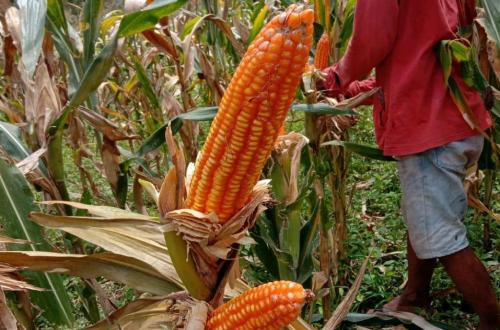
Indonesia’s state logistics agency, Bulog Papua, has purchased 398 tons of locally produced corn from farmers in Keerom Regency, highlighting the government’s continued efforts to strengthen regional food security while improving the welfare of farming communities in Papua. The procurement program forms part of Indonesia’s broader food resilience strategy by ensuring that locally harvested agricultural products receive stable market access and fair purchasing opportunities.
The latest procurement demonstrates the growing importance of Papua’s agricultural sector in supporting national food security initiatives. Officials stated that absorbing farmers’ harvests through Bulog provides greater certainty for producers while helping stabilize agricultural markets during harvest seasons. For local farmers, guaranteed buyers reduce marketing uncertainty and encourage continued investment in agricultural production.
Keerom Regency has gradually emerged as one of Papua’s important agricultural production areas. Favorable land conditions and ongoing government support for farming activities have enabled local communities to expand corn cultivation alongside other food crops. By purchasing locally produced harvests, Bulog aims to strengthen domestic supply chains while encouraging sustainable agricultural growth in eastern Indonesia.
Government officials emphasized that increasing local agricultural production remains a strategic priority as Indonesia seeks to reinforce national food resilience through stronger regional food systems.
Keerom Emerges as an Important Agricultural Region
Located near Indonesia’s border with Papua New Guinea, Keerom Regency has increasingly become recognized for its agricultural potential.
The region possesses extensive land suitable for food crop cultivation, allowing farmers to develop corn production alongside rice, vegetables, and other agricultural commodities.
Over recent years, government investment in agriculture has focused on improving productivity through better farming practices, access to quality seeds, technical assistance, and infrastructure supporting rural development.
Local authorities have encouraged farmers to expand production while strengthening cooperation with national institutions responsible for food security.
The procurement of 398 tons of corn illustrates the tangible results of these efforts.
Rather than relying solely on imported food supplies or production from other regions, Papua is increasingly contributing to domestic agricultural production through its own farming communities.
Agricultural experts frequently note that strengthening local production reduces dependence on external supply chains while improving regional economic resilience.
For Keerom farmers, the ability to sell harvests directly through Bulog provides greater confidence to continue expanding cultivation in future planting seasons.
Government Procurement Provides Market Certainty
One of the principal challenges faced by smallholder farmers is uncertainty regarding market access after harvest.
Price fluctuations, transportation costs, and limited bargaining power often reduce farmers’ incomes despite successful production.
Government procurement programs seek to address these concerns by providing reliable buyers capable of purchasing agricultural commodities under established procedures.
Officials explained that Bulog’s procurement mechanism helps stabilize producer prices while supporting farmers during peak harvest periods.
When farmers possess confidence that harvested crops can be marketed successfully, they become more willing to invest in improved seeds, fertilizers, machinery, and better cultivation practices.
This cycle contributes to higher productivity over time while strengthening rural economic activity.
Agricultural economists frequently observe that market certainty represents one of the most important incentives encouraging farmers to increase production.
Stable purchasing systems therefore complement broader agricultural development policies focusing on productivity, technology adoption, and sustainable farming.
The procurement initiative in Keerom demonstrates how public institutions can support both food security objectives and farmer welfare simultaneously.
Strengthening National Food Security Through Regional Production
The purchase of locally produced corn aligns closely with Indonesia’s broader food security agenda.
National policymakers have repeatedly emphasized the importance of increasing domestic agricultural production to strengthen food resilience while reducing vulnerability to external market disruptions.
Corn occupies an important position within Indonesia’s food system.
Beyond direct consumption, it serves as an essential component of livestock feed, food processing industries, and broader agricultural supply chains.
Ensuring stable corn production therefore contributes to multiple sectors of the national economy.
By absorbing harvests from Papua, Bulog supports a more geographically diversified food production system.
Regional agricultural centers across Indonesia collectively contribute to national food resilience by reducing dependence on production concentrated in only a few provinces.
Officials believe that strengthening eastern Indonesia’s agricultural capacity will become increasingly important as national food demand continues to grow.
The development of productive farming regions in Papua therefore supports both regional prosperity and broader national food security objectives.
Improving Farmer Welfare Through Sustainable Agriculture
Increasing agricultural production alone is not sufficient to improve rural livelihoods.
Equally important is ensuring that farmers receive fair economic returns for their work.
Government officials have consistently emphasized that procurement programs should contribute directly to improving farmer welfare by expanding market opportunities and strengthening rural incomes.
For farming households in Keerom, successful harvests represent months of continuous labor, investment, and careful crop management.
Guaranteed procurement helps reduce uncertainty while providing greater financial stability for families whose livelihoods depend upon agriculture.
Higher and more predictable incomes also enable farmers to invest in education, healthcare, improved farming equipment, and future production.
Development specialists frequently identify agriculture as one of the most effective sectors for reducing rural poverty because income generated through farming circulates directly within local communities.
As agricultural activity expands, supporting businesses including transportation, equipment suppliers, food processing enterprises, and local markets likewise experience increased economic activity.
This multiplier effect strengthens broader regional development while creating additional employment opportunities throughout rural Papua.
Agriculture as a Driver of Rural Economic Growth
The procurement of 398 tons of corn from farmers in Keerom represents more than a routine government purchase. It illustrates how agriculture continues to serve as one of the principal drivers of economic growth in rural Papua, where farming remains an important source of employment and household income.
For many communities, agriculture provides a stable economic foundation while creating opportunities for broader rural development. Increased agricultural production generates demand for transportation services, agricultural equipment, storage facilities, local markets, and food processing businesses, creating a multiplier effect that benefits the wider regional economy.
Government officials have repeatedly emphasized that strengthening agriculture contributes directly to poverty reduction and economic resilience. When farmers have reliable market access and receive fair prices for their harvests, they are more likely to reinvest in their farms by improving cultivation methods, expanding planted areas, and adopting more productive technologies.
The procurement carried out by Bulog therefore supports not only individual farmers but also the broader rural economy in Keerom Regency. Increased agricultural activity stimulates commercial transactions within villages while creating additional opportunities for local entrepreneurs involved in logistics, agricultural supplies, and food distribution.
Development economists consistently identify agriculture as one of the sectors with the strongest capacity to generate inclusive economic growth because the benefits are distributed directly among rural households.
Building Stronger Food Supply Chains in Papua
An effective food system depends not only on agricultural production but also on efficient supply chains capable of connecting farmers with consumers.
One of Bulog’s key responsibilities is ensuring that food commodities move efficiently from production areas to storage facilities and distribution networks. By purchasing locally harvested corn, the agency helps strengthen supply chain resilience while reducing marketing barriers often faced by smallholder farmers.
Officials note that stronger procurement systems encourage greater coordination among farmers, cooperatives, transport providers, warehouses, and government institutions.
This integrated approach reduces post-harvest losses, improves product quality, and enhances the overall efficiency of agricultural markets.
For Papua, where transportation across mountainous terrain and remote regions can present logistical challenges, strengthening regional supply chains remains an important component of food security.
Improved storage, transportation infrastructure, and procurement mechanisms help ensure that agricultural products can reach markets more efficiently while maintaining product quality.
As food supply chains become more reliable, consumers also benefit from greater market stability and improved availability of domestically produced food commodities.
Government planners view these improvements as an important step toward strengthening regional food systems capable of supporting long-term economic development.
Supporting Sustainable Agricultural Development
The procurement initiative also reflects Indonesia’s broader commitment to sustainable agricultural development.
Increasing production must be accompanied by responsible land management, efficient resource utilization, and continuous improvements in farming practices.
Agricultural extension programs, technical assistance, access to improved seed varieties, and farmer training remain important components of efforts to enhance productivity while maintaining environmental sustainability.
Officials have emphasized that supporting farmers extends beyond purchasing harvests.
Long-term agricultural development also requires investments in irrigation, rural infrastructure, farm mechanization, access to financing, research, and climate-resilient farming practices.
These measures help strengthen farmers’ capacity to adapt to changing weather patterns while improving productivity over time.
For Keerom Regency, continued agricultural development creates opportunities to diversify food production while strengthening Papua’s contribution to Indonesia’s national food security agenda.
The combination of government support, farmer participation, and improved market access is expected to create a stronger agricultural sector capable of delivering sustainable economic benefits for local communities.
Strengthening Papua’s Role in National Food Security
Papua’s agricultural sector is increasingly becoming an important contributor to Indonesia’s broader food resilience strategy.
While the province has traditionally been recognized for its rich natural resources and biodiversity, expanding agricultural production demonstrates the growing diversity of Papua’s economic potential.
Officials believe that strengthening food production in eastern Indonesia helps create a more balanced national agricultural system by reducing excessive dependence on production centers located elsewhere in the country.
The procurement of locally produced corn from Keerom reflects this broader policy direction.
Encouraging agricultural growth across multiple provinces strengthens national resilience against market disruptions, climate variability, and fluctuations in food supply.
It also reinforces the principle that regional development should be driven by the comparative advantages of each area.
For Papua, agriculture represents one of several sectors capable of supporting sustainable development alongside fisheries, forestry, tourism, and small and medium-sized enterprises.
Looking Ahead
Bulog Papua is expected to continue expanding cooperation with farmers, local governments, and agricultural institutions as efforts to strengthen food security progress across the province. Future priorities are likely to include increasing procurement capacity, improving storage and logistics infrastructure, enhancing farmer productivity, and strengthening agricultural supply chains. As Indonesia advances its food self-sufficiency agenda, Papua is expected to play an increasingly important role by contributing greater agricultural output while improving the welfare of rural communities.
Conclusion
The procurement of 398 tons of corn from farmers in Keerom Regency demonstrates Bulog Papua’s continuing commitment to strengthening food security, supporting local agriculture, and improving rural livelihoods. By providing farmers with reliable market access and helping stabilize agricultural prices, the initiative encourages greater production while reinforcing confidence among farming communities. Beyond contributing to Indonesia’s broader food self-sufficiency strategy, the program illustrates how government procurement can strengthen regional supply chains, stimulate local economic activity, and promote sustainable agricultural development. As investment in Papua’s agricultural sector continues to grow, initiatives such as this are expected to play an increasingly important role in enhancing farmer welfare and building resilient food systems for the future.