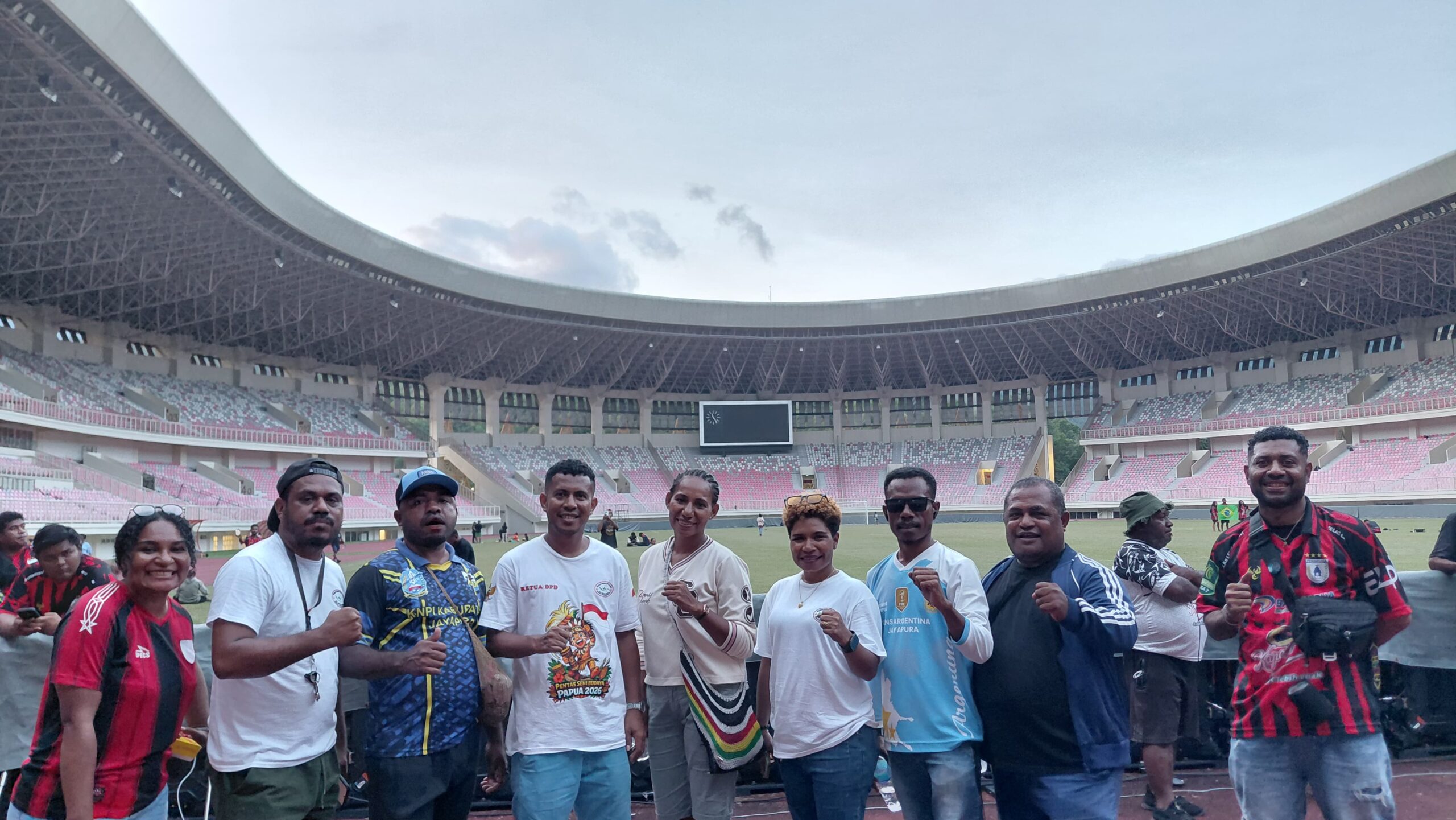
On the morning of May 10, 2026, the atmosphere around Lukas Enembe Stadium felt very different from the chaos that unfolded there three nights earlier.
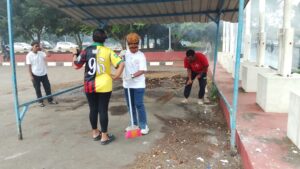
Instead of smoke, shattered glass, and frustrated crowds, hundreds of people arrived carrying brooms, shovels, paint buckets, and trash bags. Some wore office uniforms because they had come directly as civil servants from the Papua provincial government. Others came wearing Persipura jerseys. Members of the Indonesian National Armed Forces (TNI) moved through the stadium area helping collect debris, while former Indonesian national team player Ortizan Solossa quietly joined volunteers cleaning damaged sections of the venue.
The cleanup came after riots erupted on May 8, 2026, following Persipura Jayapura’s 0-1 defeat against Adhyaksa FC in the Liga 2 playoff, a result that ended the club’s hopes of returning to Liga 1. The unrest left parts of the stadium damaged and dozens of vehicles burned, triggering criticism from football authorities and disappointment across Papua.
But by Monday morning, the focus had started to shift.
People were no longer talking only about the riot.
They were talking about repair.
A Governor’s Appeal That Drew a Response
Papua Governor Mathius D. Fakhiri was among the first officials to publicly call for collective action after the riot.
According to statements reported by local media on May 10, Fakhiri invited civil servants from the provincial administration to join a community cleanup around the stadium complex. He said the facility belonged to the people of Papua and should not be left damaged after the unrest.
“We must take care of what we already have,” he said during the cleanup activity, while also urging residents to maintain public sports facilities built for the wider community.
The governor’s message was not delivered in a particularly political tone.
It sounded more personal than that.
He spoke as someone disappointed by what had happened but equally determined not to let the destruction become the final image associated with Papua football.
Cleaning the Stadium, Slowly and Quietly
The damage was still visible.
By midday, several areas of the stadium still bore signs of the riot.
Burn marks remained near parking sections. Broken barriers and scattered trash were visible outside parts of the venue. Volunteers moved carefully through damaged areas collecting metal fragments, plastic debris, and burned material left after the unrest.
Some workers repainted damaged fences while others focused on clearing entrances and walkways.
There was no large ceremony attached to the activity.
Most people simply arrived and started working.
Different Groups, Same Purpose
The most notable aspect was the diverse group of individuals involved.
Civil servants worked beside football supporters. Soldiers carried debris alongside university students and local residents.
Some people spoke while working.
Others stayed quiet.
A volunteer quoted by local reporters said he came because he felt embarrassed after seeing the riot footage circulate nationally on social media.
Another supporter said Persipura had given Papua pride for decades, and damaging the stadium only hurt the club further.
Ortizan Solossa Returns to the Stadium
Among the figures drawing attention during the cleanup was Ortizan Solossa, one of Papua’s most recognized football player names. He is the brother of Boaz Solossa, and they are both legends of the national team football and Persipura players.
People stopped briefly to greet him or ask for photos, but usually he simply continued helping volunteers collect debris and clean sections of the stadium.
For older Persipura supporters, his presence carried emotional meaning.
Ortizan belongs to a generation closely associated with Papua football’s strongest years, when Persipura became one of Indonesia’s most respected clubs and Papuan players earned national recognition for their discipline and talent.
Some residents said seeing former players participate directly in the cleanup reminded them that football in Papua was built through pride and hard work, not anger.
TNI Joins Recovery Effort
Soldiers Help Restore Stadium Area
Personnel from the TNI also joined the cleanup operation around the stadium complex on May 10.
Local reports showed soldiers helping remove damaged materials and assisting volunteers in restoring sections affected during the riot.
Their involvement reflected wider efforts by authorities to stabilize the atmosphere after tensions rose following the playoff defeat.
While security remained present around the area, the mood during the cleanup was calm.
Children were seen walking near the venue again, and some residents stopped simply to watch volunteers work.
Trying to Rebuild Papua Football’s Image
Several local residents interviewed during the activity expressed concern that the riot had damaged Papua’s football reputation nationally.
For years, Papua has been known as one of Indonesia’s strongest football regions, producing players admired across the country.
That is partly why the violence after the Persipura defeat felt especially painful for many people.
The cleanup effort, in a small way, became an attempt to show another side of Papua football culture.
Not the anger from May 8.
But the responsibility that followed afterward.
Persipura Still Holds Deep Emotional Meaning
Even after several difficult seasons, Persipura remains deeply connected to Papuan identity.
The club’s history closely intertwines with moments of regional pride, particularly during years when Papuan players emerged as major figures in Indonesian football.
That emotional connection explains why the defeat against Adhyaksa FC triggered such strong reactions.
But it also explains why so many people later returned to help clean the stadium.
One resident interviewed during the activity said Persipura belongs to Papua “like family.”
“When family makes mistakes, we fix them together,” he said quietly while collecting trash near the outer section of the venue.
Football, Emotion, and Responsibility
Football often creates emotional reactions everywhere in the world.
But local observers in Papua say the sport carries unusual weight there because Persipura has long functioned as more than just a club.
It represents identity, pride, and shared memory.
That is why the riot felt damaging beyond physical destruction alone.
And this is why the cleanup effort also carried symbolic importance.
Not because it erased what happened.
But because it showed many Papuans did not want violence to become the lasting image of their football culture.
Moving Forward After the Riot
As the afternoon ended on May 10, volunteers were still working around the stadium.
The cleanup was far from complete.
Some damaged areas would require repairs beyond simple community work. Authorities are also continuing investigations related to the riot and the destruction that followed the playoff match.
But the atmosphere had changed noticeably.
The anger that dominated the stadium on May 8 had given way to something quieter.
Fatigue, perhaps.
Reflection too.
And underneath it all, there was the sense that many people simply wanted Papua football to recover.
Conclusion
The riot after Persipura’s defeat against Adhyaksa FC left visible scars around Lukas Enembe Stadium.
Burned vehicles, damaged facilities, and national criticism created one of the darkest moments Papua football has faced in recent years.
However, the events that unfolded on May 10 presented a contrasting narrative.
Civil servants cleaned debris before returning to their offices. Soldiers worked beside local residents. Former football stars joined ordinary supporters under the hot Jayapura sun.
No one pretended the riot had not happened.
But many people in Papua appeared determined to show that the violence should not become the only story people remember from that week.