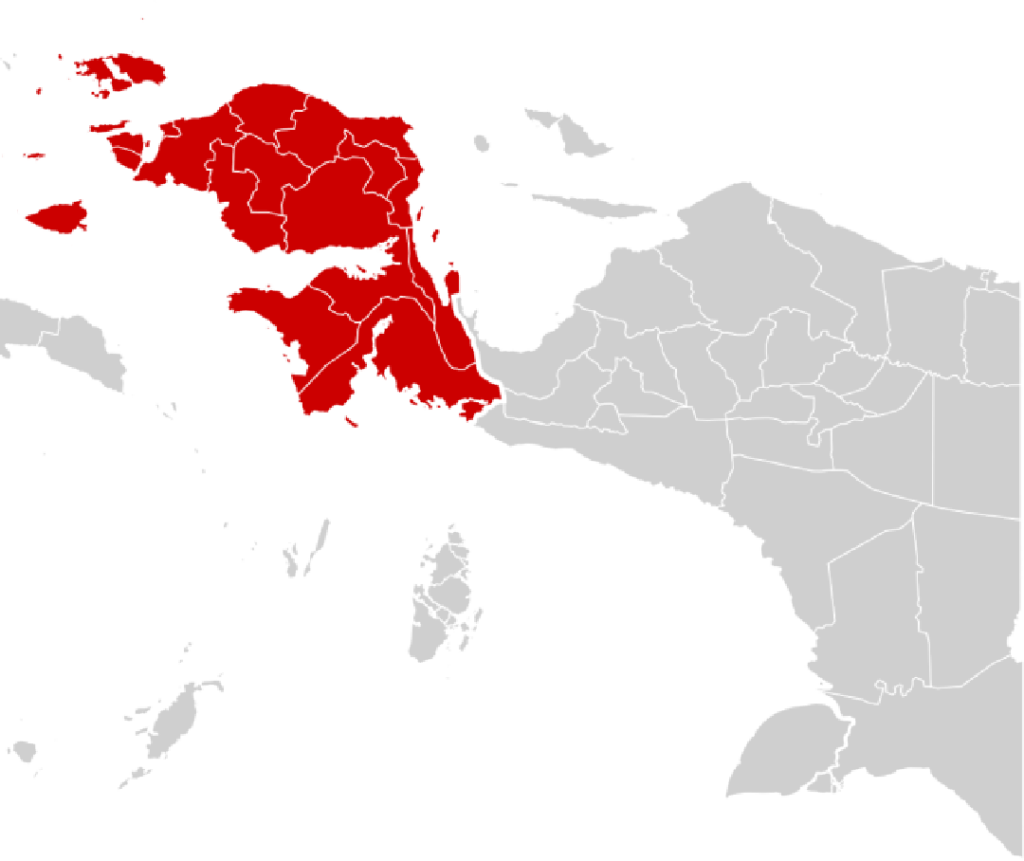
In Papua, football often begins without structure.
It is played on open ground, in villages, in city corners, wherever space allows. There are no formal systems at the start, only repetition and instinct. From that environment, players emerge in ways that are not always predictable.
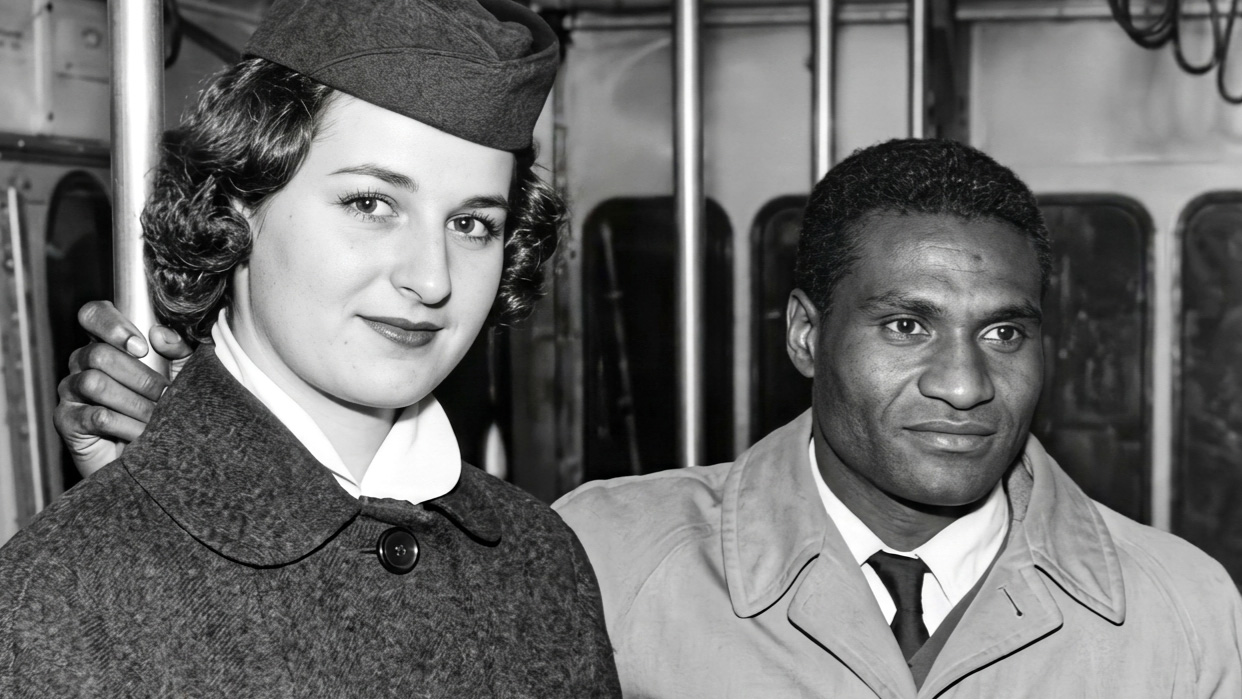
One of them was Daniel Hanasbey.
His name does not always appear in global football conversations, but within the history of Indonesian football, his journey carries a particular weight. He is remembered as one of the first footballers from Papua to step onto European fields, at a time when such a move was almost unheard of.
Growing Up in Jayapura’s Football Culture
Daniel Hanasbey was born in 1939, in Jayapura (Port Numbay), a city where football has long been part of everyday life.
Children grow up with the game.
Not through academies, but through constant play.
Matches happen after school, on weekends, in informal settings that demand endurance and creativity. Players learn by doing, not by instruction.
Hanasbey developed his abilities in this environment.
There was no clear pathway to professional football abroad at the time.
Only local competitions.
And the willingness to keep playing.
A Breakthrough Season in Papua
Before his move abroad, Hanasbey had already made a strong impression locally.
In 1959, he played for a football club known as W.I.K., competing in the Voetbalbond Hollandia en Omstreken, commonly referred to as V.H.O., one of the organized football competitions in Papua during that period.
Playing as an attacking midfielder, Hanasbey stood out.
Over the course of the season, he scored 24 goals in just 16 matches.
For a midfielder, that number was striking.
It reflected not only technical ability but also positioning and instinct in front of goal.
His contribution helped W.I.K secure the V.H.O. championship, marking one of the earliest notable achievements by a Papuan player in an organized league setting.
More Than Statistics
The numbers tell part of the story.
But within the local context, his performance meant something more.
It showed that a player from Papua could dominate in a structured competition, not only in informal matches.
It also created visibility.
Even if limited.
Enough to open the next step.
The Move to Europe
After his success in Papua, Hanasbey moved to the Netherlands, entering a football environment that was very different from where he began.
He joined Hollandia Victoria Combinatie, commonly known as HVC Amersfoort.
At the time, such a move was rare.
For an Indonesian player, it was uncommon.
For a Papuan player, it was even more unusual.
Adapting to a Different Game
In Europe, football followed a different rhythm.
Training was organized.
Tactics were emphasized.
Physical preparation was monitored carefully.
For players coming from informal football environments, the adjustment could be demanding.
Hanasbey had to adapt not only to the style of play but also to the discipline that came with it.
A Quiet but Important Presence
His time in Europe did not come with widespread media attention.
But it carried significance.
He became one of the earliest examples of a Papuan player competing in an international setting.
That alone was enough to shift perception, even if slowly.
Papua’s Enduring Football Talent
Papua has consistently produced footballers with distinctive qualities.
Strong physical presence.
Speed.
Technical ability shaped by constant play.
These traits have become associated with players from the region.
Generations That Followed
After Hanasbey, more players from Papua gained national recognition.
Among them are Boaz Solossa, Ortizan Salossa, Ian Kabes, Erol Iba, Eduard Ivakdalam, and Elie Aiboy.
Each of these players contributed to Indonesian football in different eras.
They brought consistency at club level.
Visibility at the national level.
And they reinforced a pattern that had already begun to take shape.
Papua is not only passionate about football.
It produces players who can compete.
The Challenge of Turning Talent Into Opportunity
Despite the abundance of talent, challenges remain.
Facilities are not always evenly distributed.
Access to structured training varies.
Connections to international football systems are limited.
This creates a gap between potential and opportunity.
Gradual Progress
There has been progress.
Scouting networks have improved.
Recognition of Papua’s football contribution has grown.
Some players now have opportunities beyond Indonesia.
But the process continues to develop.
Internal Link Perspective
Earlier coverage on this platform has explored how football in Papua is closely tied to identity and community life.
Hanasbey’s story fits naturally into that narrative.
It represents an early point in a longer timeline.
A Legacy That Still Matters
Daniel Hanasbey’s career may not be widely documented in modern football archives.
But his significance remains.
Being among the first to move from Papua to Europe carries a different kind of importance.
It creates a reference point.
Something that exists beyond statistics.
Conclusion: A Quiet Beginning With Lasting Impact
The story of Daniel Hanasbey is not defined by headlines.
It is defined by timing.
He emerged at a moment when pathways were limited.
Yet he still found a way forward.
From Jayapura to European football, his journey reflects both individual determination and the deeper reality of Papua as a source of football talent.
Today, young players continue to play on the same kinds of fields.
The same conditions.
But with a slightly different perspective.
Because someone once made that journey before them.
And showed that it could be done.