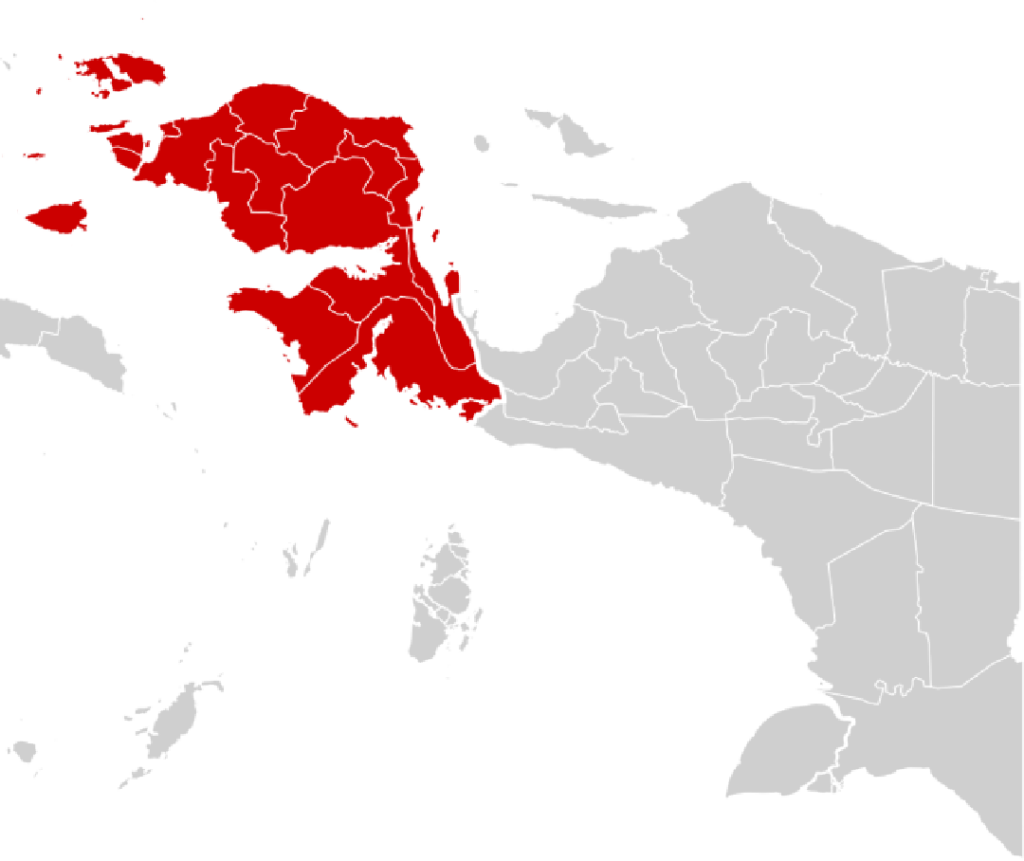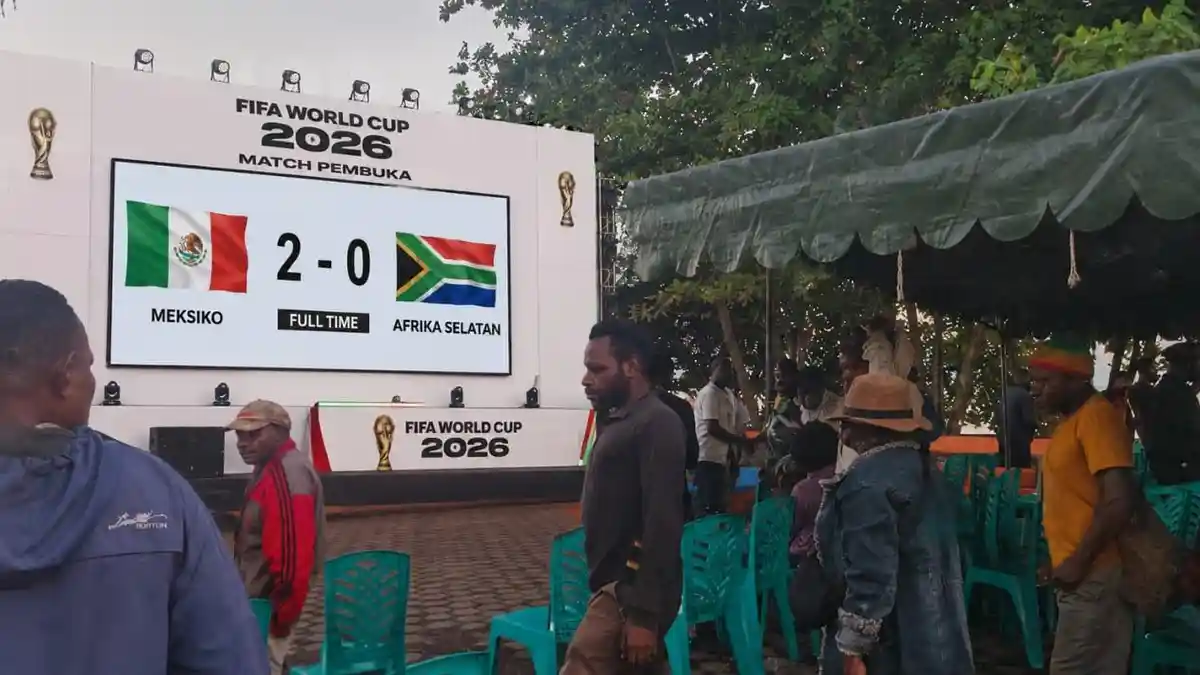
The atmosphere was electric even before the game started.
In the city of Jayapura, walls were painted with World Cup murals. In Nabire football fans gathered on beaches with flags of their favourite national teams. Jerseys and banners were flying off the shelves in Mimika, where residents have been getting ready for weeks of football fever, traders said.
In Papua, thousands of kilometres away from the stadiums of the FIFA World Cup 2026 in North America, the tournament has become more than just a sporting event. It has become a social celebration that unites communities from various ethnic, religious and cultural backgrounds over a common love for football.
But this year the excitement comes with an added layer of pride for many Papuans.
One of the players that draw attention is Forzan Assan Ouedraogo Kogoya, a young footballer with Papuan blood whose family roots are from the Tolikara regency, Papua Pegunungan (Papua Highlands). Football is one of Papua’s most popular sports, and his inclusion in Germany’s World Cup squad has sparked debate across the territory.
For many locals, his journey is bigger than football.
It’s a reminder that Papua-related talent can shine on the world’s biggest sporting stage.
A World Cup Celebration Across Papua
For Papua, the World Cup has always been special.
Football is a part of the region’s everyday life. Whether you’re in the villages on the coast or the towns up in the mountains, you’ll see impromptu football pitches. Matches often take place on dusty fields, open fields, and even in community spaces where children practise for hours long after school is over.
The World Cup comes every four years, and that passion turns into a celebration for everyone.
In Waropen Regency, local people transformed a pastor’s house into what they called an “Argentina Fan Base,” turning it into a national story. The property was decorated with blue-and-white flags, national flags and football memorabilia as fans gathered to watch matches together.
The scene was part of a broader trend across Papua.
Communities adopted various national teams as representations of their football identity, and the carnival mood highlighted friendship rather than rivalry.
Nabire’s Beachfront Football Festival
The clearest example was in Nabire, where fans from different countries mixed in opening celebrations for the tournament.
Supporters from Argentina, Brazil, England, Germany, Spain and other soccer nations celebrated together instead of dividing into rival camps.
The event was as much a cultural festival as it was a sporting one.
Flags fluttered in the sea breeze as families, young people and local residents turned out to watch.
Observers noted that football temporarily erased many social boundaries.
People from opposing teams shared food, chat and excitement as they waited for matches to start.
For many participants, that sense of togetherness became one of the tournament’s most memorable aspects.
Jayapura Turns Into a Football City
The World Cup atmosphere was impossible to miss in Papua’s capital.
Motorcycle convoys flying national flags rode down main roads. Public spaces became gathering points for the supporters. Cafes and restaurants hosted special viewing parties for the swelling crowds.
Football-themed murals also appeared in different parts of the city.
The artwork brought colour to the neighbourhood and captured the tournament’s spirit.
The murals became popular photo and social media spots, especially for the younger residents.
Brazil Remains a Favourite
Support is diffused across many countries, though reports from Jayapura suggested Brazil was still one of the most popular teams among local fans.
Papuan fans have been long supporters of the country’s football tradition, many drawn to the creativity, quickness and attacking nature that Brazilian football had been known for in the past.
Argentina, England, Germany and Spain also drew large followings.
But the range of support seemed to bring communities together rather than split them apart.
In markets, schools, offices and neighbourhoods, football talk became part of daily life.
TVRI Expands Access Across Papua
To recognise the public’s interest in the tournament, Indonesia’s public broadcaster, the Television of the Republic of Indonesia (TVRI), extended its information and coverage throughout Papua.
TVRI Papua held special activities related to the World Cup and invited local media to participate in order to support communities to stay connected to the event.
Officials said it was important to make World Cup information accessible to audiences across Papua, including those in remote areas.
Meanwhile, TVRI Papua Barat has been striving to increase the reach of broadcasts in areas that were traditionally considered telecommunications or broadcast blind spots.
It’s a piece of a larger effort to make sure citizens everywhere can enjoy the world’s big international events.
In many remote communities in Papua, TV remains one of the most important sources of information and entertainment.
Football as a Shared Experience
Media observers say sporting events are often moments of national and community connection.
The World Cup in particular creates shared experiences that transcend social and geographic boundaries.
Whether they meet in city cafes or village community halls, they are part of the same global event.
That sense of connection goes a long way to explaining why broadcasters attach such importance to increasing coverage during big tournaments.
PLN Supports Reliable Electricity During the Tournament
The other key ingredient behind the thrill of a match broadcast? Electricity.
Reliable power supply is particularly important in international sporting events, which are watched by large audiences.
Many Papuans across the province are following matches via television broadcasts, digital streaming platforms and public viewing locations.
Thus, the State Electricity Company (PLN) has a very important supporting role during the tournament period.
With a steady electricity supply, homes, businesses and community gathering spots can continue to enjoy broadcasts uninterrupted.
Reliable electricity also supports economic opportunities generated by the event for cafes, restaurants and small businesses that benefit from increased customer activity during World Cup matches.
A Boost for Local Businesses
The World Cup isn’t just entertainment.
“Small businesses in Papua have experienced growth in their activities related to the enthusiasm of football.
In Mimika, the demand for flags and merchandise was up as supporters were buying national team flags, jerseys and accessories.
Some traders said they made millions of rupiah during the early phases of the tournament.
In Nabire similar trends were observed, with merchandise associated with the top football nations becoming especially popular.
The World Cup is a temporary but meaningful economic boost for local entrepreneurs.
The phenomenon shows how global sporting events can open opportunities even in parts of the world far from the host venues.
Football Creates Community Economies
Economists tout big sporting events as catalysts for local economic activity.
Restaurants are open late.
Merchandise sales are up.
Increased demand for transportation services.
More people come to public gathering places.
In the short term, these activities circulate money locally and support small businesses.
In Papua many traders welcomed the extra income that football enthusiasm generated.
The Pride of a Papuan Connection
Of all the stories to emerge from the World Cup, few have captured the imagination in Papua like that of Forzan Assan Ouedraogo Kogoya.
The young midfielder, who comes from Tolikara, made it into Germany’s World Cup squad after impressing in European football.
Papuan football fans who had closely followed his progress welcomed his inclusion with enthusiasm.
On the international stage he plays for Germany, but many locals see his win as a symbol of the global potential of Papuan heritage.
A Symbol for Young Athletes
Papua has long been acknowledged as one of the richest sources of sporting talent in Indonesia.
They have been successful at national and international levels, including the footballers, runners, weightlifters and athletes of the region.
Ouedraogo’s performance on the biggest stage in football is an inspiration for the younger generation.
His story is a testament to how talent, hard work and the right opportunities can propel individuals into the highest echelons of professional sport.
There are many local coaches who hope such examples will inspire more kids to follow their sporting dreams.
Football and Papua’s Identity
Papua’s World Cup celebrations reveal an important truth.
Football is a special part of the social and cultural life of the region.
The sport brings people together, creates economic opportunities and is a platform for collective expression.
Football remains a part of social life, whether it’s murals in Jayapura, beach gatherings in Nabire, merchandising in Mimika, or support for players with Papuan roots.
The World Cup just ratchets that up to a global level.
Conclusion
As the FIFA World Cup 2026 unfolds, Papua has made a significant impact on the tournament. Communities around the region have turned public spaces into gathering points, businesses have got a boost, and broadcasters and public institutions have sought to make the event widely available.
Further pride has come from the rise of Forzan Assan Ouedraogo Kogoya to Germany’s World Cup squad – a reminder to many Papuans that talent associated with their homeland can rise to the highest echelons of international sport. All of these developments prove that football continues to be a unifying force in communities, an inspiration for young people and a bridge to social cohesion across Papua.