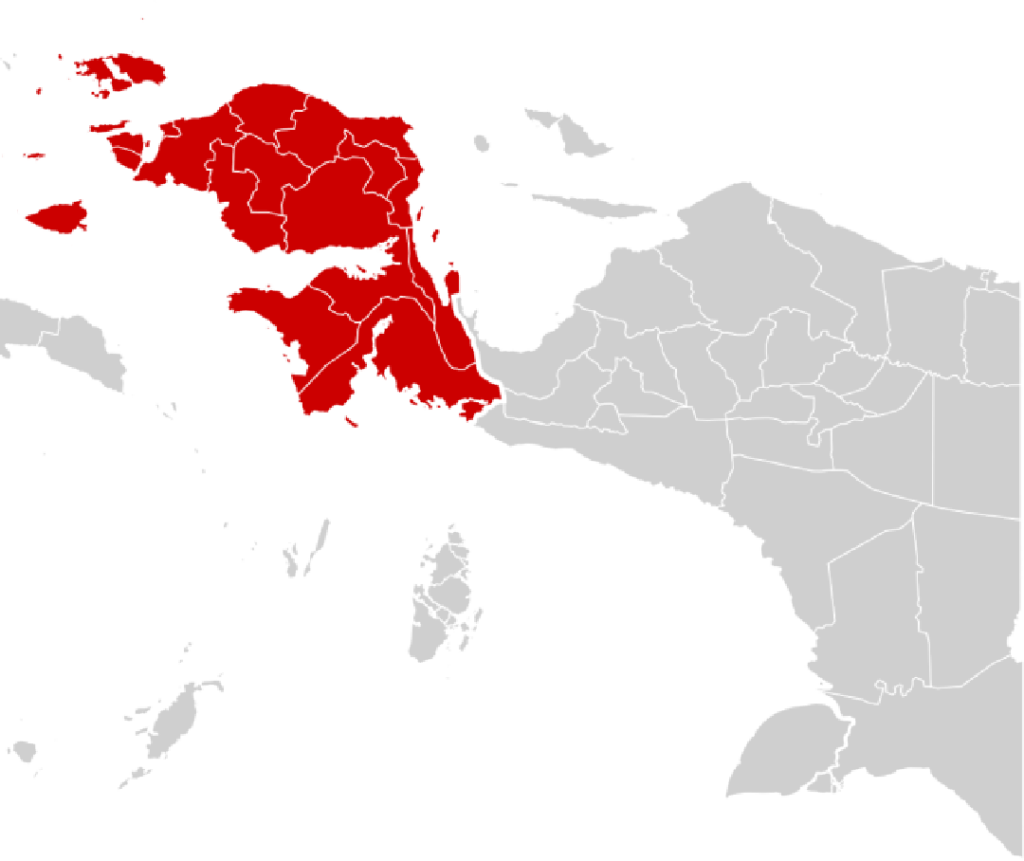
In the cool highlands and swampy lowlands of Papua Tengah (Central Papua) Province, there aren’t always fences or concrete pillars to show where districts end and begin. Ancestral memory, rivers, hunting grounds, and stories passed down from generation to generation often define them. When those ideas don’t agree, things can get tense very quickly. That is what happened in Kapiraya earlier this month, when members of the Mee and Kamoro communities fought, burning down buildings and breaking trust.
Three regencies in Papua Tengah are Dogiay, Deiyai and Mimika have agreed to work together to keep the peace at the border so that the unrest doesn’t happen again. Local leaders are calling the move, which was announced in mid-February 2026, a turning point. Authorities want structured coordination, dialogue, and mediation instead of letting arguments over administrative boundaries turn into community conflict.
After the Kapiraya incident on February 12, 2026, regency heads, provincial officials, community leaders, and security forces met several times to talk about the decision.
The Unrest in Kapiraya
On February 12, 2026, things got tense in Kapiraya. The disagreement was about claims that overlapped and administrative boundaries that affected areas that are between regencies in Papua Tengah Province.
Local news reports say that at least 20 buildings were set on fire during the riots. Residents left for a short time, teachers were pulled out for safety, and security forces were sent in to stop things from getting worse.
Some people said that the conflict was politically motivated, but several community leaders made it clear that the main issue was a border dispute. They denied claims of political interference and said that misunderstandings about where the borders were had made things worse.
Provincial officials quickly took notice of the event. Many people were worried about the violence not only because it damaged property, but also because it could make the Mee and Kamoro communities even more distrustful of each other. These two groups have long histories and cultural pride.
A Coordinated Response
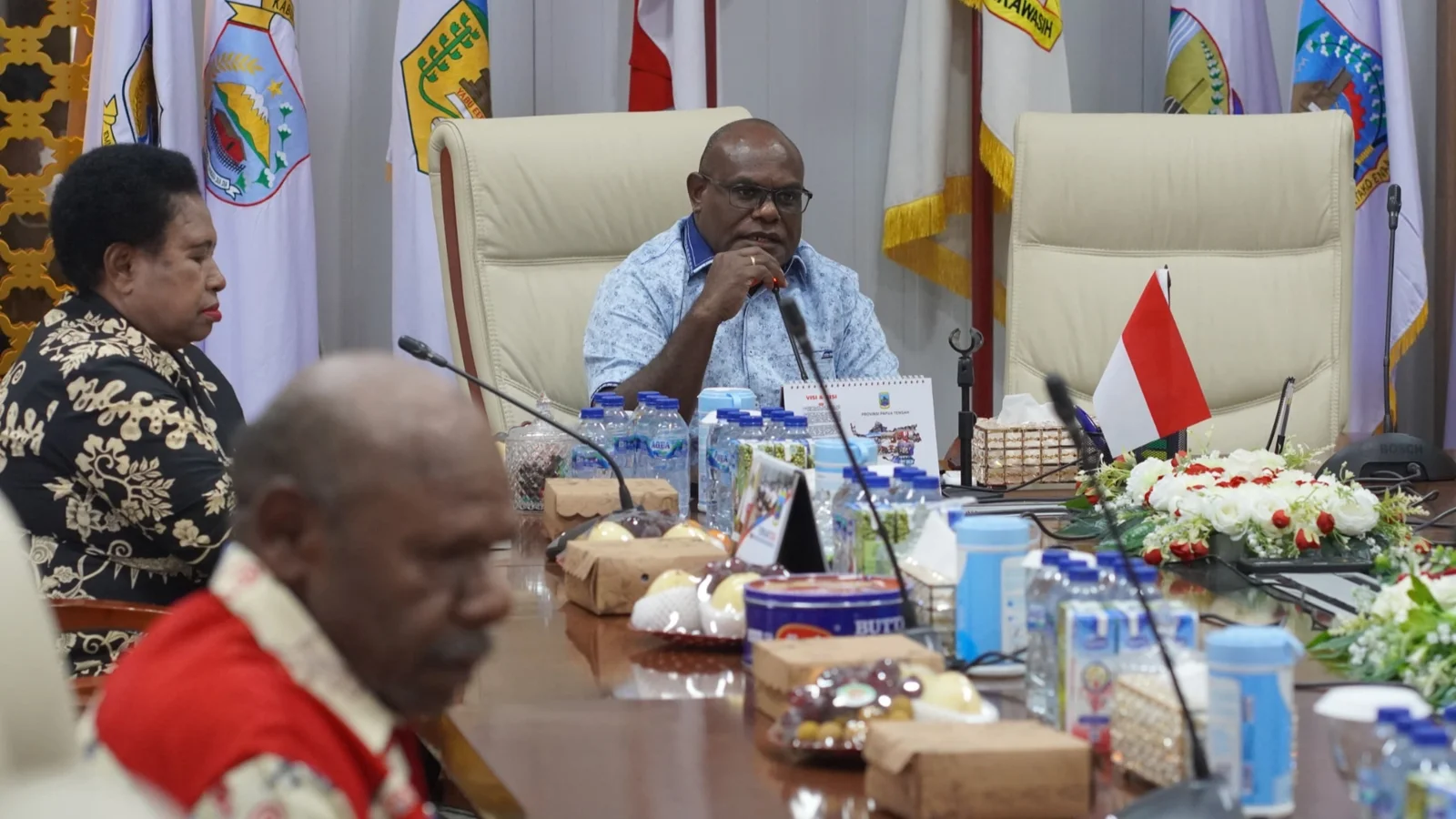
On February 14 and 15, 2026, leaders from the provinces and regencies met to talk about how to calm things down and stop more fighting. The Governor of Papua Tengah, Meki Fritz Nawipa laid out three important steps to deal with the Kapiraya conflict. These included stabilizing security right away, having structured conversations between traditional leaders, and coordinating administrative efforts to make sure everyone knew where the boundaries were.
A real agreement came out of these talks. Three regencies in Papua Tengah agreed to set up a joint border handling team to handle disputes and calm tensions before they get out of hand.
There will be members from each regency’s government, traditional leaders, and security officials on the team. Its job is to look into disputed border areas, help communities talk to each other, and make sure that administrative decisions are made clear and open.
Structure and Leadership
The local government in Deiyai Regency acted quickly. The Regent of Deiyai chose Ernes Kotouki to be in charge of the conflict handling team at the regency level on February 15, 2026. The appointment showed that the Kapiraya fallout needed to be dealt with quickly and seriously.
It is thought that respected local people need to be involved. In Papua, traditional authority is important. People can get angry when decisions are made without talking to them first. The governments want to rebuild trust by getting tribal leaders and other respected members of the community involved.
The joint team is supposed to work closely with the provincial government to make sure that administrative boundaries are clear based on legal documents and past agreements.
Voices from the Ground
In the days after the riots, students and groups from civil society also spoke out. On February 15, 2026, student groups asked for a peaceful solution and conversation, telling leaders to put reconciliation ahead of confrontation.
Teachers who had been pulled out of affected areas for a short time said they hoped things would get back to normal soon. The conflict messed up their classrooms and their sense of safety, which is important for learning.
A teacher who asked to remain anonymous said that the uncertainty was scary. When people heard that buildings were being burned, many were afraid of more violence. Some people felt better knowing that the government was taking steps to stop the problem by forming a structured border team.
Community leaders in Mimika Regency also publicly denied that political interference was to blame for the conflict. They said again that the disagreement was about clarifying territory and not outside interference.
The Importance of Clear Borders
In Papua, administrative boundaries are often set by a mix of old treaties, natural features, and government orders. But in places where maps don’t always match up with what people think they know, problems can happen.
When lines aren’t clear, there are questions about how to manage resources, deliver services, and represent people politically. These kinds of arguments can make tensions based on identity worse, especially if people feel like their ancestral land is at stake.
So, making a border handling team is more than just a bureaucratic step. It is a recognition that peace needs clear communication.
The three regencies want to stop misunderstandings from turning into violence by setting up a system just for settling disputes.
Support from the Province
The Governor of Papua Tengah has spoken out in favor of the plan. In statements after the Kapiraya unrest, he stressed that peace and stability are necessary for progress.
He talked about three main parts of dealing with the conflict. First, security right away to stop more violence. Second, community leaders need to talk to each other to build trust again. Third, an administrative review of the disputed boundary.
Members of the Papua Tengah Provincial House of Representatives also said they liked how proactive the governor was.
The Kapiraya incident was a reminder to provincial leaders that local problems can quickly spread to larger areas if they aren’t dealt with quickly.
Effects on the Society and Economy
The unrest in Kapiraya made everyday life difficult. Markets were closed for a short time. Schools stopped doing things. Families were worried about their safety.
Stability has a big effect on the economy in rural Papua. Trade slows down when there is more tension. Farmers don’t want to travel. Transportation is no longer certain.
Regency leaders want to restore trust and make sure that development programs can continue without interruption by forming the joint border team.
Putting Reconciliation First
In Papua, elders often help people talk and hold traditional ceremonies as part of the reconciliation process. The joint team is expected to include these customs in its work.
Communities can get past their immediate anger and focus on what they have in common through customary reconciliation processes. Leaders from both the Mee and Kamoro communities have said they want to find a peaceful solution.
The involvement of students and groups from civil society makes the reconciliation effort even stronger. Younger generations often connect old ways of doing things with new ways of doing things.
Stopping Conflict from Happening Again
Setting up a joint border handling team doesn’t mean that problems won’t happen again. But it does set up a way to stop things from happening.
Instead of waiting until violence breaks out, authorities can now deal with complaints early on. Being open about boundary decisions can help stop rumors and doubt.
Security forces are still on standby in sensitive areas, but the focus has changed from using force to talking.
A Duty to Share
The Kapiraya riots were painful, but they also made people think. Leaders agreed that clear administration needs to go hand in hand with community involvement.
Peace is not an idea for people who live in Papua Tengah. It has an impact on whether kids go to school, whether merchants set up stalls, and whether families feel safe at night.
The fact that the three regencies agreed shows that they understand that peace needs cooperation across administrative lines.
Looking Ahead
The new border handling team starts working in February 2026. There are meetings planned. The paperwork is looked over. There are plans for community meetings.
People in Kapiraya are cautiously hopeful. You can rebuild buildings that have been burned down. It takes longer to rebuild trust after it has been broken. But structured dialogue gives us a way to move forward.
The regencies working together show that they are serious about stopping the kind of violence that hurt Kapiraya earlier this month.
Papua Tengah gets the message loud and clear. Administrative regions may have lines that separate them, but communities should not be divided by them.
Leaders want to make sure that disagreements over lines on a map never again turn into fires on the ground by working together, being clear, and talking to each other.