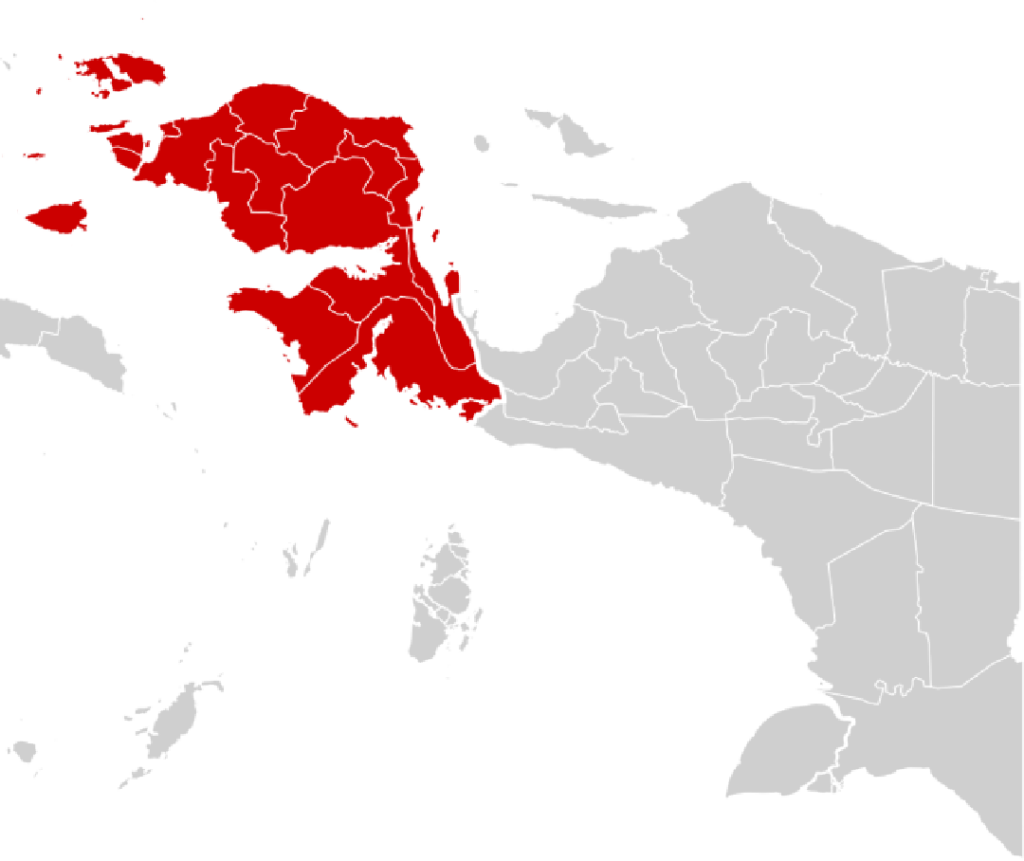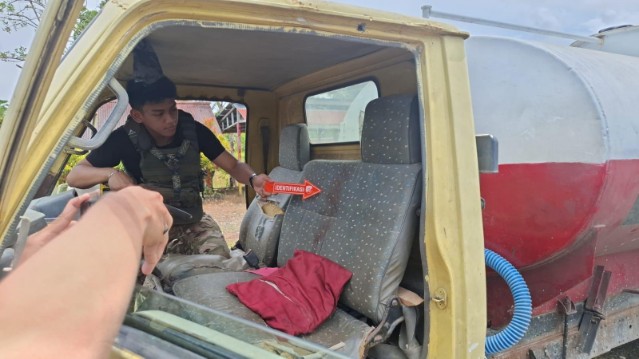
In the highlands of Yahukimo Regency, Papua Pegunungan Province, the sound of gunfire once again broke the fragile peace that residents had hoped would come after weeks of increased security operations.
On February 12, 2026, an armed attack thought to have been carried out by members of TPNPB OPM, an armed separatist group that has repeatedly targeted both security personnel and civilians in the region, killed a civilian driver who was bringing clean water to local communities.
The victim, a driver of a clean water tanker, was attacked while making his usual delivery in Dekai, the capital of Yahukimo. Several local and national news sources say that the attackers started shooting without warning. The driver was shot and taken to the hospital right away for emergency care. After that, he was sent to Jayapura for more medical care.
The attack is part of a worrying trend of violence in Yahukimo in early 2026, which included the shooting of a pickup truck driver and the death of a school worker in separate events in Dekai.
People who spoke after the event said that the community was once again full of fear.
A Normal Delivery Turned Violent
The hurt man was not a government employee or a security guard. As a civilian, he was doing a simple public service by bringing clean water to homes and businesses in Dekai. In many highland areas of Papua, clean water distribution is still a very important service because there aren’t enough roads and buildings.
Witnesses said that the tanker truck was driving down a local road when gunfire broke out. The driver tried to steer away from where the attack came from, but bullets hit the car and hurt him.
Satgas Damai Cartenz’s security forces acted quickly to secure the area and get the victim out. He was first treated nearby, and then he was flown to Jayapura for more advanced medical care.
Authorities quickly started a search in nearby forests where the people who were thought to be responsible had fled.
The attack was all too familiar for many people who lived there.
A Number of Civilian Targets
The driver of the water tanker was not shot in a vacuum. Yahukimo had already been the target of two other violent attacks on civilians in the weeks before this one.
In late January 2026, a driver of a pickup truck was shot while driving along a quiet road with goods in the back. The driver lived, but they were hurt badly enough to need to go to the hospital.
A little while later, a carpenter who worked at a school in Dekai was shot and killed. The worker was making furniture for schools when gunmen who were not known to him attacked. His death shocked teachers and families all over the district.
There is one thing that all of these events have in common. The victims didn’t have any weapons. They weren’t fighting. They were just regular people doing their daily tasks.
Residents are even more scared that civilian infrastructure and public service providers are becoming targets because these attacks keep happening.
Suspected Revenge After Security Operations
The Koops Habema forces of the Indonesian military announced in late January 2026 that they had successfully secured bases used by former armed groups in Yahukimo. This led to a rise in violence.
Security officials said that operations had broken up armed groups and made militants leave a number of strongholds in wooded areas.
Local experts and analysts think that the most recent attacks may have been revenge for the security operations that came before them.
Even though officials haven’t officially confirmed the motive, the pattern suggests that the goal is to create instability and send a message after losing territory.
But for civilians, the motive doesn’t help much. What matters is that life has become less predictable on a daily basis.
Effects on Public Services
The shooting of a water truck driver has effects that go beyond hurting one person. In Yahukimo, permanent pipelines don’t always make sure that people can get clean water. Mobile tanker deliveries fill in important gaps.
When these kinds of services stop working, whole neighborhoods are affected. A steady supply of water is important for schools, clinics, and homes.
A resident of Dekai said that the attack made drivers afraid to keep making deliveries without more security. “We need water.” “But drivers also need safety,” he said in a low voice.
The ripple effect on the economy is also worrying. If transport companies don’t want to work in some areas, it could affect food distribution, building projects, and even basic business.
Fear and Strength in Dekai
Yahukimo Regency’s Dekai is a small but important center. It has schools, markets, and government offices that serve the nearby districts. But because it is so far away from other places, security problems are harder to solve.
People who live there say that the town goes from normal to tense all of a sudden. On Sundays, church bells ring, kids go to school, and traders set up stalls. But the sound of gunfire has become a part of life in the last few months that no one wants.
It was said that parents kept their kids inside after the tanker driver was shot. There was less activity in the market. People started talking about safety and doubt.
There is strength in fear, though. Leaders in the community have asked people to stay calm and work with the police. Religious leaders have asked for peace and conversation.
What the Government Did
After the attack, security forces stepped up their patrols and searches in Yahukimo. Satgas Damai Cartenz said that teams were sent out to find the people who were thought to be behind the attacks and stop any more from happening.
Officials stressed that keeping civilians safe is still a top priority. They told people to report any strange movements and stay away from remote areas for a while.
At the national level, officials said again that they were committed to keeping Papua’s highland areas stable and stopping armed groups from attacking public infrastructure.
Security experts say that protecting civilian services is important for both public safety and long-term growth.
The Bigger Picture of Violence in Yahukimo
Over the years, Yahukimo has had security problems from time to time. Its mountains and thick forests make it hard for law enforcement to do their jobs.
But observers are worried about the change that involves targeting civilians who are not involved in the fighting. When drivers, carpenters, and service workers are hurt, the social contract starts to break down.
Repeated attacks could make people less likely to invest in infrastructure and public services. Teachers and health workers might not want to work in districts that are very dangerous. Companies might think twice about growing.
For people who live there, these kinds of problems have an immediate effect on their daily lives.
Human Cost Beyond Headlines
There is a family behind every headline. The water tanker’s driver, who was hurt, has family members waiting in Jayapura. The pickup driver who was shot is now facing medical bills and lost income. The family of the school worker who was killed is still grieving.
These stories show that violence in Papua is real and not just a story. It has a direct effect on homes.
Local young people who want steady jobs and an education watch events unfold with worry. Some people are upset that conflict gets in the way of progress.
Community elders stress that peace would help development efforts grow more fully.
Calls for Peace and Talking
Many community leaders want parallel efforts to focus on dialogue and reconciliation while security operations are still going on.
They say that trust-building and including people in the economy are just as important as enforcement for long-term peace.
The goal of development programs in Yahukimo is to make roads better, make it easier for people to get an education, and make healthcare facilities better. Ongoing violence could put these efforts at risk.
People who live there often say they want simple things, like safe roads, working schools, and a reliable water supply.
The Importance of Protecting Civilians
International humanitarian principles stress the need to protect civilians during times of war. No matter what the political story is, attacking unarmed people goes against basic rules.
The attack on the driver of the water tanker makes people even more worried about how unsafe civilian workers are in Papua’s highlands.
It is very important to keep the community stable by making sure that important services like water delivery, food transport, and education can get through safely.
Looking Ahead
While the injured driver gets care in Jayapura, security operations are still going on in Yahukimo. Authorities are still on the lookout because they know that things could get worse if they aren’t careful.
The events of February 2026 show how easily peace can break down in some parts of Papua.
People in Dekai and nearby villages hope that this most recent act of violence will not be followed by more.
Families stayed inside during the quiet hours after the shooting, when dusk fell over the hills of Yahukimo. Some people prayed. Some people listened for sounds in the distance.
Life goes on, but with care.
Conclusion
The shooting of a civilian water tanker driver in Yahukimo on February 12, 2026, is more than just another security incident. It shows a pattern of violence that has recently targeted people who are not involved in the fighting, such as a pickup driver and a school worker.
The fact that TPNPB OPM is suspected of being involved and the timing after military operations in late January point to a complicated and unstable situation.
But there is a simple truth that goes beyond strategic analysis. People who aren’t in the military are the ones who suffer the most from instability.
For the people of Yahukimo, the way forward depends on making things safe again, making sure that public services keep running, and rebuilding trust in everyday life.
The sound of gunfire is a reminder that peace in Papua’s highlands is still a work in progress.