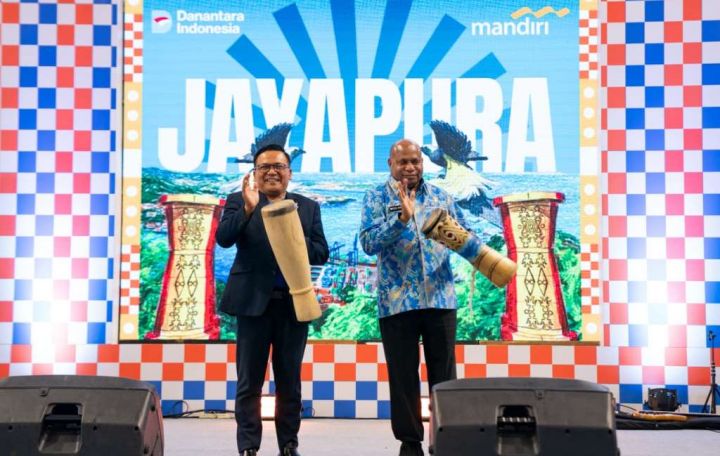
As November drew to a close, a fresh sense of optimism swept across Jayapura. From 27 to 30 November 2025, the city welcomed one of the most anticipated economic and cultural events of the year: Livin’ Fest 2025, Bank Mandiri’s signature festival designed to accelerate the growth of MSMEs and strengthen the digital ecosystem in Papua. For four days, GOR Cenderawasih transformed into a vibrant arena of entrepreneurship, creativity, and financial innovation, becoming a meeting point for government officials, MSME actors, creative workers, and thousands of residents eager to witness Papua’s evolving economic landscape. This was not merely another corporate event—it was a milestone that symbolized Papua’s readiness to take part in Indonesia’s broader digital transformation.
The significance of choosing Jayapura as a host city was not lost on the attendees. Papua, often portrayed through the lens of geographical challenges and infrastructure limitations, showcased a different narrative: one brimming with potential, resilience, and cultural richness. Livin’ Fest brought with it a sense of inclusion—an affirmation that Papua is not just a participant but an essential stakeholder in Indonesia’s economic future.
The Context: Why Digital Acceleration Matters for Papua
Over the past decade, Papua has made gradual progress in MSME development, yet many entrepreneurs still operate in traditional structures that rely heavily on cash transactions, limited market connectivity, and minimal business training. These constraints hinder their ability to scale, diversify, or penetrate wider markets. Recognizing this, the Indonesian government and financial institutions have pushed for greater digital inclusion in eastern Indonesia, seeing digitalization as the key to unlocking long-term growth.
Livin’ Fest 2025 emerged precisely within this context. Focusing on “Sinergi Majukan Negeri (Synergy to Advance the Nation),” the festival embraced the idea that synergy—between MSMEs, financial institutions, government agencies, and communities—is crucial to lifting Papua’s economy. Governor Mathius Fakhiri emphasized repeatedly that for Papua to move forward, it must bridge the digital divide and empower entrepreneurs with tools that allow them to compete beyond local boundaries. Livin’ Fest thus arrived as a practical intervention: a hands-on showcase of what digital transformation can look like when implemented directly in community spaces rather than confined to policy documents.
What made the festival even more relevant was the growing national push for non-cash transactions and digital banking ecosystems. By highlighting the Livin’ by Mandiri app and its integrated services, the event encouraged MSMEs—from small market vendors to emerging creative brands—to embrace digital payments, online promotions, and financial management tools. For many, this was their first exposure to the digital economy in a structured, supportive environment.
A Festival That Blends Commerce, Culture, and Technology
Stepping into GOR Cenderawasih during Livin’ Fest felt like entering a crossroads of innovation and tradition. The venue buzzed with energy as more than a hundred MSMEs filled the halls with colorful displays of local products: aromatic Papuan coffee, sago-based dishes, smoked fish, hand-carved ornaments, natural oils, woven noken bags, contemporary fashion items, and digital artwork created by young designers. The blend of old and new was striking—traditional crafts placed alongside QRIS payment stands, and indigenous motifs presented through modern fashion concepts.
The festival featured several interconnected zones that captured the diversity of Papua’s economic potential. The MSME and Creative Industry Pavilion became the primary attraction, where entrepreneurs showcased their best products while receiving assistance on branding, marketing, and packaging. The Digital Ecosystem Corner allowed visitors to explore Mandiri’s financial solutions, experiment with the Livin’ app, and consult with banking representatives about microcredit opportunities tailored to small businesses. Meanwhile, the Public Service Hub brought government services directly to the community. Visitors could renew their driving licenses, update administrative documents, or access information on provincial programs—all without leaving the festival grounds.
What set Livin’ Fest apart was its ability to merge economic empowerment with entertainment. Concerts featuring Papuan musicians, cultural dance performances, fashion shows, talk shows, and children’s activities created a community-centered atmosphere that drew in families and youth. This approach helped demystify digital banking, presenting it not as a complicated system but as an accessible and supportive tool integrated into daily life. As one visitor remarked, Livin’ Fest felt “like a big celebration where business, culture, and modern life meet.”
Honoring the Heart of Local Commerce: The Inclusion of Mama-Mama Papua
One of the defining features of Livin’ Fest 2025 was the deliberate inclusion of mama-mama Papua, the traditional women traders who play a vital role in sustaining community economies. Their presence became a strong symbol of the festival’s commitment to inclusive development. These women, known for selling vegetables, tubers, smoked fish, betel nut, and woven crafts, often operate with minimal financial access and rely on daily cash transactions that limit long-term growth.
Responding to the governor’s request, Bank Mandiri ensured that mama-mama Papua were given booth space, training sessions, and opportunities to promote their products to a wider audience. Many of them experienced their first encounter with digital financial tools during the festival—learning how to accept QRIS payments, open savings accounts, and manage their finances using simple digital interfaces. For these women, Livin’ Fest was not just a commercial opportunity; it was a step toward financial confidence and economic independence.
The impact of their participation went beyond the festival. Visitors from other regions who attended or watched online livestreams expressed admiration for the authenticity and resilience of Mama-Mama Papua. Their crafts and culinary products gained visibility, potentially opening doors for future collaborations, tourism-driven sales, and broader recognition of their economic role.
Bank Mandiri’s Vision: Building a Sustainable Digital Ecosystem for Papua
While Livin’ Fest unfolded as a colorful and dynamic celebration, its strategic purpose was clear: Bank Mandiri is positioning itself as a long-term development partner in Papua. Rather than treating the festival as a one-time event, the bank emphasized its commitment to creating a sustainable digital ecosystem that connects entrepreneurs, consumers, government agencies, and financial platforms.
This vision is built on several pillars:
- Financial Inclusion: Ensuring that MSMEs—including informal traders—gain access to savings accounts, microcredit, and financial literacy training.
- Digital Empowerment: Promoting the usage of QRIS, Livin’ PayLater, digital loans, and e-commerce integration.
- Creative Industry Support: Helping designers, artists, and cultural entrepreneurs promote their products to national and global audiences.
- Public-Service Collaboration: Hosting integrated government services to reduce administrative burdens and streamline economic participation.
- Infrastructure Strengthening: Encouraging partnerships to improve digital access, internet connectivity, and financial infrastructure in rural areas.
Through Livin’ Fest, Bank Mandiri showcased a model where banking services function not only as financial tools but also as catalysts for wider socio-economic transformation. It was an example of how corporate initiatives can align with provincial development goals to generate measurable community benefits.
Culture as a Competitive Advantage in the Digital Market
One of the festival’s strongest narratives was the seamless integration of culture into digital transformation. Papua’s uniqueness—its indigenous artistry, rich culinary heritage, and vibrant storytelling traditions—emerged as a strategic asset in building competitive MSME products. Rather than diluting cultural identity, digital tools amplified it.
A young entrepreneur selling eco-friendly Papuan jewelry stated that digital payments and online visibility allowed her to connect with buyers in Jakarta, Makassar, and even abroad. Meanwhile, digital artists demonstrated how indigenous motifs could be reinterpreted through modern design platforms, giving Papua’s cultural iconography new commercial appeal. Livin’ Fest illustrated that when tradition and technology intersect, new forms of innovation flourish.
Beyond the Celebration: Challenges That Must Still Be Addressed
Despite the positive momentum generated by Livin’ Fest, Papua continues to face substantial challenges that require long-term solutions. Digital literacy remains uneven, especially in remote areas where access to training and technology is limited. Internet connectivity disruptions still pose obstacles for consistent digital adoption. Additionally, many MSMEs need ongoing mentorship to strengthen bookkeeping, quality control, branding, and product diversification.
Another challenge lies in logistics. Papua’s geographical landscape often makes transportation costly and time-consuming, affecting the ability of MSMEs to scale their production or deliver goods quickly to national markets. Without improvements in supply chain infrastructure, the transition to the digital economy will face natural limitations. Livin’ Fest offered a powerful start, but sustained investment and coordination between government, the private sector, and communities are essential to maintain the momentum.
The Lasting Legacy of Livin’ Fest 2025
When the final day of Livin’ Fest 2025 came to an end, the energy within GOR Cenderawasih lingered long after the booths closed and the stages fell silent. Entrepreneurs returned home with new knowledge, expanded networks, and a clearer sense of how digital tools can elevate their livelihoods. Papa-mama traders left with a newfound confidence that their products, long rooted in local tradition, could evolve into competitive offerings within Indonesia’s expanding digital marketplace.
The festival’s most important contribution may not be the sales generated or the number of visitors recorded, but the inspiration it sparked. It offered a glimpse of a future in which Papua is not merely adapting to digital transformation but actively shaping it—driven by local talent, cultural identity, and strategic collaboration.
Livin’ Fest 2025 ultimately affirmed a truth often overlooked in national conversations: Papua has the creativity, resilience, and economic potential needed to thrive in the digital era. What it requires is continued partnership, consistent investment, and a shared belief that progress must reach every corner of the archipelago. With the right support, the seeds planted during Livin’ Fest can grow into a robust ecosystem that transforms not just Jayapura, but all of Papua.
Conclusion
The implementation of Livin’ Fest 2025 in Jayapura represents far more than a celebratory event—it marks a pivotal step in Papua’s long-term transformation toward a digitally empowered and economically inclusive future. Over four days, the festival becomes a living laboratory of innovation, cultural expression, and business acceleration, bringing together MSMEs, creative industries, local communities, and financial institutions under one collaborative ecosystem. Through digital onboarding, capacity-building programs, and market-expansion opportunities, Livin’ Fest strengthens the foundation for Papua’s economic resilience while nurturing new entrepreneurial confidence among local business actors, including mama-mama Papua. The festival’s success reflects growing momentum toward digital adoption across eastern Indonesia, serving as a model for how strategic partnerships can unlock regional economic potential. As digital infrastructure continues to expand and financial services become increasingly accessible, Livin’ Fest 2025 stands as a milestone in Papua’s journey toward an inclusive, competitive, and future-ready digital economy.