
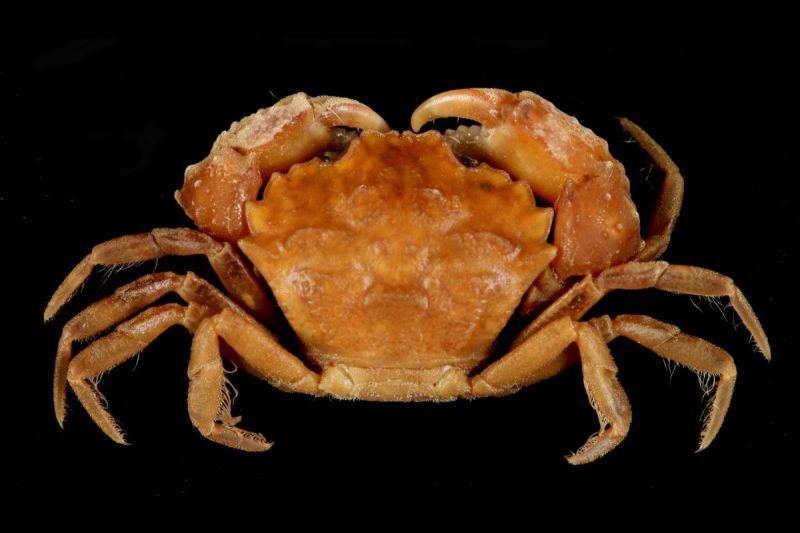
A small crab measuring just around 10 millimetres has added a significant entry to the scientific record of Papua’s extraordinary biodiversity. Identified as Parapanope Gesangi, the newly recognised species was discovered through environmental monitoring conducted by PT Freeport Indonesia (PTFI) in Mimika Regency, Papua Tengah (Central Papua) Province. Its distinctive feature is a series of striped patterns along its legs, setting it apart from other known species.
The discovery is the latest result of a long-running environmental research programme involving PTFI’s Environmental team and Indonesia’s marine research institutions. It also adds to earlier findings of two previously unidentified crab species, Typhlocarcinops Robustus and Typhlocarcinops Raouli, in the Ajkwa River estuary, within PTFI’s operational area in Mimika.
For Papua, the significance goes beyond the identification of another small marine animal. The findings offer further scientific documentation of ecosystems stretching from coastal wetlands and mangrove forests to the island’s mountainous interior. They also demonstrate how sustained environmental observation and cooperation with scientific institutions can contribute to understanding and documenting biodiversity in regions that remain difficult to access.
Gesang Setyadi, PTFI’s Vice President of Environmental Affairs, said the discovery enriches scientific records of Papua’s biodiversity and demonstrates the contribution of the company’s environmental research.
“This discovery enriches the record of biodiversity in Papua while also demonstrating the contribution of PTFI’s environmental research,” he said, as quoted by ANTARA on November 27, 2026.
The finding places Mimika once again on the map of biodiversity research, highlighting the scientific importance of the region’s coastal and terrestrial ecosystems.
A Discovery Built on Nearly Three Decades of Monitoring
The identification of Parapanope Gesangi was not the result of a single expedition. It emerged from an environmental monitoring programme that PTFI began in 1997, initially as part of its efforts to observe ecological conditions around its operational area.
In the early 2000s, the monitoring programme expanded to include mangrove ecosystems, with researchers paying closer attention to crabs, shellfish and other organisms living in coastal habitats.
The work involved periodic sampling and observation of biological organisms, water and sediment. These activities were intended to evaluate ecosystem conditions and assess potential environmental impacts associated with operations in the area.
Over time, the samples collected through the programme became valuable materials for further scientific investigation. Through cooperation with the Oceanology Research Centre of Indonesia’s Institute of Sciences, known as LIPI, specimens could be examined in greater detail by specialists.
This process illustrates the importance of maintaining environmental records over extended periods. Biological surveys do not always produce immediate discoveries. Some findings require repeated observations, comparisons with existing scientific collections and detailed examination before researchers can establish whether an organism represents a previously undocumented species.
In Mimika, the accumulated monitoring data provided a foundation for researchers to identify unusual characteristics in crab specimens and pursue further taxonomic investigation.
How Parapanope Gesangi Was Identified
The identification process entered a significant stage in 2021, when crustacean taxonomist Professor Dwi Listyo Rahayu examined the specimens and identified characteristics that differed from those of other known species.
The research then continued through detailed specimen examination and comparison with scientific collections, in collaboration with Professor Peter Ng in Singapore.
Such comparisons are an important part of taxonomy, the scientific discipline concerned with identifying, describing and classifying living organisms. Researchers must establish that the physical characteristics of a specimen are sufficiently distinct from those of previously described species before formally recognising it as new to science.
The examination of Parapanope Gesangi eventually confirmed its distinct identity.
At approximately 10 millimetres in size, the crab is relatively small. Its most recognisable feature is the striped pattern on its legs, which provides a visible characteristic for distinguishing it from other crabs in the same broader scientific group.
The species was named Parapanope Gesangi in recognition of Gesang Setyadi, PTFI’s Vice President of Environmental Affairs. The naming acknowledges his involvement in supporting environmental research and biodiversity monitoring in the company’s operational area.
The discovery also demonstrates that biodiversity research is not limited to identifying large or commercially important animals. Small organisms, including crabs and other invertebrates, can provide valuable information about the diversity and complexity of an ecosystem.
Why Scientific Identification Matters
Professor Dwi emphasised that accurate species identification is essential if biodiversity information is to be used reliably in research, conservation and the management of biological resources.
“Accurate species identification is essential to ensure that biodiversity data can be used reliably in research, conservation, and the management of biological resources,” she said.
She added that taxonomy ensures every species has a consistent scientific identity that is recognised internationally.
This point is particularly relevant for Papua, which contains a wide range of habitats and biological communities. Without accurate identification, organisms may be incorrectly classified, overlooked in conservation assessments or confused with species already documented elsewhere.
Scientific names also allow researchers from different countries and institutions to communicate using a common classification system. This makes it easier to compare findings, build research databases and understand how species are distributed across different geographical areas.
For Mimika, the identification of Parapanope Gesangi adds another piece of information to the scientific understanding of the region’s coastal ecosystems.
The finding does not, by itself, establish the overall ecological condition of the area. However, it provides documented evidence of biodiversity that can support further research and more informed environmental management.
Earlier Discoveries in the Ajkwa River Estuary
The new crab species is part of a wider record of biodiversity research conducted in and around PTFI’s operational area.
In 2020, researchers identified two other previously undocumented crab species in the Ajkwa River estuary: Typhlocarcinops Robustus and Typhlocarcinops Raouli.
Those discoveries also emerged from routine environmental monitoring conducted by PTFI in cooperation with LIPI. After researchers noticed unusual physical characteristics, the specimens underwent further examination over a period of almost four years before being recognised as new species.
The two crabs have distinct physical features.
Typhlocarcinops Robustus has a relatively sturdy body and strong-looking claws. Its scientific name reflects this robust appearance, with the Latin word Robustus meaning strong or sturdy.
By contrast, Typhlocarcinops Raouli has a rectangular body, slender claws and fine hairs. Its name honours Raoul Serène, a French crab specialist who studied this group of crustaceans.
At the time, Professor Dwi explained that the rivers and biological communities of Mimika form a rich ecosystem, particularly because they provide habitats for numerous species, including crabs.
She highlighted the importance of cooperation between PTFI and LIPI in ensuring that environmental research and monitoring could be carried out effectively.
The earlier findings provide useful context for the latest discovery. Together, the three crab species demonstrate how continued sampling and taxonomic research can reveal organisms that might otherwise remain undocumented.
A Wider Record of Biodiversity in Papua
The crab discoveries form part of a broader research record involving plants, insects, amphibians and other animals.
In 2020, research in PTFI’s operational area also led to the identification of Diplycosia puradyatmikai, a newly described plant species belonging to a group of shrubs found in mountainous environments.
In 2021, collaboration involving PTFI, LIPI and the South Australian Museum confirmed the discovery of Litoria lubisi, a green tree frog found in a sago swamp forest in Mimika.
Research has also included observations of the New Guinea Singing Dog, a wild highland dog found around the Grasberg area.
According to company publications cited in the ANTARA report, biodiversity research supported by PTFI has contributed to the identification of 29 new plant species, 50 insect species, 21 crab species and two fish species.
These figures illustrate the breadth of scientific investigation across different habitats. The research covers environments ranging from coastal and estuarine areas to high-altitude mountain ecosystems.
The diversity of habitats is one of the reasons Papua remains important for biodiversity research. Coastal wetlands, mangroves, freshwater systems, tropical forests and mountainous landscapes support different biological communities, each requiring specialised observation and scientific methods.
The findings also reinforce the importance of documenting species before changes in habitat, climate and land use make research more difficult.
Cooperation with Universities and Scientific Institutions
PTFI has continued developing partnerships with research institutions and universities, including the University of Papua (UNIPA), to identify and document biodiversity in areas surrounding its operations.
According to the company, its support includes access to research locations that may be difficult to reach, field facilities and environmental monitoring data.
Such assistance can be important in regions where geographical conditions present practical challenges for scientific research. Remote locations may require specialised transport, field equipment and extended periods of observation.
Partnerships can also bring together different forms of expertise. Companies operating in a particular region may have long-term environmental records and access to field locations, while universities and research institutions contribute scientific methods, taxonomic knowledge and independent academic expertise.
When properly documented and made available for scientific scrutiny, these contributions can strengthen the quality of biodiversity research.
Gesang said PTFI would continue its environmental monitoring efforts to expand scientific knowledge and support the preservation of Papua’s biodiversity for future generations.
The company’s stated commitment to collaboration with researchers and universities suggests that the latest discovery is part of an ongoing research agenda rather than an isolated achievement.
Environmental Research and Responsible Resource Management
The discovery of Parapanope Gesangi also raises a broader question about the relationship between industrial activity, environmental observation and biodiversity protection.
Mimika is home to major mining operations, but it also contains ecologically important coastal, riverine and mountainous environments. Understanding the biological characteristics of these areas is therefore important for environmental planning and responsible resource management.
Long-term monitoring can provide information about changes in water quality, sediment conditions and biological communities. Repeated sampling allows researchers to establish records that can be compared over time.
However, identifying a new species should not be interpreted as proof that every part of an operational area is free from environmental impacts. Biodiversity discoveries and environmental impact assessments answer different questions. The former documents the existence and characteristics of organisms, while the latter examines environmental conditions and potential effects of human activities.
Both forms of research are important. Scientific discoveries can expand knowledge of local ecosystems, while transparent monitoring and assessment are necessary to evaluate environmental performance.
For Papua, stronger cooperation among companies, government agencies, universities and scientific institutions can help ensure that environmental information contributes to better decision-making.
The involvement of local researchers and educational institutions is also important. Expanding research capacity within Papua could create opportunities for students and scientists to participate in biodiversity documentation, field studies and conservation initiatives.
Conclusion
The discovery of Parapanope Gesangi in Mimika is a meaningful addition to the scientific understanding of Papua’s biodiversity. Measuring around 10 millimetres and distinguished by striped patterns on its legs, the species was identified through a research process built on environmental monitoring that began in 1997 and expanded into mangrove ecosystems in the early 2000s.
The work involved PTFI’s environmental team, researchers from Indonesia’s former LIPI research institution and international scientific collaboration, including comparisons with collections in Singapore. It also follows earlier discoveries of Typhlocarcinops Robustus and Typhlocarcinops Raouli in the Ajkwa River estuary.
For Papua, the wider significance lies in the scientific knowledge generated through sustained observation and cooperation. The findings demonstrate that the region’s ecosystems still offer important opportunities for research, from the smallest coastal organisms to species living in high-altitude forests.
The next challenge is to ensure that discoveries are followed by continued documentation, transparent environmental monitoring and stronger research partnerships. Involving more universities and local researchers could help build scientific expertise within Papua while improving knowledge of its natural heritage.
Ultimately, the value of the discovery extends beyond the naming of a new crab. It is a reminder that understanding and protecting biodiversity requires patience, scientific rigour and cooperation across institutions. With sustained research, Papua’s natural wealth can be better documented and its ecological importance more widely recognised by the international scientific community.
Read Also
Cassowary Conservation: Indonesia Protects Papua’s Forest Guardian
Leonardo DiCaprio Appreciates Indonesia’s Forest Protection in Papua

