
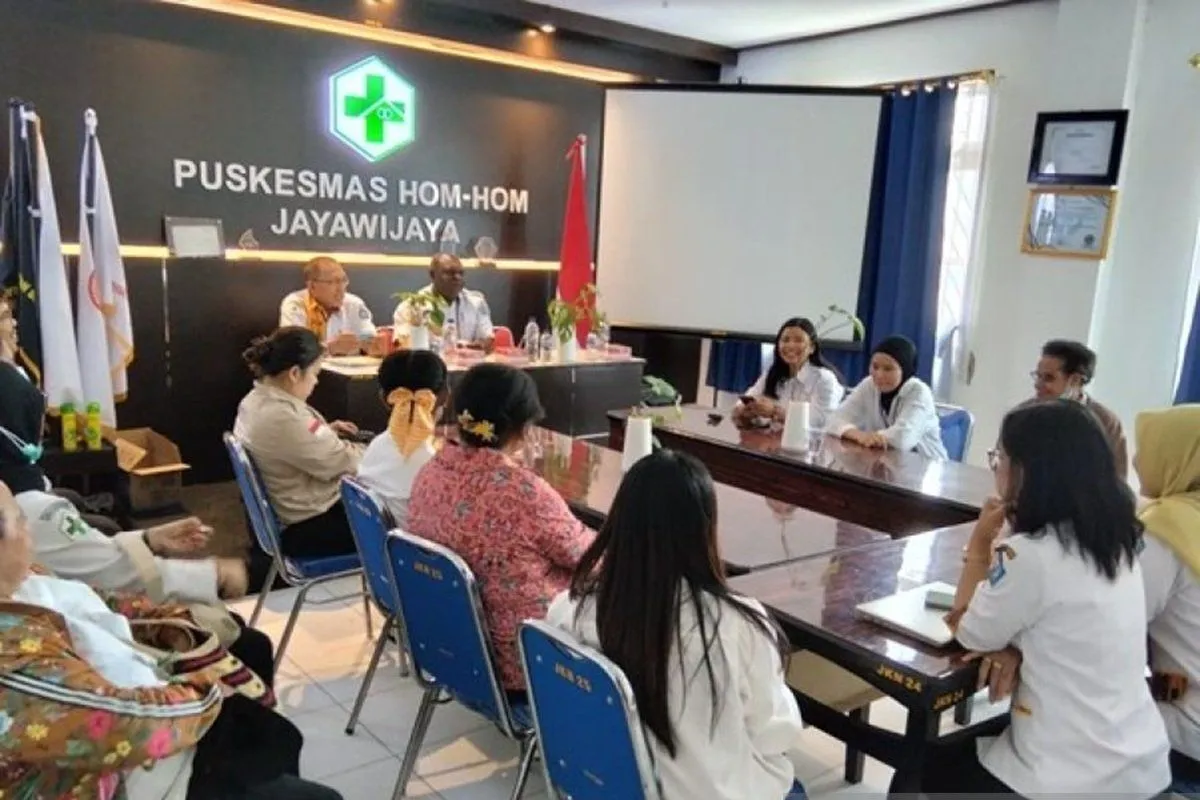
The Jayawijaya Regency Government is preparing to extend operating hours at the Hom-Hom Health Centre in Hubikiak District until 7pm, in a move aimed at improving access to primary healthcare and reducing the growing number of patients referred to Wamena Regional General Hospital. The Hom-Hom Health Centre extended hours plan would expand services from the current closing time of 2pm to a schedule running from 8am to 7pm.
The proposal comes after Wamena Regional Hospital reported that patients referred from primary healthcare facilities increasingly arrive at its emergency department from early afternoon through the evening and, in some cases, into the early hours of the morning. Local health officials believe that extending the availability of services at Hom-Hom could help address some of this pressure by allowing patients to receive appropriate initial treatment for longer during the day.
The initiative is being coordinated by the Jayawijaya Health Office. Its acting head, Esau R. Aibesa, said discussions had taken place with the management and staff of Hom-Hom Health Centre about the proposed schedule. The plan, however, still requires additional medical personnel and arrangements for financing before it can operate regularly.
The proposal reflects a practical effort by the local government to adapt primary healthcare services to the needs of residents rather than relying solely on existing administrative operating hours.
Rising referrals prompt a review of health centre schedules
The immediate reason for the proposed extension is the increasing number of patients referred to Wamena Regional Hospital, particularly those arriving at its emergency department after midday.
According to Esau, hospital reports indicate that referred patients begin arriving at around 1pm and continue to come through the evening, sometimes until dawn. This pattern has encouraged the Jayawijaya Health Office to consider whether primary healthcare services should remain available for longer.
Under the existing arrangement, Hom-Hom Health Centre provides services until 2pm. Patients who require attention later in the day may therefore have fewer opportunities to access services at the facility, depending on their condition and the availability of other healthcare options.
The proposed schedule would extend the health centre’s service period by five hours, from 8am until 7pm. This would give residents a longer daily window in which to seek medical attention and could allow health workers to assess more patients before deciding whether referral to hospital care is necessary.
Esau explained that the policy was being considered in response to the increasing flow of referrals to Wamena Regional Hospital.
“We are doing this change because the number of referred patients arriving at the regional general hospital is increasing. Therefore, the service hours at Hom-Hom Health Centre are being extended,” he said, as quoted by ANTARA on November 16, 2026.
The proposed change is intended to help manage the number of patients referred to the hospital, although the extent to which it will reduce referrals will depend on the types of cases treated at the health centre and the availability of qualified personnel.
Learning from Wamena City’s 24-hour health centre
The Jayawijaya Health Office has already considered a similar adjustment at another primary healthcare facility.
Esau said Wamena City Health Centre had begun operating around the clock, providing an example of how service schedules can be adapted to meet community needs.
The experience has encouraged officials to examine the possibility of extending Hom-Hom’s operating hours as well. The two facilities, however, have different operating arrangements, and the proposed schedule at Hom-Hom is not intended to replicate a 24-hour service.
Instead, the current plan is to provide services from 8am until 7pm, with medical personnel working in shifts to cover the longer period.
Esau said the physical facilities at Hom-Hom were already available. The main challenge was ensuring that enough health workers could be assigned to maintain the service schedule.
This distinction is important. Extending opening hours requires more than just keeping a health centre’s doors open. Patients must have access to qualified professionals who can assess their conditions, provide appropriate treatment and determine when referral to a hospital is necessary.
The local government therefore needs to address staffing arrangements before the extended schedule can become a regular service.
Shortage of doctors and pharmacists remains a challenge
The availability of medical personnel is one of the central issues identified during discussions between the Health Office and Hom-Hom Health Centre.
Esau said the facility still needed additional doctors and pharmacists to support the proposed operating hours. The staffing requirements identified by the health centre included four doctors and four pharmacists.
The intention is to divide the personnel into shifts, with two doctors available during the morning period and two covering the afternoon and evening. A similar staffing arrangement would be needed to ensure that pharmacy services could support patients throughout the extended schedule.
The shortage highlights a practical challenge facing healthcare expansion in the region. Even when buildings and equipment are available, the quality and continuity of services depend on having sufficient trained personnel.
Doctors are needed to assess patients, identify conditions requiring urgent attention and make clinical decisions about treatment or referral. Pharmacists are important to ensure that medicines are managed and provided appropriately.
Without adequate staffing, an extended schedule could place additional pressure on existing workers and affect the consistency of services. For that reason, the Jayawijaya Health Office has identified recruitment and staffing arrangements as priorities before the programme can operate routinely.
Esau said the Health Office intended to fulfil the required personnel needs as soon as possible.
Funding discussions to support additional working hours
Alongside staffing, the local government must also address the financial implications of extending the health centre’s hours.
The Jayawijaya Health Office plans to discuss funding support with several relevant institutions. These include the Regional Development, Research and Innovation Planning Agency (Bapperida), the Regional Financial and Asset Management Agency (BPKAD), the Social Security Agency for Health (BPJS Kesehatan) and the Papua Pegunungan (Highland Papua) Provincial Health Office.
The discussions are intended to establish the support needed to make the proposed service schedule sustainable.
Esau emphasised that the rights of medical personnel must be taken into account. Staff members who work beyond the previously established service hours need appropriate arrangements for their additional working time.
“This issue concerns the rights of medical personnel because they will be working beyond the established service hours. This matter needs to be discussed so that it does not create problems for the staff providing the services in the future,” he said.
His remarks point to an important consideration in public healthcare management. Expanding access should not depend on placing an unreasonable burden on existing workers. Proper staffing, scheduling and financial arrangements are necessary to maintain service quality and protect the welfare of healthcare personnel.
Bapperida and BPKAD will play a key role in planning and budgeting, while BPJS Kesehatan and the provincial Health Office will discuss financing support for healthcare services.
The proposed extension will therefore require coordination across several institutions rather than being implemented by the health centre alone.
Improving access to primary healthcare in Jayawijaya
The Hom-Hom initiative reflects the important role of primary healthcare facilities in the wider health system.
Community health centres, known in Indonesia as Puskesmas, provide the first point of contact for many residents seeking medical attention. They are expected to assess health conditions, provide appropriate basic treatment and refer patients to hospitals when more advanced care is needed.
When primary healthcare facilities are unable to provide services during periods when residents need them, patients may have to seek assistance elsewhere. This can contribute to increased demand at hospitals, particularly their emergency departments.
Extending Hom-Hom’s service hours could provide another opportunity for residents to obtain initial medical assessments later in the day. It may also help health workers identify cases that require hospital treatment and coordinate referrals more effectively.
However, not every condition can or should be treated at a health centre. Serious emergencies and cases requiring specialist care must continue to be referred to the appropriate hospital services. The purpose of the proposed extension is to improve the availability of primary care, not to replace the role of Wamena Regional Hospital.
The local health system can use its resources better if there is a clearer division of responsibilities between primary healthcare facilities and hospitals.
Why continuity is relevant for regional healthcare development
Healthcare access is shaped not only by the number of facilities available but also by when those facilities can provide services and whether sufficient personnel are present.
For residents of Jayawijaya, the proposed extension could make it easier to seek medical attention after the current 2pm closing time. The additional five hours may be particularly useful for people whose daily responsibilities make it difficult to visit a health centre earlier in the day.
The initiative also illustrates how local health policy can respond to information from hospitals. Reports about the timing of patient referrals have prompted the Health Office to reconsider the operating schedule of a primary healthcare facility.
This type of coordination is important because pressure on hospitals cannot always be addressed by expanding hospital services alone. Primary healthcare facilities also have a role in managing patient needs and ensuring that referrals are made when clinically appropriate.
For the Jayawijaya administration, the next task will be to translate the proposal into a workable service arrangement. That means ensuring that the required doctors and pharmacists are available, confirming the financing mechanism and establishing a schedule that can be maintained without compromising staff welfare.
The local government will also need to monitor how the extended service affects patient access and referral patterns once it is implemented. Such monitoring could help determine whether the additional hours are meeting their intended purpose and whether further adjustments are necessary.
Conclusion
The plan by the Jayawijaya Regency Government to extend services at Hom-Hom Health Centre until 7pm represents an effort to make primary healthcare more responsive to the needs of residents. The proposal follows reports of increasing patient referrals to Wamena Regional Hospital, with arrivals at its emergency department continuing from the afternoon into the evening and, in some cases, until dawn.
The initiative is still being prepared. The Health Office must first address shortages of doctors and pharmacists, establish shift arrangements and coordinate funding with relevant local and provincial institutions, BPJS Kesehatan and other partners. It must also ensure that medical personnel receive appropriate consideration for working beyond the previous service schedule.
If these requirements are met, the extended hours could provide residents with a longer period in which to access primary healthcare and help improve coordination between Hom-Hom Health Centre and Wamena Regional Hospital.
Ultimately, the success of the plan will depend on consistent implementation, adequate staffing and careful evaluation. By addressing referral patterns and enhancing services within the community, Jayawijaya can make a tangible move towards establishing a more accessible and responsive healthcare system in Papua Pegunungan.
Read Also
Papua and PNG Strengthen Cross-Border Healthcare Cooperation
Damai Cartenz Task Force Brings Free Healthcare to Ilaga

