
Nabire is preparing for a major transformation of its agricultural economy, with Indonesia’s Ministry of Agriculture allocating three million cocoa seedlings to support the development of a large-scale plantation programme in Papua Tengah (Central Papua). The initiative is expected to strengthen local farming, increase household incomes and establish Nabire as one of the region’s major cocoa-producing centres within the next three to four years.
The assistance, channelled through the Ministry’s Directorate General of Plantations, is part of a broader programme covering approximately 3,000 hectares of cocoa plantations. It represents an important step in the Indonesian government’s efforts to diversify Papua’s economic base by developing agricultural commodities with commercial potential.
The seedlings are currently being cultivated in a nursery in Samabusa, Nabire, before their planned distribution to qualified farmer groups at the end of 2026. Provincial and district authorities are coordinating the preparation and verification of beneficiary farmers to ensure that the programme reaches communities with suitable land and the capacity to manage the plantations.
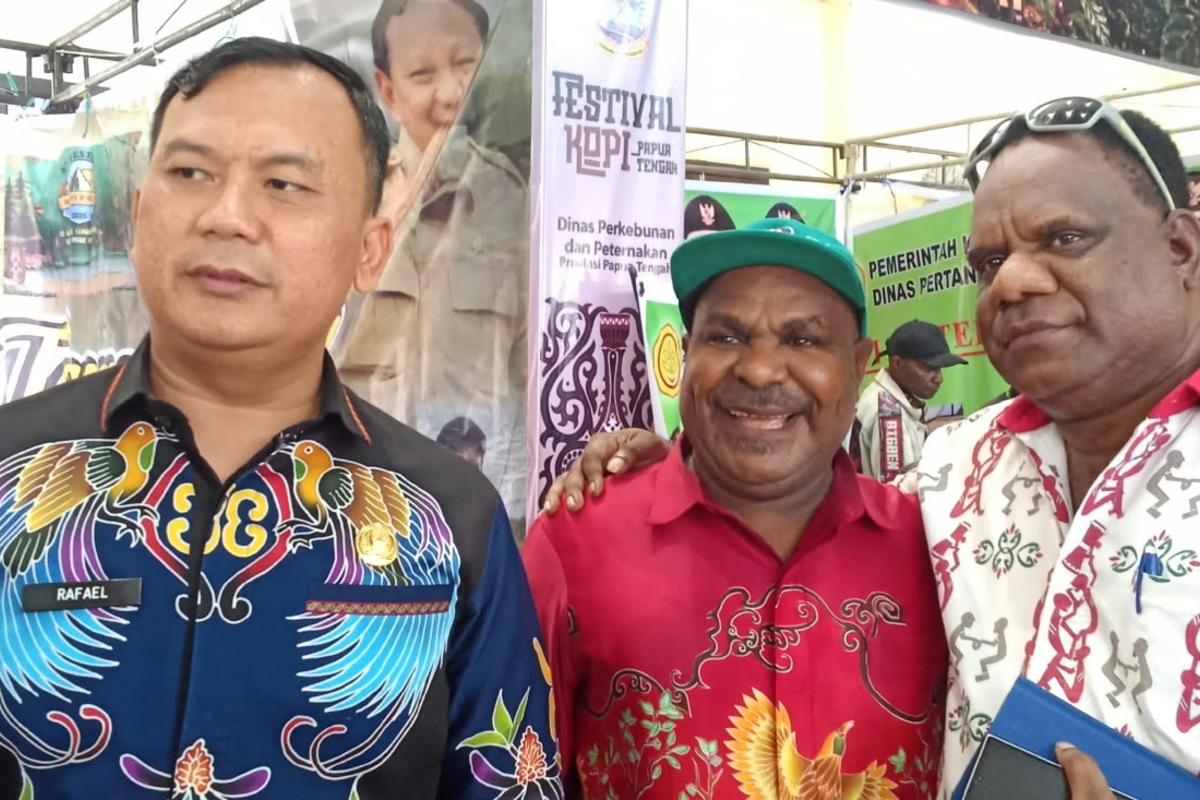
Rafael Heri Nugroho, Head of the Papua Tengah Provincial Plantation and Livestock Office, confirmed the development on October 29, following the opening of the 2026 Papua Tengah Coffee Festival in Nabire.
“The three million cocoa plants are currently in the nursery stage. We hope they can be distributed to cocoa farmer groups in Nabire District by the end of this year,” Rafael said, as reported by ANTARA.
The initiative is significant because it goes beyond distributing agricultural inputs. By connecting seedling production, plantation expansion, farmer development and future processing industries, the programme seeks to establish a more integrated agricultural economy in Papua Tengah.
For Nabire, the objective is clear: transform its agricultural potential into a productive economic sector capable of generating sustainable income and employment for local communities.
A Major Agricultural Investment in Papua Tengah
Three million seedlings will be planted to transform the plantations in Nabire.
The cocoa development programme is part of a strategic initiative by the Indonesian Ministry of Agriculture to strengthen plantation production in Papua Tengah, a province with considerable agricultural potential but significant opportunities for further economic development.
Under the programme, approximately 3,000 hectares of land in Nabire have been designated for cocoa cultivation. The development consists of two main components: the rejuvenation of 1,000 hectares of existing cocoa plantations and the expansion of cultivation areas by another 2,000 hectares.
The distinction is important. Rejuvenation is intended to replace old or less productive cocoa plants with improved planting materials, while expansion will introduce cocoa cultivation to additional suitable agricultural land.
According to Ali Jamil Harahap, Director General of Plantations at the Ministry of Agriculture, the programme requires approximately one million seedlings for every 1,000 hectares of cultivation.
Consequently, the three-million-seedling requirement is calculated according to the planned 3,000-hectare development area. The ministry has also prepared an additional 20 per cent reserve to anticipate planting losses, replacement requirements and other needs in the field.
This brings the overall allocation to approximately 3.6 million seedlings, consisting of three million primary planting seedlings and 600,000 additional seedlings.
The additional allocation is intended to ensure that farmers have sufficient planting materials if some seedlings fail to survive after transplantation.
The programme also reflects the government’s intention to establish a more organised plantation system rather than distribute seedlings without adequate preparation.
Agricultural development at this scale requires coordination between seed suppliers, nursery operators, government agencies, farmers and technical personnel responsible for monitoring plant growth.
A five-hectare nursery in Samabusa
An important stage of the programme is taking place in Samabusa, an area in the Teluk Kimi District of Nabire, where the government has prepared approximately five hectares of land for cocoa seedling cultivation.
The nursery is designed to accommodate millions of seedlings through a phased cultivation process.
The preparation of the nursery followed the Ministry of Agriculture’s decision to accelerate cocoa development in Nabire. On July 6, 2026, Director General of Plantations Ali Jamil Harahap visited the district to inspect the development programme and monitor preparations for the plantation’s expansion.
During the visit, he reviewed the nursery facilities and the preparation of planting materials required for the 3,000-hectare target.
He instructed the programme’s implementing parties to accelerate nursery construction and ensure that the preparation of planting containers and the arrival of seeds proceeded simultaneously.
The government also emphasised the importance of involving local workers in nursery development, allowing communities to benefit economically even before the plantations begin producing cocoa.
The seedling preparation process subsequently progressed through several stages.
On July 28, 2026, the Papua Tengah Quarantine Agency, through its Nabire service unit, inspected an incoming shipment of 105,000 cocoa seeds originating from Jember, East Java.
The inspection was intended to ensure that the planting materials met plant-health requirements and were free from quarantine pests and diseases.
Anton Panji Mahendra, Head of the Papua Tengah Quarantine Agency, explained that the seeds were part of the Ministry of Agriculture’s assistance programme supporting cocoa plantation expansion in Nabire.
Following quarantine procedures, the planting materials were intended to undergo further cultivation at the Samabusa nursery before distribution to farmers.
The arrival of the seeds marked an important stage in the programme’s implementation, demonstrating that the development was moving beyond planning towards the preparation of actual planting materials.
By October 29, provincial officials confirmed that the nursery programme was continuing and that distribution to eligible farmer groups was expected to occur towards the end of 2026.
Farmers at the Centre of the Development Programme
Verifying beneficiaries before distribution
While the provision of millions of seedlings represents a substantial government investment, the success of the programme will ultimately depend on the farmers who manage the plantations.
For this reason, the Papua Tengah Provincial Government has established a beneficiary verification process involving several government institutions.
The Nabire District Plantation and Livestock Office initially proposed the prospective farmer groups and planting locations, known administratively as Calon Petani dan Calon Lokasi (CPCL).
The proposals were subsequently coordinated with the provincial government and reviewed alongside the Agricultural Modernization Implementation Agency (BRMP) to assess the readiness of the proposed beneficiaries.
The verification process is intended to ensure that assistance reaches farmers who have suitable land and the capacity to cultivate cocoa.
This is an important consideration because distributing millions of seedlings without adequate preparation could create unnecessary losses and undermine the programme’s long-term objectives.
Rafael Heri Nugroho emphasised the importance of coordination between the provincial and district governments in managing the distribution process.
“We are truly grateful for and supportive of the initiative introduced by the Ministry of Agriculture. We are working together with the Nabire District Plantation and Livestock Office to ensure that the programme proceeds as expected,” he said.
The provincial administration is also expected to monitor planting activities after the seedlings reach their beneficiaries.
Such supervision will be important in ensuring that farmers receive appropriate guidance on planting techniques, soil management, fertilisation, pest control and the maintenance of young cocoa trees.
For smallholder farmers, technical assistance can be just as important as access to planting materials.
Cocoa cultivation requires consistent attention throughout the growing cycle. Without adequate knowledge of cultivation and post-harvest handling, the potential economic value of the crop may not translate into higher household incomes.
The programme therefore provides an opportunity to strengthen agricultural knowledge and improve the productive capacity of farming communities.
From Cocoa Plantations to a Regional Processing Industry
Creating value beyond raw cocoa beans
One of the most promising aspects of the initiative is its potential to develop an agricultural value chain that extends beyond the production of raw cocoa beans.
Rafael explained that the provincial government wants cocoa to become one of Papua Tengah’s leading plantation commodities, alongside coffee.
He also highlighted the potential for processing cocoa into higher-value products, including cocoa powder and chocolate bars.
This approach is consistent with the government’s broader emphasis on agricultural downstream development, commonly known in Indonesia as hilirisasi.
Rather than selling agricultural commodities exclusively in their raw form, downstream development seeks to encourage local processing, packaging and marketing so that a greater share of economic value remains within producing regions.
For Nabire, the establishment of a reliable cocoa supply could eventually create opportunities for small and medium-sized enterprises to enter the chocolate and food-processing industries.
Local entrepreneurs could potentially develop businesses in cocoa fermentation, drying, grinding, packaging and the production of finished chocolate products.
Such activities would also create demand for supporting services, including transportation, storage, equipment maintenance and agricultural supplies.
The development of processing facilities, however, will require additional investment, technical expertise, reliable electricity, market connections and consistent production volumes.
The provincial government’s strategy therefore needs to connect plantation development with private-sector participation and access to wider domestic and international markets.
If these components develop together, cocoa could become more than a plantation commodity. It could provide the foundation for a broader local agricultural industry.
Building on coffee and other agricultural commodities
Cocoa is not the only commodity being developed in Papua Tengah.
The provincial government is also promoting coffee, coconut and sago as part of a wider effort to strengthen the regional agricultural economy.
Coffee, in particular, has been identified as a priority commodity by Governor Meki Fritz Nawipa.
The province’s geographical diversity offers opportunities to develop different coffee varieties according to local growing conditions.
Robusta coffee is being directed towards lower-altitude areas, including Nabire and Mimika, while arabica has potential in higher-altitude districts such as Deiyai, Dogiyai, Paniai, Intan Jaya and Puncak.
This geographical approach allows agricultural development to reflect differences in altitude, climate and land suitability rather than applying a uniform cultivation model throughout the province.
The simultaneous development of cocoa, coffee, coconut and sago could also help diversify farmers’ income sources and reduce dependence on a single commodity.
For communities in rural areas, diversification can be particularly important because agricultural prices and harvest volumes are influenced by weather, market conditions and other external factors.
A broader plantation economy could therefore provide a more resilient foundation for household livelihoods.
Government and Local Authorities Join Forces
Provincial leadership and central government support
The development of Nabire’s cocoa industry reflects cooperation between the central government and regional administrations.
The Ministry of Agriculture, through its Directorate General of Plantations, provides the programme’s national policy framework and planting materials.
Meanwhile, the Papua Tengah Provincial Government is responsible for coordinating implementation within its administrative jurisdiction, including seedling distribution, farmer verification and cooperation with the Nabire District Government.
Rafael’s statements indicate that the provincial administration welcomes the central government’s support and views cocoa as an important opportunity to strengthen the regional economy.
The cooperation also builds on the groundwork established during Director General Ali Jamil Harahap’s July visit.
At that time, the Ministry of Agriculture was monitoring several plantation initiatives in Nabire, including the development of 3,000 hectares of cocoa, 100 hectares of coconut and programmes for coffee and sago.
The ministry’s approach was not limited to increasing planting areas. It also sought to prepare the necessary nursery infrastructure and encourage the involvement of local workers.
The Nabire District Government has an equally important role in supporting implementation at the community level.
Coordination with village administrations, farmer groups and landowners will help ensure that planting locations are thoroughly prepared and that the programme can proceed without unnecessary administrative obstacles.
The involvement of customary landowners is particularly relevant in Papua, where customary land rights form an important part of local social and economic arrangements.
Respectful consultation and agreement over land use are therefore essential to maintaining community participation and ensuring that plantation development generates benefits for local residents.
Employment opportunities for local communities
The programme also has the potential to create economic opportunities before the first cocoa harvest takes place.
The construction and operation of nurseries require labour for land preparation, seedling care, watering, transplanting and other activities.
Once plantation development expands, additional workers will be needed for land management, planting, maintenance and harvesting.
The subsequent development of cocoa processing industries could generate further employment in production, transportation, packaging and marketing.
The Ministry of Agriculture has encouraged the involvement of surrounding communities throughout the nursery development process to ensure that local residents can participate in the programme’s economic benefits.
This is an important element of inclusive development.
A plantation programme should not be measured only by the number of seedlings distributed or hectares planted. Its wider contribution should also be assessed through the number of farmers involved, employment opportunities created, productivity improvements and increases in household income.
For Papua Tengah, these outcomes would provide a more meaningful measure of the programme’s success.
The Road Ahead: From Seedlings to a Cocoa-Producing Region
Planting targets and the production timeline
The immediate priority is to complete the nursery preparation and distribute seedlings to verified farmer groups.
According to Rafael, distribution is expected to begin towards the end of 2026.
The government is targeting the development of Nabire into a significant cocoa-producing area within three to four years.
Earlier guidance from the Ministry of Agriculture indicated that the plantations could begin producing within approximately two to two and a half years, depending on planting progress and crop development.
These timelines reflect different stages of the programme. Initial production from early-planted areas may occur before the wider regional production target is fully achieved.
Nevertheless, reaching these targets will require sustained attention to several practical challenges.
First, seedling quality must be maintained throughout the nursery and distribution stages. Healthy planting materials are essential for establishing productive plantations.
Second, farmers will need continuous technical assistance, particularly during the early stages of cultivation when young trees require careful maintenance.
Third, the government will need to monitor land suitability, soil conditions, water availability and the management of pests and diseases.
Finally, market access and post-harvest infrastructure must develop alongside plantation production.
Cocoa farmers require reliable buyers, appropriate fermentation and drying facilities, transparent pricing mechanisms and access to information about market demand.
Without these supporting arrangements, increased production alone may not guarantee higher incomes.
The programme therefore presents an opportunity to develop an integrated agricultural ecosystem in which government institutions, farmers, cooperatives and private businesses share responsibility for long-term success.
Conclusion
The allocation of three million cocoa seedlings by Indonesia’s Ministry of Agriculture represents an important investment in the agricultural future of Papua Tengah.
The programme is establishing the foundation for Nabire to become a significant cocoa-producing centre by developing 3,000 hectares of plantations, constructing nursery facilities in Samabusa, and verifying beneficiary farmer groups.
The additional allocation of 600,000 reserve seedlings demonstrates the government’s efforts to anticipate planting requirements and minimise potential losses.
Beyond increasing cocoa production, the initiative offers opportunities to create employment, strengthen smallholder farming, encourage entrepreneurship and develop local processing industries.
For the Papua Tengah Provincial Government, the next challenge is to ensure that the programme successfully moves from the nursery stage to actual cultivation and sustained agricultural production.
Close coordination with the Nabire District Government, technical agencies, farmer groups and customary landowners will remain essential.
If implemented effectively, the programme could help diversify Papua’s economy and provide communities with a more sustainable source of income.
Ultimately, the success of Nabire’s cocoa development will not be determined simply by the millions of seedlings prepared but by the number of productive farms established, the prosperity of participating farmers and the emergence of local businesses capable of transforming cocoa into higher-value products.
The initiative offers a promising opportunity to turn Papua Tengah’s agricultural potential into lasting economic value, positioning Nabire as an emerging contributor to Indonesia’s cocoa industry.
Read Also
Yapen Cocoa Farmers Receive Processing Equipment
Indonesia Targets Papua for Cocoa Industrial Growth

