
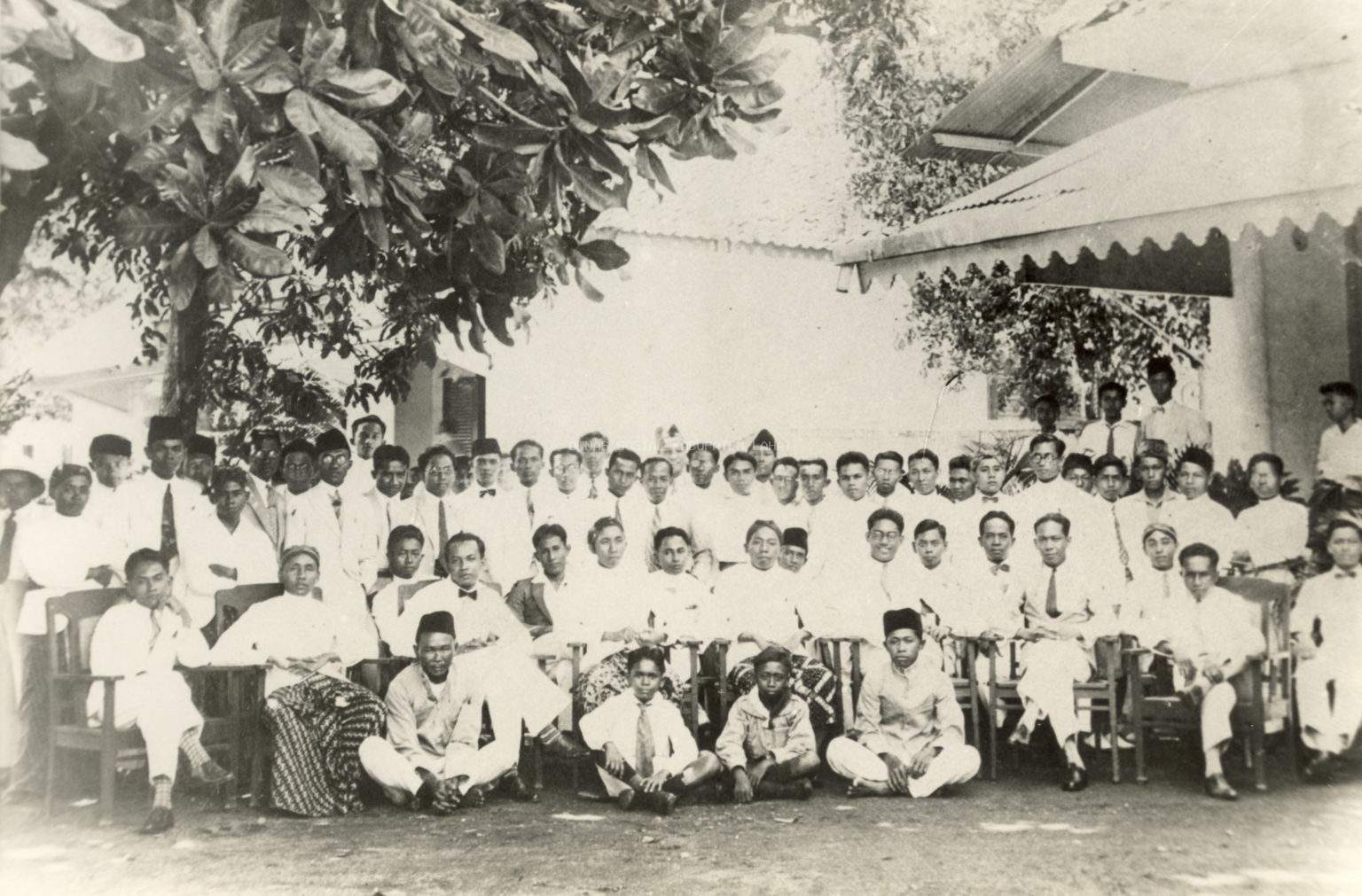
Nearly a century before social media made national conversations instantaneous, three young Papuans were reported to have taken part in one of the defining moments of Indonesia’s national awakening. Their names, Abner Ohee, Aitai Karubaba, and Orpa Pallo, have become an important part of the historical discussion surrounding the Youth Pledge, or Sumpah Pemuda, declared in Batavia on October 28, 1928.
The participation of these three young people, documented in Indonesian media accounts and historical writing, offers a reminder that the idea of Indonesia was being discussed across different communities long before the country proclaimed independence in 1945. Their reported presence at the Second Youth Congress connected Papua to a wider movement that sought to overcome regional divisions and build a shared national identity.
For Papua, the story has significance beyond a list of historical names. It provides a starting point for understanding how education, communication, political ideas, and relationships between people from different parts of the archipelago contributed to the development of Indonesian nationalism.
The account should also be understood within its historical limits. Reports say the three Papuans were at the congress, but the accounts don’t show they were formal authors or signatories of the Youth Pledge. Nor can their participation alone represent the views of every Papuan community at the time. What the story does establish is that Papuan youths have been associated with this important episode in Indonesia’s national history.
How the Youth Pledge Movement Took Shape
From regional associations to a shared national idea
In the early 20th century, the territory that would become Indonesia remained under Dutch colonial rule. Political organizations, educational institutions, and youth associations increasingly provided spaces where a new generation could discuss the future of the archipelago.
Many early organizations were established around regional, cultural, or religious identities. These associations helped young people develop leadership and organize collective activities. Over time, however, some members increasingly recognized that cooperation beyond regional boundaries would be necessary to build a stronger national movement.
The First Youth Congress, held in Batavia from April 30 to May 2, 1926, was an early attempt to bring youth organizations together. Although it did not produce the unified declaration that later became the Youth Pledge, it helped establish a wider conversation about solidarity among young people from different parts of the Dutch East Indies.
That process continued through new organizations and further discussions. The Perhimpunan Pelajar-Pelajar Indonesia, or Indonesian Students Association, became a key force behind the Second Youth Congress.
The central challenge was how to reconcile different local identities with a shared political aspiration. Participants came from communities with distinct languages, customs, religious traditions, and regional experiences. The national movement required them to imagine a common future without eliminating the diversity that shaped their backgrounds.
This was the context in which the Second Youth Congress took place in Batavia on October 27 and 28, 1928.
October 27 to 28, 1928: The congress in Batavia
The Second Youth Congress unfolded over two days and at several venues in Batavia, now Jakarta. Meetings were held at the Katholieke Jongenlingen Bond building, Oost Java Bioscoop, and Indonesische Clubgebouw, the boarding house at Kramat Raya 106 that is now home to the Youth Pledge Museum.
Participants discussed the importance of unity, the development of national consciousness, and the role of language in bringing together communities across the archipelago. The congress reflected a growing conviction that regional identity need not prevent people from sharing a national aspiration.
One of the best-known moments came when Wage Rudolf Supratman presented his composition, Indonesia Raya, instrumentally on the violin. The song would later become Indonesia’s national anthem. Its presentation at the congress added a powerful cultural dimension to the political discussions.
On October 28, the congress adopted a declaration built around three commitments: one homeland, one nation, and one language of unity.
In its modern Indonesian form, the pledge reads:
“We, the sons and daughters of Indonesia, acknowledge one homeland, Indonesia.”
“We, the sons and daughters of Indonesia, acknowledge one nation, the Indonesian nation.”
“We, the sons and daughters of Indonesia, uphold the language of unity, Indonesian.”
The declaration did not immediately create an independent country. Instead, it established a powerful political and cultural ideal that helped guide the national movement in the years that followed. Indonesia declared independence on August 17, 1945, nearly 17 years later.
The Youth Pledge is now commemorated annually on October 28 as a landmark in the development of Indonesian national identity.
The Three Papuans Behind an Often Overlooked Story
Abner Ohee, Aitai Karubaba, and Orpa Pallo
Historical accounts published by Indonesian media identify Abner Ohee, Aitai Karubaba, and Orpa Pallo as three young Papuans who attended or participated in the Second Youth Congress in 1928.
Their reported presence is significant because it places young people from Papua within the broader story of the national movement at a time when education and political communication across the archipelago were still developing unevenly.
According to West Papua Voice’s historical account, the three had travelled to Java through educational pathways associated with missionary and colonial-era schooling. Their experiences illustrate how education could expose young people to ideas and networks extending beyond their home communities.
The available accounts provide limited biographical detail about each individual and do not establish an identical role for all three in the congress. It is therefore more accurate to remember them as reported Papuan participants in the historic gathering than to assign them specific speeches, organizational positions, or authorship of the pledge without further documentary evidence.
Even with those limits, the three names deserve attention. Historical narratives often focus on the best-known national figures who chaired meetings, drafted resolutions, or organized political movements. The presence of lesser-known participants helps show that the development of Indonesian nationalism involved more than a handful of prominent leaders.
The participation attributed to Ohee, Karubaba, and Pallo also raises an important question about historical memory: how many people who contributed to national movements have remained largely unknown outside their communities?
Remembering these young Papuans broadens the account of the Youth Pledge by bringing attention to people from Indonesia’s easternmost region. Their story deserves further historical research, including efforts to identify contemporary records, educational backgrounds, and family accounts that could clarify the nature of their participation.
Ramses Ohee’s appeal to preserve historical memory
Papuan figures have kept the story alive by encouraging greater public awareness of the three young people.
Ramses Ohee, chairman of the Barisan Merah Putih organization and a son of Abner Ohee, has highlighted the fact that many Indigenous Papuans may not know that Papuan youths were reported to have attended the 1928 congress.
The Youth Pledge Museum drawing attention to Abner Ohee, Aitai Karubaba, and Orpa Pallo and their connection to the historic gathering.
The appeal is fundamentally about historical recognition. Knowledge of the three participants can help young Papuans understand that the history of Indonesia’s national awakening includes people from different regions, rather than belonging exclusively to the best-known centers of political activity.
It also offers a reason for schools, universities, museums, and community organizations to explore local contributions to national history. Historical awareness becomes stronger when students can connect national events with people and places that are familiar to them.
The story of the three Papuans is consequently not just a matter of commemoration. It is an opportunity to encourage further research and make the country’s national history more inclusive.
Boven Digoel and Papua’s Place in the National Awakening
The history of the Youth Pledge is also discussed alongside developments in Boven Digoel, in southern Papua, where the Dutch colonial administration established an exile settlement for political prisoners.
Following failed uprisings against colonial rule in Banten and West Sumatra in 1926 and subsequent repression, Dutch authorities sent hundreds of political activists and other detainees to Boven Digoel during the late 1920s. The remote location, difficult environment, and disease made exile there particularly harsh.
Among the prominent nationalists associated with the exile system were Mohammad Hatta, Sutan Sjahrir, and Tjipto Mangunkusumo, although their periods and circumstances of detention differed.
The presence of political exiles in Papua forms part of a wider historical story about the movement of ideas across the archipelago. Nationalist thought was not confined to major urban centers. Political prisoners, educators, missionaries, traders, and other travelers also contributed to the circulation of knowledge, although the extent and impact of these interactions varied between places and communities.
West Papua Voice’s historical account presents Boven Digoel as one of the settings through which ideas about national identity and colonial rule reached Papua. This offers a useful regional context for understanding the wider political environment of the era.
However, the available evidence does not establish that the three young people who attended the 1928 congress were directly influenced by particular exiles at Boven Digoel. Nor should the presence of the exile settlement be treated as proof that all Papuan communities had already adopted a uniform national political identity.
The more defensible historical point is that Papua was connected to wider developments in the colonial archipelago through several channels, including education, travel, administration, and the movement of people. These connections formed part of the environment in which ideas about Indonesia circulated and developed.
What the Youth Pledge Meant for Papua
The three principles of the 1928 pledge provide a framework for understanding why the reported participation of Papuan youths matters.
The first principle, one homeland, expressed a shared geographical and political imagination that extended beyond individual islands and regions. The second, one nation, placed collective identity alongside local and ethnic identities. The third, one language of unity, recognized the importance of communication across communities.
For Papua, the significance of this history lies in the documented connection between Papuan individuals and a gathering dedicated to national unity. It adds a regional dimension to the history of Indonesian nationalism and challenges simplified accounts that portray the movement as exclusively centered on western Indonesia.
At the same time, a careful historical interpretation recognizes that national identity develops over time. The participation of three young people cannot by itself demonstrate that every Papuan community held the same political outlook in 1928 or settle every later debate about Papua’s political history.
The Youth Pledge was a statement of aspiration. Its long-term significance came from the continued efforts of many people and organizations to turn that aspiration into political institutions, public participation, and, ultimately, an independent state.
The pledge therefore provides a historical basis for discussing unity without overlooking the diversity of Papua’s communities or the importance of accurate historical research.
Why This History Matters to Young Papuans Today
The legacy of the three young Papuans has contemporary relevance in education, culture, and public life.
First, their story can encourage young people to learn more about the contributions of Papuans to Indonesia’s national history. School lessons and local historical projects could explore the lives of Ohee, Karubaba, and Pallo while also examining the wider context of the 1928 congress.
Second, the story shows how important it is to have access to education. The reported journeys of the three young people to Java illustrate the importance of learning opportunities and contact with wider intellectual networks. Today, education, vocational training, and digital access can help young Papuans participate more fully in public life and regional development.
Third, the Youth Pledge offers a historical example of cooperation across cultural differences. In modern Papua, that principle can be reflected in peaceful dialogue, community service, democratic participation, and cooperation between customary institutions, schools, religious organizations, and government agencies.
These lessons extend beyond Papua. Indonesia’s diversity makes the pledge relevant throughout the country, while Papua’s distinctive cultures and historical experiences give the anniversary particular local resonance.
For public institutions, preserving this history requires more than repeating familiar slogans. It means supporting reliable historical documentation, encouraging research into underrepresented figures, and making credible information accessible to students and the public.
Conclusion
The reported participation of Abner Ohee, Aitai Karubaba, and Orpa Pallo in the Second Youth Congress of 1928 deserves a place in discussions of Papua’s relationship with Indonesia’s national awakening.
Their names connect Papua to a defining episode in the movement that promoted one homeland, one nation, and one language of unity. The historical record available through media accounts provides a basis for remembering them, while further archival research could establish more precisely the roles they played and the circumstances surrounding their participation.
The larger lesson is that many people, including those whose names have received little public attention, contribute to national history. Recognizing these figures can make Indonesia’s historical narrative more inclusive and provide young Papuans a clearer understanding of the region’s place in the country’s past.
As Indonesia continues to commemorate the Youth Pledge each October 28, the story of the three Papuan youths offers an opportunity to connect historical memory with present-day priorities: education, cultural preservation, peaceful cooperation, and meaningful participation in development.
Remembering them should not mean simplifying Papua’s complex history. It should mean examining that history carefully, acknowledging the evidence available, and ensuring that the experiences of Papuans are included in the wider account of Indonesia’s national journey.
Read Also
Papua Youth Urged to Lead Unity and Peace
Biak Numfor Adds 1,828 PPPK to Strengthen Public Services

