
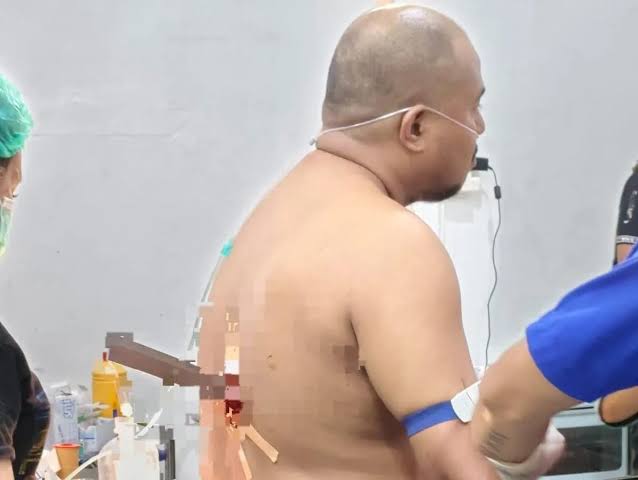
The stabbing of a hospital worker in Dekai has renewed concerns about the safety of civilians and the conditions in which essential public services operate in Papua. Two unidentified assailants attacked the victim, a 32-year-old contract employee in the radiology department of Dekai Regional General Hospital, on the evening of October 23, 2026. Indonesian authorities are investigating a possible connection to an armed separatist group, although that allegation has not yet been established.
The incident took place at around 7.30 p.m. local time behind a kiosk in the teachers’ housing area near State Senior High School (SMA Negeri) 1 Dekai in Yahukimo Regency, Papua Pegunungan (Highland Papua) Province. The victim, identified by the initials LM, suffered stab wounds to his right back and left abdomen. Residents who heard his cries for help came to his assistance and took him to Dekai Regional General Hospital for emergency treatment.
The case has drawn attention not only because of the severity of the attack but also because the victim works in a public hospital that provides medical services to the surrounding community. Violence against healthcare personnel can have consequences beyond the immediate injury, particularly in areas where access to medical services depends on the continued availability of local staff.
The Damai Cartenz Task Force and Yahukimo Police are pursuing the suspects and collecting evidence. Investigators have obtained preliminary information about their characteristics and are examining a possible link to the armed group known as KKB Kodap XVI Yahukimo, reportedly led by Kopi Tua Heluka. Police have stressed, however, that the suspected connection still needs to be proven through further investigation.
How the Attack Unfolded
Two Unidentified Assailants Struck after Dark
According to preliminary investigative findings reported by Indonesian media, LM was sitting behind a kiosk when two unidentified people suddenly attacked him with a sharp weapon. The assailants reportedly approached from his left side and behind him, inflicting two stab wounds.
The attack occurred during a power outage, leaving the surrounding area poorly lit. That limited visibility is among the circumstances investigators will need to consider as they reconstruct the incident and assess the available evidence.
Despite his injuries, LM reportedly shouted for help and attempted to resist the attackers. The two suspects then fled the scene. Residents who heard the commotion went to investigate and found the injured worker before arranging his transport to the hospital.
The sequence of events points to a sudden act of violence against a person who was not reported to be engaged in any confrontation at the time. Authorities have not publicly established a motive, and the available reporting does not confirm whether the victim was specifically targeted because of his employment at the hospital.
That distinction matters. The attack occurred away from the hospital premises, behind a kiosk in a residential area. Although the victim’s occupation makes the incident particularly concerning for the healthcare sector, investigators still need to determine whether his work had any connection to the motive.
A Weapon Remained Lodged in the Victim’s Back
When LM arrived at the emergency department of Dekai Regional General Hospital, a sharp weapon resembling a short, handleless samurai-style blade was reportedly still lodged in his right back.
Damai Cartenz Task Force public relations chief Commissioner Yusuf Sutejo confirmed that the victim had suffered two stab wounds, one to the right side of his back and another to the left side of his abdomen. He said LM had received medical treatment and was reported to be in stable condition, although he remained under medical supervision.
The reported condition of the victim underscores the seriousness of the assault. Stab wounds to the back and abdomen can require urgent assessment because of the risk of internal injuries, although the published reports did not provide a detailed medical diagnosis or prognosis.
The response of local residents was also important. Their intervention helped ensure that the injured man reached medical care after the assailants escaped. Their actions illustrate how community assistance can be critical in an emergency, particularly when violence occurs outside normal working hours.
The victim’s condition was described as stable in the reports published on October 24 and 25. No subsequent medical update was included in those accounts, so his longer-term recovery could not be independently confirmed from the available reports.
Police Gather Evidence and Pursue the Suspects
Following the incident, personnel from the Damai Cartenz 2026 police task force and the Yahukimo Police responded to the hospital and checked on the victim. Officers subsequently examined the crime scene, secured the area, and began gathering information from witnesses.
Investigators reportedly recovered a weapon handle and a pair of sandals from the vicinity of the attack. Both items were secured as evidence that could help establish what happened and identify those responsible. Police are also examining witness statements and the circumstances surrounding the incident.
The case was registered under Police Report No. LP/B/57/X/2026/SPKT/Polres Yahukimo/Polda Papua, dated October 23, 2026. According to the reports, investigators are pursuing charges under Indonesia’s Criminal Code, Law No. 1 of 2023, concerning aggravated assault, with a primary allegation involving premeditation. The applicable provisions and any eventual charges will depend on the evidence and the course of the legal process.
Yusuf said investigators had obtained preliminary information about the suspects’ characteristics. Based on their initial assessment of the incident and its characteristics, authorities are examining whether the two assailants have links to KKB Kodap XVI Yahukimo.
“However, that suspicion still needs to be proven,” Yusuf said, according to the published reports. He added that the task force and the Yahukimo Police were continuing their investigation and efforts to identify and arrest the perpetrators.
This qualification is central to understanding the case. Authorities have identified a line of inquiry, not a final determination of responsibility. Establishing the suspects’ identities, determining their motive, and verifying any organizational connection will require evidence that can withstand legal scrutiny.
Officials Call for Public Cooperation
Yusuf described LM as a civilian who worked as a contract employee in the hospital’s radiology department. He characterized the violence as an act of intimidation against civilians and urged members of the public to provide information that could assist the investigation.
He also stressed that criminal acts would be handled through legal procedures based on facts and evidence. The appeal reflects the authorities’ reliance on community cooperation to help reconstruct the incident and locate the suspects.
The head of the Damai Cartenz 2026 operation, Inspector General Faizal Ramadhani, said the case would be handled professionally and in accordance with the law. Deputy operation head Commissioner Ardiansyah Daulay urged residents to remain vigilant, avoid circulating unverified information, and report relevant information to police.
Those messages are particularly important in a sensitive security environment. Rumors or premature accusations can complicate an investigation, put innocent people at risk, and intensify tensions within communities. A credible response requires both the pursuit of those responsible and respect for due process.
The immediate objective is to establish what happened, identify the perpetrators, and bring the case through the legal system. A wider public-safety objective is to reassure residents that acts of violence will be investigated without encouraging retaliation or collective blame.
Why Attacks on Healthcare Workers Matter
The stabbing has implications beyond the investigation itself. Healthcare workers provide services that communities rely on regardless of political affiliation, ethnicity, or security conditions. Attacks on medical workers can have far-reaching consequences for their colleagues, patients, and families who rely on local health facilities.
In places where medical personnel are already essential to maintaining access to care, violence can create additional uncertainty. Staff may become concerned about their personal safety, while patients and their relatives may worry about travelling to appointments or seeking emergency treatment. These are potential consequences of attacks on healthcare personnel, not confirmed outcomes of the Dekai incident.
The reports available so far do not state that RSUD Dekai suspended services or that the stabbing disrupted hospital operations. Nor do they establish that the attackers intended to obstruct healthcare delivery. It would therefore be premature to describe the incident as a proven campaign against medical services.
Nevertheless, the possibility of wider consequences deserves attention. If healthcare personnel perceive their surroundings as unsafe, maintaining reliable staffing and encouraging patients to seek timely care can become more difficult. Protecting civilian workers is consequently an important part of maintaining the continuity of public services.
The government and local authorities face the dual responsibility of investigating violent crime and ensuring that essential services remain accessible. That includes responding to credible security threats while avoiding measures that unnecessarily restrict patients’ access to medical treatment.
The public should understand that healthcare workers should be able to do their jobs without fear of violence or intimidation. Any assault against them should be investigated thoroughly, regardless of the perpetrator’s identity or alleged affiliation.
Security Concerns and the Need for Verified Findings
Yahukimo, like other parts of Papua, faces complex security challenges. In this case, police have publicly identified a suspected connection to an armed group as one line of investigation. The allegation is serious, but the evidence available in the cited reports does not establish that TPNPB-OPM members carried out the stabbing or that the attack was ordered as part of a strategy to disrupt public healthcare.
That distinction should not diminish the seriousness of the crime. The two unidentified assailants must be identified, and the evidence should be used to determine individual responsibility. Investigators should support any established organizational connection with verifiable evidence and disclose it through appropriate legal procedures.
The state’s response will be judged not only by whether suspects are arrested but also by whether the investigation is credible, proportionate, and transparent. Clear communication can help counter speculation while giving the public confidence that authorities are pursuing the case.
Local residents can also contribute, as long as their participation is safe. Relevant information can assist investigators, but members of the community should not attempt to confront suspects themselves or target individuals on the basis of rumor. As police have urged, information should be reported through lawful channels.
The wider priority is to maintain public safety without allowing one violent incident to fuel further violence. A careful investigation, timely updates, and continued access to healthcare would help serve that objective.
Conclusion
The stabbing of LM, a radiology worker at Dekai Regional General Hospital, is a serious assault against a civilian and a reminder of the risks faced by people who sustain essential public services in Papua. The reported injuries, the recovery of evidence, and the ongoing pursuit of two unidentified suspects underline the need for a thorough investigation and accountability under Indonesian law.
Authorities are examining a possible link to KKB Kodap XVI Yahukimo, but responsibility and motive have not yet been conclusively established. That allegation must be tested against evidence rather than treated as a settled fact. At the same time, the attack deserves an unequivocal response: violence against civilians is unacceptable, and healthcare workers must be able to serve their communities safely.
The next steps are to identify the suspects, establish the motive, verify any organizational links, and bring those responsible to justice. Maintaining public confidence will also require reliable updates and continued access to medical services. Ultimately, security efforts in Papua should be measured not only by progress in criminal investigations but also by whether residents can seek treatment, go to work, and carry on their daily lives without fear.
For the people of Yahukimo, the immediate hope is that LM continues to recover and that the investigation leads to a lawful resolution. Law enforcement, public institutions, and the wider community share the practical responsibilities of protecting healthcare personnel and preserving the delivery of essential services.
Read Also
Indonesia Promotes 136 TNI Soldiers Serving in Papua
TNI-OPM Clashes in Nduga Leave Two Dead

