
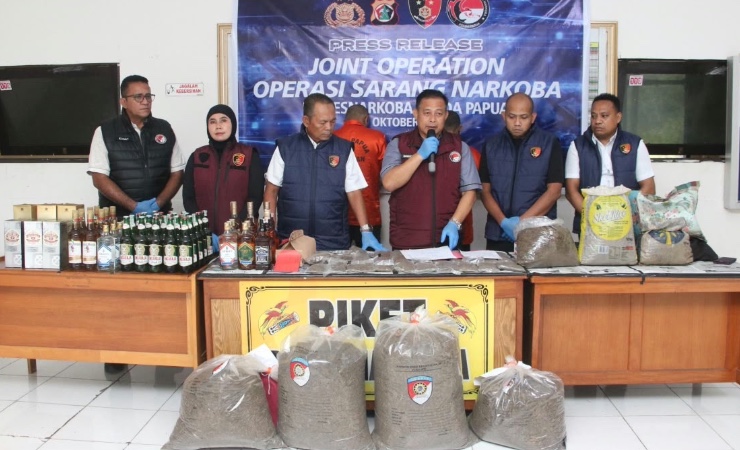
Indonesian police have arrested eight suspected drug dealers in Jayapura and seized approximately 20 kilograms of cannabis, 164.4 grams of methamphetamine and 53 bottles of alcoholic drinks in an operation targeting suspected drug-distribution locations. The Papua Regional Police operation highlights the continuing challenge of restricting narcotics circulation in a region where both land and sea routes can be exploited to move illegal substances between communities.
The operation, reported by Indonesian media on October 19, 2026, combined enforcement against suspected drug dealers with efforts to remove substances associated with public health and security concerns. The quantities seized indicate the scale of the alleged distribution activity uncovered by investigators, although the full extent of the network and the intended destinations of the drugs will depend on the outcome of further inquiries.
The arrests also come amid wider police efforts to disrupt cannabis transportation through Jayapura. In a separate case, officers from the Papua Regional Police’s Water and Air Police Directorate arrested a suspected courier at Jayapura Port on the night of October 17. The man, identified by the initials NK, allegedly intended to transport around four kilograms of cannabis to Sorong in Southwest Papua aboard the passenger ship KM Sinabung. Police said the cannabis was believed to have originated in Papua New Guinea and entered Indonesia through an unofficial border route.
Although the two cases are separate, together they underline why law enforcement in Papua must address both local distribution and the movement of narcotics between locations.
Eight Suspects Arrested in Jayapura
An Operation Targeting Suspected Drug Activity
The reported operation in Jayapura resulted in the arrest of eight people suspected of involvement in drug distribution. Officers seized cannabis weighing approximately 20 kilograms, methamphetamine totalling 164.4 grams, and 53 bottles of alcoholic drinks, according to reports supplied by Seputar Papua and Kompas.
The operation formed part of police efforts to address suspected drug activity at locations identified for enforcement. The investigation has seen significant progress with the arrests and seizures, but the legal process must still assess the evidence. The court must establish the guilt of those arrested, who should be regarded as suspects until then.
The distinction matters in cases involving alleged distribution networks. Police action can remove suspected drugs from circulation and provide investigators with evidence, but further inquiries are needed to establish who controlled the substances, how they were obtained, and whether other people were involved.
The amount of cannabis reportedly seized is substantial enough to warrant further investigation into its origin, intended recipients, and distribution arrangements. The methamphetamine seizure also raises questions about the channels through which different types of narcotics are reaching local markets.
The 53 bottles of alcoholic drinks seized during the operation form another part of the reported enforcement outcome. However, the available reports do not establish that every bottle was illegal or explain the specific legal basis for its seizure. Investigators must confirm those details.
Establishing the Wider Network
Arresting suspected dealers is one stage in a broader law enforcement process. Investigators must determine whether the suspects were operating independently or as part of a larger distribution network. They may also need to examine communications, financial transactions, supply arrangements, and the relationship between suspected sellers and their customers.
Such work is important because street-level seizures do not necessarily reveal the full structure of a supply chain. A person found in possession of drugs may be a distributor, courier, or intermediary, and the roles of individuals must be established through evidence rather than assumption.
The next stage of the Jayapura investigation will therefore be important in determining whether the operation has disrupted a local distribution point or exposed links to a wider network. The information available at the time of reporting does not establish the final findings of the investigation or whether additional arrests will follow.
For the public, the immediate significance is that the substances reported seized are no longer available for distribution through the channels under investigation. For law enforcement, the longer-term test is whether the evidence can be used to identify suppliers and prevent the same routes or locations from being used again.
Cannabis Trafficking and the Papua New Guinea Border
A Separate Case at Jayapura Port
The challenges facing police in Jayapura are not limited to suspected dealers operating within the city. Papua’s geography, including its international land border and extensive maritime connections, also creates enforcement responsibilities involving transportation between locations.
On Saturday night, October 17, 2026, officers from the Papua Regional Police’s Water and Air Police Directorate arrested a suspected courier identified as NK at Jayapura Port. The suspect was preparing to board KM Sinabung, a passenger vessel bound for Sorong in Southwest Papua. Police said he was allegedly carrying around four kilograms of cannabis intended for distribution in Sorong.
The case was reported by ANTARA on October 19. According to Papua Regional Police Water and Air Police Director Commissioner Tri Setyadi, the arrest followed information received by officers that NK was carrying cannabis for transport to another city.
“From the information received, NK was carrying around four kilograms of cannabis that would later be distributed in Sorong,” Tri said, according to ANTARA.
The statement indicates that police were investigating not only possession of the drug but also its alleged movement to another destination. Transportation by passenger vessel can connect communities across Papua and neighboring regions, making port inspections and intelligence-led enforcement relevant to efforts to prevent illegal cargo from reaching its intended market.
Police said preliminary questioning suggested that the cannabis originated in Papua New Guinea and had been smuggled into Indonesia through an unofficial route along the border. Tri added that NK had allegedly been promised Rp5 million if he successfully transported the consignment to Sorong.
These details remain allegations reported during the initial investigation. The origin of the cannabis, the alleged payment arrangement, and any involvement by other people will need to be established through further evidence.
The Importance of Maritime Enforcement
The arrest illustrates the role of the Water and Air Police Directorate in monitoring transportation routes and investigating suspected smuggling. Ports are important points of connection for residents, commerce, and passenger travel, but they can also be used by people attempting to move prohibited goods.
Effective enforcement must therefore balance security with the normal movement of passengers and legitimate cargo. Intelligence from the public, targeted inspections, and coordination between police units can help officers focus their attention on suspicious activity without treating ordinary travel as inherently criminal.
In the NK case, investigators said questioning was continuing to identify possible links to other people. Tri appealed to residents to report suspected drug distribution in their communities, emphasising the importance of public cooperation in supporting law enforcement.
The case also demonstrates why investigations into alleged trafficking should not stop with the person physically carrying the drugs. If evidence confirms that a courier was acting on behalf of others, identifying the people who arranged the shipment could help authorities understand how the supply chain operates.
Protecting Communities from Drug-Related Harm
Enforcement Is Only One Part of the Response
Narcotics enforcement is important not only because illegal drugs are prohibited under Indonesian law, but also because drug distribution can expose individuals, families, and communities to serious health and social risks.
Methamphetamine is a powerful stimulant associated with significant physical and psychological harms. Cannabis also carries health risks, particularly when used by adolescents and other vulnerable groups. The effects of substance use vary, but prevention, early intervention, and access to appropriate support are important parts of a public health response.
Police operations can reduce the supply available through suspected distribution channels. Yet seizures alone cannot demonstrate whether drug use has declined or whether the underlying market has been disrupted permanently. That assessment requires longer-term information, including trends in drug availability, repeat offending, treatment access, and community reports.
Prevention programs can complement enforcement by helping young people understand the risks associated with drug use and providing families clear information about where to seek assistance. Schools, health professionals, community organizations, and local authorities can all contribute to that effort.
Public cooperation is also essential. Residents may be among the first to notice suspicious transactions or repeated activity around a location. Reporting information through appropriate channels can support investigations, provided allegations are assessed carefully and do not lead to vigilantism or the targeting of people without evidence.
The Role of Accountability and Due Process
Careful investigation and respect for legal procedures must follow police operations. Seized substances need to be documented and examined, while suspects must be processed according to Indonesian law. Evidence must establish the role of each individual rather than relying solely on the fact that a person was present at a location or associated with another suspect.
This approach strengthens the credibility of law enforcement. Successful drug control is not measured only by the number of arrests or the weight of substances seized. It also depends on the quality of investigations, the ability to identify the people responsible, and the prevention of further distribution.
The distinction between the Jayapura raid and the separate port arrest is equally important. The available reporting does not establish a connection between NK or the four-kilogram cannabis consignment and the eight suspects arrested in the other operation. The two cases should therefore be treated as distinct investigations unless authorities establish a link.
What the Operations Mean for Security in Papua
The seizures in Jayapura and the separate arrest at the port illustrate two dimensions of the drug-control challenge facing Papua: alleged distribution within urban communities and the movement of narcotics between locations.
Jayapura’s role as a transport and administrative center makes effective enforcement important for the wider region. The port connects the city with other destinations, while the international border with Papua New Guinea creates additional responsibilities for agencies monitoring the movement of prohibited goods.
The reported seizures demonstrate police activity against suspected distribution and transportation. However, a lasting reduction in trafficking will require more than isolated operations. Investigators need to identify suppliers and financial links, while agencies responsible for border security and maritime monitoring need to share information where appropriate.
At the same time, local communities need accessible prevention and support services. Drug-related harm cannot be addressed solely through arrests if demand, vulnerability, and barriers to treatment remain unaddressed.
The authorities will also need to communicate verified outcomes clearly. Information about the legal status of the suspects, the confirmed weight and classification of seized substances, and any subsequent arrests would help the public understand the results of the investigations without overstating what has been established.
Conclusion
The reported arrest of eight suspected dealers and seizure of approximately 20 kilograms of cannabis, 164.4 grams of methamphetamine, and 53 bottles of alcoholic drinks mark a significant enforcement action by the Papua Regional Police in Jayapura. The separate arrest of a suspected courier with about four kilograms of cannabis at Jayapura Port shows how hard it is to stop drugs from being moved between cities.
Both cases underline the importance of intelligence, community reporting, and effective investigation. They also show why enforcement must be supported by efforts to trace supply networks, strengthen prevention, and maintain access to appropriate health and social services.
The immediate seizures are an important part of the response, but the longer-term measure of success will be whether investigators can establish the full extent of the alleged networks and prevent further distribution. Transparent reporting, due process, and cooperation between police and communities will remain essential.
For Papua, sustained action against narcotics can contribute to safer communities and better protection for young people. Achieving that goal requires a coordinated approach that combines credible law enforcement with prevention, public awareness, and accountability.
Read Also
Papua Police Seize 10 kg of Marijuana in Jayapura
The Indonesia’s Customs Unveils 45 Drug Cases Worth Rp2.24 Billion in Papua
Papua Drug Cases Rise as Police Step Up Enforcement

