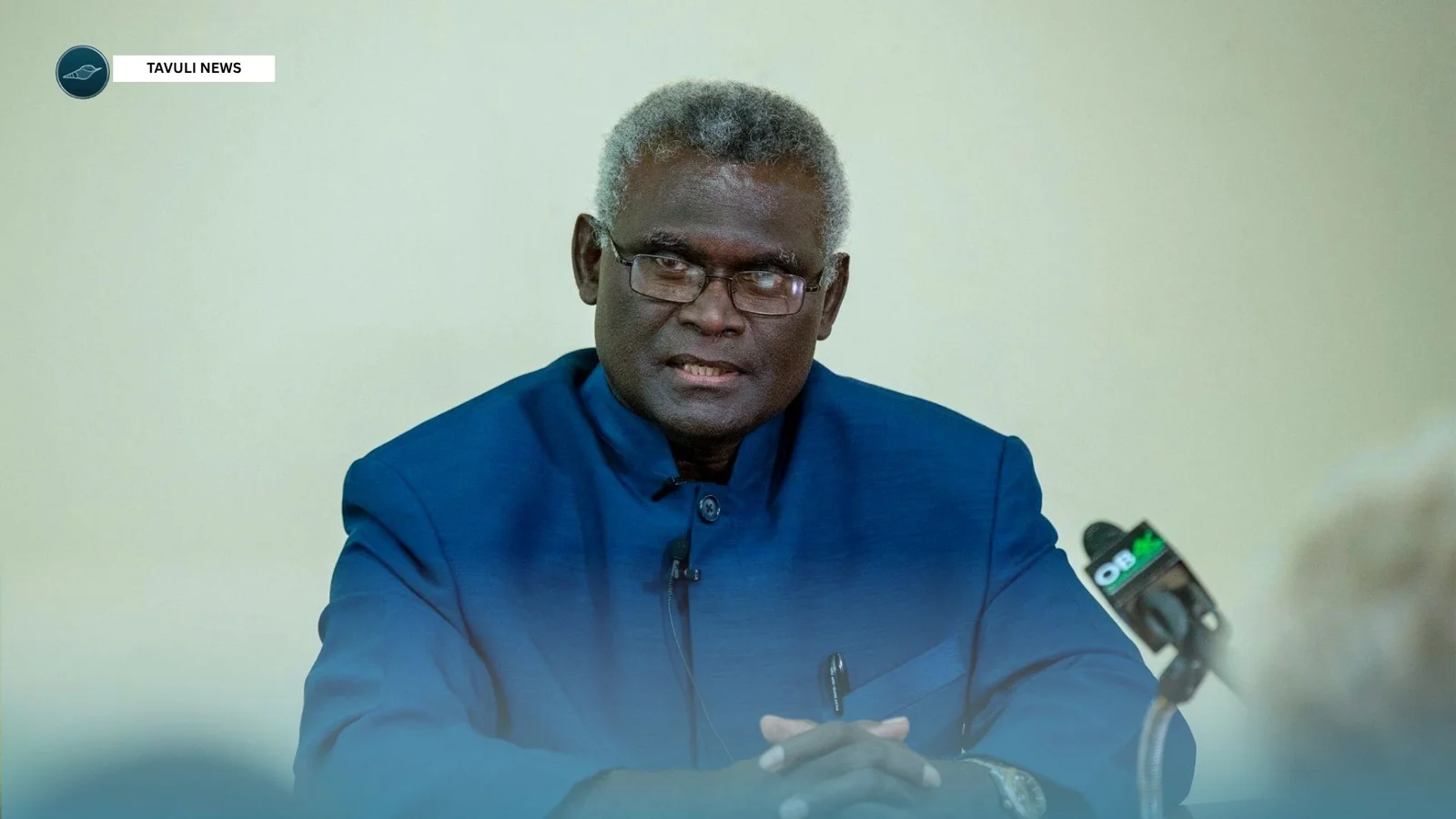
Manasseh Sogavare’s criticism of Prime Minister Matthew Wale’s Papua speech has brought a new dimension to the diplomatic debate between the Solomon Islands and Indonesia. The opposition leader is not disputing Honiara’s right to raise human rights concerns but says the government must match its public statements with diplomatic discipline, a clear strategy, and respect for Indonesia’s sovereignty.
The intervention followed Wale’s address to the 81st United Nations General Assembly in New York on September 24, 2026, where he called for attention to reported human rights violations in Papua and urged Indonesia to facilitate a visit by the UN High Commissioner for Human Rights. Wale also expressly recognized Indonesia’s sovereignty and territorial integrity and described Indonesia as a friend of the Solomon Islands.
Sogavare’s response, reported by Solomon Islands media on October 1 and by Jubi on October 2, was directed at what should happen after the speech and Indonesia’s subsequent response. His central argument was that international advocacy carries particular responsibility when it comes from a sitting prime minister speaking on behalf of a sovereign state.
The disagreement matters beyond the exchange between two political figures. The Solomon Islands and Indonesia have a relationship shaped by regional diplomacy, Pacific institutions, and differing perspectives on Papua. The challenge now is whether both governments can manage those differences without allowing public criticism to displace dialogue.
What Wale Said at the United Nations
Human Rights Concerns and a Call for Verification
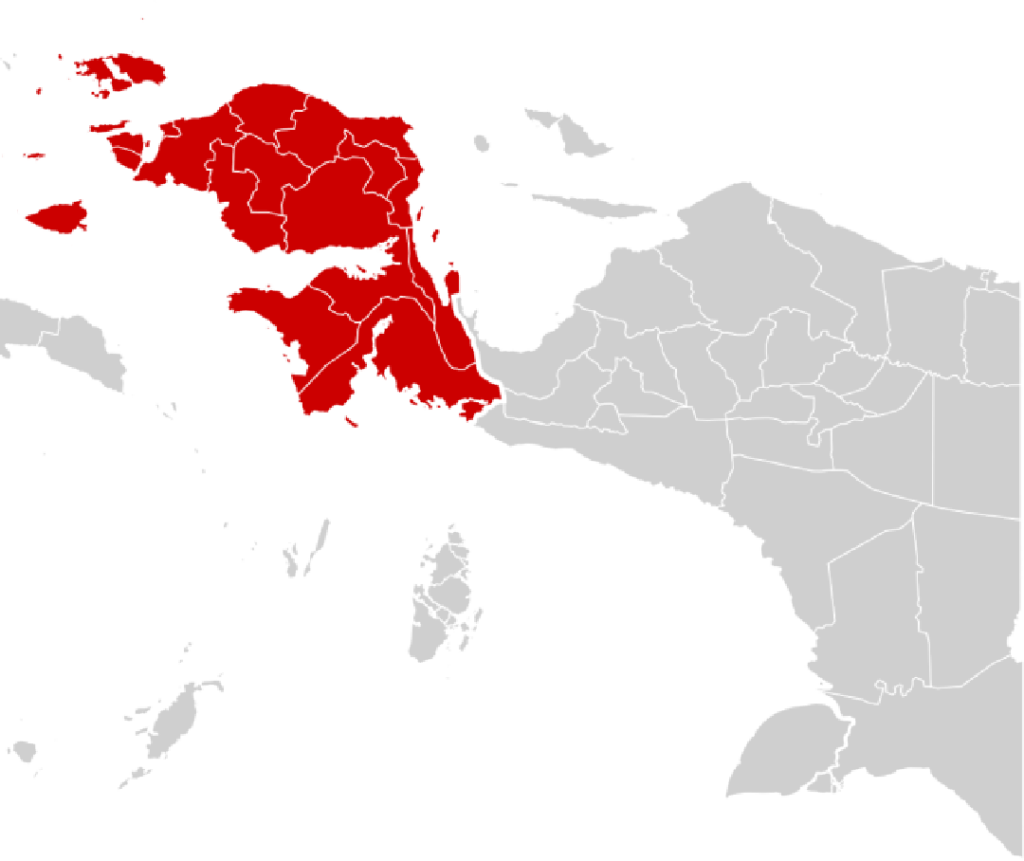
During the UN General Debate, Wale raised the issue of reported human rights violations in Papua. He called for independent verification and urged Indonesia to allow the UN human rights chief access to the region.
His speech placed Papua within a broader discussion of human rights and international engagement. For Solomon Islands, the issue has a particular regional dimension because of the close Melanesian ties many Solomon Islanders feel with Papuans.
Wale’s interest in the issue is longstanding. In 2015, he served as the Solomon Islands government’s special envoy on Papua and supported greater regional and international engagement. His September address therefore followed an established public position rather than introducing an entirely new subject in the Solomon Islands’ foreign policy.
At the same time, Wale’s speech included an explicit recognition of Indonesia’s sovereignty and territorial integrity. That point is important to understanding the debate: his remarks combined a call for international attention to human rights concerns with an acknowledgement of Indonesia’s status as a sovereign state.
The speech nevertheless drew criticism from Indonesian lawmakers, who argued that the presentation of Papua at an international forum should include a fuller account of security challenges and violence affecting civilians, including attacks attributed to the TPNPB-OPM. The competing positions have made the framing and verification of information central to the diplomatic discussion.
Sogavare’s Response: Advocacy and Government Responsibility
There is an Important Difference
In a statement reported by the Solomon Islands’ Official Opposition, Sogavare said he did not question Wale’s longstanding concern for Papua or the Solomon Islands’ right to raise legitimate human rights issues.
But he drew a distinction between advocacy and the responsibility of governing. When a prime minister speaks at the United Nations, Sogavare argued, he speaks for the country and his words carry the weight of its foreign policy.
“The Opposition is not questioning the Prime Minister’s longstanding concern for Papua or the Solomon Islands’ right to raise legitimate human rights concerns,” the statement said.
It continued: “But there is an important difference between advocacy and the responsibility of leading a government.”
Sogavare’s point was not that the Solomon Islands should remain silent. Rather, he argued that public statements should be followed by a considered diplomatic plan, including direct engagement with Indonesia and the use of established regional and international channels.
The opposition said Indonesia’s response should not force Solomon Islands to abandon its concerns, but neither should it draw the government into an unnecessary public confrontation. In Sogavare’s formulation, restraint means knowing when a country has made its position clear and when diplomacy should take over.
This is the core of his criticism: the government must demonstrate how its intervention at the UN will lead to constructive engagement, rather than leaving the issue at the level of speeches and public exchanges.
Indonesia’s Response and the Bilateral Relationship
Indonesia has rejected allegations of systematic human rights violations in Papua and defended its legal and institutional mechanisms. The response has added urgency to Sogavare’s call for the Solomon Islands government to explain its next steps.
The disagreement raises a familiar challenge in international relations. Governments may raise human rights concerns about another country, while the country being criticized may view the intervention as incomplete, politically sensitive, or insufficiently grounded in verified information. The way each side responds can affect not only the issue under discussion but also wider bilateral cooperation.
For Indonesia, sovereignty and territorial integrity are central principles in its response to international statements about Papua. Indonesian lawmakers have also argued that discussions should take account of violence against civilians and security personnel attributed to armed groups.
For Solomon Islands, the issue carries regional and cultural significance. Sogavare’s statement recognizes that concern, while insisting that it be pursued in a way that preserves diplomatic channels and respects the same sovereignty principles the Solomon Islands expects other countries to observe.
The two positions are not necessarily irreconcilable. Sogavare explicitly argued that respect for sovereignty and concern for human rights are not contradictory. His proposed balance is to support credible and independent examination of human rights concerns while maintaining constructive relations with Jakarta.
That formulation leaves room for diplomatic engagement, but it also places responsibility on the Solomon Islands government to explain how it intends to proceed.
The Pacific Islands Forum as a Diplomatic Channel
A Regional Process Already Exists
Sogavare pointed to an established Pacific Islands Forum process as a way to continue discussing Papua without relying solely on public statements.
The opposition cited the 2025 Pacific Islands Forum Foreign Ministers Meeting, which reaffirmed recognition of Indonesia’s sovereignty over Papua, stressed constructive dialogue with Indonesia and tasked the Forum Secretariat with working with Indonesia on a proposed visit by Forum envoys in 2026, in consultation with the Melanesian Spearhead Group Secretariat.
For Sogavare, this process provides a diplomatic route through which Solomon Islands can continue raising concerns while keeping dialogue open.
The regional framework matters because Solomon Islands cannot resolve the issue alone. A multilateral process can provide a structure for engagement, help establish shared expectations, and create opportunities for communication between governments.
However, the existence of a regional process does not itself resolve disagreements about access, evidence, or the substance of human rights allegations. Its practical value will depend on whether the governments involved can agree on procedures and sustain engagement.
The opposition has therefore asked the GREAT Government to clarify what diplomatic contact has taken place with Indonesia following Jakarta’s response, what role the Ministry of Foreign Affairs and External Trade has played, and whether the government’s next steps have been agreed upon by the Cabinet.
A Political Disagreement Inside Solomon Islands
The exchange also reflects a domestic political debate about how the Solomon Islands should conduct its foreign policy.
Sogavare, a former prime minister and senior political figure, is challenging the government to show that its approach to Papua is consistent with its stated commitment to pragmatic, sovereign, and mutually beneficial international relations. His statement argues that foreign policy requires both conviction and judgment.
Wale, meanwhile, has a longstanding record of concern about Papua and has used the UN platform to call for international verification of reported human rights violations. His position, as reported, combines that call with an explicit recognition of Indonesia’s sovereignty.
The opposition’s criticism is therefore focused less on whether the issue should be raised and more on how a government should manage the consequences of raising it. Sogavare’s statement asks whether the administration has a strategy beyond the UN podium.
That question has practical implications. A government’s foreign policy is not measured only by the positions it announces but also by the diplomatic work that follows: whether it communicates with the country concerned, uses regional institutions effectively, and clarifies the outcomes it seeks.
The political debate should not be mistaken for evidence that the Solomon Islands has adopted a single, uncontested position on every aspect of Papua. The reported statements show a discussion about diplomatic methods and responsibility within the country’s political leadership.
Why the Issue Matters to Indonesia and the Pacific
Papua remains a sensitive subject in Indonesia’s relations with some Pacific governments. For countries with Melanesian populations and regional ties, public concern about Papua can carry political and cultural weight. For Indonesia, statements about the territory intersect with sovereignty, national unity, and its relationships across the Pacific.
That combination makes diplomatic language especially consequential. A statement intended to draw attention to human rights can also be interpreted by the country concerned as a challenge to its internal affairs, particularly if the context and evidence are contested.
The reverse is also true: a response centered exclusively on sovereignty may not satisfy those seeking credible examination of specific allegations. Sogavare’s argument is that a durable diplomatic approach must acknowledge both concerns rather than treating them as mutually exclusive.
For Indonesia and Solomon Islands, the immediate task is to preserve communication and avoid allowing disagreement over Papua to dominate the wider bilateral relationship. Practical cooperation and regional stability depend on the ability of governments to discuss sensitive issues without abandoning established channels.
Conclusion
Sogavare’s criticism has shifted attention from Wale’s remarks at the United Nations to the diplomatic choices that follow them. His position recognizes the Solomon Islands’ right to raise human rights concerns about Papua while arguing that such advocacy must be accompanied by restraint, clear objectives, and respect for Indonesia’s sovereignty.
The next stage will depend on whether the GREAT Government can explain how it intends to pursue its concerns through direct engagement, the Pacific Islands Forum, the Melanesian Spearhead Group, and the United Nations. For Indonesia, continued dialogue offers an opportunity to present its position and engage with questions raised by regional partners.
The disagreement does not have to define the relationship between the two countries. Its significance will be shaped by what both governments do next: whether they rely on public confrontation or use diplomacy to address differences, clarify evidence, and maintain constructive engagement.
In the end, the test of the Solomon Islands’ approach will not be the force of a speech alone, but whether its foreign policy can combine principle with practical diplomacy. For Indonesia and its Pacific neighbors, that balance will remain important as discussions about Papua continue.
Read Also
Indonesia Uses UN Right of Reply on Papua
Indonesian Lawmakers’ Challenges Solomon Islands’ UN Speech on Papua