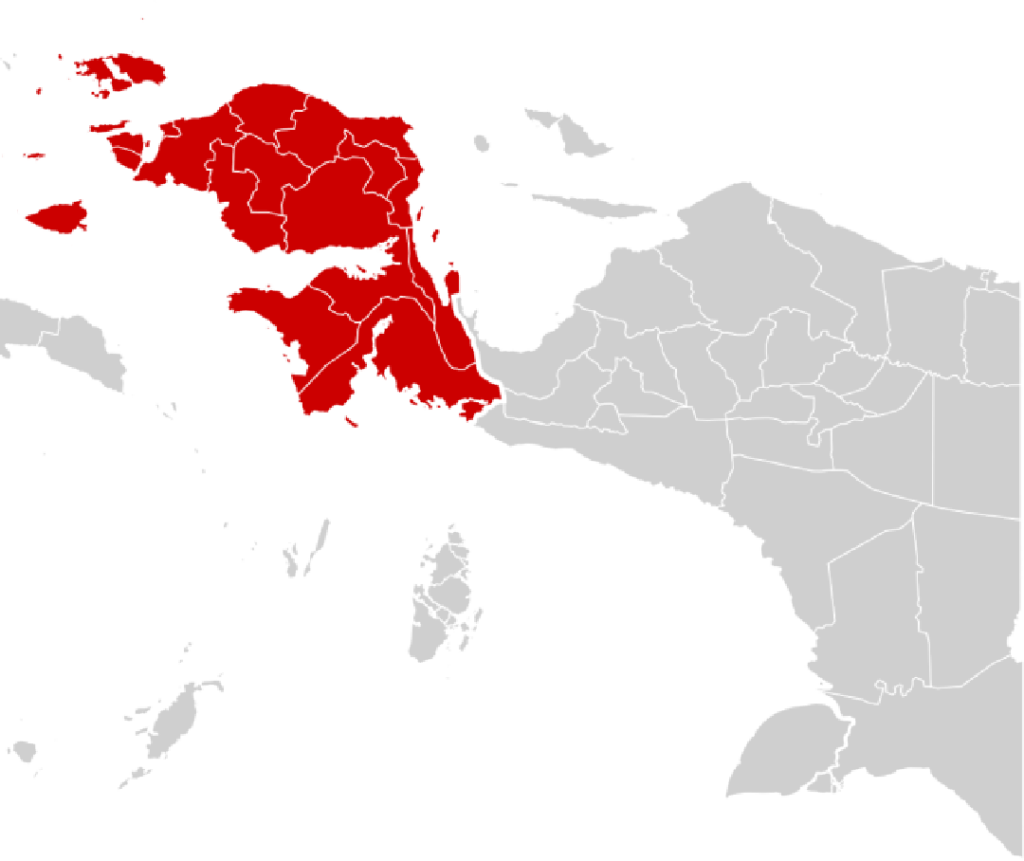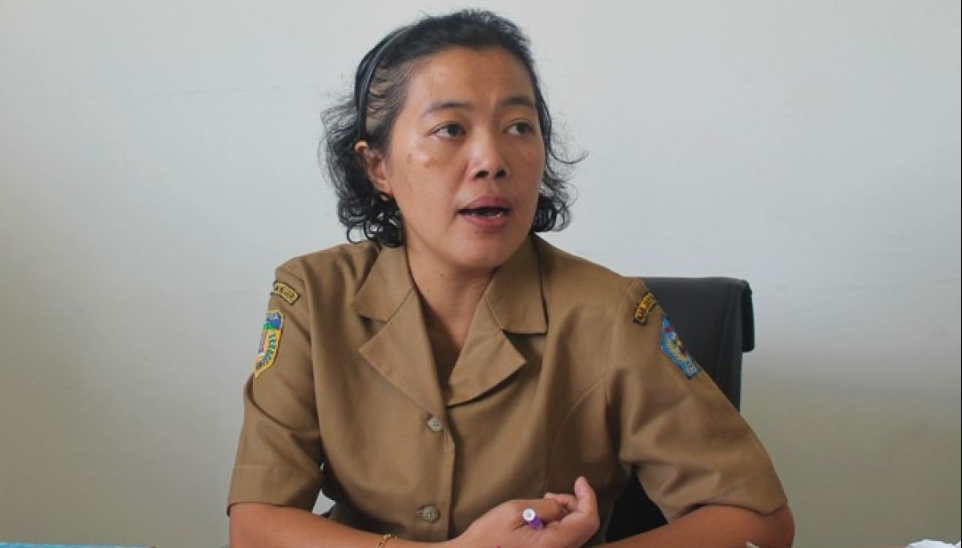
Violence abruptly ended Aprida Rapi’s story of dedicated public service. The 49-year-old government official was serving as Head of the Livestock and Animal Health Division at the Agriculture Agency of Jayawijaya Regency when she was killed during an official assignment in Muliama, Jayawijaya, Papua Pegunungan (Highland Papua), on September 9, 2026.
Aprida was travelling with colleagues from the Jayawijaya Agriculture Agency to deliver livestock assistance and inspect a rice-field development program when their journey was interrupted by an armed attack. She was shot in the abdomen and died at the scene, according to Indonesian authorities.
Two other agriculture officials, Alfonsius Albinus Mehan and Wili Mbuik, were also killed.
Authorities have attributed the attack to an armed group suspected of being associated with the West Papua National Liberation Army from the Free Papua Movement’s (TPNPB OPM) War Regional Command (Kodap) III Ndugama, led by Egianus Kogoya. The investigation remains ongoing, including efforts to identify and apprehend the people responsible.
For Aprida’s family in Tana Toraja, Sulawesi Selatan (South Sulawesi), however, the case is not simply about Papua’s security conflict. It is about a woman who spent years working as a public servant, travelled to communities as part of her duties, and did not return from an assignment intended to help local residents.
A Career Built Around Livestock and Public Service
Aprida Rapi served as Head of the Livestock and Animal Health Division at the Jayawijaya Agriculture Agency.
Her position placed her at the intersection of two important issues for Papua Pegunungan: food security and rural livelihoods.
Livestock programs are particularly important in remote communities, where government assistance can help households develop sources of food and income. Officials working in this sector are therefore frequently required to travel outside government offices and into villages.
That was the purpose of the journey that ended in Muliama.
According to the Head of the 2026 Damai Cartenz Operation, Inspector General Faizal Ramadhani, a group of 11 employees from the Jayawijaya Agriculture Agency had travelled from Wamena toward Muliama to deliver livestock assistance and inspect a rice-field development program.
The assignment was part of the ordinary machinery of local government.
It involved officials going directly to communities, checking agricultural programs, and delivering assistance. In other words, Aprida was not travelling for a private activity when she was killed. She was performing her duties as a government employee.
That distinction is central to understanding the human and development cost of the attack.
The Journey from Wamena to Muliama
The events of September 9 began as a routine field mission.
The agriculture team travelled from Wamena toward Muliama. Their activities included distributing livestock assistance, including piglets, and checking the implementation of a program to open new rice fields.
The group later began its journey back toward Wamena.
At approximately 3:53 p.m. local time, the convoy was attacked on a road in Muliama District.
Kombes Pol. Yusuf Sutejo, spokesman for the 2026 Damai Cartenz Operation, said preliminary information indicated that the vehicle carrying the officials was stopped by an armed group and the occupants were ordered to stop.
The exact sequence of events was still being investigated, but the attack resulted in three deaths.
Aprida suffered a gunshot wound to the abdomen and died at the location.
Veterinarian Alfonsius Albinus Mehan, 35, suffered a gunshot wound to the back of the head and also died at the scene.
Wili Mbuik, a 25-year-old agriculture official and civil servant candidate, suffered a gunshot wound and was taken to Wamena Regional Hospital. She later died while receiving treatment.
The three deaths transformed what had begun as an agricultural field mission into one of the most serious recent attacks against local government personnel in Jayawijaya.
What Happened at the Scene?
Police and security personnel subsequently examined the location of the attack.
Investigators found three spent cartridges at the scene. Two were identified as 5.56 mm ammunition, generally associated with long-barrel firearms, while another was a 9 mm cartridge associated with a short firearm.
Witness information also led investigators to estimate that around eight people may have been involved in the attack.
Kombes Yusuf Sutejo said police had obtained descriptions of the suspected attackers and were pursuing them.
The discovery of physical evidence was important because investigators needed to reconstruct what happened beyond the initial witness accounts.
The evidence, witness statements, and subsequent identification efforts have formed the basis of the continuing investigation.
At the same time, authorities have urged caution in interpreting the investigation before all facts are established.
The identification of suspected perpetrators and the attribution of responsibility must ultimately be supported by evidence and handled through the legal process.
Aprida Was Among Three Civilian Officials Killed
The death of Aprida is inseparable from the two other victims.
All three were connected to the Jayawijaya Agriculture Agency and were performing government duties when the attack occurred.
Aprida was 49.
Alfonsius was 35.
Wili was in her mid-twenties.
Their ages represented three different stages of working life, but their professional purpose on that day was similar: they were travelling to support agricultural development and rural communities.
The five colleagues who survived the attack were subsequently brought to safety and became important witnesses for investigators.
The incident therefore affected an entire government team, not just the three people who lost their lives.
For the surviving employees, returning to fieldwork after such an attack is likely to carry a very different meaning.
For the families, the loss is permanent.
The Long Journey Home to Tana Toraja
After Aprida’s death, attention turned to bringing her home.
Her body was flown from Wamena on September 11.
Kapolres Jayawijaya AKBP Anak Agung Made Satruya Bimantara said Aprida’s body was transported on a Trigana Air Cargo flight from Wamena.
The departure was accompanied by an emotional farewell.
Around 400 relatives and members of the wider community reportedly gathered to accompany her before the body was flown to Sulawesi Selatan. Police and airport personnel helped oversee the process.
The journey continued to Tana Toraja, where Aprida’s family and relatives awaited her.
When the ambulance arrived in Tondon, Makale, on the morning of September 12, relatives reportedly broke down in tears.
The family held prayers before her body was taken to Bo’ne, in Lembang Leatung Matallo, North Sangalla, where relatives gathered to mourn her.
The images from Tana Toraja offered a stark contrast to the language of security reports.
In Jayawijaya, Aprida was described through her position and the circumstances of her death.
In Tana Toraja, she returned as a daughter, relative, colleague, and member of a community grieving someone they knew personally.
A Loss That Reached Beyond Papua
The killing of Aprida has consequences that extend beyond the immediate security situation.
Agriculture is one of the foundations of local economic development. Government agricultural officials are responsible for programs that affect food production, livestock ownership, rural incomes, and household resilience.
When officials cannot safely travel to communities, the effects may be felt in places far from the original security incident.
A livestock distribution program may be delayed.
A rice-field project may require additional security arrangements.
Agricultural officers may become more reluctant to travel into isolated areas.
Communities may have less access to technical assistance.
These are not abstract consequences. They can directly affect household livelihoods.
This is why civilian security is closely connected to economic development in Papua Pegunungan.
The Indonesian government’s challenge is not only to respond to armed attacks but also to ensure that essential public services remain operational.
Why Aprida’s Work Matters
Aprida’s role in livestock and animal health may appear technical to people unfamiliar with rural development.
In practice, it is highly practical.
Livestock can provide food, household assets, and income. Animal health programs can reduce losses and improve productivity. Government officers also serve as a bridge between public policy and individual farmers.
In Papua Pegunungan, where communities are geographically dispersed and transportation is challenging, that bridge can be especially important.
The Muliama mission was therefore part of a larger effort to connect government programs with communities.
The fact that the three officials were travelling to distribute livestock assistance and monitor rice-field development illustrates how security and development intersect.
A road that becomes unsafe is not simply a security problem. It can become an economic problem, a food security problem, and a public-service problem.
The Broader Security Investigation
Indonesian authorities have said the attack is suspected to involve the Kodap III Ndugama armed group associated with Egianus Kogoya.
The allegation remains part of the ongoing investigation.
Police have also identified two people, PN and KT, as suspected perpetrators in the broader case. Authorities say the two were already on police wanted lists and are suspected members of the Egianus Kogoya-led group.
According to the Damai Cartenz Operation, investigators linked the two suspects to other violent incidents in Papua, including the August 2026 shooting during the Baliem Valley Cultural Festival and the 2023 kidnapping of Susi Air pilot Philip Mark Mehrtens.
Those claims are allegations made by security authorities and should not be treated as judicial findings of guilt.
Their identification nevertheless demonstrates that investigators are attempting to connect evidence from the Muliama attack with existing case records.
Police have continued searching for the remaining suspects.
The investigation is therefore moving on two parallel tracks: establishing who carried out the Muliama attack and determining whether individual suspects have connections to earlier cases.
A Public Servant in the Middle of Papua’s Development Challenge
Aprida’s story highlights a reality that is often overlooked in international discussions about Papua.
Much of the region’s development depends on people willing to work in difficult environments.
Teachers travel to remote schools.
Health workers serve isolated communities.
Agricultural officers visit farmers.
Government administrators travel between districts.
Infrastructure teams work in challenging terrain.
These workers are not normally participants in armed conflict. Yet in areas affected by insecurity, their movement can expose them to risks beyond their professional responsibilities.
That is why protecting civilian workers must be considered part of development policy.
For the Indonesian government, restoring security in areas affected by armed violence is therefore directly connected to its ability to implement economic and social programs.
For local communities, the issue is equally straightforward.
They need government services to arrive safely.
They need officials to be able to return after delivering those services.
And they need agricultural assistance to translate into real improvements in household livelihoods.
Remembering Aprida Rapi
It is easy for a name to disappear beneath the terminology of a security report.
“Civil Servant.”
“Victim.”
“Armed attack.”
“Investigation.”
But Aprida Rapi was more than a line in a police statement.
She was a 49-year-old public servant who had responsibility for livestock and animal health in Jayawijaya.
On the day she died, she was carrying out the work assigned to her.
She was travelling with colleagues to support communities.
She was helping implement agricultural programs.
She was returning from that mission when she was tragically killed.
Her body travelled thousands of kilometres from Papua Pegunungan to South Sulawesi, where family and relatives gathered to say goodbye.
The journey home became a reminder of the distance many public servants travel in Indonesia to carry out their duties.
It also exposed the human cost of insecurity in Papua.
Conclusion
The death of Aprida Rapi is a tragedy for her family, her colleagues, and the communities she served.
The 49-year-old Head of the Livestock and Animal Health Division at the Jayawijaya Agriculture Agency was killed while carrying out a government mission involving livestock assistance and agricultural development.
Her death, alongside those of Alfonsius Albinus Mehan and Wili Mbuik, has raised renewed concern about the security of civilian workers in Papua Pegunungan.
The Indonesian authorities have attributed the attack to an armed group and continue to investigate the incident. Suspected perpetrators have been identified, while the search for others continues.
The next stage is crucial.
Investigators must establish the complete sequence of events, identify those responsible, and ensure that the evidence is processed through the legal system. At the same time, the government faces the broader challenge of ensuring that violence does not prevent public servants from reaching the communities they are expected to serve.
That connection between security and development is perhaps the clearest lesson from Aprida’s death.
A livestock program is only useful if officers can safely deliver it.
A rice-field project is only sustainable if communities can access the officials supporting it.
And public service can only function when those who provide it are protected.
Aprida Rapi left Wamena as a government officer carrying out an ordinary assignment.
She returned to Tana Toraja in a coffin.
For Papua Pegunungan, her death should strengthen the determination to protect civilian workers, maintain essential public services, and ensure that development can continue even in areas facing serious security challenges.
Read Also
Three Jayawijaya Civil Servants Killed by TPNPB OPM in Muliama
Alfonsius: 9 Years Serving Papua, Killed by TPNPB OPM in Jayawijaya
Wili Mbuik: Young Civil Servant Killed by TPNPB OPM in Jayawijaya