A security dispute in Papua has taken a new turn after Maybrat shooting claims involving three civilians prompted the Indonesian military to issue a public clarification. Kodam XVIII/Kasuari, the Indonesian National Army (TNI) command responsible for the region, said the injuries suffered by the three residents were inconsistent with gunshot wounds and that no Indonesian military operation was taking place around the reported location when the incident occurred.
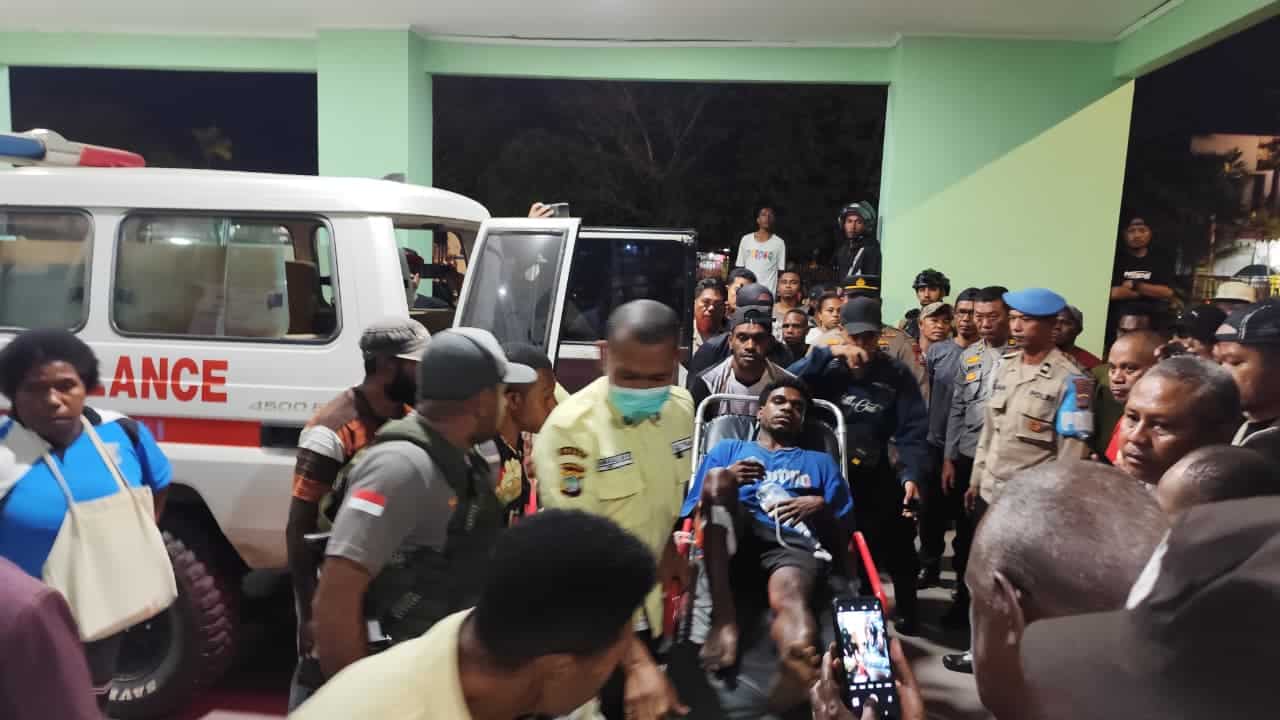
The statement came after reports initially described the incident as a shooting involving civilians in Aifat Timur Tengah, Maybrat Regency, in Southwest Papua Province. The three residents were subsequently taken to Sele Be Solu Hospital in Sorong for further treatment. According to the military’s account, preliminary examination indicated injuries more strongly associated with a sharp weapon than firearms.
The conflicting accounts underline the importance of a careful investigation in a region where security incidents can quickly become politically sensitive. They also demonstrate why verified information is particularly important as Indonesia approaches its 81st Independence Day celebrations on 17 August.
What Happened in Maybrat?
The incident occurred in the Ainot area, around the banks of the Kamundan River, in Aifat Timur Tengah District. According to the report published by Koreri on 16 August 16, the incident took place on 13 August, 06.00 PM, although some earlier reports circulated descriptions that referred to 14 August in connection with the victims’ evacuation.
Three residents from Aifam Village were reported to have been injured. Two of the victims were women and one was a man. They were later transported to Sele Be Solu Hospital in Sorong, where they received medical treatment.
The initial reports generated concern because the incident was described as a possible shooting of civilians. Some media reports subsequently raised allegations involving Indonesian military personnel. Those allegations, however, have not been established as fact.
Kodam XVIII/Kasuari rejected the suggestion that its personnel were responsible.
Military Says Injuries Were Not Gunshot Wounds
In its latest public statement, Kodam XVIII/Kasuari said its preliminary assessment found that the victims’ wounds were not gunshot injuries but were strongly suspected to have been caused by a sharp weapon.
The military also stated that its initial field verification found no Indonesian military troops conducting an operation around Ainot at the time of the incident. At the same time, the command emphasized that the investigation remained ongoing and that conclusions should not be reached prematurely.
That distinction is important. A military denial does not by itself establish who was responsible for the incident. Conversely, an initial allegation that military personnel were involved should not be treated as proven without evidence.
For international readers following developments in Papua, the most reliable assessment at this stage is therefore that the circumstances surrounding the injuries remain under investigation.
Authorities Call for Calm
Kodam XVIII/Kasuari said it was deeply concerned about the incident and condemned violence against civilians regardless of who was responsible.
The command also highlighted the rapid response of medical personnel and security authorities, noting that the injured residents were transported to the hospital for continued treatment.
The military’s appeal for calm reflects a broader concern about the potential consequences of unverified information in Papua. In communities where security incidents can carry political implications, incomplete information can spread rapidly through social media and local networks.
Kodam XVIII/Kasuari specifically urged residents not to become provoked or distribute information whose source and accuracy had not been established. It said the Indonesian military, police, and local government would continue working together to maintain security in Southwest Papua.
That approach places verification at the center of the government’s response.
A Sensitive Security Environment
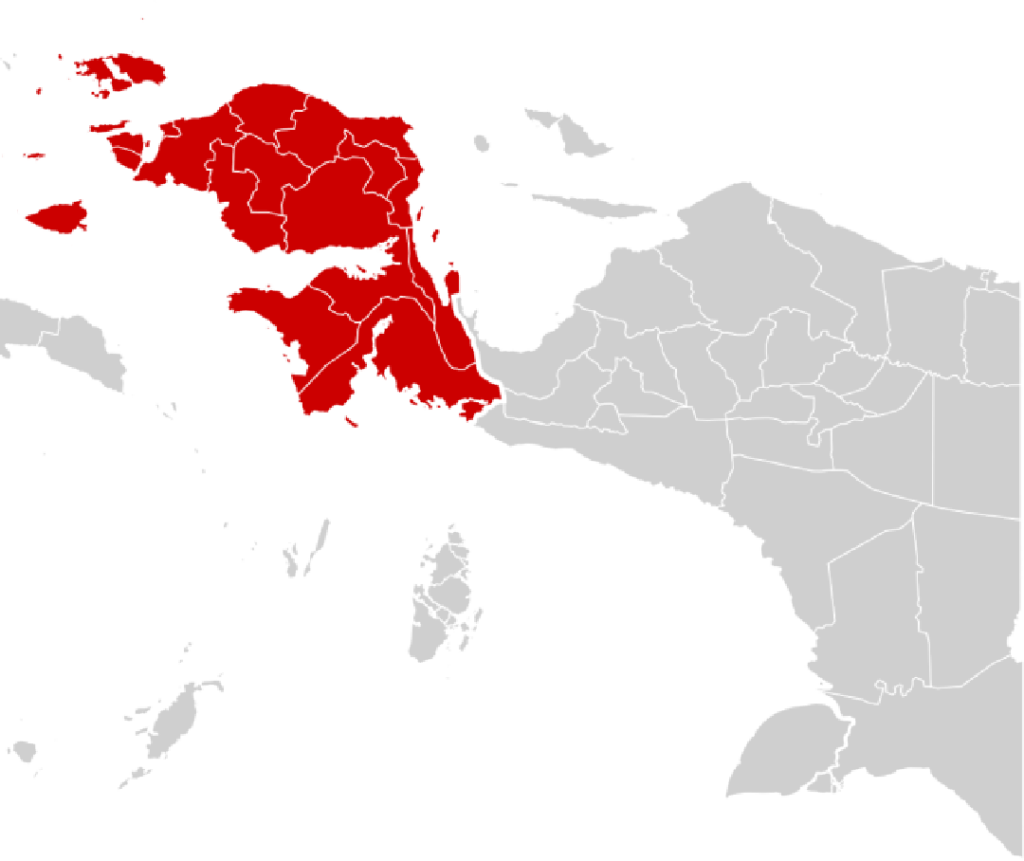
Maybrat is part of Papua Barat Daya (Southwest Papua), a province that borders several areas where Indonesian security forces have faced armed attacks and other security challenges recently.
The wider Papua security environment has frequently involved allegations and counterallegations between state authorities and armed separatist groups. Such circumstances make attribution particularly sensitive.
It is therefore important to distinguish between an unidentified assailant, an allegation against government personnel, and a confirmed act by an armed group. These are not interchangeable descriptions.
At the time of the latest official statement, Kodam XVIII/Kasuari had not publicly established the identity of the perpetrator. The command said investigators were continuing to examine available information and evidence before providing further conclusions.
This is why any claims connecting the incident directly to the West Papua National Liberation Army from the Free Papua Movement (TPNPB OPM) should be seen as unproven until investigators find evidence to support them.
Why Attribution Matters
Attribution is not merely a technical issue. In a politically sensitive environment, assigning responsibility without sufficient evidence can deepen public anxiety, damage trust, and complicate efforts to protect civilians.
If investigators eventually determine that an armed group was responsible, that finding would have significant security implications. If evidence instead establishes another perpetrator, the response would need to follow the same principle: accountability based on facts and Indonesian law.
Currently, the available official information does not definitively attribute the attack to either the Indonesian military or TPNPB OPM.
That is an important point for responsible journalism.
Security and Civilian Protection
The Maybrat incident also highlights a central challenge for the Indonesian government in Papua: security policy must protect civilians while ensuring that allegations of misconduct are investigated transparently.
For communities living in remote areas, physical security is closely connected to access to healthcare, transportation, education, and government services. A security incident can have consequences far beyond the immediate victims. It can affect mobility, local commerce, and confidence in public institutions.
This is particularly relevant in districts such as Maybrat, where geography makes emergency responses more complicated than in major urban centers.
The evacuation of the three injured residents to Sorong illustrates the importance of functioning connections between remote communities and regional healthcare facilities. The response is therefore not only a security matter but also a question of public service capacity.
Indonesia’s Independence Day Adds Political Sensitivity
The incident occurred just days before Indonesia’s Independence Day on 17 August, when national celebrations are taking place across the country, including Papua.
Independence Day has particular political significance in Papua because competing narratives about history, identity, and political status have long circulated in the region.
That context can make isolated security incidents more vulnerable to politicization.
For Indonesian authorities, maintaining public order while avoiding unnecessary escalation is therefore critical. The military’s decision to publicly explain its preliminary findings and emphasize that the investigation remains open is part of an effort to prevent speculation from becoming accepted as fact.
The government must also ensure that the investigation remains credible. A transparent process is essential not only for public confidence but also for the credibility of any eventual conclusion.
Separating Security Facts from Political Narratives
The Maybrat case offers a wider lesson about information management in conflict-affected regions.
An incident involving civilians can quickly be framed through competing political narratives. One side may describe it as evidence of state violence, while another may attribute it to an armed separatist group. Neither interpretation should automatically be accepted before evidence is established.
The responsible approach is to separate three things: what is known, what has been alleged, and what remains unknown.
In this case, what is known is that three civilians were injured in Maybrat and subsequently received medical treatment in Sorong. The Indonesian military has stated that preliminary examination did not identify the injuries as gunshot wounds and that no TNI operation was underway in the immediate area at the time.
What remains unresolved is who caused the injuries and precisely how the incident unfolded.
That distinction should remain at the center of public discussion.
Protecting Stability while Investigations Continue
The Indonesian government and local authorities face a delicate task. They must maintain security without allowing uncertainty to fuel further tensions.
The immediate priority should be the recovery of the victims, protection of residents, and completion of a credible investigation. If evidence identifies a perpetrator, appropriate legal action should follow.
At the same time, communities need reliable information. Regular communication from authorities can help prevent rumors from filling an information vacuum.
Kodam XVIII/Kasuari has said that significant developments from the investigation will be communicated publicly once they have been verified.
That commitment will be important in the days ahead.
For international observers, the case also demonstrates why developments in Papua require careful reading of multiple sources rather than reliance on a single narrative. Local reporting, official statements, medical findings, and independent verification can each contribute different pieces to the picture.
A Broader Development and Security Challenge
Security cannot be separated from development in Papua.
Roads, bridges, schools, healthcare facilities, airports, and telecommunications infrastructure all depend on a minimum level of stability. Conversely, better public services can strengthen communities’ resilience and improve their ability to respond to emergencies.
This is particularly significant in remote areas of Southwest Papua. The ability to transport injured residents from Maybrat to a hospital in Sorong demonstrates both the geographic challenges facing the region and the importance of maintaining transport and healthcare networks.
The longer-term objective should therefore extend beyond responding to individual incidents. It should include strengthening civilian institutions, emergency healthcare, law enforcement capacity, and community-based conflict prevention.
For Indonesia, such efforts are part of the broader challenge of ensuring that development reaches communities across Papua while maintaining public safety.
The Importance of Evidence
The Maybrat case is still developing. That means definitive conclusions should wait until investigators have completed their work.
The strongest message from the latest official statement is not simply the denial of military involvement. It is the insistence that the facts must be established before responsibility is assigned.
That principle is especially important in Papua, where security incidents often carry consequences beyond the immediate event.
The three injured residents deserve proper medical treatment. Their families deserve clear information. The wider community deserves security. And the public deserves an investigation capable of distinguishing verified evidence from speculation.
Conclusion
The Maybrat shooting claims have highlighted once again how quickly a security incident in Papua can become a matter of national and political attention. Kodam XVIII/Kasuari has denied that TNI personnel were involved, saying preliminary assessments indicate the victims suffered injuries from a sharp weapon rather than gunfire and that no military operation was taking place in the area at the time.
But the case is not yet closed. The identity of the perpetrator and the complete circumstances surrounding the incident remain matters for investigation.
For Papua, the priority should be straightforward: protect civilians, treat the injured, establish the facts, and ensure accountability based on evidence. As Indonesia prepares to mark its 81st Independence Day, maintaining calm in Maybrat and across Southwest Papua will require not only security measures but also responsible communication and public trust.
The coming days will show whether the investigation can provide the clarity that residents and the wider public need. Until then, the most responsible position is to avoid premature attribution and allow verified evidence to guide the next steps.