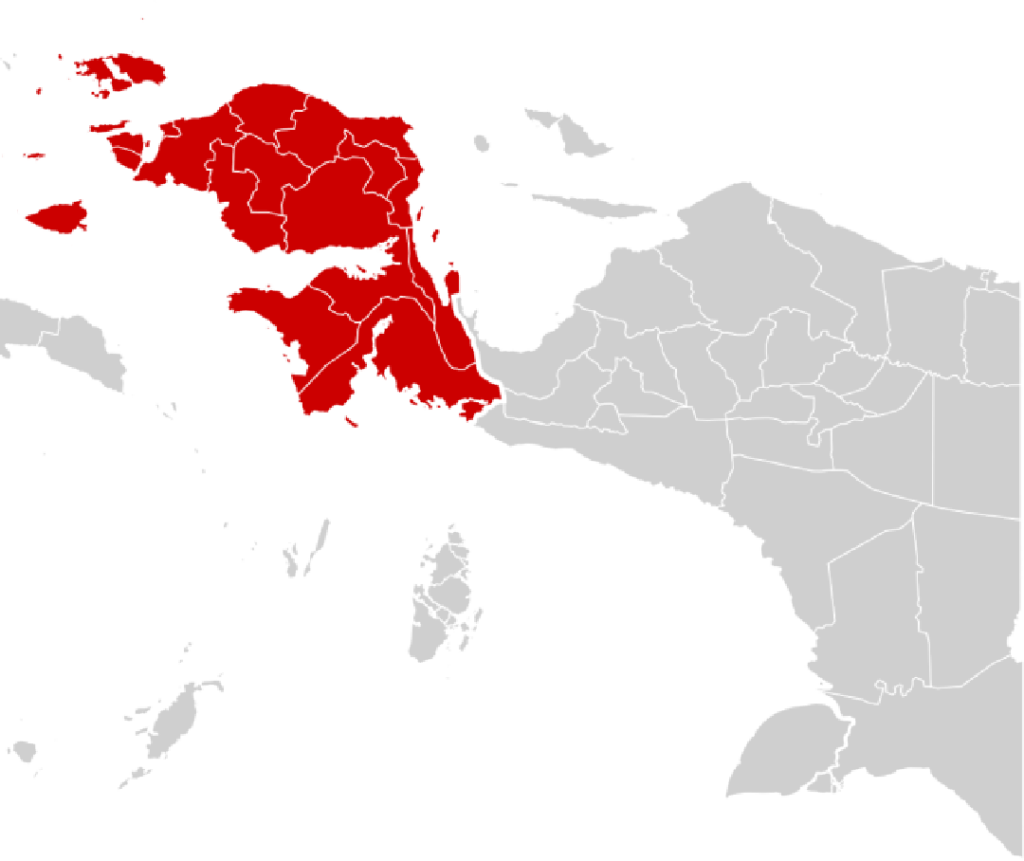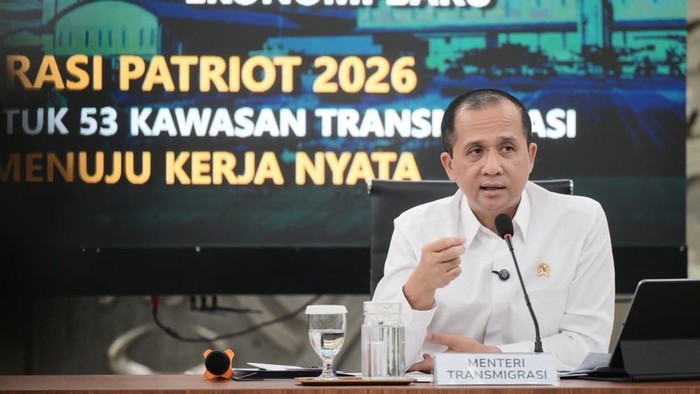
In communities where distance can make it difficult to reach markets, technology, and specialized expertise, Indonesia is sending a large academic field team directly to the ground. Around 1,230 participants of the 2026 Patriot Expedition Team (TEP) have been assigned to Papua, with the government expecting their work to translate local resources into higher productivity, stronger businesses, and new employment opportunities.
The deployment is part of a broader partnership between the Ministry of Transmigration and 10 Indonesian universities. Rather than limiting the program to research and mapping, the teams are expected to work alongside communities, identify practical economic problems, introduce appropriate technology, develop local products, and connect businesses with potential buyers, investors, and wider markets.
The scale is significant, but officials say the number of participants is not the main measure of success. The real test will be whether farmers, fishermen, small businesses, and households can increase their incomes and continue using the knowledge and systems introduced after the expedition teams leave.
From Research to Practical Economic Action
The 2026 program represents a shift in emphasis from mapping potential to acting on what earlier research has identified.
In 2025, about 2,000 TEP researchers were deployed to 154 transmigration areas to examine economic potential, natural resources, infrastructure, and local economic institutions. This year’s program is intended to turn those findings into more concrete interventions. The government has narrowed its broader development focus to 53 priority transmigration areas nationally, seeking deeper impact rather than simply expanding the number of locations.
In Papua, approximately 1,230 participants have been organized into about 200 teams across 10 transmigration areas. These include Lereh in Jayapura, Senggi in Keerom, Salor and Muting in Merauke, Prafi in Manokwari, Momiwaren in South Manokwari, Werianggi and Werabur in Teluk Wondama, Bomberay and Tomage and Weri and Saharey in Fakfak, and Klamono and Segun in Sorong.
The teams come from 10 university partners: Institut Teknologi Bandung, Universitas Diponegoro, IPB University, Universitas Gadjah Mada, Universitas Airlangga (UNAIR), Institut Teknologi Sepuluh Nopember, Universitas Indonesia (UI), Universitas Padjadjaran, Universitas Hasanuddin, and Universitas Brawijaya.
The arrangement gives the program a multidisciplinary character. Researchers and professionals can bring expertise in agriculture, economics, technology, health, business development, and other fields, while local communities contribute knowledge about their own environment, resources, and economic practices.
That combination is particularly relevant in Papua, where development conditions vary considerably between districts and communities.
A Tailor-Made Approach for Papua
Minister of Transmigration Muhammad Iftitah Sulaiman Suryanagara has stressed that development cannot rely on a single model applied uniformly across Indonesia.
He described the approach as “tailor-made,” with teams expected to consider local land conditions, weather, terrain, commodities, and social and cultural characteristics before designing interventions.
That principle may sound straightforward, but it has important implications for Papua.
A farming community does not necessarily face the same constraints as a fishing community. A village with agricultural production may need better post-harvest processing and transport, while another community may have products but lack packaging, branding, or access to buyers.
The TEP model therefore seeks to begin with the problem rather than with a predetermined solution.
In agricultural areas, for example, teams may assist farmers with improving production, post-harvest handling, and market access. Where local products already have commercial potential, assistance can focus on product quality, packaging, business capacity, and increasing selling value.
This approach places universities in a role that extends beyond traditional academic research.
Universities Take Knowledge into the Field
The partnership between the government and universities is one of the most important elements of the expedition.
Indonesia’s higher education institutions have large pools of researchers, lecturers, graduates, and specialists. Bringing that expertise into remote communities can help narrow the gap between knowledge developed in laboratories and the practical challenges faced by producers.
The Ministry of Transmigration says the program is intended to ensure that science and technology are applied directly to community needs. Participants are expected not simply to conduct research but to help solve problems, introduce appropriate technology, and develop local economic opportunities.
This model has already been reflected in the work of universities participating in earlier Patriot initiatives.
For example, Universitas Indonesia’s work in Werianggi and Werabur in Teluk Wondama has focused on strengthening local economic institutions, entrepreneurship, and market connections. Previous field research identified agricultural and fisheries potential but also highlighted challenges involving market activity and local economic institutions.
The university has explored initiatives such as processing bananas into higher-value products and strengthening women’s participation in household enterprises. Such programs illustrate the broader idea behind the expedition: local resources can generate greater economic value when communities have access to processing, packaging, branding, finance, and markets.
The Economic Logic of Local Value Creation
For Papua’s rural economy, one of the central challenges is the presence of natural resource management issues.
The greater question is how much economic value can remain within local communities.
A farmer who sells an unprocessed commodity may receive income from production. But additional economic activity can emerge when the commodity is processed, packaged, marketed, and distributed locally.
That process can create demand for workers, transportation, packaging materials, equipment, marketing services, and small-scale business management.
The same principle applies to fisheries and other local products.
The Patriot Expedition is therefore designed to help communities move beyond simply producing commodities toward developing value chains. Government officials have specifically identified increased productivity, higher incomes, stronger MSMEs and local businesses, expanded markets, investment, and employment as indicators of success.
The emphasis on employment is particularly important. A stronger local value chain can create opportunities not only for producers but also for young people seeking work in processing, logistics, retail, services, and entrepreneurship.
Opening Markets for Papua’s Small Businesses
Market access is often as important as production capacity.
A community may produce agricultural goods or handicrafts with genuine commercial potential, but the business can remain small if producers have difficulty reaching buyers outside their immediate area.
The TEP teams are expected to help bridge that gap by connecting local businesses with potential buyers, investors, and other market partners.
This situation is where universities can provide an important contribution. Academic teams can help entrepreneurs assess products, understand consumer preferences, improve packaging, and develop more systematic approaches to business management.
Digital tools can also expand the possibilities.
Earlier Patriot initiatives by Universitas Airlangga in Papua Barat, for example, have explored digital economic transformation, business assistance, and the development of local products such as processed matoa. The objective has been to help small businesses move beyond local markets through improved management, marketing, and digital skills.
However, digitalization alone cannot solve structural economic problems. Online marketing has limited value if production is inconsistent, transportation is unreliable, or products cannot meet quality standards.
For that reason, digital development needs to be accompanied by stronger production systems, logistics, financial management, and local institutions.
Building Institutions Alongside Businesses
One of the less visible but potentially important aspects of the Patriot Expedition is its attention to economic institutions.
A single entrepreneur may struggle to purchase equipment, transport goods, or negotiate with larger buyers. Producer groups, cooperatives, and village enterprises can potentially help communities pool resources and coordinate production.
UI’s previous work in Werianggi and Werabur identified this institutional dimension as an important part of local economic development. The area has agricultural and fisheries resources, but turning those resources into a stronger local economy requires networks connecting producers, markets, and government institutions.
This situation is why the expedition’s success should not be judged only by the number of businesses trained.
A more meaningful question is whether local communities become better equipped to organize their own economic activities.
If a producer group can negotiate with buyers without outside assistance, that is a measurable gain. If a local enterprise can manage its finances and expand its market independently, the intervention has greater prospects of lasting.
Papua’s Geography Makes Local Capacity Important
Papua presents particular development challenges because communities are spread across a vast and geographically diverse territory.
Distance can increase the cost of transporting agricultural and fisheries products. Limited connectivity can make access to information and markets more difficult. In some locations, basic infrastructure and institutional capacity also remain important constraints.
The Patriot Expedition cannot resolve all of these structural challenges by itself.
What it can do is help communities identify practical bottlenecks and develop solutions suited to local circumstances.
That distinction matters.
A university team cannot replace roads, ports, or telecommunications infrastructure. But it can help producers understand how to use available infrastructure more efficiently, improve product quality, organize supply, and identify markets.
Likewise, research cannot substitute for local government policy. But evidence from the field can help policymakers make more informed decisions.
A Wider Partnership Around Transmigration Areas
The government’s strategy also places the expedition within a broader effort to develop transmigration areas as productive communities.
According to the Ministry of Transmigration, the 2026 TEP program involves 1,476 participants (246 team leaders and 1,230 staff) in 246 teams, selected from more than 10,000 applicants through the participating universities. Nationally, participants are working in 53 priority transmigration areas, including Papua.
The Papua deployment therefore represents a substantial portion of the national program.
The government describes the initiative as an effort to bring science and technology closer to communities while improving productivity, income, and welfare.
For Papua, the initiative creates an opportunity to connect academic expertise with regional development priorities.
It also places greater responsibility on the participating universities and local administrations. Their work must remain connected to community priorities rather than becoming a series of short-term activities with limited follow-through.
Lessons from UI and UNAIR
The experience of previous university-led initiatives provides some indication of how the model can work.
UI’s engagement in Werianggi and Werabur has combined research with economic institution building, entrepreneurship, and local value creation. Its earlier work suggests that the development challenge is not simply identifying resources but creating the systems necessary to convert resources into sustainable income.
UNAIR’s Patriot Expedition in Papua Barat provides another example. Its teams have worked across health, digitalization, environmental management, and MSME development. Initiatives involving Smart Posyandu, digital business assistance, and matoa processing demonstrate how community welfare and economic development can be addressed together.
These experiences also highlight an important principle: local ownership matters.
Training can provide knowledge, but knowledge becomes economically valuable when communities can apply it independently.
The Real Test Begins After the Expedition
The most important measure of the 1,230 participant deployment will come after the teams complete their assignments.
Government officials have already emphasized that success should be measured through tangible changes, including improved productivity and income, stronger local businesses, expanded markets, investment, and employment.
That provides a useful framework for evaluating the program.
If farmers earn more because post-harvest losses decline, the intervention has produced a measurable result. If local entrepreneurs discover new buyers, that represents another gain. If processing businesses emerge and hire workers, the economic effect becomes broader.
But sustainability will ultimately depend on whether communities can continue the work without permanent dependence on external teams.
That is where the partnership between government, universities, and communities becomes particularly important.
A Development Model Built Around Local Potential
The deployment of 1,230 Patriot Expedition participants represents a significant effort to connect Indonesia’s academic resources with development priorities in Papua.
Its most promising feature is the attempt to move from mapping to implementation. Rather than simply documenting what communities have, the teams are being asked to help determine how those resources can generate greater productivity, income, and employment.
The approach also reflects a more decentralized understanding of development. Papua’s communities have different resources, markets, and social structures. A solution that works in Merauke may not be suitable for Teluk Wondama or Sorong.
That is why the government’s emphasis on locally tailored interventions is important.
The partnership also provides universities an opportunity to demonstrate that academic knowledge can have a direct social and economic impact.
The longer-term objective, however, should not be to make communities dependent on recurring expeditions. It should be to leave behind stronger skills, institutions, business networks, and local capacity.
Looking Ahead
The Patriot Expedition enters its most important phase when researchers and participants begin translating expertise into everyday economic activity.
For Papua’s transmigration areas, the opportunity is substantial. Better production can raise incomes. Processing can increase local value. Stronger businesses can create employment. Improved market access can expand commercial opportunities. And university partnerships can help local governments make development decisions based on evidence.
But those outcomes will require continuity.
The success of the 2026 program will ultimately depend on whether the relationships created between government, universities, and communities remain active after the expedition ends.
If they do, the 1,230 Patriots deployed to Papua could become more than a large academic field program. They could help establish local economic systems capable of generating opportunities from Papua’s own resources and human capital.
That is a more demanding goal than simply completing an expedition. It is also a more meaningful measure of development.
Conclusion
The deployment of 1,230 Patriot Expedition participants to Papua represents a major attempt to connect government policy, university expertise, and local community potential. More than a field program, the initiative offers an opportunity to strengthen productivity, expand market access, support local businesses, and create new employment in transmigration areas. Its lasting impact, however, will depend on sustained collaboration after the expedition ends. If local skills, institutions, and businesses continue to grow independently, the program could become a practical model for turning Papua’s economic potential into more inclusive and sustainable prosperity.