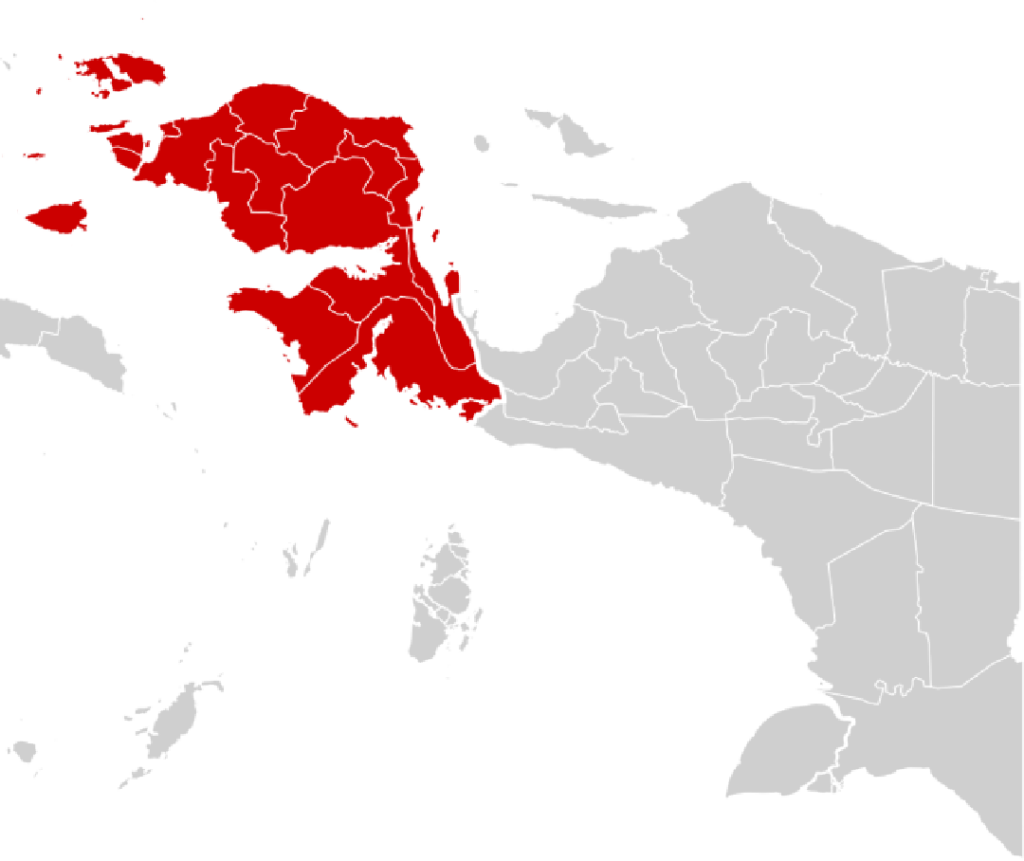
The Papua Tengah (Central Papua) medical scholarships program is putting human resources at the center of the province’s healthcare strategy, with the provincial government allocating scholarships for 35 Indigenous Papuans, known as Orang Asli Papua (OAP), to pursue medical education.
The initiative is intended to strengthen the availability of doctors in Papua Tengah and, over time, improve access to healthcare services for communities across the province.
The program comes as local authorities continue to face the challenge of ensuring that healthcare facilities are supported by sufficient medical personnel. Rather than relying solely on short-term recruitment, the scholarship approach seeks to build a pipeline of local professionals who understand the communities they will eventually serve.
According to reporting by ANTARA Papua Tengah, the provincial government has allocated scholarships for 35 prospective OAP doctors. The initiative is being implemented through the provincial health authorities as part of efforts to strengthen healthcare services.
The significance of the policy goes beyond the number of scholarship recipients.
A doctor trained through an affirmative education program can eventually become part of a local medical workforce, contributing not only through clinical services but also through health education, prevention programs, and community outreach.
For a geographically challenging province such as Papua Tengah, developing that local capacity is particularly important.
Why Local Doctors Matter
Healthcare access is influenced by more than the number of hospitals and clinics available.
Facilities also require qualified doctors, nurses, midwives, pharmacists, and other health professionals to operate effectively.
This is especially relevant in remote areas, where recruiting and retaining medical personnel can be more difficult than in major Indonesian cities.
The challenge is not unique to Papua Tengah. Across the broader Papua region, governments have increasingly recognized that investment in healthcare infrastructure needs to be accompanied by investment in medical professionals.
Earlier this year, for example, DPD member Filep Wamafma argued that improvements to healthcare infrastructure in Papua would need to be matched by adequate medical personnel, particularly specialist doctors. He said the development of 24 hospitals across the Papua region would have limited impact if the facilities were not supported by qualified health workers.
That principle also applies to Papua Tengah.
A modern health facility can provide better services only when doctors and other health professionals are available to operate it.
The scholarship program therefore addresses the human capital side of healthcare development.
From Scholarship to Public Service
The value of a medical scholarship is ultimately measured not only by graduation but also by what happens afterward.
The objective of Papua Tengah’s program is to produce doctors who can contribute to healthcare delivery in the province.
This approach is consistent with a broader pattern in Papua, where affirmative education programs are increasingly designed around the needs of local development.
In Papua Barat, for example, the provincial government has established a medical scholarship initiative for OAP students with an explicit expectation that recipients return and serve in the province after completing their studies. The program requires recipients to sign a formal commitment to return and work in Papua Barat.
The experience highlights an important policy consideration for Papua Tengah: scholarships are most effective when they are connected to clear workforce planning.
The province needs to identify where doctors will be needed, what medical specialties are most important, and how graduates can transition into local healthcare institutions.
That makes coordination between the provincial government, universities, hospitals, and health authorities essential.
A Selective Program Rather Than an Open Door
Papua Tengah’s health authorities have also emphasized the importance of a rigorous selection process.
That approach matters because medical education requires a high level of academic preparation, discipline, and commitment.
A scholarship program intended to address a long-term shortage cannot simply focus on increasing the number of beneficiaries. It must also ensure that recipients have the ability to complete demanding medical training.
ANTARA Papua Tengah has reported that the provincial health office is applying a strict selection process for the doctor scholarship program.
This reflects a broader shift toward making affirmative education programs more accountable.
Affirmative policies are designed to expand opportunities for groups that may face structural barriers to higher education. But effectiveness depends on combining access with quality.
For prospective medical students, that means academic standards remain important.
For the government, it means public funds are directed toward candidates with the strongest prospects of completing their studies and eventually contributing to the healthcare system.
Education as Health Infrastructure
It is easy to think about healthcare infrastructure in physical terms.
Hospitals need buildings. Clinics need equipment. Laboratories need technology. Ambulances need roads and logistical support.
But people are equally important as infrastructure.
A province can build a modern hospital without immediately having enough specialists to provide the full range of services.
Training doctors takes considerably longer than constructing a building. Medical students must complete undergraduate education, professional training, and, where necessary, specialist education.
That is why scholarship programs should be viewed as long-term investments.
A student receiving support today may become a practicing doctor several years from now. The policy therefore requires patience and continuity.
For Papua Tengah, that investment could gradually reduce dependence on doctors recruited from outside the region while increasing the number of professionals with a strong understanding of local conditions.
Strengthening Healthcare in Remote Communities
Papua Tengah’s geography presents a particular challenge to equitable healthcare delivery.
The province contains large areas where communities are separated by mountains, forests, and long distances between population centers.
In such circumstances, access to healthcare can depend heavily on the availability of personnel willing and able to work outside major urban areas.
Locally trained doctors may have an additional advantage because they can understand local languages, cultural practices, and community structures.
That does not mean every OAP doctor will automatically work in a remote district. Workforce distribution requires appropriate incentives, career pathways, infrastructure, and professional support.
But building a larger pool of doctors originating from Papua Tengah creates a stronger foundation for addressing those challenges.
The provincial government’s scholarship initiative can therefore be understood as part of a broader strategy to develop human resources alongside physical healthcare infrastructure.
Connecting Medical Education With Regional Development
The program also fits into a wider effort by Papua Tengah to develop human capital.
The provincial government has implemented other education initiatives aimed at preparing local residents for professional careers.
In July 2026, for example, Papua Tengah prepared 120 prospective students for its teacher training program as part of a long-term strategy to address shortages of teachers and attendance problems in schools. The government described the program as an effort to develop teachers with both professional competence and a commitment to serve local communities.
The same principle can be applied to healthcare.
Education is not an isolated sector. It determines the availability of professionals needed by hospitals, schools, government agencies, and businesses.
By investing in doctors, Papua Tengah is also investing in the province’s wider capacity to manage its own development.
Why Specialist Doctors Remain Important
Training general practitioners is an important first step, but the province’s healthcare ambitions will eventually require more specialist doctors.
Across Papua, governments have increasingly focused on specialist education because hospitals cannot provide comprehensive referral services without specialists.
Earlier this year, DPD’s Filep Wamafma specifically called for greater access to specialist scholarships for OAP doctors. He argued that strengthening the specialist workforce would be essential as healthcare infrastructure expands across Papua.
The argument is straightforward.
A patient may have access to a hospital but still need to travel elsewhere if the necessary specialist is unavailable.
For remote communities, such referrals can create additional financial and logistical burdens.
Over time, developing specialists from Papua Tengah could help reduce those gaps.
The 35 scholarship recipients therefore represent more than a numerical target. They can become the beginning of a longer pipeline of medical professionals.
A Question of Retention
Training doctors is only one part of the challenge.
Keeping them in Papua Tengah is equally important.
Medical professionals need competitive working conditions, adequate equipment, opportunities for professional development, and clear career pathways.
Doctors are also more likely to remain in a region when they can see a sustainable future there.
This means scholarship policy should ideally be connected with broader workforce policies.
Government hospitals and health centers need to provide appropriate working environments. Professional development opportunities need to remain available. Housing, transportation, and other practical considerations can also influence whether doctors remain in remote areas.
A scholarship therefore works best as one component of a larger system.
The investment begins with education but must continue through recruitment, placement, professional development, and retention.
A Broader Investment in Papua’s Human Capital
The decision to prioritize OAP medical students also reflects the importance of developing local human capital.
For many communities, the presence of a doctor who comes from the region can have significance beyond medical treatment.
Local professionals can become role models for younger students and demonstrate that careers in medicine are attainable.
They can also participate in preventive health campaigns, school health programs, and public education.
Over time, these activities can contribute to stronger health literacy.
A doctor does not simply treat illness.
Doctors can also help communities understand prevention, nutrition, maternal health, child development, sanitation, and the importance of seeking medical assistance early.
That broader role makes the development of a local medical workforce relevant to public health as well as clinical services.
The Road From Scholarship to Better Services
The 35 scholarship recipients will not transform Papua Tengah’s healthcare system overnight.
Medical education takes years, and the province will continue to need doctors and other health workers during that period.
Existing recruitment, national health workforce programs, and partnerships with medical institutions will therefore remain important.
But the scholarship program addresses a different question: where will tomorrow’s doctors come from?
By answering that question today, Papua Tengah can begin building a more sustainable workforce for the future.
The effectiveness of the program will depend on implementation.
Selection needs to remain transparent and merit-based within the affirmative framework. Academic support should be available to students who encounter difficulties. Progress needs to be monitored. Graduates need clear pathways into provincial and district health services.
If those elements work together, the investment could generate benefits well beyond the original scholarship.
Looking Ahead
Papua Tengah’s decision to support 35 OAP medical students represents a long-term approach to healthcare development.
The province is effectively investing in people before they become healthcare providers.
That requires patience, but it also offers the possibility of a more sustainable solution to the distribution of medical personnel.
The next stage will be ensuring that scholarship recipients successfully complete their education and eventually have meaningful opportunities to serve communities across Papua Tengah.
The province will also need to continue developing hospitals, primary healthcare facilities, medical equipment, and supporting infrastructure so that graduates have appropriate places to practice.
The strongest outcome would be a cycle in which education strengthens healthcare, better healthcare supports healthier communities, and healthier communities contribute more effectively to regional economic and social development.
Conclusion
The Papua Tengah medical scholarship program for 35 OAP prospective doctors represents a significant investment in the province’s human capital.
At its core, the policy recognizes a simple reality: better healthcare requires not only buildings and equipment but also people with the skills and commitment to serve communities.
The government’s decision to combine scholarship support with a strict selection process is therefore an important part of the program’s credibility. The objective is not simply to increase the number of students receiving financial assistance but to build a pipeline of qualified doctors capable of contributing to Papua Tengah’s healthcare system.
The initiative also fits within a wider pattern of development across Papua, where education and workforce programs are increasingly being linked to specific regional needs. Similar efforts elsewhere in Papua have emphasized the importance of ensuring that scholarship recipients eventually return to serve their communities.
For Papua Tengah, the road ahead will require continued investment.
The province will need to support students throughout their education, strengthen healthcare facilities, create attractive professional opportunities, and develop policies that encourage graduates to work where they are most needed.
If those efforts remain consistent, today’s scholarship recipients could become tomorrow’s doctors serving communities from Nabire to the province’s more remote districts.
In that sense, the 35 scholarships are not simply an education program.
They are an investment in who will provide healthcare in Papua Tengah in the years ahead.