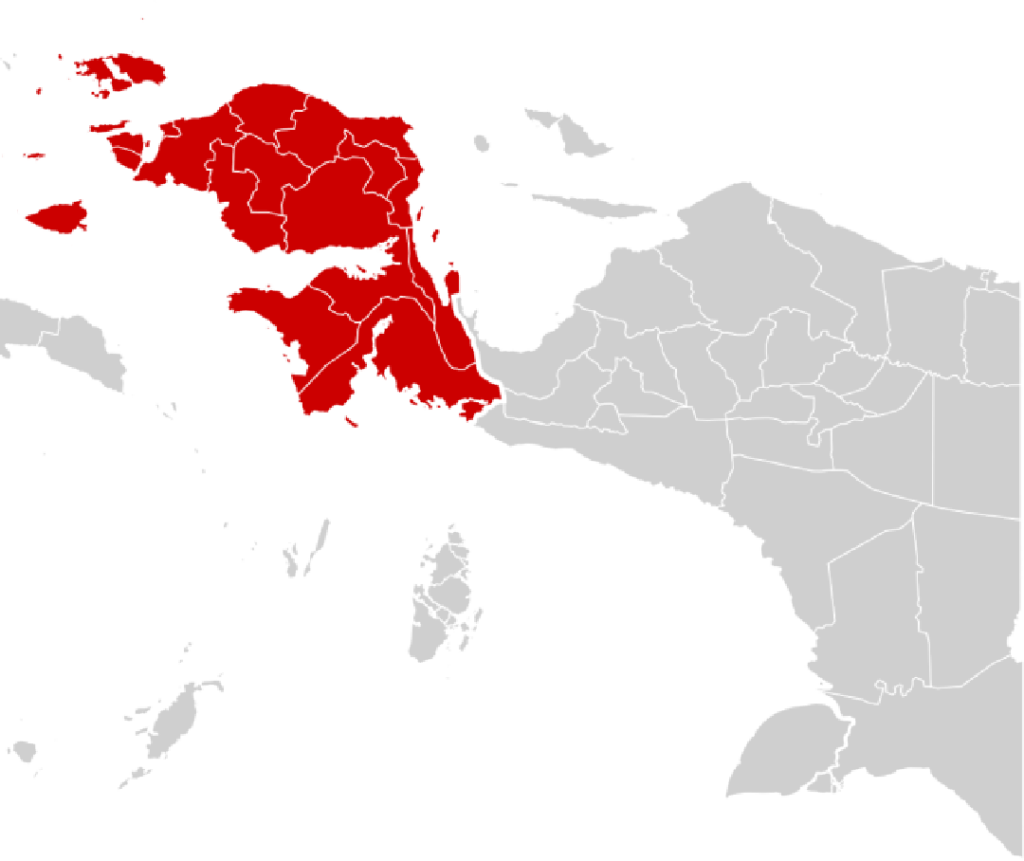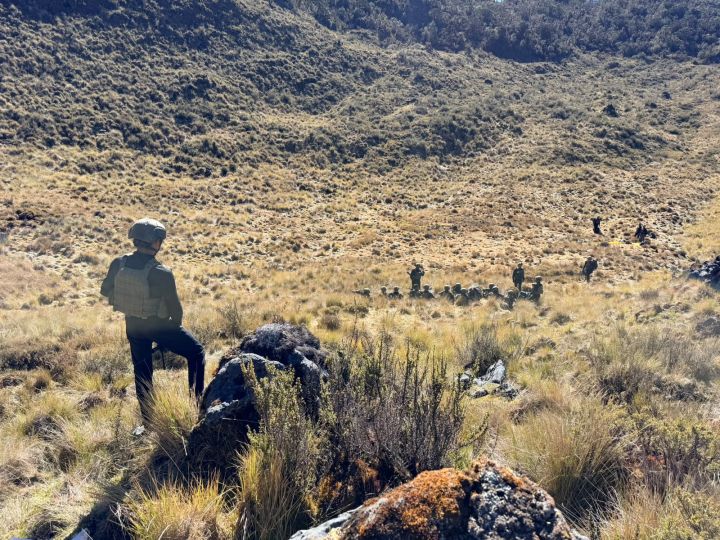
Indonesia’s Papua food aid mission to the remote district of Agandugume has entered a critical phase as authorities work to deliver emergency food supplies to communities affected by prolonged extreme weather. While difficult terrain and adverse weather have complicated logistics, officials also acknowledge that security concerns stemming from armed group (the West Papua National Liberation Army of the Free Papua Movement or TPNPB OPM) activities have increased operational risks for humanitarian personnel involved in the mission.
The emergency response follows reports that prolonged rainfall and deteriorating weather conditions disrupted agricultural production and food availability in several highland communities. To prevent the humanitarian situation from worsening, the Indonesian government mobilized emergency assistance involving multiple institutions, including local governments, disaster management authorities, healthcare services, and the Indonesian National Armed Forces (TNI).
Officials stated that ensuring humanitarian assistance reaches isolated communities remains the government’s highest priority. However, intelligence gathered from the field indicates that armed groups operating in the region have issued threats intended to obstruct the delivery of aid and discourage the presence of security personnel supporting relief operations.
Despite these challenges, authorities reaffirmed their commitment to continuing humanitarian operations while implementing additional security measures designed to protect both aid workers and civilians awaiting emergency supplies.
Extreme Weather Deepens Humanitarian Needs
Agandugume, located in Papua’s mountainous interior, has experienced persistent adverse weather conditions that have significantly affected local food production.
Agriculture remains the primary source of livelihood for many highland communities. Extended periods of heavy rainfall have damaged crops, delayed harvests, and limited access to remote farming areas. These conditions have reduced household food availability while increasing dependence on external assistance.
The mountainous geography further complicates humanitarian operations. Many villages are accessible only by air or through difficult overland routes that become increasingly hazardous during prolonged rainfall.
Government agencies therefore initiated emergency food assistance to stabilize local conditions and ensure that vulnerable residents receive essential supplies while recovery efforts continue.
Officials emphasized that humanitarian interventions are intended to address immediate food needs while longer-term agricultural recovery programs are prepared for affected communities.
Security Threats Complicate Relief Operations
While environmental conditions present major logistical obstacles, security concerns have emerged as another significant challenge.
According to field reports cited by Indonesian authorities, armed groups allegedly led by Lekagak Talenggen and Numbuk Talenggen rejected the arrival of humanitarian convoys and reportedly issued threats directed at government officials, security personnel, and parties supporting the assistance mission. Authorities believe these actions are intended to discourage the presence of state institutions in areas regarded by the armed groups as part of their operational base.
Officials stressed that the emergency mission is humanitarian in nature and focuses on delivering food assistance to civilians affected by extreme weather rather than conducting offensive security operations.
Nevertheless, the reported threats have required additional coordination between civilian agencies and security forces to minimize risks during the distribution process.
Military officials acknowledged that the operational environment remains sensitive but reaffirmed that assistance efforts will continue.
As Brigadier General Zamiel Philiang, Commander of the Logistics Support Task Force, stated, the situation is considered challenging, but authorities remain committed to ensuring aid reaches affected communities.
TNI Supports Safe Humanitarian Access
TNI play an important supporting role in humanitarian missions conducted in geographically challenging regions.
In Agandugume, TNI personnel have focused on securing transportation routes, monitoring the security environment, and coordinating with local authorities to reduce potential risks during aid distribution.
Officials explained that the military’s role is intended to ensure humanitarian personnel can operate safely while maintaining conditions that allow emergency supplies to reach civilian populations without unnecessary disruption.
Security patrols have been intensified in response to reported threats, and coordination among military units, regional governments, and humanitarian agencies has been strengthened to support the continuity of relief operations.
Authorities emphasized that protecting civilians remains the primary objective throughout the operation.
The humanitarian mission also illustrates the increasingly integrated approach adopted during emergency response efforts, where disaster management, healthcare services, local administrations, and security institutions work together under a unified operational framework.
Humanitarian Assistance Beyond Emergency Relief
Government officials note that food assistance represents only the first phase of broader recovery efforts planned for affected communities.
Once immediate food security conditions improve, authorities expect to continue supporting agricultural recovery, healthcare services, nutritional assistance, and improvements to rural infrastructure.
Development specialists frequently emphasize that effective humanitarian responses should combine emergency relief with long-term resilience programs capable of reducing vulnerability to future natural hazards.
For Papua’s central highlands, strengthening food security will likely require continued investment in climate-resilient agriculture, transportation infrastructure, healthcare accessibility, and community preparedness.
Such measures aim to improve resilience while reducing the humanitarian impact of future periods of extreme weather.
Coordinated Government Response to the Crisis
The humanitarian operation in Agandugume reflects the importance of coordination among multiple government institutions when responding to emergencies in Papua’s remote highlands. Delivering assistance to isolated communities requires more than the transportation of food supplies. It also depends on effective planning, reliable logistics, accurate assessments of local conditions, and continuous communication between agencies operating in the field.
Authorities mobilized personnel from regional governments, disaster management agencies, health services, and TNI to ensure emergency aid could be delivered as quickly and safely as possible. This integrated approach allows each institution to contribute according to its respective responsibilities while maintaining a common objective of protecting affected communities.
Officials stressed that humanitarian assistance is guided by the immediate needs of residents experiencing food shortages due to prolonged extreme weather. The coordinated response is intended to stabilize conditions while preparing additional recovery measures that will help communities resume normal economic and agricultural activities.
The operation also demonstrates Indonesia’s broader disaster management strategy, which emphasizes cooperation across institutions to improve the effectiveness of emergency response in geographically challenging regions.
Protecting Civilians During Humanitarian Operations
Ensuring the safety of civilians remains the central priority throughout the humanitarian mission.
According to Indonesian authorities, reports of armed group threats required additional security measures to prevent disruption of food distribution activities. Security personnel were therefore assigned to support humanitarian operations while allowing civilian agencies to continue delivering essential assistance to affected villages.
Military officials emphasized that the role of TNI is focused on creating a secure environment in which humanitarian workers can perform their duties and residents can receive assistance without unnecessary risk. The objective is to protect lives while maintaining access to isolated communities facing urgent humanitarian needs.
Officials also noted that humanitarian operations require restraint, careful coordination, and close communication with local authorities to minimize risks to civilians. Maintaining public trust remains essential because successful relief efforts depend on cooperation between government institutions and local communities.
The situation illustrates how security and humanitarian considerations often intersect in remote conflict affected areas. While law enforcement agencies remain responsible for addressing security threats, humanitarian assistance continues to focus on meeting the immediate needs of vulnerable populations.
Building Long Term Food Security in Papua
Emergency food assistance provides an essential response during periods of crisis, but officials recognize that sustainable food security requires long term investment.
The central highlands of Papua possess unique environmental conditions that present both opportunities and challenges for agriculture. Frequent rainfall, mountainous terrain, transportation constraints, and climate variability all influence agricultural productivity and food distribution.
Development experts therefore emphasize that humanitarian assistance should be accompanied by programs supporting agricultural recovery, improved rural infrastructure, community health, and climate resilience.
Future initiatives are expected to strengthen local food production through improved farming techniques, better access to agricultural inputs, expanded transportation networks, and stronger cooperation between central and regional governments.
Such investments are intended to reduce the vulnerability of remote communities to future weather related disruptions while improving overall household resilience.
Officials believe that strengthening local agricultural capacity remains one of the most effective ways to improve food security across Papua’s interior. Combined with better transportation infrastructure and emergency preparedness, these measures can help reduce dependence on external assistance during future crises.
Humanitarian Access Remains Essential
The events in Agandugume highlight the importance of preserving humanitarian access during emergencies.
International humanitarian principles recognize that civilians affected by disasters should be able to receive assistance regardless of logistical or security challenges. Indonesian authorities have consistently stated that emergency relief operations are conducted to protect affected communities and ensure that essential food supplies reach those in need.
Maintaining uninterrupted humanitarian access also supports broader development objectives by reducing the long term social and economic impacts of disasters. Timely assistance helps prevent worsening food insecurity while allowing communities to begin recovery sooner.
Officials continue to monitor conditions in the affected area and remain prepared to adjust operational plans as weather and security conditions evolve.
Looking Ahead
The Indonesian government is expected to continue strengthening humanitarian preparedness across Papua through closer coordination among disaster management agencies, regional governments, healthcare institutions, and security forces. Future priorities are likely to include improving logistics capabilities, expanding early warning systems, strengthening climate resilient agriculture, and enhancing emergency response capacity in remote regions. Officials have also emphasized the importance of maintaining secure humanitarian access so that essential assistance can continue reaching communities affected by natural disasters and other emergencies.
Conclusion
The humanitarian mission to Agandugume demonstrates Indonesia’s commitment to protecting communities affected by extreme weather through coordinated emergency assistance and strengthened logistical support. Despite reported security threats from armed groups that complicated relief operations, government agencies continued working together to deliver food aid while prioritizing the safety of civilians and humanitarian personnel. The operation underscores the importance of combining effective security measures with humanitarian principles to ensure vulnerable populations receive essential assistance. Looking ahead, continued investment in disaster preparedness, resilient agriculture, infrastructure, and interagency cooperation will be critical to strengthening food security and community resilience across Papua’s central highlands.