
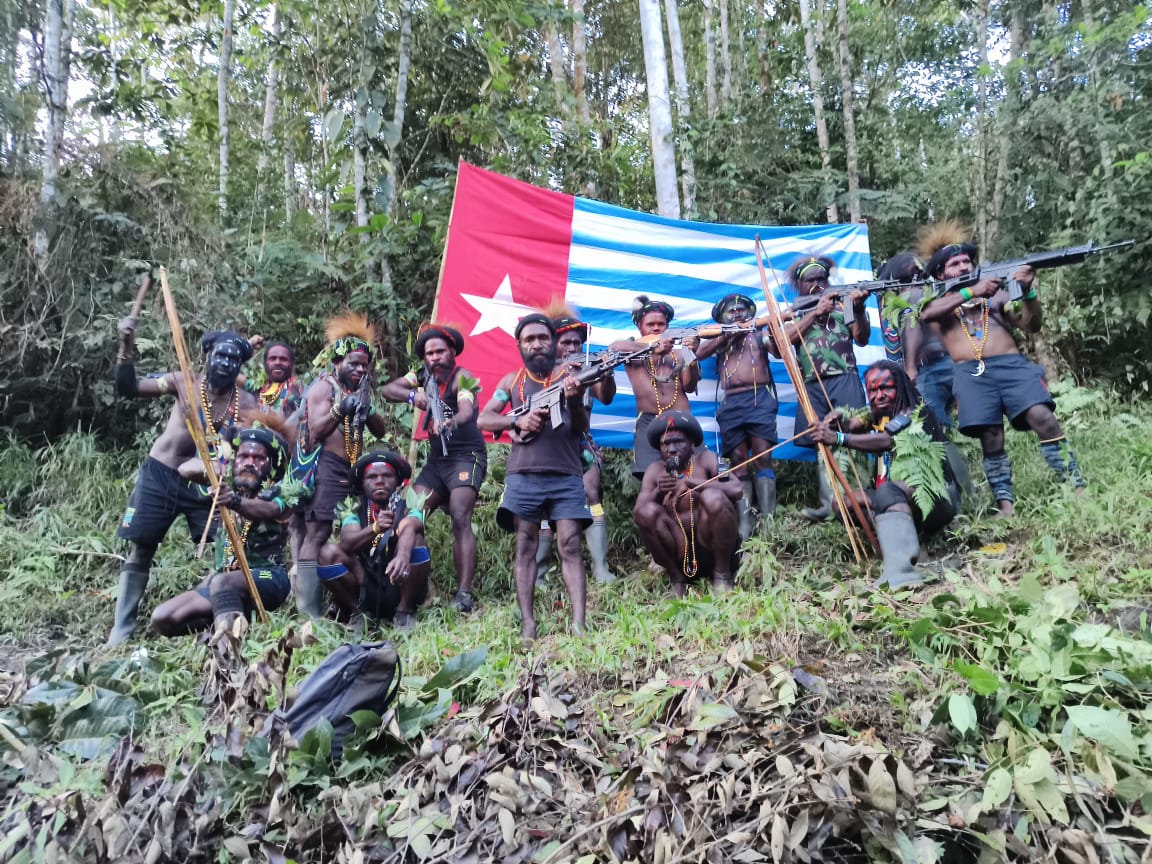
The recent decision by the West Papua National Liberation Army (TPNPB) of the Free Papua Movement (OPM) to publicly release a list identifying several Papuan officials, community figures, and civilians as alleged targets while warning of possible execution has intensified concerns regarding the safety of civilians in Papua. The announcement, published through the group’s spokesperson and widely reported by Indonesian media, came only days after the killing of three Indigenous Papuan civilians in Yahukimo, an incident that has already drawn significant public attention and renewed debate over the protection of noncombatants in conflict affected areas.
According to statements circulated by the armed group, individuals accused of cooperating with Indonesian security institutions were labeled as intelligence informants and threatened with severe consequences. The publication of such accusations has raised concerns because those identified include civilians and public officials whose daily responsibilities involve delivering government services, community administration, education, and development programs.
For many observers, the latest development reflects an escalation in intimidation tactics that extends beyond armed confrontations and increasingly affects ordinary residents living in Papua’s highland communities.
Human rights observers generally note that civilians should not become targets of intimidation, retaliation, or violence regardless of political or security dynamics. Ensuring the protection of noncombatants remains a fundamental principle recognized in international humanitarian norms and domestic legal systems alike.
Public Threats Extend Beyond Armed Confrontation
The publication of a self declared “wanted list” represents a development that has generated concern among local communities because it broadens the potential scope of intimidation beyond direct security operations.
Unlike armed engagements involving security forces, the latest announcement explicitly referred to civilians, local government officials, and community members whom the group alleged were assisting state institutions.
Security analysts explain that public accusations of this nature may create fear within communities because individuals identified by armed groups often face increased personal security risks irrespective of whether the allegations are substantiated.
The psychological impact may also extend beyond those directly named.
Residents living in affected districts may become reluctant to cooperate with public institutions, participate in development programs, or carry out routine government responsibilities if they fear being labeled as collaborators.
Development specialists frequently observe that sustained intimidation can weaken public administration by discouraging teachers, healthcare workers, village officials, and civil servants from serving remote communities where public services are already limited.
As a result, the consequences extend beyond individual security to broader community welfare.
Concerns Follow the Killing of Three Indigenous Papuans
The latest threats emerged shortly after reports concerning the deaths of three Indigenous Papuan civilians in Yahukimo, an incident previously documented by West Papua Voice.
According to available reporting, the victims were civilians rather than members of Indonesian security forces.
The incident prompted renewed concern regarding the vulnerability of local communities living in areas affected by armed violence.
Community leaders and local observers have increasingly emphasized that ordinary Papuans frequently bear the greatest humanitarian burden whenever violence escalates.
Disruptions to transportation, education, healthcare delivery, local markets, and agricultural activities often accompany periods of heightened insecurity, limiting access to essential public services for families residing in remote districts.
The combination of recent civilian fatalities and subsequent public threats has therefore intensified concern among many residents regarding personal safety and freedom of movement.
Security specialists note that protecting civilians remains one of the most important objectives during any law enforcement or security operation because prolonged insecurity can undermine public confidence while delaying social and economic development.
Humanitarian Principles Emphasize Civilian Protection
International humanitarian principles consistently distinguish between civilians and individuals directly participating in armed hostilities.
Although legal interpretations depend on the specific circumstances of each incident, humanitarian organizations generally emphasize that civilians should be protected from threats, intimidation, and acts of violence.
Publicly identifying civilians as targets or encouraging violence against them raises serious humanitarian concerns because such actions may increase fear within communities and expose noncombatants to unnecessary risk.
Humanitarian experts also stress that accusations directed toward civilians should be addressed through lawful judicial processes rather than unilateral declarations by nonstate armed actors.
Maintaining respect for civilian status remains essential for reducing humanitarian suffering and preserving opportunities for dialogue, public services, and community resilience.
For Papua, where many remote villages depend upon teachers, healthcare workers, village administrators, and religious leaders, ensuring the safety of civilians carries particular importance for sustaining everyday life.
Impact on Public Administration and Community Services
The latest threats also have implications for the functioning of local government and public institutions.
Many of those reportedly identified by the armed group perform administrative responsibilities that directly support community welfare, including coordination of education, healthcare, village governance, infrastructure development, and social assistance programs.
Public officials working in remote districts frequently serve as the primary link between isolated communities and provincial or national government services.
Security concerns affecting these personnel therefore risk disrupting essential public administration.
Development experts note that uncertainty surrounding personal safety can discourage experienced professionals from accepting assignments in remote areas where qualified teachers, medical personnel, engineers, and civil servants are already in limited supply.
This challenge may ultimately affect service delivery for Indigenous Papuan communities that rely upon consistent access to education, healthcare, agricultural support, and administrative assistance.
For this reason, ensuring the security of civilian public servants is viewed not only as a law enforcement issue but also as an important component of regional development.
Fear and Intimidation Affect Community Resilience
Beyond the immediate security implications, sustained intimidation may also influence the broader social fabric of affected communities.
Researchers studying conflict affected regions frequently observe that persistent threats can weaken trust among neighbors, discourage community participation, and create uncertainty regarding everyday activities.
In Papua, where customary leadership, churches, community organizations, and village institutions play central roles in maintaining social cohesion, preserving public confidence remains particularly important.
Community resilience depends upon residents feeling sufficiently secure to continue farming, attending school, operating businesses, participating in religious activities, and accessing public services without fear of retaliation.
Officials and local leaders have therefore repeatedly emphasized the importance of maintaining conditions that allow communities to pursue normal social and economic life despite ongoing security challenges.
Human Rights, Rule of Law, and the Protection of Civilians
The recent threats issued against Papuan civilians and public officials have renewed discussions regarding the importance of protecting noncombatants in areas affected by armed violence. Human rights principles and international humanitarian norms consistently emphasize that civilians should be protected from intimidation, retaliation, and violence, regardless of political affiliation or the broader security situation.
Legal experts generally agree that allegations against individuals should be addressed through lawful judicial mechanisms rather than through unilateral declarations or threats of violence by armed groups. Publicly labeling civilians as legitimate targets may expose them and their families to significant risks while creating an atmosphere of fear that affects entire communities.
The incident also illustrates the broader humanitarian consequences of violence beyond immediate casualties. Fear of being accused of collaborating with one side or another may discourage residents from participating in public life, cooperating with humanitarian programs, or accessing government services. In remote areas of Papua, where village officials, teachers, healthcare workers, and religious leaders perform multiple community roles, intimidation directed toward civilians can have consequences that extend far beyond individual victims.
For this reason, many humanitarian practitioners emphasize that protecting civilians is fundamental not only for safeguarding human rights but also for maintaining access to education, healthcare, public administration, and humanitarian assistance.
Violence Undermines Papua’s Development Agenda
The latest developments also highlight the wider impact that insecurity can have on Papua’s long term development.
Over recent years, Indonesia has accelerated investments in transportation infrastructure, healthcare facilities, education, telecommunications, food security, and economic empowerment programs throughout Papua. These initiatives seek to improve public services while expanding opportunities for Indigenous Papuan communities.
However, development specialists frequently observe that sustainable progress depends upon a stable environment where public institutions, schools, health centers, businesses, and community organizations can operate safely.
Threats directed toward local officials, community leaders, and civilians may discourage qualified professionals from working in remote districts that already face shortages of teachers, medical personnel, engineers, and civil servants. This can delay the implementation of public programs and reduce access to essential services for communities living in isolated areas.
Similarly, continued insecurity may affect investment confidence, transportation, local markets, and community mobility, creating additional economic challenges for residents whose livelihoods depend upon agriculture, small businesses, and interdistrict trade.
Officials therefore continue to emphasize that maintaining public security remains closely linked with achieving broader development goals across Papua.
Community Resilience and Peaceful Social Cohesion
Despite continuing security challenges, community resilience remains one of Papua’s greatest strengths.
Across many regions, customary leaders, religious institutions, youth organizations, women’s groups, and village communities continue to play important roles in preserving social harmony, supporting conflict resolution, and encouraging peaceful coexistence.
Researchers studying conflict-affected societies often note that local communities are essential partners in reducing violence because they possess longstanding social networks capable of fostering dialogue, mutual trust, and community solidarity.
Religious leaders and customary institutions in Papua have historically contributed to mediation efforts, humanitarian assistance, and reconciliation initiatives that prioritize the welfare of local communities.
Strengthening these community-based approaches, while ensuring that civilians remain protected from intimidation and violence, can help reinforce public confidence and support long term social stability.
Development experts frequently argue that sustainable peace is built not only through law enforcement but also through education, economic opportunity, inclusive governance, and active community participation.
Rule of Law as the Foundation for Lasting Stability
Government officials have repeatedly emphasized that criminal acts resulting in violence against civilians will continue to be addressed through Indonesia’s legal system.
Security operations conducted by law enforcement agencies are intended to pursue individuals suspected of criminal offenses while maintaining efforts to protect the wider civilian population. At the same time, authorities continue encouraging community cooperation through legal reporting mechanisms and witness protection procedures where appropriate.
Legal certainty remains an important element in strengthening public trust because it reinforces the principle that disputes and allegations should be resolved through due process rather than intimidation or violence.
International experience demonstrates that societies experiencing long term stability generally combine effective law enforcement with strong public institutions, transparent governance, and meaningful community engagement.
For Papua, strengthening these institutions remains an important component of broader efforts to improve public services, encourage investment, expand educational opportunities, and enhance the welfare of Indigenous communities.
Looking Ahead
Authorities are expected to continue investigating recent acts of violence in Yahukimo while providing security support for communities affected by the threats issued against civilians and public officials. At the same time, government programs focusing on infrastructure, education, healthcare, economic empowerment, and community development are expected to continue as part of broader efforts to improve living conditions throughout Papua. Policymakers increasingly emphasize that sustainable progress depends upon combining effective law enforcement, protection of civilians, respect for the rule of law, and inclusive regional development.
Conclusion
The publication of a self-declared wanted list accompanied by threats against Papuan civilians and public officials has heightened concern over the protection of noncombatants in Papua, particularly following the recent killing of three Indigenous Papuan civilians in Yahukimo. Beyond the immediate security implications, such intimidation can disrupt public services, weaken community confidence, and affect the daily lives of residents who depend on stable access to education, healthcare, and government institutions. Strengthening civilian protection, upholding the rule of law, and supporting peaceful community resilience therefore remain essential components of Indonesia’s broader efforts to promote security, sustainable development, and long term stability across Papua.

