
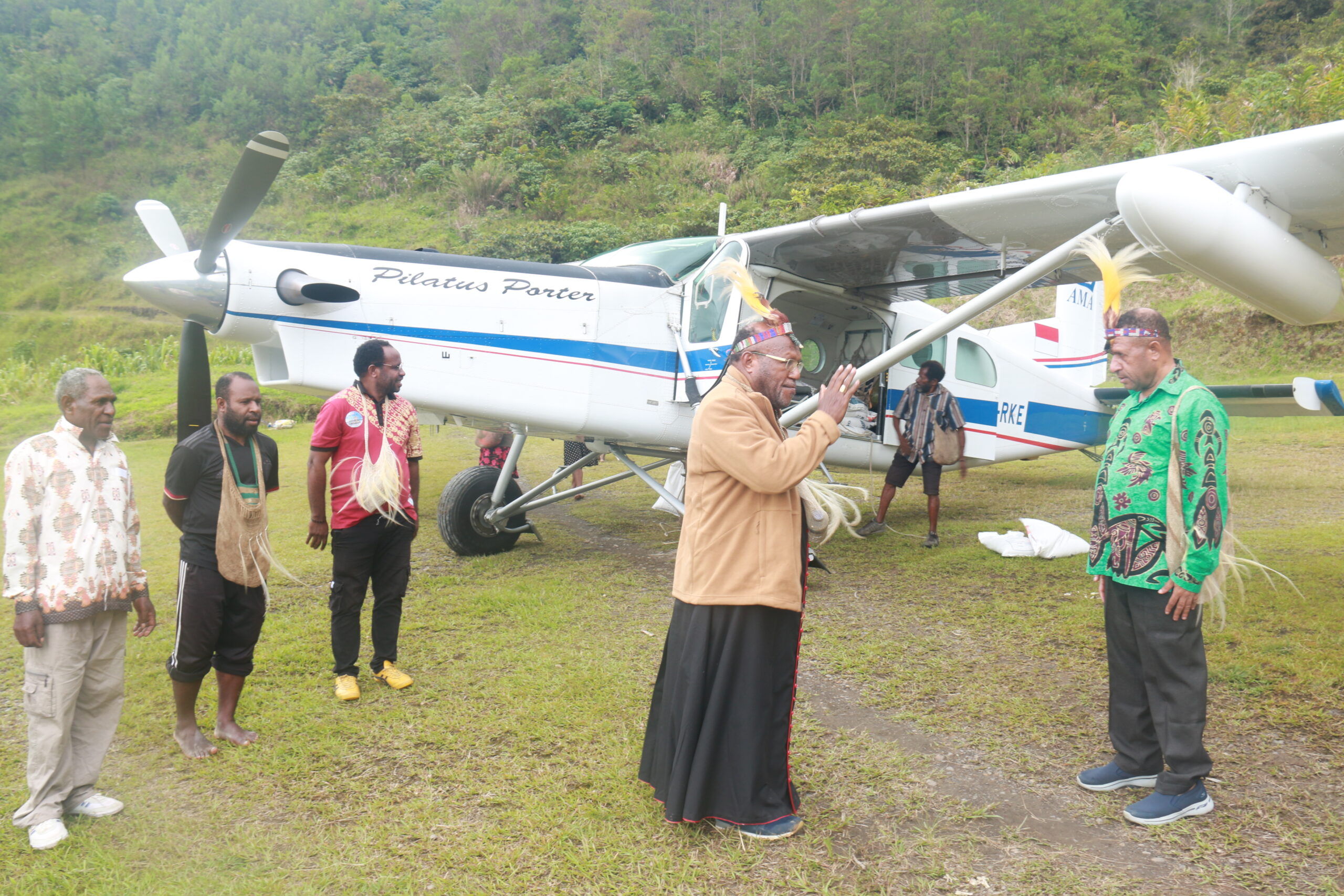
After weeks of uncertainty after a fatal attack that left an American pilot dead, PT Associated Mission Aviation (AMA) has officially resumed flight operations serving Pegunungan Bintang Regency in Papua from 17 July 2026.
The decision marks an important milestone for thousands of residents living in remote mountain communities where air transportation continues to be the primary means of access to health care, education, food supplies, government services, and humanitarian aid.
Company representatives said the reopening follows close coordination with regional authorities and a full review of operational security. PT AMA also sought better security guarantees from local governments before it restored scheduled services to several remote destinations.
The resumption of flights is broadly regarded as a positive for communities that faced major logistical disruptions during the temporary suspension of operations.
In addition to restoring transportation, the reopening emphasizes the necessity of protecting civilian aviation operating in remote geographical regions, where aircraft often provide vital lifelines for local populations.
Returning to the Skies After a Difficult Tragedy
The resumption of operations comes after one of the most difficult incidents faced by humanitarian aviation in Papua in recent years.
On 2 July 2026, Captain Nicholas Francis Gosselin, an American pilot working for PT AMA was killed in an armed attack while carrying out aviation services in Papua. Indonesian authorities blamed TPNPB members for the attack, and investigations into the attack and its broader context are ongoing.
The tragedy affected aviation personnel, church groups, humanitarian workers, and communities that depended on regular flights for their daily needs.
PT AMA has temporarily suspended several routes of flights while reviewing operational procedures and assessing security conditions following the incident.
The suspension highlighted not only the operational safety reasons but also how quickly a security breach can cut off basic services in Papua’s mountainous interior.
For many villages without road access, aircraft are the only reliable means of transportation to connect villagers to hospitals, schools, markets, and government offices.
The decision to restart the operations is thus significant not only for aviation but also for humanitarian access across the region.
Aviation Remains a Lifeline for Remote Communities
Road transportation is common in much of Indonesia, but in the central mountains of Papua, small aircraft rule.
Steep mountains, dense forests, deep valleys, and limited road infrastructure mean that aviation is often the fastest and sometimes the only practical way of getting to isolated communities.
Transport of routine flights:
“Medical staff and patients.
Teachers and teaching materials.
Foodstuffs and basic commodities.
Materials for construction.
Government Logistics
Church workers and humanitarian agencies.
Disaster relief during natural disasters.
Reliable aviation services are therefore directly connected to everyday life for the residents of Pegunungan Bintang.
Disruption in air transportation can immediately impact the supply of food, delivery of health care, education, and local economic transactions.
The need to keep transportation connectivity has repeatedly been underlined by provincial officials as integral to supporting wider development programs in Papua.
With the province’s incredible geography, aviation is likely to be indispensable for many years to come, as infrastructure spreads out across the region.
PT AMA Introduces Stronger Operational Requirements
PT AMA, announcing its decision to resume services, said tighter security arrangements would be in place for future operations.
“We require local governments to provide better security guarantees before flights to some remote destinations,” the company representatives said.
The safety of pilots, passengers and aircraft remains the paramount operational priority, officials said.
The company also cited the difficult conditions for aviation personnel working in Papua and called for close cooperation between local authorities, community leaders, aviation operators, and security institutions.
Flight operations have since resumed, but management said ongoing assessment of operational conditions would have to continue.
This approach is consistent with internationally recognized practices for risk management in the aviation industry, particularly for operators serving geographically isolated or security-sensitive regions.
Safety assessments will continue to weigh operational risks against the need to maintain essential services for local communities.
Humanitarian Organizations Stress Civilian Protection
Religious leaders and humanitarian organizations too voiced concern over the safety of civilian aviation workers in Papua following the deadly incident.
Representatives of the church stressed that humanitarian flights should still serve communities and not become victims of violence.
Some church leaders also downplayed misinformation following the incident and reiterated the humanitarian nature of aviation services that serve remote populations.
Their statements highlighted the need to safeguard the public’s trust and allow humanitarian organizations to continue to provide aid safely.
Observers say cooperation between religious institutions, local governments, community leaders, aviation providers, and security authorities remains essential in ensuring humanitarian access in remote areas.
These partnerships help to strengthen communication and minimize misunderstandings that could put civilian services at risk.
Restoring Confidence in Essential Air Transportation
“This decision by PT AMA is not only about restoring scheduled flights but also about rebuilding the confidence of aviation personnel and communities affected by the recent tragedy.
Papua pilots routinely fly in difficult weather conditions, serving remote airstrips with little infrastructure.
These operational challenges notwithstanding, humanitarian aviation is vital to sustaining the daily lives of people in isolated mountain districts.
The return of regular service is a sign of resilience and a reaffirmation that officials are committed to keeping air transportation available for the communities served.
The gradual normalization of aviation services is also expected to assist local economic activity by facilitating the movement of goods, services, and essential personnel across Pegunungan Bintang.”
Safe Aviation Is Essential for Humanitarian Access
PT AMA’s decision to restart flights reflects a larger principle that humanitarian agencies globally acknowledge: safe civilian aviation is fundamental for delivering life-saving services to people in remote areas.
In the highlands of Papua, an airplane is much more than a means of transport. They are mobile lifelines connecting thousands of residents with hospitals, schools, government institutions, churches, markets, and emergency help.
The impact of flight disruptions extends well beyond transportation.
Patients who need to get to referral hospitals in urgent cases might have to wait.
Vaccines, medicines, and medical equipment are harder for health workers to get to where they’re needed.
It is harder to ship teachers and educational supplies.
Logistical constraints might lead to shortages or a substantial rise in the price of basic food items and household necessities.
For this reason, the ability to maintain safe operation of civilian air services is of concern to provincial authorities, humanitarian organizations, and aviation operators.”
“Protecting humanitarian transport is in service of local communities. It keeps access to services that support daily life,” officials have repeatedly underlined.
The reopening of PT AMA’s routes is therefore a huge step towards restoring the confidence of the residents who rely heavily on aviation to meet their essential needs.
Connectivity Strengthens Regional Development
Transportation connectivity is one of the most important foundations of development in Papua and has long been recognized as such.
Many communities in the central highlands are accessible mainly by air because of steep mountains, dense forests, and difficult terrain, unlike many provinces where roads connect most districts.
Therefore, the provision of reliable aviation services directly supports wider government efforts to improve education, healthcare, food security, public administration, and economic development.
Small businesses depend on cargo flights to bring in supplies.
Farmers have more access to regional markets.
Medical staff can move more efficiently between remote health facilities.
Public services can be provided more reliably by government agencies.
Also, education programs become more effective when teachers and learning materials are able to reach isolated schools without long interruptions.
Better connectivity is stabilizing supply chains and encouraging commercial activity in otherwise physically isolated districts, which is good for local economies.
Thus, officials view aviation not only as transportation infrastructure but also as an integral part of regional development policy.
With the expansion of infrastructure projects across Papua, aviation will remain a key partner in supporting inclusive growth in remote regions.
International Perspectives on Humanitarian Aviation
Humanitarian aviation is a key enabler of support to populations living in remote or crisis-affected areas around the world.
Organizations like the United Nations Humanitarian Air Service (UNHAS), the International Civil Aviation Organization (ICAO), and many humanitarian aviation providers fly aircraft in areas where roads are limited or where natural disasters, conflict, or geographic barriers restrict access.
They carry humanitarian workers, medical aid, food assistance, vaccines, emergency supplies, and government officials responsible for providing key public services.
The protection of civilian aviation engaged in humanitarian operations has always been a priority of the international humanitarian principles.
Allowing safe passage for humanitarian flights enables governments, churches, development organizations, and local communities to continue providing assistance without interruption.
For those outside the country, Papua is a case study in the logistical realities that remote areas face in many parts of the world.
In a mountainous province such as this one, aviation is not only a convenience. It is critical infrastructure that supports healthcare delivery, education, disaster response, and economic resilience.
Thus, the resumption of PT AMA’s operations is representative of wider international efforts to maintain links with isolated populations in the face of challenging geographic and security realities.
Looking Ahead
PT AMA stated that flight operations will continue under enhanced operational procedures with close coordination with local governments, community leaders, aviation authorities, and security institutions. “It is hoped that improved safety arrangements will enable humanitarian services to continue reaching remote communities with minimal operational risk.
Provincial officials also hope improved security conditions will enhance transportation connectivity, support the delivery of public services, and promote continued development throughout the interior of Papua. As aviation services slowly get back to normal, communities in Pegunungan Bintang will have greater access to healthcare, education, food distribution, and government programs that depend on regular air transportation.
Conclusion
PT Associated Mission Aviation, or AMA, resumed flights to Pegunungan Bintang, an important step in restoring essential transportation services after a fatal attack that killed an American pilot and led to a temporary suspension of operations. PT AMA is helping reconnect remote communities that rely heavily on aviation for healthcare, education, logistics, humanitarian assistance, and economic activity by reopening services under strengthened security arrangements and closer coordination with local authorities. The development additionally emphasizes the broader significance of protecting civilian and humanitarian aviation in remote areas. Continued collaboration among security, government institutions, local communities, and aviation operators is expected to see sustained connectivity underpin long-term development, improved public services, and greater resilience across Papua’s mountainous interior.

