
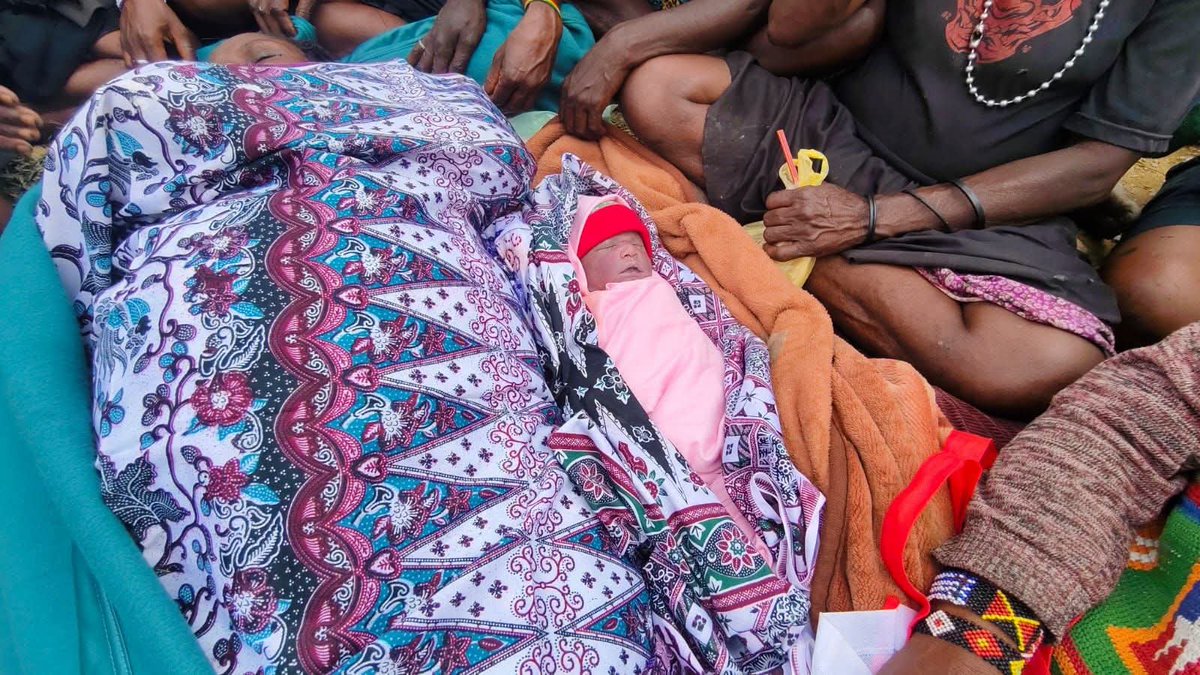
The death of a pregnant woman during an armed confrontation in Intan Jaya Regency, Central Papua Province, has demonstrated the urgent need to protect civilians in conflict-affected areas, prompting the Indonesian government to promise a thorough investigation.
On 2 July 2026, the victim, Melkiana Duwitau, was shot dead in Wandoga Village, Sugapa District, during a shoot-out between Indonesian security forces and armed members of the West Papua National Liberation Army (TPNPB) linked to the Free Papua Movement (OPM). The tragedy immediately prompted responses from government officials, the National Human Rights Commission (Komnas HAM), community leaders, and humanitarian observers, who all called for a transparent investigation to establish the facts surrounding the incident.
The government said all civilian casualties must be investigated thoroughly through lawful investigative mechanisms and stressed accountability and public confidence are essential for peace and the protection of communities in Papua.
For many observers, the incident underscores the complex security environment in Papua, where armed encounters can threaten serious risks to civilians living near operational areas.
Pregnant Woman Dies During Armed Confrontation
Security forces have been conducting operations in Sugapa District after clashes with armed members of the TPNPB OPM, Indonesian authorities and local media reported.
During the exchange of gunfire, a fatal shot struck Melkiana Duwitau, who was seven months pregnant at the time, when she was in her home near the site of the clashes.
A number of eyewitnesses saw several TPNPB OPM fighters taking cover behind Melkiana’s house when they opened fire at the security forces. Meanwhile, the security forces chose not to open fire due to limited visibility from fog and rain to prevent civilian casualties.
The incident immediately raised concern as civilian casualties continue to be one of the most serious humanitarian consequences of armed violence. Either way, the toll on civilians has only heightened calls for more effort to protect noncombatants in areas where security operations are taking place.
Authorities are investigating the shooting, and officials have pledged to assist the victim’s family.
The tragedy has sparked wider debate about the safety of civilians in remote areas where communities sometimes live close to zones of armed activity.
Government Commits to Transparent Investigation
Senior Indonesian officials were quick to announce the government’s support for a full, transparent investigation of the incident.
Coordinating Minister for Law, Human Rights, Immigration, and Penitentiary “The government is open for an independent investigation with the National Human Rights Commission (Komnas HAM) to investigate the circumstances surrounding the death,” said Yusril Ihza Mahendra.
“It is still important to find the facts through credible investigative mechanisms to ensure accountability and maintain public confidence,” Yusril said.
Government officials emphasized that responsibility should be established based on verified evidence collected through the investigative process and not on speculation or competing claims made at the time of the incident.
Observers say the Indonesians’ willingness to allow the involvement of Komnas HAM is a sign of institutions’ commitment to transparency in security-related incidents that result in civilian casualties.
The inquiry will likely hear witnesses, look at forensic evidence and operational reports, and piece together the timeline before releasing official findings.
Most legal analysts say independent review mechanisms foster more public confidence by ensuring that investigations are carried out in accordance with established legal procedures.
Military Explains Operational Circumstances
The Indonesian National Armed Forces (TNI) also released a statement to explain the operational circumstances surrounding the confrontation.
Armed members of the TPNPB OPM were discovered by security forces operating in the area, which led to the exchange of gunfire, according to military officials.
Preliminary operational reports from the TNI say it was the armed group that fired the fatal shot that hit Melkiana Duwitau. Military officials also said TPNPB OPM members had inserted themselves among the civilians during the clash, using the local residents as human shields, which made the security operation very difficult.
The military said there were civilians in the vicinity of the engagement area, and security forces intentionally held their fire to reduce the risk of more civilian casualties.
TNI said protecting civilians was a primary operational consideration throughout the incident, despite the tactical challenges of the confrontation.
“These operational accounts are part of the larger investigation and will be weighed with other evidence collected by the appropriate authorities,” military officials also emphasized.
Civilian Protection Remains a Central Concern
The death of Melkiana Duwitau has again highlighted the humanitarian risks of armed confrontations in Papua.
Security experts tend to agree that civilians can be most at risk when clashes take place close to populated villages, especially in mountainous regions where settlements and operational zones can overlap.
International humanitarian principles recognize the importance of distinguishing between civilians and combatants and the obligation of all parties to armed violence to take all feasible precautions to avoid harm to noncombatants.
Humanitarian organizations have repeatedly asked all parties involved in the security situation in Papua to put the protection of civilians first, ensure access to medical care, and avoid taking actions that could put local communities in unnecessary danger.
The Indonesian government has repeatedly said maintaining public safety is a key goal along with broader efforts to maintain stability and support development across Papua.
As investigators collect evidence, many observers stress the importance of arriving at an accurate and objective picture of what happened, not only for the victim’s family but also for the sake of public confidence in the rule of law.
Komnas HAM Calls for an Independent Investigation
Indonesia’s National Human Rights Commission (Komnas HAM) also commented on the incident, calling for a comprehensive, independent, and transparent investigation into the death of Melkiana Duwitau.
“To ensure accountability, it is important to establish the exact sequence of events while protecting the rights of victims and maintaining public confidence in state institutions,” Komnas HAM said. The commission said that before assigning blame, investigators should gather forensic evidence, interview witnesses, review operational records, and corroborate all the information available.
The government’s decision to invite Komnas HAM’s involvement is considered by legal observers an important step in the direction of strengthening transparency and making sure the investigation proceeds within established legal procedures.
They argue that independent oversight enhances institutional credibility, particularly in civilian casualty cases during security operations.
Human rights organizations have likewise stressed that civilian protection remains a priority for all parties to armed confrontations and that investigations should be evidence-based, objective, and free from political influence.
Balancing Security Operations With Civilian Protection
The incident has again highlighted one of the greatest challenges for security operations in Papua, namely protecting civilians in the face of armed attacks.
Military analysts say operations in mountainous terrain present unique operational risks. Villages are often located near armed group activity, meaning the likelihood of civilians being caught in the crossfire increases the more exchanges of gunfire occur.
Armed members of the TPNPB OPM use civilians as human shields during the confrontation, according to preliminary operational reports from the Indonesian National Armed Forces. Such tactics make operational decisions much more difficult as security forces have to reduce the risk of injuring local residents, the military said.
TNI officials said soldiers deliberately did not return fire after they spotted civilians near the area of engagement, saying the operational priority at that time was to avoid further civilian casualties.
But the statements are part of a continuing investigation by the government, which is expected to look at ballistic evidence, witness accounts, operational communications, and forensic evidence before reaching official conclusions.
Security experts usually note that investigations into incidents that occur during armed confrontations often require careful reconstruction, as multiple accounts may surface in the immediate aftermath of violence.
The Importance of Establishing the Facts
Investigators also are expected to answer a series of important factual questions about the incident as well as determine legal responsibility.
Authorities will want to determine the origin of the fatal shot, reconstruct the sequence of events of the firefight, examine the positioning of the security personnel and members of the armed group, and find out if the operational procedures for the protection of civilians were followed given the circumstances.
Legal scholars emphasize the multiple purposes of objective investigations. They provide answers to the families of victims, increase institutional accountability, improve operational procedures, and strengthen confidence that allegations of civilian casualties are properly reviewed through the legal process.
The government’s promise of a full investigation is therefore not confined to the solving of one case. It is also an opportunity to take stock of lessons that could inform stronger civilian protection in future security operations.
Observers note that transparent investigations are crucial in conflict-affected regions, as credible fact-finding helps to reduce misinformation while promoting greater public trust in official institutions.
Civilian Protection Remains a Shared Responsibility
The tragedy has renewed the broader debate about the duty of all parties to armed conflict to protect noncombatants.
International humanitarian principles stress that civilians shall not be the object of attack and shall be protected from the effects of hostilities to the extent feasible. They also oppose practices that increase risks to civilian populations such as conducting military activities in the vicinity of noncombatants.
Humanitarian workers in conflict zones continue to repeat time and time again that saving civilian lives requires restraint, discipline, clear operational procedures, and respect for internationally accepted humanitarian norms.
Many remote villages in Papua remain geographically isolated, and the protection of civilians is of particular importance as local communities often depend on scarce health care facilities, challenging transportation networks, and vital public services that may be disrupted during insecurity.
Melkiana Duwitau’s death, therefore, is a reminder of the humanitarian toll that armed violence can have on everyday families far from major population centers.
Looking Ahead
Indonesian authorities are expected to continue to cooperate with Komnas HAM and other relevant institutions to develop a complete factual record of the incident as the investigation progresses. Officials said any determination of responsibility would be based on verified evidence gathered through lawful investigative procedures, not on preliminary assertions made in the immediate aftermath of the confrontation. It is also expected that the findings will contribute to future improvements in civilian protection and operational practices in conflict-affected areas.
Conclusion
Melkiana Duwitau’s death has highlighted the devastating impact armed clashes can have on civilian populations in Papua. The Indonesian government’s backing of a transparent investigation, and Komnas HAM’s involvement, shows an institutional commitment to establishing the facts through independent legal processes. The Indonesian military says the fatal shot was fired by armed TPNPB OPM members, and its personnel exercised restraint because civilians were near the firefight, but the ongoing investigation will continue to be essential in objectively determining the circumstances surrounding the incident. Ultimately, Indonesia’s broader efforts to promote lasting peace, security, and humanitarian protection throughout Papua rely on accountability, strengthening civilian protection, and reinforcing public confidence in the rule of law.

