The government has officially inaugurated 1,151 km of upgraded regional roads across 37 provinces, one of the largest coordinated regional infrastructure programs recently. The nationwide program, valued at Rp5.41 trillion, consists of five strategic road projects in Papua, where improved transportation infrastructure is expected to enhance connectivity between communities, reduce logistics costs, and increase access to economic opportunities.
The projects are among Indonesia’s wider efforts to improve regional transport networks by upgrading roads linking rural communities with district capitals, markets, public services, and production centers. The program is nationwide, but Papua’s tough terrain makes transport slower and costlier than in most of the country.
Officials say better roads can help spur long-term economic growth in remote areas by facilitating the movement of people and goods.
A Nationwide Infrastructure Initiative
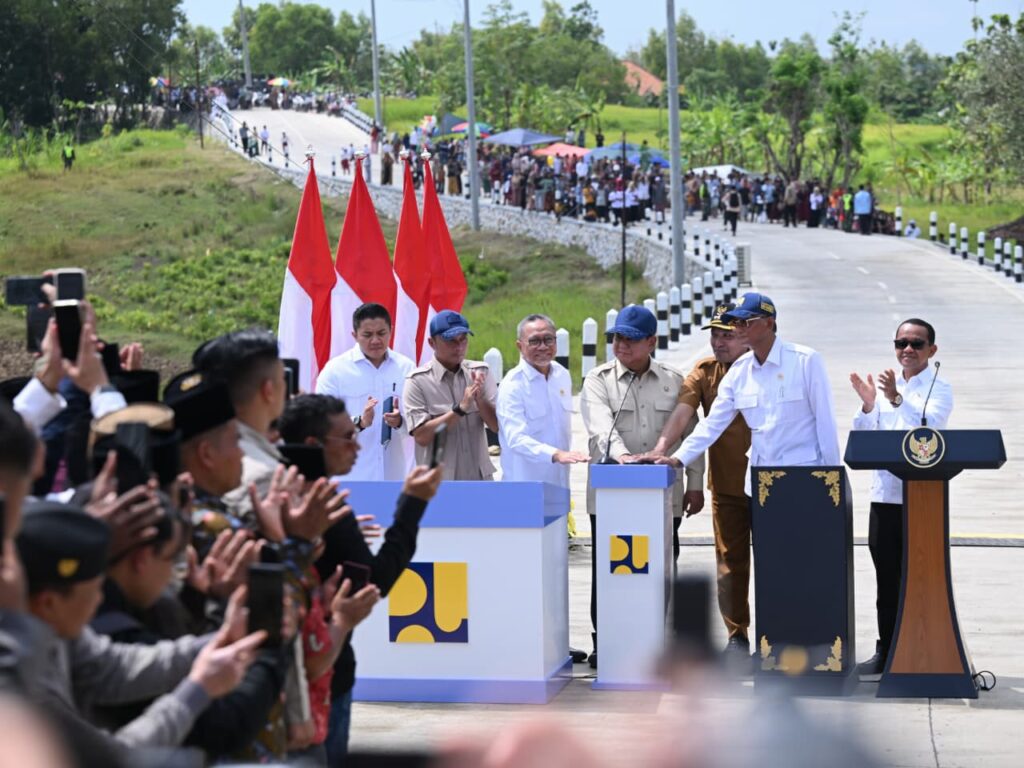
President Prabowo Subianto led the inauguration ceremony, officially launching the completion of regional road improvements across the archipelago.
The Ministry of Infrastructure and Regional Development said the projects were completed through cooperation between the central government and regional administrations as part of an effort to upgrade roads considered essential for regional mobility.
“Transportation infrastructure is one of the key foundations for economic growth because reliable roads improve market access, reduce travel time and lower logistics expenses,” said Minister Agus Harimurti Yudhoyono (AHY).
He stated that the infrastructure development aims to enhance the efficiency and resilience of transportation networks for both urban and rural communities.
Officials said many of the roads that were upgraded have been widened and strengthened to handle greater levels of traffic, as well as to improve safety and durability.
Five Strategic Road Corridors in Papua
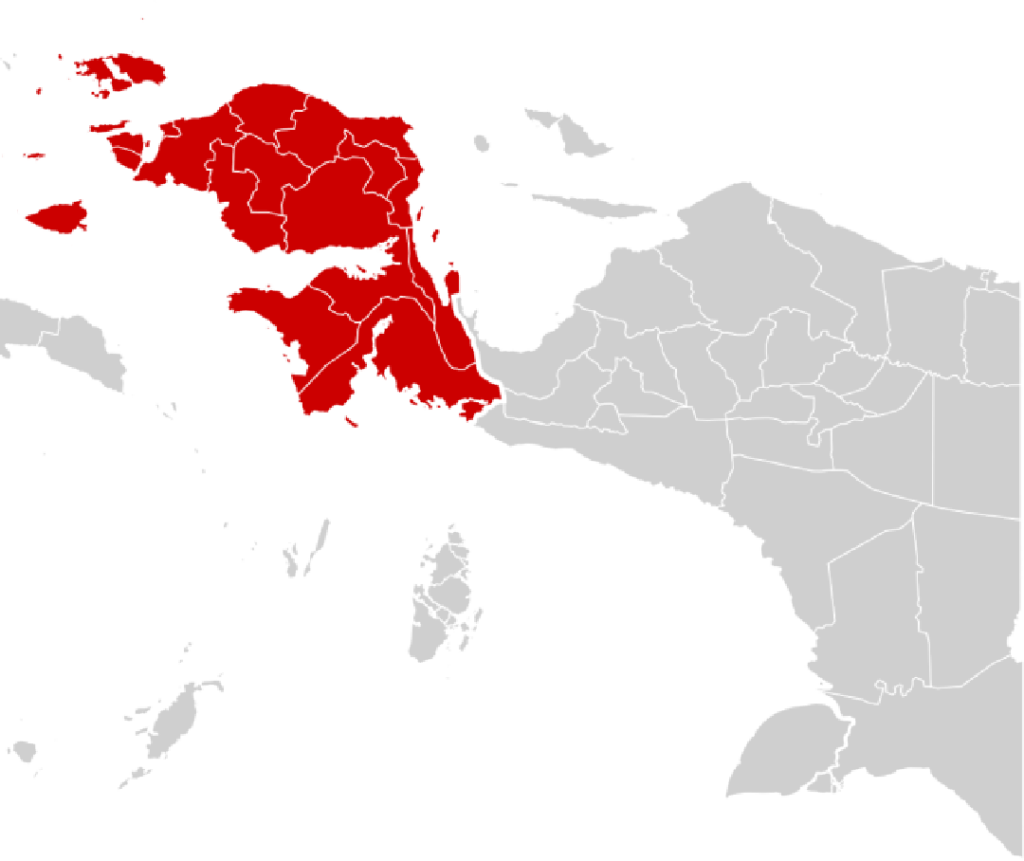
Among the nationwide inaugurated projects, five road sections are in Papua, which traverse several regencies with different geographical characteristics.
Upgraded corridors include the following:
1. Kiren to Kaisau, Sarmi Regency
2. Inasi to Bawei, Biak Numfor Regency
3. Botawa to Koweda to Barapasi, Waropen Regency
4. Warbo from Arso VII to Arso III, Regencies of Keerom
5. Skori Puai in Jayapura Regency
The roads connect rural settlements with administrative centers, agricultural areas, fisheries, schools, health facilities, and local markets.
Local governments see better transportation as a benefit because it helps with day-to-day travel and also supports larger economic activities.
Lower Logistics Costs
“Transportation costs continue to be one of the most significant development challenges across Papua.
The mountainous terrain, dense forests, and scattered settlements often mean longer travel times and higher operating expenses than in many western parts of Indonesia.
Improving road quality can reduce travel times for cars and lower fuel consumption and maintenance expenses for freight.
It can improve market access, helping farmers and fishermen maintain product quality and reduce post-harvest losses.
Economists generally note that infrastructure investment tends to have multiplier effects by cutting down transaction costs along local supply chains.
Supporting Rural Economies
The improved road network is also expected to boost agriculture, fisheries, forestry, and small businesses.
Improved corridors may better connect communities with district markets and may also enable producers to move crops, fisheries products, and other commodities more effectively.
Small and medium-sized enterprises can also benefit from better access to suppliers and customers.
Infrastructure experts say that transportation improvements often result in private investment, as companies gain more confidence in the reliability of logistics.
In Papua, where a significant number of economic activities depend heavily on road access, improved transportation networks might gradually increase regional competitiveness.
Local Government Welcomes the Investment
The completion of the five road projects was welcomed by leaders at the provincial and regency levels, who described transportation infrastructure as an important foundation for improving public services and regional development.
Local officials said excellent roads make it easier to get to school, health care, government services, and emergency assistance, as well as help commercial activity.
They also expressed hope that continued investment in transportation infrastructure will improve connectivity between districts and reduce disparities between urban centers and remote communities.
Several regional governments have singled out transport infrastructure as a key priority for long-term development because of its impact on economic productivity.
Infrastructure Beyond Transportation
Experts note that roads often generate wider social benefits beyond transportation itself.
Improved accessibility may encourage school attendance, expand access to healthcare, strengthen disaster response capacity, and facilitate the delivery of government services.
Better roads can also support tourism development by improving access to natural attractions and cultural destinations.
In Papua, where geography presents significant logistical challenges, transportation infrastructure is widely regarded as one of the essential components of broader regional development.
Challenges Ahead
The inauguration is an important milestone, but investment will still be needed to keep roads in good condition.
Rainfall is heavy, and landslides, flooding, and difficult terrain continue to present engineering challenges throughout Papua.
Experts in infrastructure highlight that regular maintenance, drainage systems, and sturdy building codes are necessary to guarantee durability over time.
They also point out that any future transportation planning must be closely coordinated with environmental management and community consultation in order to support sustainable development.
Looking Ahead
The inauguration of five upgraded road corridors in Papua reflects Indonesia’s ongoing effort to improve regional connectivity through transportation infrastructure. While infrastructure alone will not solve every development challenge, better roads can improve mobility, increase access to markets and public services, and generate broader economic activity across rural communities. As further investments in transportation, education, health care, and digital connectivity go forward, reliable infrastructure is expected to play an increasingly important role in supporting inclusive development across Papua as well as improving integration with the rest of Indonesia’s economy.
Conclusion
Opening five upgraded road corridors in Papua demonstrates the increasing role of transportation infrastructure in facilitating regional development across eastern Indonesia. The projects could reduce logistics costs, facilitate the movement of people and goods, and expand economic opportunities for local residents by improving connectivity between remote communities, production centers, and public services. Sustained investment in maintenance, environmental management, and complementary infrastructure continues to be critical. But the new road network is an important step in improving accessibility and strengthening Papua’s long-term economic resilience as part of Indonesia’s broader infrastructure development agenda.