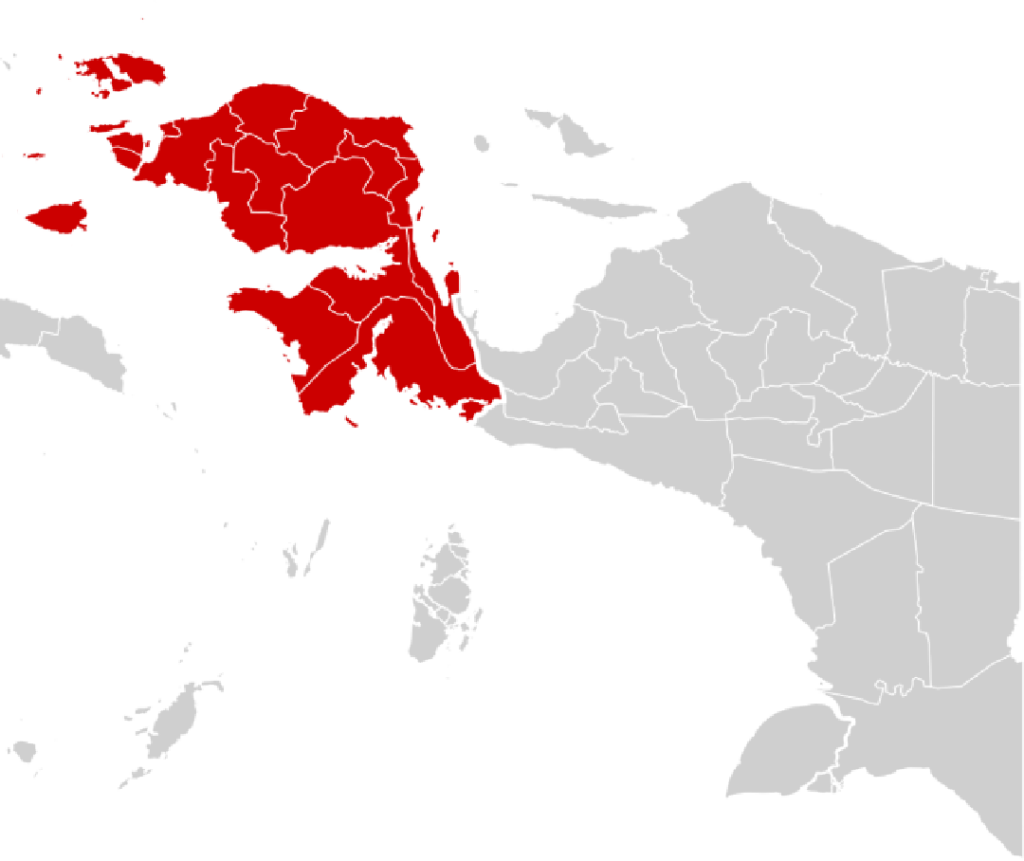
Indonesia plans to develop new Border Crossing Posts (Pos Lintas Batas Negara, or PLBN) and strategic border roads in Papua as part of a wider effort to improve connectivity, strengthen border management, and boost economic development in communities along the 824-kilometer border with Papua New Guinea.
Government officials said the expansion will add more PLBN facilities in Keerom Regency, Papua Province, and Pegunungan Bintang Regency, Papua Pegunungan (Papua Highlands) Province, to the three border posts currently in operation in Papua. The plans also include bettering border roads connecting remote settlements, allowing patrols by security agencies and improving mobility for local residents.
The proposal is a continuation of Indonesia’s long-term border development policy that sees frontier regions as not only security buffer zones but also gateways for economic growth, public services, and regional integration.
Strengthening Border Management Along an 824 Kilometer Frontier
Indonesia has one of the longest land borders in Southeast Asia with Papua New Guinea, stretching some 824 kilometers through mountainous terrain, dense tropical forests, and sparsely populated areas.
The logistical problems of managing such a large frontier are immense. The limited transportation infrastructure, difficult geography, and dispersed settlements necessitate continuous investment in government facilities, transportation networks, and border monitoring systems.
“The addition of more PLBNs is to strengthen the state’s administrative presence while offering immigration, customs, quarantine, and security services closer to the communities living near the international boundary,” officials said.
The planned facilities also reflect Indonesia’s broader push to modernize border management and improve access to government services for residents in border districts.
Existing Border Posts Form the Foundation
Currently, Papua has three border crossing posts in operation.
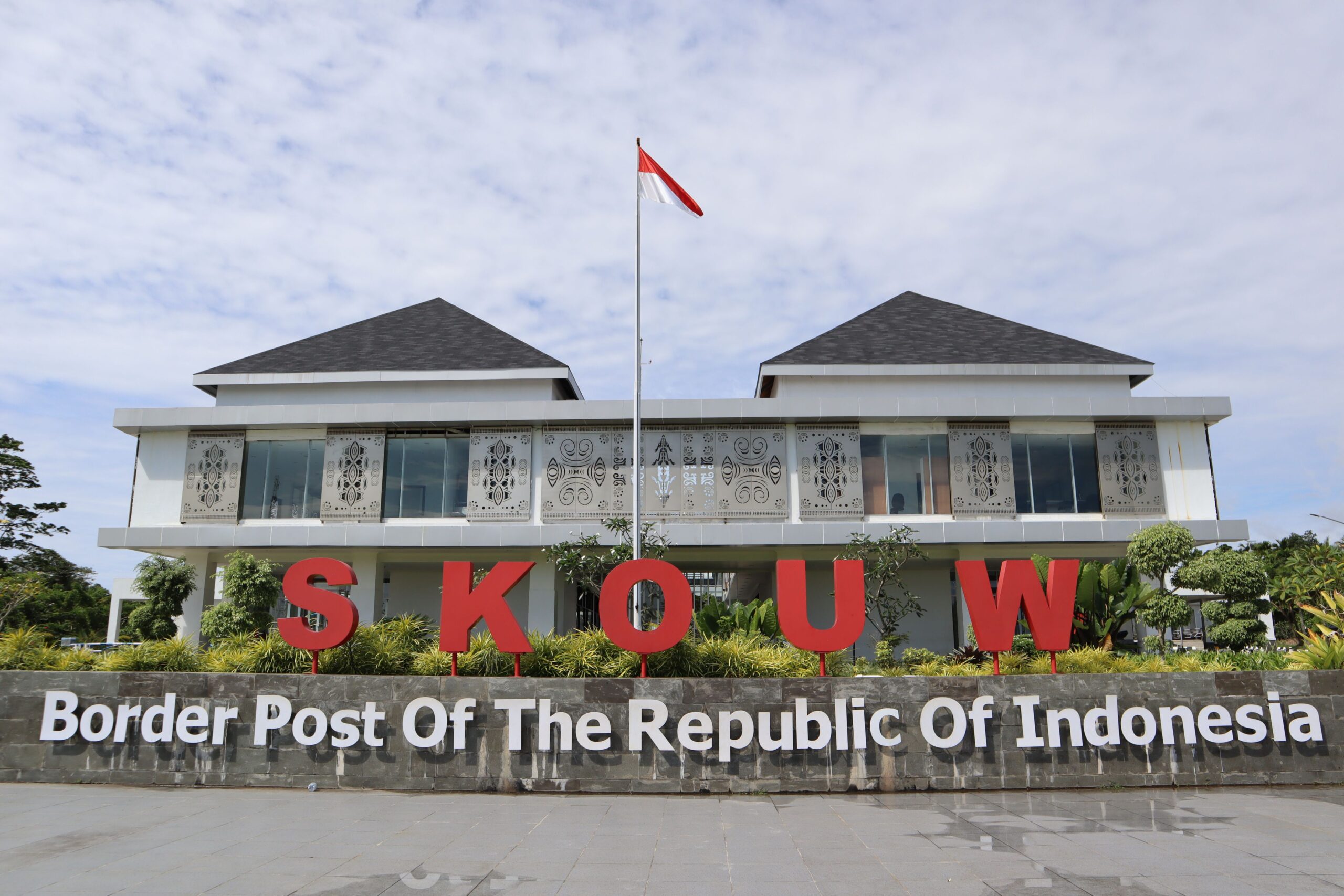
The first is PLBN Skouw in Jayapura City, Papua Province, the main official gate between Indonesia and Papua New Guinea. Since opening, Skouw has enabled the legal movement of people across the border and has supported local trade and tourism.
Further south, PLBN Sota in Merauke Regency, Papua Selatan (South Papua) Province, is another important crossing point connecting communities on each side of the border.
The newest facility is PLBN Yetetkun in Boven Digoel Regency, Papua Selatan Province, which extends Indonesia’s administrative and security presence in one of the country’s more remote border regions.
In Keerom and Pegunungan Bintang, officials are planning to build new facilities and extend official border infrastructure into areas where cross-border movement has traditionally been harder to monitor.
New PLBNs Planned for Keerom and Pegunungan Bintang
Reports say that the administration of President Prabowo Subianto will continue to develop infrastructure on the national borders, with several new PLBN projects in Papua and Kalimantan (Borneo) as their focus.
The proposed locations are Keerom Regency, which is east of Jayapura and borders Papua New Guinea, and Pegunungan Bintang Regency, a mountainous area where transportation is still limited due to the rugged terrain.
Officials believe the new facilities will help upgrade government services and, at the same time, facilitate legal cross-border mobility and improve coordination of customs, immigration, quarantine, and security agencies.
The planning stage of the projects includes anticipated detailed technical studies, budget preparation, and interagency coordination before construction begins.
Border Roads to Improve Connectivity
The government also intends to accelerate the construction and improvement of border roads and new border posts.
Officials say the roads will serve multiple functions.
Improved roads should increase the efficiency of routine patrols for security agencies by reducing travel times to remote border areas.
Better transportation infrastructure could improve access to healthcare, education, government services, and regional markets for local communities.
Economically, better roads can reduce transport expenses for agricultural products, fisheries, and small businesses and forge better links between remote villages and larger commercial centers.
Infrastructure specialists say transportation investment often has wider economic effects by spurring private investment, opening up market access and enhancing regional competitiveness.
Supporting Security and Public Services
Government representatives have stressed that border infrastructure is not just about security.
Modern PLBN facilities often combine customs, immigration, quarantine, health services, banking, public information centers, and commercial space.
The integrated approach gives frontier communities access to various government services in one place and facilitates legal cross-border travel.
Better infrastructure also helps prevent illegal cross-border activities such as smuggling, unauthorized migration, and trafficking by improving surveillance and coordination among relevant institutions, officials said.
Generally, security analysts point to strong border facilities as helping make governance more efficient by increasing the visibility of legitimate economic activity and facilitating coordination among government agencies.
Border Regions as Centers of Economic Growth
Indonesia’s approach to border development has changed dramatically in the last decade.
Increasingly, policymakers are viewing frontier areas as not only strategic defense zones but also as possible engines of economic growth.
Today, border posts often become a catalyst for local commerce, facilitating legal trade, supporting tourism, and attracting investment in transportation, logistics, retail, and public services.
Communities near official border crossings could also benefit from better infrastructure, more jobs, and more interaction with domestic markets.
Officials believe such developments can help reduce regional disparities while enhancing the integration between frontier districts and the national economy.
Parliamentary Support for Expansion
Indonesia’s House of Representatives has voiced its support for the expansion of border crossing posts, saying that stronger border infrastructure benefits national sovereignty and community welfare.
Lawmakers said there needs to be improvement in transportation networks, public services, telecommunications, health, and education, along with infrastructure investment, to ensure that border communities see real development benefits.
Furthermore, observers note that proper border management relies on cooperation between national ministries, provincial governments, local administrations, and security agencies responsible for customs, immigration, defense, and law enforcement.
Challenges Remain
Many people support the need for more border infrastructure, but careful planning is essential for its implementation.
Accessing much of Papua’s frontier requires air or river travel, which drives up construction costs compared to many other parts of Indonesia.
Implementing successfully will require environmental assessments, engineering studies, consultation with indigenous communities, and long-term maintenance planning.
Experts also emphasize that infrastructure alone cannot solve all the issues faced by remote border regions. Continued investment in healthcare, education, communications, and economic development will be critical to maximizing the benefits of improved connectivity.
Looking Ahead
Indonesia’s plan to increase the number of border crossing posts and strategic border roads in Papua is part of a larger effort to bolster governance, enhance connectivity, and promote sustainable development in one of the country’s most geographically difficult areas. Although the projects are still in the planning stage, the expansion of official border infrastructure could improve public services, facilitate legal cross-border movement, improve transportation, and support local economic activity along the Indonesia–Papua New Guinea frontier. As the project moves forward, it will be important for national and regional governments, technical agencies, and local communities to work together to make sure the investments provide lasting benefits to people living near the border and help manage one of Indonesia’s longest international borders effectively.
Conclusion
Indonesia’s plan to expand border crossing posts and strategic border roads in Papua is part of a broader effort to strengthen governance, improve connectivity, and enhance resilience along the country’s 824-kilometer border with Papua New Guinea. The initiative should also improve access to public services, facilitate legal cross-border movement, promote local trade, and reduce the isolation of remote communities, alongside better border management. Implementation will require ongoing investment, environmental stewardship, and close engagement with Indigenous communities. The planned infrastructure shows how border regions are increasingly viewed not only as strategic frontiers but also as gateways for inclusive economic development and regional integration. “If done well, the expansion can result in improved border governance and open up new opportunities for sustainable growth and improved standards of living for communities on the frontier of Papua.