
In many parts of Papua, attending school is not always as simple as walking a few blocks from home.
For some children, living in remote highland villages or isolated coastal communities, access to the nearest school can involve crossing rivers, travelling for hours by boat or leaving their families behind to continue their education elsewhere.
This fact has long been one of the greatest challenges for education development in the easternmost part of Indonesia.
Now the Indonesian government is working on a new initiative to fill that gap.
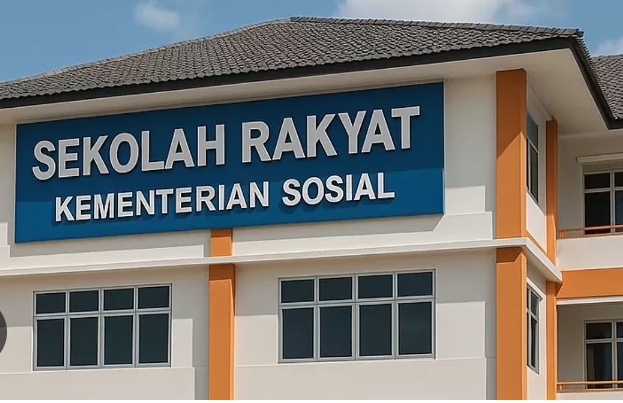
The Ministry of Social Affairs is planning to start the construction of four Sekolah Rakyat, or People’s Schools, across Papua starting July 2026. The programme aims to provide free education and boarding for children from economically vulnerable families and to extend educational opportunities to Indigenous Papuans in remote areas.
“This project is not just about building school buildings,” provincial authorities say. They say it is part of a wider effort to make sure geography doesn’t determine a child’s future.
The planned schools are expected to be one of the province’s most significant social investments in 2026 at a time when Papua continues to strive to improve education, health, infrastructure and human resource development.
Bringing Schools Closer to Communities
Access has been one of the most persistent barriers to Papua’s education sector for decades.
Although most districts have increased their enrolment rates, distance remains an issue for thousands of students, particularly in the mountains and rural areas where the transportation infrastructure is still limited.
Officials involved with the People’s School programme say the programme was specifically designed to meet these challenges.
The facilities will be run as integrated boarding schools, meaning students will be able to live and study in the same environment, unlike conventional schools. The aim of the approach is to reduce travel burdens and to create a more stable learning environment.
The first phase of development will focus on four locations in Papua Province, according to the Ministry of Social Affairs.
Construction is slated to begin in July 2026, after environmental studies and public consultations.
The schools will be equipped with classrooms, dormitories, ancillary facilities and educational infrastructure to offer a complete learning environment, provincial officials said.
Education as a Pathway to Opportunity
The idea of the People’s School programme reflects a growing recognition that education is one of the most effective tools for reducing inequality.
Many families in Papua, particularly those far from urban centres, tie their access to education directly to economic opportunities.
Children who have completed secondary and higher education are generally more likely to find formal employment, to undertake entrepreneurship or to pursue studies at universities.
For that reason, officials view investment in education not simply as a social programme but as a long‐term development strategy.
The goal is to assist in preparing a generation that can contribute to the future growth of Papua while retaining strong ties to local communities and cultural values.
July 2026 Construction Timeline Moves Forward
Recently preparations for the project have accelerated.
On June 11, the provincial authorities and representatives of the Ministry of Social Affairs discussed implementation plans, including environmental impact assessments and community participation mechanisms.
Papua Governor Mathius Fakhiri said he supported the initiative and stressed that local communities should be part of the planning process.
The provincial government says public consultation remains an integral part of the project, as the schools will impact surrounding communities.
Officials have asked residents to join in discussions about environmental assessments, land use and community needs.
Community Participation Becomes Key
One theme that keeps coming up is the importance of public participation, provincial officials say.
Education projects are often successful when communities feel a sense of ownership over the institutions being built.
This principle is especially important in Papua, where social relations and local leadership structures are essential in community life.
Officials structure the consultation processes not only to meet administrative requirements but also to ensure that the schools genuinely reflect local needs and expectations.
Policymakers believe that involving community stakeholders early in the planning process will help prevent future obstacles and gain more public support.
Investing in Human Resource Development
Papua is increasingly becoming part of a broader discussion on human resource development in Indonesia.
Politicians often talk about how infrastructure projects alone don’t guarantee long-term progress.
Roads, airports, bridges and public facilities can improve connectivity, but ultimately sustainable development depends on the quality of human capital.
The planned People’s Schools are thus closely connected to larger efforts to improve educational outcomes among Indigenous Papuans.
Apart from health, economic empowerment and public services, education has become one of the mainstays of the development agenda of Papua.
Recently, various scholarship programmes and educational assistance schemes have emerged to support Indigenous students.
People’s School is intended to supplement these efforts by providing access at an earlier point in the educational pathway.
Creating Future Leaders
Many teachers in Papua say talent is everywhere in the region, but opportunities are not always evenly distributed.
Children in remote districts often encounter barriers that are not really about their ability to learn.
Distance, transportation costs and lack of educational facilities can have a giant impact on learning outcomes.
People’s schools and programmes like it aim to dismantle those barriers.
It is hoped that students who benefit from better educational environments today will become the teachers, doctors, engineers, entrepreneurs, public servants and community leaders of tomorrow.
The long-run perspective also helps explain why education continues to attract much attention from national and regional governments.
Economic Benefits Beyond the Classroom
The officials see the main goal as education but also see broader economic benefits.
Large public projects often create jobs during both construction and operation phases.
Local workers, contractors, educators, administrative staff, and service providers will benefit from the local jobs created by the four planned schools.
Moreover, the presence of educational institutions often stimulates economic activity in the vicinity.
Schools and student populations often generate additional demand, which benefits small businesses, transportation services, food suppliers, and accommodation providers.
Supporting Regional Development
The Ministry of Social Affairs has emphasised that the initiative is a crucial component of a broader developmental ecosystem.
Education helps economic growth, not only by generating jobs today but also by creating skilled workers in the future.
That connection is particularly important for Papua, where the efforts to improve competitiveness and human resource capacity are ongoing.
Papua’s regional leaders have repeatedly said economic development must be accompanied by educational advancement to ensure sustainable long-term growth.
A Broader National Commitment
The People’s School programme is one part of a larger Indonesian strategy to improve the equity of education in the country.
The government has been increasingly focusing on providing children in remote, disadvantaged and frontier regions with opportunities comparable to those in major urban centres.
Papua remains a priority in that strategy because of geographic difficulties and varied social conditions.
National policymakers say educational equity is a prerequisite for national cohesion and for the equitable distribution of development gains across all regions.
For many observers, the proposed schools are a concrete manifestation of that commitment.
Building on Existing Education Programmes
The new schools will add to other educational efforts already under way in Papua.
These include scholarship programmes, school revitalisation projects, capacity development for teachers, and educational assistance schemes for Indigenous students.
Readers may also be interested in our previous coverage of the launch of Papua’s PACE and MACE education cards and the expansion of the ADEM scholarship programme, both of which aim to improve educational opportunities for Indigenous Papuan youth.
The initiatives together point to a broader policy direction toward enhancing access, quality and inclusiveness in Papua’s education sector.
Looking Ahead
Construction is scheduled to commence in July 2026, heralding what many are hoping will be a transformative project for education in Papua.
There are still, no doubt, challenges.
Building schools in remote areas requires precise planning, logistical coordination and continued financial support.
But officials are hopeful that the programme can have a real impact.
The arrival of new educational facilities could open up opportunities for families with children who travel long distances just to attend class that seemed impossible before.
The project reflects a growing belief that the future of Papua as a whole will depend not only on its natural resources or infrastructure but also on the knowledge, skills and aspirations of its young people.
Conclusion
The plan to build four People’s Schools in Papua starting in July 2026 marks a significant move to broaden educational opportunities in one of Indonesia’s most geographically difficult areas. The initiative combines free education, boarding facilities and community participation as a method of breaking down barriers faced by Indigenous Papuan students living in remote areas.
The project’s broader goal is clear: to give every child, regardless of where they are born, the opportunity to learn, grow and contribute to Papua’s future development, but the success of the project will ultimately depend on effective implementation.

