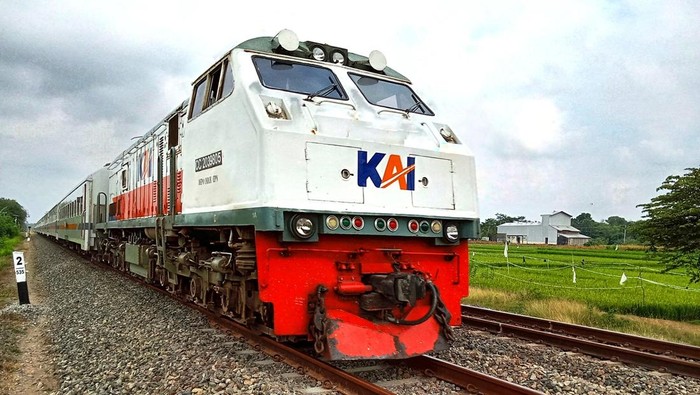
Railways have been a familiar feature of everyday life in many parts of Indonesia for decades. Trains transport millions of passengers through Java, transport commodities across Sumatra, and increasingly underpin economic activity in several regions of the country.
However, rail transport has never been adopted on a large scale in Papua.
That may not always be true.
The central government has included Papua in its long-term national railway development agenda, and the Papua provincial government has resumed discussions on how the construction of Papua’s first railway network could support regional growth.
The renewed attention comes amid wider efforts by Indonesia to expand transportation infrastructure and strengthen connectivity across the archipelago. Rail transport could be a major contributor to increased economic activity, reduced logistics costs and greater mobility in one of the most geographically challenging parts of the country, officials believe.
The project is still at the planning and feasibility stage, but proponents see the railway proposal as a potentially transformative development for Papua’s future.
For many residents, the debate is about more than trains.
It’s about how people move, how goods move, and how opportunities move.
A Vision That Has Existed for Years
The notion of a railway in Papua is not new.
In fact, people have repeatedly raised the subject of rail transportation in the region over the past several decades. There have been all kinds of studies and proposals and preliminary assessments of connecting major population centres with rail infrastructure.
But Papua’s geography has always posed unique challenges.
With mountain ranges, dense forests, extensive river systems and relatively low population density, transport projects are far more complex than in many other parts of Indonesia.
Those realities have often hampered implementation.
But government officials have continued to revisit the idea, arguing that long-term development necessitates transportation solutions that can support future economic growth.
The proposal has recently gained momentum as part of Indonesia’s broader strategy for railway infrastructure development, reports indicate.
Papua Included in National Railway Expansion Plans
Indonesia has plans to develop its railway infrastructure all over the country, including perhaps in Papua, reports on national development discussions in June 2026 indicate.
The wider project is part of a long-term vision to build thousands of kilometres of railway lines nationwide.
The national framework must include Papua.
This indicates that railway development is not only a regional wish but also a part of Indonesia’s broader transportation strategy.
Officials say connectivity is one of the most important determinants of economic competitiveness.
Areas with excellent transport networks tend to have lower logistics costs, better access to markets and more integration into national economic systems.
Governor Fakhiri Pushes for Faster Progress
Papua Governor Mathius Fakhiri has been one of the railway project’s most vocal supporters.
Fakhiri has repeatedly expressed support for speeding up planning and public consultation on railway development in recent months.
Stakeholders and community representatives highlighted the economic benefits that enhanced transportation infrastructure could bring during the governor’s conversations.
He has also urged residents to see the project as part of a wider modernisation drive in Papua.
Provincial officials say conversations have been about making sure that railway development matches local needs and supports long-term economic goals.
The governor’s endorsement is part of a broader policy position that views connectivity as essential for growth.
Public Consultation Remains Important
The emphasis on public engagement is one of the most remarkable aspects of the present debate.
Infrastructure projects of this scale inevitably impact communities, land-use patterns and development priorities.
That’s why provincial leaders have emphasised the importance of engaging local residents in the planning process.
Officials say transparency and consultation will be critical to building public trust and ensuring that future development benefits surrounding communities.
The approach also takes into account lessons learned from large-scale infrastructure projects in Indonesia where community participation is increasingly a key component of project planning.
Connecting Jayapura and Surrounding Areas
Currently, discussions revolve around a railway corridor that would link Jayapura City and Jayapura Regency.
Some surveys and preliminary site assessments have already been carried out looking at potential routes and technical requirements.
Although the final decision has not yet been made public, the proposed corridor is often cited as a practical starting point, as it connects major administrative, residential and economic areas.
Better travel links between the two areas could be a boost for residents who commute regularly.
The project could also provide a complement to existing road networks that are still experiencing rising traffic as the population and economic activity increase.
Reducing Logistics Costs
Rail advocates also often tout freight movement as a potential benefit of the project beyond passenger transportation.
In Papua, logistics costs are a major challenge due to the distance, geography and transportation limitations.
Many goods have to travel long distances before reaching the consumer.
Transportation expenses, thus, tend to raise prices.
A railway network could help to solve part of that challenge by offering an additional mode of transportation for commodities, construction materials, agricultural products and commercial goods.
Reducing logistics costs can boost business competitiveness and promote regional economic development.
Economic Potential Beyond Transportation
Supporters of the railway scheme say its consequences could be far more extensive than simply mobility.
Transportation infrastructure has historically been a factor in investment patterns, urban growth and economic activity.
New transportation corridors can attract businesses, boost tourism, and foster development in historically underserved areas.
Leaders in Papua see the same potential.
As investment in agriculture, fisheries, tourism and trade continues to grow, so too does the importance of transport efficiency.
A modern railway system can support these sectors by improving the connectivity between production areas and consumer markets.
Supporting Future Growth
Development economists like to remind us that the benefits of transportation infrastructure are cumulative over time.
We measure the immediate impact through construction activity and employment.
In the longer term there is generally increased investment, higher productivity and greater economic integration.
Those potential benefits are of great interest for Papua, where distances are still great and transport options limited in many areas.
And that helps explain why the talk of railways is never out of the news, despite the long time frame of the project.
Challenges Remain
While there is hope for the proposal, there are still significant challenges.
Papua is one of the most complex terrains in South-east Asia.
Building railways in mountainous terrain and environmentally sensitive areas requires abundant planning, engineering expertise, and financial resources.
Questions that will need to be carefully considered are funding, environmental management, route selection and long-term operational sustainability.
Several observers have also identified the importance of making sure that the railway development is complementary to existing transport systems and not just a duplication of them.
These considerations mean that progress is likely to be slow.
Major transportation projects often require years of planning before construction can begin.
Balancing Development and Sustainability
Another major consideration is environmental stewardship.
Policymakers increasingly recognise the need to balance development goals with conservation priorities in Papua, which contains some of the world’s most important tropical ecosystems.
Future planning will have to take into account environmental impacts while supporting economic growth, government officials say.
Achieving that balance will be critical to sustaining public support for the project.
Why the Railway Debate Matters
The debate on railway development has been renewed as part of the larger discussion about the future of Papua.
Limited connectivity has been one of the region’s most persistent challenges for decades.
“Better transport is widely regarded as a critical ingredient to improving economic integration, closing regional gaps and increasing opportunities for local communities.
The railway proposal is thus more than a transportation project.
It has become a symbol of broader aspirations for modernisation, mobility and long-term development.
Regardless of whether construction starts soon or more studies are required, the conversation itself shows how infrastructure remains at the heart of Papua’s development agenda.
Conclusion
Papua’s railway development plans resurfacing are a major step in the region’s continued efforts to improve connectivity and economic development. The proposal is supported by national and provincial leaders and is part of a wider vision of creating transport systems that can support future mobility, investment and regional integration.
But the conversation underscores a rising awareness that transportation infrastructure will be critical to Papua’s future, even in the face of major technical and financial hurdles. For many residents, the railway is more than just trains. This is about forging stronger links between communities, creating more economic opportunities and supporting a more integrated and prosperous Papua.