
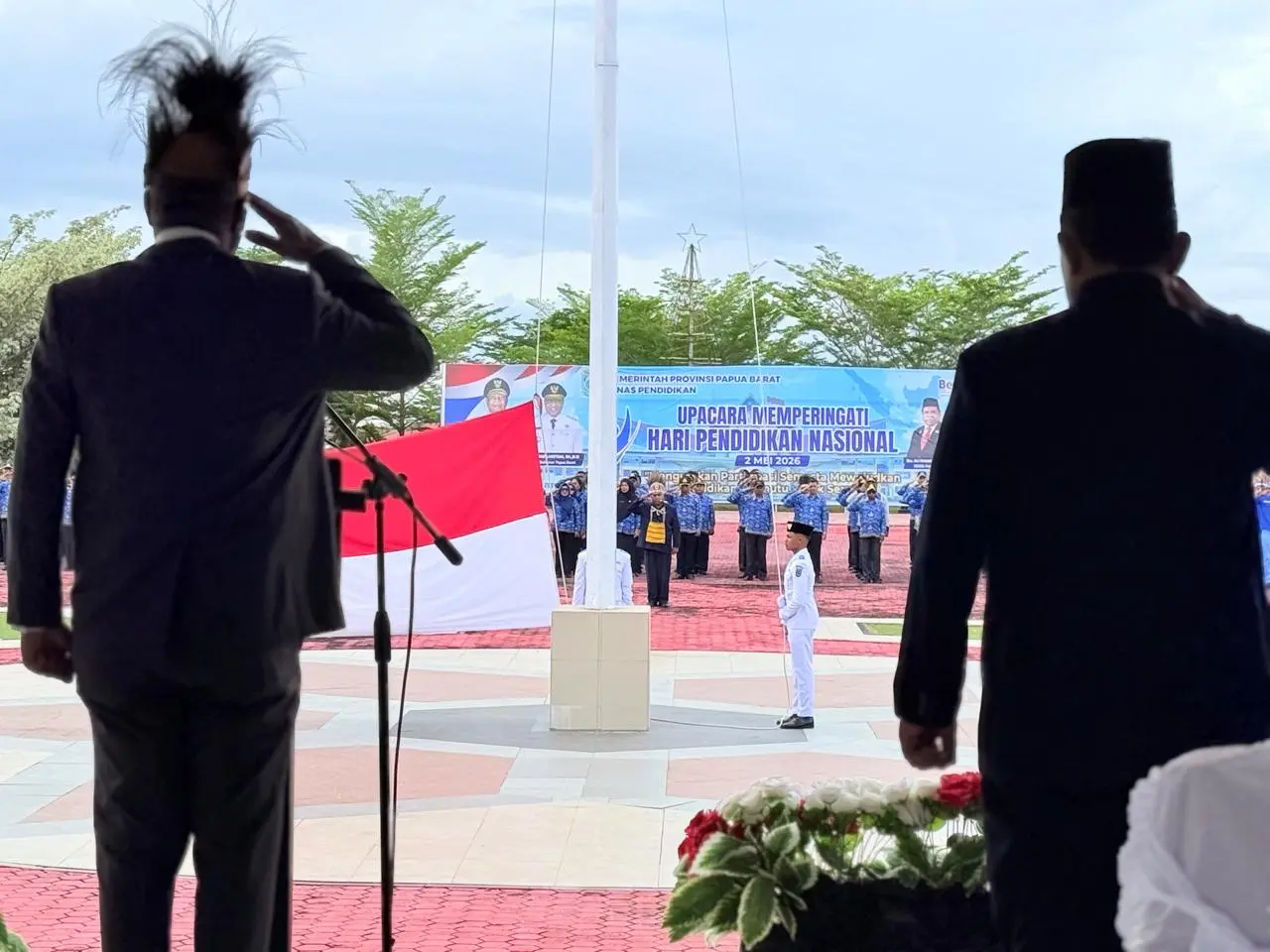
On May 2, 2026, in a school yard in Mimika, students stood in lines that were not perfectly straight. Some adjusted their uniforms. Others glanced at their teachers, waiting for the signal to begin. There was no elaborate stage, no large crowd. Still, the meaning was clear. The National Education Day (Hari Pendidikan Nasional) 2026 was being marked quietly but with attention.
The ceremony was simple.
For many of those present, the day was less about celebration and more about reflection.
Different Places, Different Ways of Marking the Day
But not all regions did celebrate the day in the same way.
In Papua Tengah, officials mentioned inclusive education and how it reflects progress. In Papua Barat the emphasis was a little different, which reminded the younger generation to be careful in using technology.
The ceremony was low-key in Sarmi. There were a couple of speeches and a group of students, and the event was over and everyone went on about their day.
Students planted trees further inland in Papua Pegunungan. It was a different kind of activity, but the same idea. Education is not only classrooms. It’s about how people think about the future.
Teachers Who Keep Things Moving
Work That Is Not Always Seen
In Papua when people talk about education, they usually talk about teachers.
Papuan people often talk about education in a conversational way, rather than in a formal setting.
In places like the Baliem Valley, teachers are spoken of as steady figures. They’ll come out even though the conditions aren’t great. They teach with their means.
This is sometimes enough to keep moving forward.
Adapting to What Is Available
Teaching here often involves adjustment.
Materials may be limited.
Distances can be long.
Classrooms do not always look the same from one place to another.
Still, lessons continue.
That continuity, even when imperfect, is what many people point to as progress.
Education as Something Practical
One idea kept recurring throughout the different ceremonies.
Education is seen as a route to progress.
Not in theoretical terms, but in practical ones.
Better access means more choices.
More choices mean more opportunities for work, for life, for the next generation. More choices mean more career options, more choices in education, and a better quality of life for families.
It’s an easy link, but it changes how people talk about education.
Inclusion Becoming Part of the Conversation
Expanding Who Gets Access
Officials in Papua Tengah discussed inclusive education.
This includes programs for children with special needs and vocational training that equips students with practical skills.
Participation is the emphasis.
Making sure that more people are in the system, not outside it.
Reaching Remote Communities
There is also an ongoing emphasis on targeting sites outside of major population centers.
They are often called remote or underserved.
There is no easy way to expand education there.
It takes infrastructure, coordination, and time.
But it is still an important goal.
Small Moments That Stay With People
One student stood out in a ceremony.
His walk was hard, but when the flag went up he stood as tall as he could.
There was no announcement on it.
No special attention.
But the people looked on.
Such moments often go on longer than speeches.
Progress That Moves at Different Speeds
Education in Papua does not move evenly.
Some areas develop faster.
Others take longer.
The pace is often shaped by geography and access.
There have been improvements.
More schools.
Better facilities in certain regions.
But there are still gaps.
People are aware of both.
Technology and a Changing Environment
New Tools, New Questions
In places like Manokwari, discussions during Education Day included technology.
Students today have more access to information than before.
That changes how they learn.
It also brings new questions about how that access is used.
Adjusting Along the Way
Education systems here are still adapting.
What worked in the past may not fully apply now.
Teachers and students are adjusting together, often without clear guidelines.
It is a gradual process.
What the Day Actually Means
For many, Education Day isn’t about the ceremony itself.
It’s about what it stands for.
The attempt to improve.
The recognition of those who teach.
That change is still happening even if it’s slow.
Looking Forward
The day closes the way it opened.
Students back in class.
Teachers carry on with their routines.
There is nothing sudden about it.
But the reminder is there.
That education is continuing.
That it demands attention.
That it is part of something bigger.
Conclusion
The National Education Day 2026 in Papua was not marked by large events.
It unfolded in small, familiar ways.
In Papua, that feels appropriate.
Because education here is not built through one moment.
It grows through repetition.
Through presence.
Through people who continue, even when conditions are not ideal.
And sometimes, that is where real change begins.

