
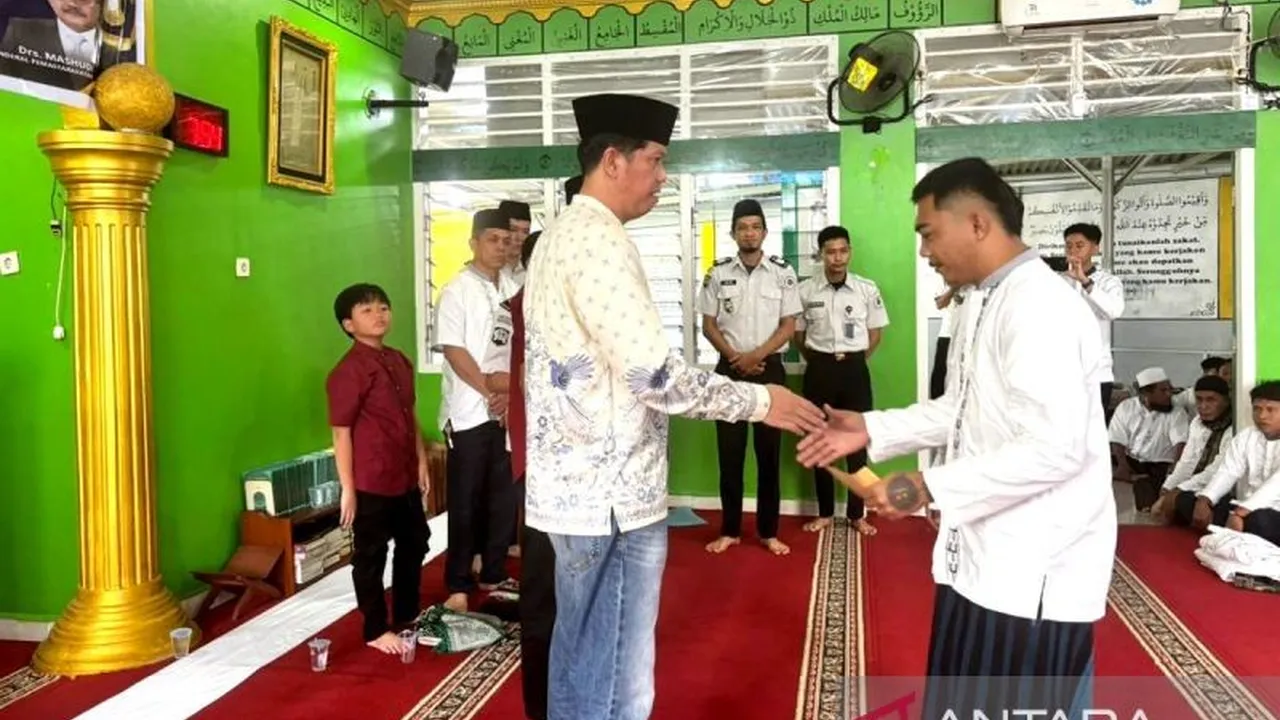
On the morning of Eid al-Fitr inside a prison, things begin almost the same as any other day.
Doors open at their usual hour. Guards move through the corridors. The sound of footsteps echoes against walls that rarely change.
But there is a difference, even if it is difficult to describe.
People speak more softly. They wait more carefully. They pay attention in a way that feels deliberate.
For some inmates, this day might bring news that changes something important, such as the possibility of parole, a transfer to a different facility, or updates on their legal cases.
Waiting for a Name
In one correctional facility in the Papua Barat (West Papua) Province, Manokwari’s prison, inmates gathered in a hall that is usually used for briefings and announcements. There were no decorations, no signs that this was a special day. Only rows of people sitting quietly, facing the front.
They were waiting.
Some tried to look calm. Others kept their eyes fixed on the officer holding a list of names. A few glanced around, as if looking for reassurance from others who were feeling the same thing.
No one spoke loudly.
The moment felt too important for that.
When the reading began, the room grew even quieter.
Each name called meant something different.
A few weeks less.
A few months closer.
For some inmates, there is a possibility of going home sooner than expected.
What Happened That Day
On March 21, 2026, correctional authorities in Papua Barat granted Eid remission to hundreds of inmates.
In total, 427 people received sentence reductions across the region, including both adult prisoners and a smaller number of young detainees.
For most, the reduction did not mean immediate freedom.
It meant something more gradual.
Time was moving forward, albeit just little faster.
For a small number, it meant something else entirely.
Release.
He walked out of the prison gate on the same day that other inmates were still counting their remaining time.
The Sound of a Name
When one inmate heard his name, he did not react immediately.
He sat still for a moment, as if making sure he had heard correctly.
Then he nodded.
No celebration. No visible emotion.
Just a quiet acknowledgment.
Afterward, he leaned slightly toward the person next to him and said something in a low voice.
A short sentence. Almost a whisper.
Moments like that are easy to miss.
But they carry weight.
How Remission Is Decided
Remission in Indonesia is not random.
It follows a process.
Inmates must meet certain conditions. They must follow rules, maintain acceptable behavior, and participate in programs inside the prison.
These programs can include religious activities, vocational training, or counseling.
Over time, officers observe.
They record behavior. They evaluate progress.
When Eid approaches, those records become part of the decision.
Who has shown change.
Who is ready for a step forward?
Life Inside, Day After Day
Understanding what remission means helps us understand what life inside is like.
Days follow a pattern.
Wake up. Clean. Eat. Attend scheduled activities.
Time passes, but slowly.
In some facilities, inmates learn skills.
Carpentry. Cooking. Small crafts.
In others, activities are more limited.
Space can be crowded. Resources can be stretched.
Family visits are infrequent, especially in regions where travel is difficult.
For many inmates in Papua Barat, distance is another barrier.
Their families may live far away, in villages that are difficult to reach.
Eid Without Family
Eid inside prison is not the same as outside.
There are prayers. There is a shared meal, often more special than usual.
But there are no large family gatherings.
No visits to relatives.
No going home.
For inmates, Eid becomes something quieter.
A moment to reflect.
A moment to think about what has been lost and what might still be possible.
The Meaning of a Shorter Sentence
For someone outside, a reduction of a few weeks might not seem significant.
Inside, it matters.
It changes how time is measured.
It brings release closer.
It makes the wait feel less distant.
For some inmates, it also brings a sense of recognition.
This recognition shows that their efforts, however small, have been noticed.
A System That Tries to Encourage Change
Officials often describe remission as part of a larger goal of rehabilitation, which includes helping inmates reintegrate into society and reduce recidivism rates.
Rehabilitation.
The idea is that prison should serve not only to punish but also to rehabilitate.
It should prepare people to return to society.
Remission becomes one way of encouraging that.
If someone obeys the rules, participates in programs, and shows progress, there is a reward.
Not immediate freedom.
But movement.
Families on the Outside
While inmates wait inside, families often wait outside.
They follow news of remission announcements.
They try to find out whether their relatives are included.
Occasionally they hear directly.
Occasionally they wait for confirmation.
For families, even a small reduction can feel important.
It changes expectations.
It allows them to start preparing.
A Mother’s Perspective
One woman in Manokwari, whose son is serving a sentence, spoke about what remission means to her.
“It gives us hope,” she said.
She did not know yet whether her son would receive it.
But she was waiting.
“Even if it is a little, it helps,” she added.
Her words were simple.
But they reflected something many families feel.
Not Everyone Receives It
Inside the prison, not every name is called.
Some inmates sit through the entire reading without hearing theirs.
For them, the moment passes quietly.
There is no visible reaction.
But the absence is felt.
Still, the process remains clear.
Remission must be earned.
And for those who did not receive it, there is always another opportunity in the future.
After the Announcement
When the reading ended, the room slowly returned to its usual state.
People stood up. Some spoke quietly. Others walked back to their cells.
There was no celebration.
There was only a shift in mood.
For those who received remission, something had changed.
For those who did not, the routine continued.
Two Who Walked Free
Among the 427 recipients, a small number were released immediately.
For them, Eid became something else.
A transition.
From inside to outside.
From routine to uncertainty.
He transitioned from a state of waiting to a new beginning.
Stepping out of prison is not the end of a story.
It is the start of a different one.
The Challenge of Returning
For those who leave, the next step is not always easy.
Finding work. Reconnecting with family. One must adjust to a different pace of life.
These are challenges that take time.
Some succeed. Some struggle.
But the opportunity exists.
A Quiet Kind of Change
Back inside, life continues.
The same routines. The same schedules.
But for some, the perspective shifts.
The end feels closer.
The days feel more purposeful.
Even a small reduction in time can change how someone thinks about the future.
Looking Ahead
Remission is granted every year during Eid.
It is a recurring moment.
But for each individual, it is unique.
It marks a point when something changes.
However slightly.
More Than a Policy
From the outside, remission can look like a policy.
Remission appears to be a system of rules and procedures.
From the inside, it feels different.
It feels personal.
It is about time.
About waiting.
About the possibility of something beyond the walls.
Conclusion
As the day ends inside Papua Barat’s prisons, the atmosphere settles back into its usual rhythm.
Lights dim. Conversations quiet down.
But for those who heard their names, the day remains.
Not because it was loud.
But because it mattered.
Because in a place where time often feels fixed, it moved.
Even if only by slightly.
And sometimes, that is enough to change how the future is seen.

