
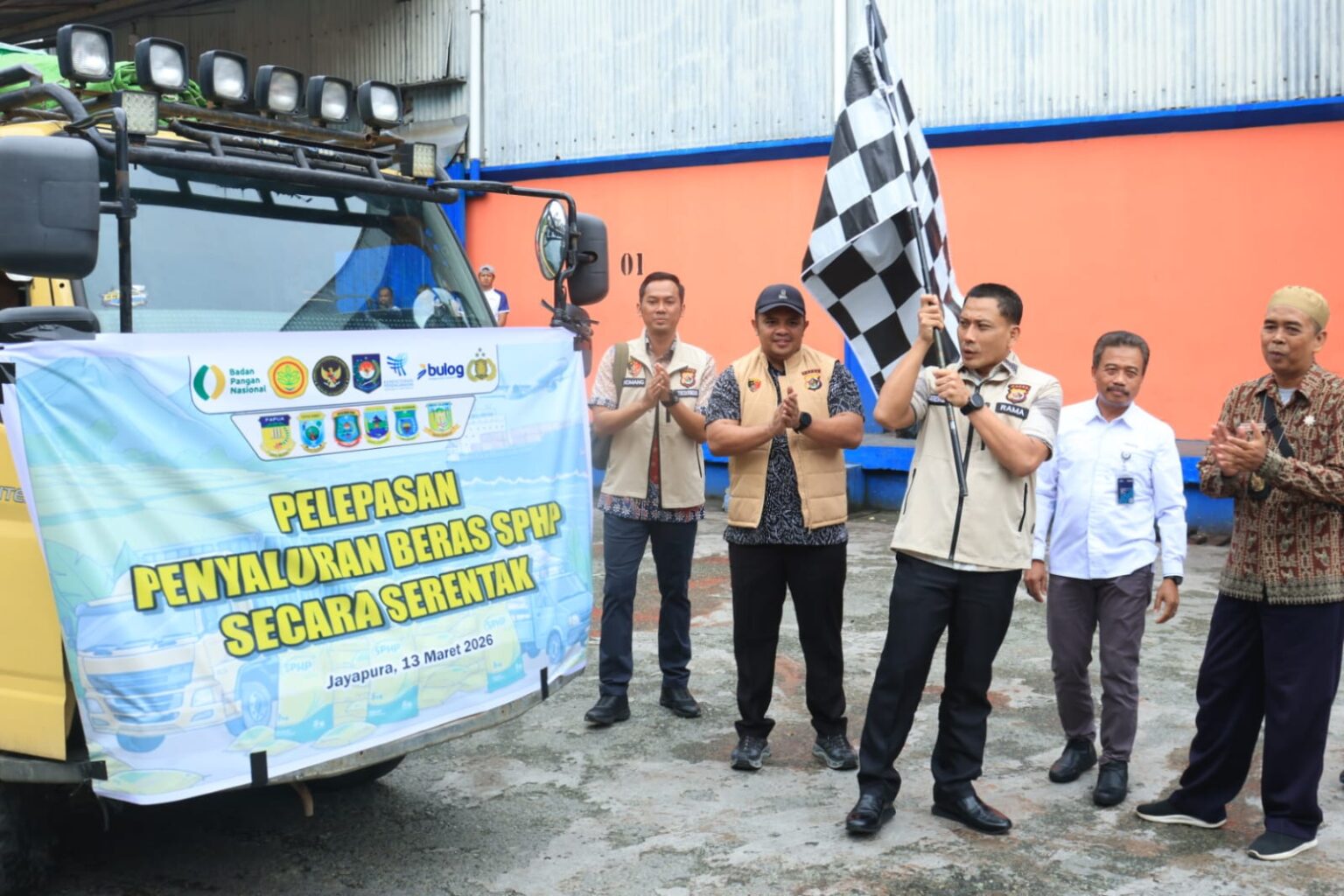
In the early morning at a logistics warehouse in Jayapura, stacks of rice bags were ready to start a long trip across the easternmost part of Indonesia. Trucks waited in line near the loading area while police, officials, and warehouse workers planned the next step in the distribution process.
The rice would soon go to cities, coastal towns, and highland communities in three provinces in Papua. It would come at a time when many families’ budgets are getting tighter.
As Ramadan goes on and Eid al-Fitr gets closer, the need for basic foods starts to grow in markets all over Indonesia. In Papua, where supply chains go over thousands of kilometers of ocean and rough land, keeping food prices stable is a very difficult problem.
The Papua Regional Police have started a program to distribute 137 tons of rice through low-cost market programs across the region. This is to help keep prices stable and make sure communities can get the basic goods they need.
The program is part of a larger effort by the government to keep food prices stable while also protecting the buying power of residents during one of the busiest times of the year.
Preparing for Increased Demand
In many Indonesian communities, Ramadan changes the way people live their daily lives. People shop for food to make meals before the fast starts, so markets that are usually quiet in the early morning become busy.
In the late afternoon, things pick up again as families get ready for the evening meal that will break the fast.
Every day for a month, this pattern happens again and again.
As Eid al-Fitr gets closer, demand in markets often goes up as families get ready for big family gatherings and festive meals.
In Papua, these seasonal spikes in demand can put even more strain on food supply chains.
Most of the staple foods sold in Papuan markets come from other islands, like Sulawesi or Java. Ships move goods over long distances, and then trucks or smaller boats take them to towns and villages.
Prices can be affected by the weather, the cost of transportation, and the limits of logistics.
Authorities often step in to make sure that food stays cheap when demand goes up during Ramadan.
The Release of 137 Tons of Rice
The Food Task Force of the Papua Regional Police organized the release of 137 tons of rice from the state logistics agency Bulog’s regional warehouse in Jayapura on March 13, 2026.
The rice is part of the government’s SPHP program, which stands for “stabilizing food supply and prices.”
Officials said that the distribution is part of a nationwide effort to keep food available and keep prices stable before major religious holidays.
From the warehouse in Jayapura, the rice is being distributed to communities across the broader Papua region, which includes the provinces of Papua, Papua Pegunungan (Papua Highlands), and Papua Selatan (South Papua).
Local police in each area help with logistics and make sure that the rice gets to communities through low-cost market programs.
The goal is clear. Make sure that people can buy basic foods at prices that are still affordable for most families.
Cooperation Between Institutions
Several institutions have to work together for the program to work.
The Papua Regional Police’s Food Task Force is in charge of keeping an eye on things and getting them out to people. Bulog gets rice from government reserves and takes care of moving it from warehouses to places where it can be distributed.
Regional governments and trade offices also help by putting on low-cost market events where people can buy rice and other basic goods.
Officials say that in a region as complicated as Papua, this kind of cooperation is needed.
Mountains, forests, and rivers that make travel slow and expensive separate many districts.
Authorities hope that by coordinating distribution through many different organizations, they can make sure that food gets to communities even in places that are hard to get to.
Monitoring Markets and Preventing Speculation
The Food Task Force of the Papua Regional Police keeps an eye on markets all over the region in addition to the rice distribution program.
Officers go to traditional markets and distribution centers on a regular basis to check on the availability of basic goods and keep an eye on price trends.
This monitoring helps the government find possible problems like hoarding or price hikes that are unfair.
Police have told traders and distributors not to change prices during Ramadan.
Officials stress that keeping the market fair is important for keeping consumers safe.
The government wants to keep the food supply chain stable by combining supervision with direct distribution of subsidized rice.
Affordable Markets for Communities
The program will give out rice that will be sold at low-cost market events in a number of cities and districts.
These events usually happen in public places like markets, public squares, or the courtyards of mosques.
People who live there can buy rice for less than what it costs in most local markets.
For families on a tight budget, the difference can be big.
Buying a few kilograms of rice at a cheap market can keep a family’s food supply going for several days.
Officials say the events are meant to make sure that regular families, not big distributors, get the benefits.
In some places, there are limits on how much rice people can buy so that more people can get it.
A Lifeline for Remote Communities
In many parts of Papua, getting food to people means more than just moving it from one city to another.
Some villages can only be reached by small planes that land on small airstrips cut into the sides of mountains. Some people need to take long boat trips along rivers that wind through thick rainforests.
Because of these logistical issues, food costs more in Papua than in many other parts of Indonesia.
Government officials often say that making sure people in Papua have enough food is a job that all levels of government and communities must work together to do.
The affordable market initiative and other programs like it are meant to help close the gap between supply and demand in places where transportation is still a big problem.
Public Response
People who have been to affordable market events say the program has helped them in a big way.
For families getting ready for Eid al-Fitr, being able to buy rice at a lower price helps ease some of the financial stress that comes with this time of year, when costs usually go up.
A lot of families buy extra rice to make sure they have enough for the last few days of Ramadan and the Eid al-Fitr celebrations.
Local vendors have also said that stable food prices keep traditional markets busy.
People keep shopping and supporting local businesses when they know they can get food.
A Nationwide Effort
The rice distribution in Papua is part of a bigger plan for the whole country to keep prices stable during Ramadan.
The Indonesian government has sent out a lot of subsidized rice to all parts of the country to make sure that people can still get basic foods.
Many provinces are putting into place programs like subsidized rice distribution and affordable markets at the same time.
The police’s involvement in Papua shows how important it is to work together to keep both the economy and society stable.
Looking Toward Eid al-Fitr
As the month of fasting goes on, people in all parts of Papua are getting ready for Eid al-Fitr.
The markets get busier as families buy the things they need to make traditional meals. Stores put out new clothes and decorations for the holiday that is coming up.
In the background, trucks are still moving rice from the Jayapura warehouse to other parts of the region.
The goal of each shipment is to make sure that no community runs out of goods or sees prices go up too much during the holidays.
Cheap rice coming to Papua means that people who live in cities and remote areas will still be able to meet their basic needs.
Ensuring Food Security Through Cooperation
The fact that 137 tons of rice were sent to three provinces shows how working together can help solve economic problems.
During this time of year, when demand is at its highest, police, government agencies, and logistics companies are working together to make sure that food stays available and cheap.
For communities getting ready to celebrate Eid al-Fitr, these kinds of things are useful.
A bag of rice bought at a cheap store may not seem like a big deal.
But for families in Papua, it means safety, stability, and the peace of mind that they can all sit down to dinner together during the holidays without worrying about how much their next meal will cost.

