
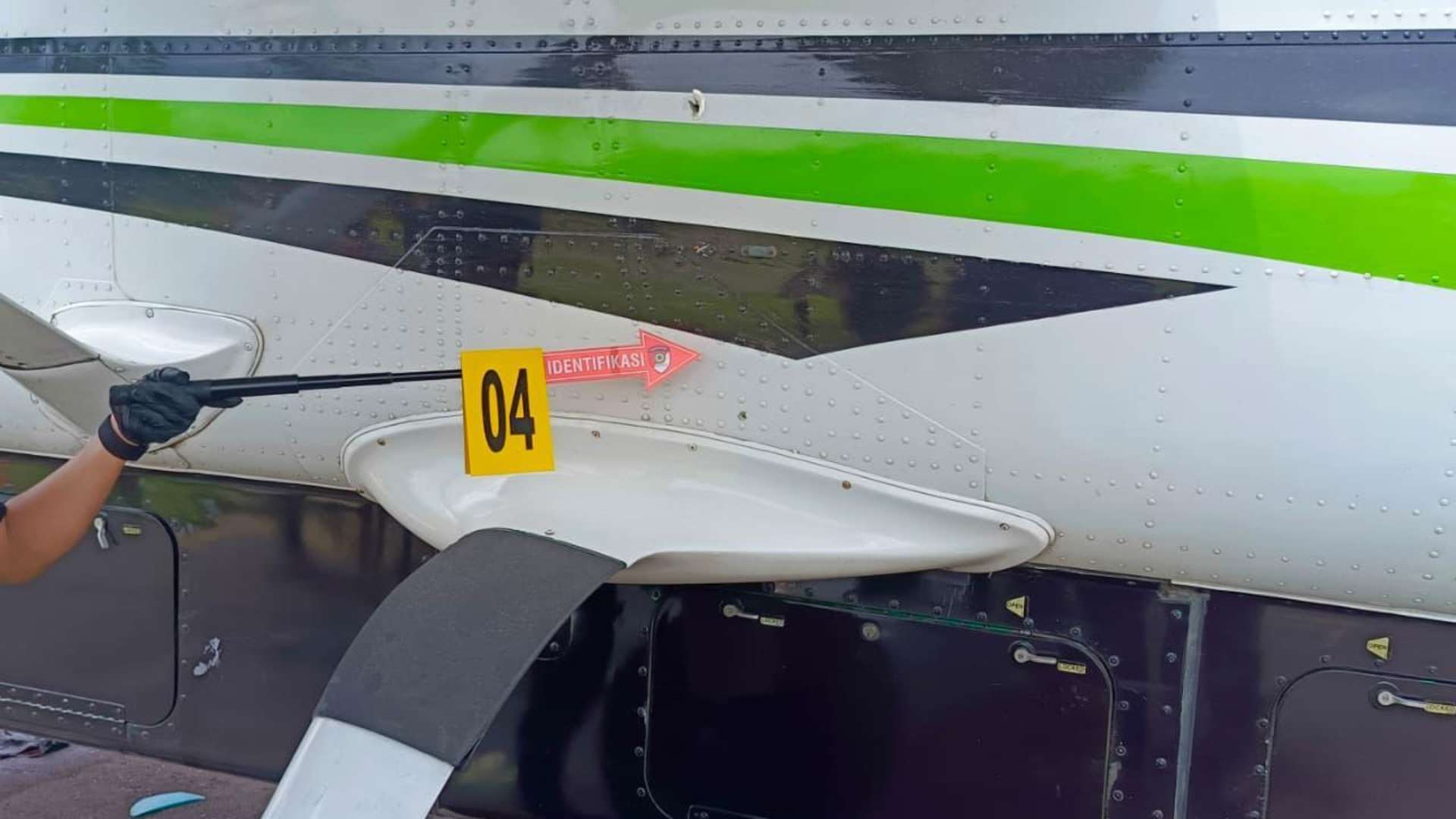
The quiet runway at Koroway Airport in Boven Digoel Regency, Papua Selatan (South Papua) Province, doesn’t get much national attention. It is a small airstrip in the middle of a thick forest that is a lifeline for remote communities that rely on small planes to get food, medicine, and transportation. But on February 11, 2026, the name Koroway became known for tragedy when gunfire hit a Smart Air plane, killing two pilots and shaking the already fragile sense of safety in Papua’s interior.
Indonesian officials have now arrested four members of the TPNPB OPM armed group who are thought to have been directly involved in the attack, weeks after it happened. The Damai Cartenz Task Force and local police worked together to make the arrests. This is a big step forward in the investigation into one of the most serious attacks on civil aviation in Papua recently.
The case has gotten a lot of attention across the country, not just because of the deaths, but also because it shows how civilian aviation infrastructure is being targeted in a region that relies heavily on air travel to survive.
The Attack That Shocked Koroway
A Smart Airplane landed at Koroway Airport on the morning of February 11, 2026, after finishing a normal flight to the remote district. Gunshots rang out from the edge of the airstrip just after the plane landed.
Investigators say that the attackers used four guns during the attack. The bullets hit the cockpit, killing the captain and co-pilot. Even though things were crazy, other people on the ground lived.
The victims were experienced pilots who flew to remote areas in Papua. The loss was devastating for families in Boven Digoel and the nearby areas. These pilots weren’t new to each other. Aviation crews often become familiar faces in remote areas because they bring not only supplies but also a way to connect to the outside world.
The attack was quickly blamed on members of the TPNPB OPM, an armed separatist group that has carried out attacks in Papua’s highlands and remote areas from time to time.
Investigation and Pursuit
The Damai Cartenz Task Force stepped up its work in Papua Selatan in the days after the attack. Officers patrolled the area, got information from local people, and followed the paths that the suspects were thought to have used to escape.
The investigation involved numerous interconnected components. Koroway’s land is thick and hard to get to, with few roads and thick forests that hide it. Authorities, on the other hand, stressed that targeting civilian aviation needed a strong and quick response.
On February 16, 2026, police confirmed that they had arrested four individuals suspected of direct involvement in the shooting. One of the people arrested was the person who is thought to have shot at the Smart Air plane.
The arrests were made in different operations, which shows that intelligence units and field officers worked together. Authorities also seized weapons they believe were involved in the attack.
Revealing the Motive
During questioning, the police learned more about the attack’s motive. Police statements reported by national media say that the attackers said they chose the plane as a target because they saw aviation operations as signs of the state’s presence and growth in Papua.
Investigators found that the attackers thought that stopping flights would slow down the growth of infrastructure and government programs in remote areas. Essentially, the attack aimed to intimidate individuals and convey political messages.
According to security officials, the goal was to stop development efforts and make the area less stable.
This news led to more discussion about the link between security and development in Papua. In Boven Digoel, flying is not a luxury. It is crucial. Schools, clinics, and small businesses need flights that are on time.
Authorities say that by going after civilian pilots, the criminals went too far and put regular people at risk instead of political institutions.
The Bigger Effect on Papua
The Smart Air attack had effects right away. For a short time, several aviation companies looked over the security measures for Papua’s first airstrips. While officials investigated safety measures, some flights experienced delays.
People who lived in Koroway and nearby areas were worried about what would happen next. Would the flights keep going? Would important supplies get there on time?
Local leaders told people that aviation services would start up again with better security. There were more patrols around the airport’s perimeter, and police and military units worked together better.
National leaders spoke out against the attack, saying that violence against civilian aviation is not acceptable.
Voices from the Community
After the arrests, the mood in Koroway went from shock to careful relief.
A shop owner in the area said that the shooting scared many people. Businesses closed early, and kids stayed inside. The arrest of suspects restored people’s confidence.
Another person who lived there said they hoped that better security would stop things like this from happening again. He said that flying is the only reliable way to get from Koroway to bigger towns.
But for the families of the pilots, justice can’t bring back what they lost. Colleagues and aviation officials who attended memorial services in their hometowns said they were dedicated professionals who wanted to help people in remote areas.
Security and Development
The arrests have brought back up the question of how to balance long-term development with enforcing security in Papua.
Officials say that it is still important to keep building roads, schools, and health facilities, among other things. They say that threats and fear shouldn’t stop progress.
Analysts say that targeting aviation hurts both government projects and the economies of the areas where they happen. Traders, teachers, medical staff, and small business supplies all fly.
By stopping flights, attackers could cut off communities that already have trouble getting around.
Law Enforcement Promise
The Damai Cartenz Task Force has promised to go after any other suspects who may be involved. Authorities said that investigations are still going on to find networks connected to the attack.
Police stressed that they follow national rules when they do their jobs and put the safety of civilians first.
Officials also asked people in the community to work with the police and report any strange behavior.
International Implications
The deaths of two pilots at Koroway Airport had an impact outside of Papua. International observers have long seen the safety of civil aviation as a key sign of stability in the region.
Attacks on civilian planes make people worry about safety standards and keeping non-combatants safe.
Indonesian authorities want to show that these kinds of crimes won’t go unpunished by quickly arresting suspects.
A Region Looking for Stability
People often tell Papua’s story in terms of conflict. But it’s also a story of strength, culture, and hope.
The Smart Air tragedy showed both weaknesses and strengths in the institutions.
People in Boven Digoel are cautiously hopeful about the future as flights start up again and life starts to settle down.
The arrests of the four TPNPB OPM members are more than just a step in the investigation. They stand for a promise to follow the law, keep civilians safe, and keep remote areas connected instead of cutting them off.
The pain is still fresh for the families of the pilots who died. The runway is once again a bridge to opportunity for the people of Koroway.
The events of February 2026 serve as a reminder for all of Papua that security and development must coexist to prevent fear from cutting off the lifelines that so many people rely on.

