The Radio of the Republic of Indonesia (RRI) Jayapura broadcast expansion is taking on a role that extends beyond radio programming. In Papua, where mountains, islands, long distances and uneven communications infrastructure can make access to information difficult, the public broadcaster is seeking to reach communities at the country’s eastern frontier while adapting its services to the digital era.
The latest push targets regions along the Indonesia-Papua New Guinea border. RRI Jayapura says it is strengthening transmission infrastructure in frontier areas and combining terrestrial broadcasting with digital platforms so that information can reach communities through more than one channel. The objective is not simply to increase the number of listeners but to provide national information that is impartial, educational and useful to people living in some of Indonesia’s most geographically challenging areas.
The effort has gained renewed attention as RRI marks its 81st anniversary. At the same time, provincial leaders in Papua and Papua Tengah have described the broadcaster as something larger than a conventional news outlet: a public space where government and communities can exchange information, discuss development and bring local concerns into the wider public conversation.
Reaching Papua’s Most Distant Communities
For radio, geography matters.
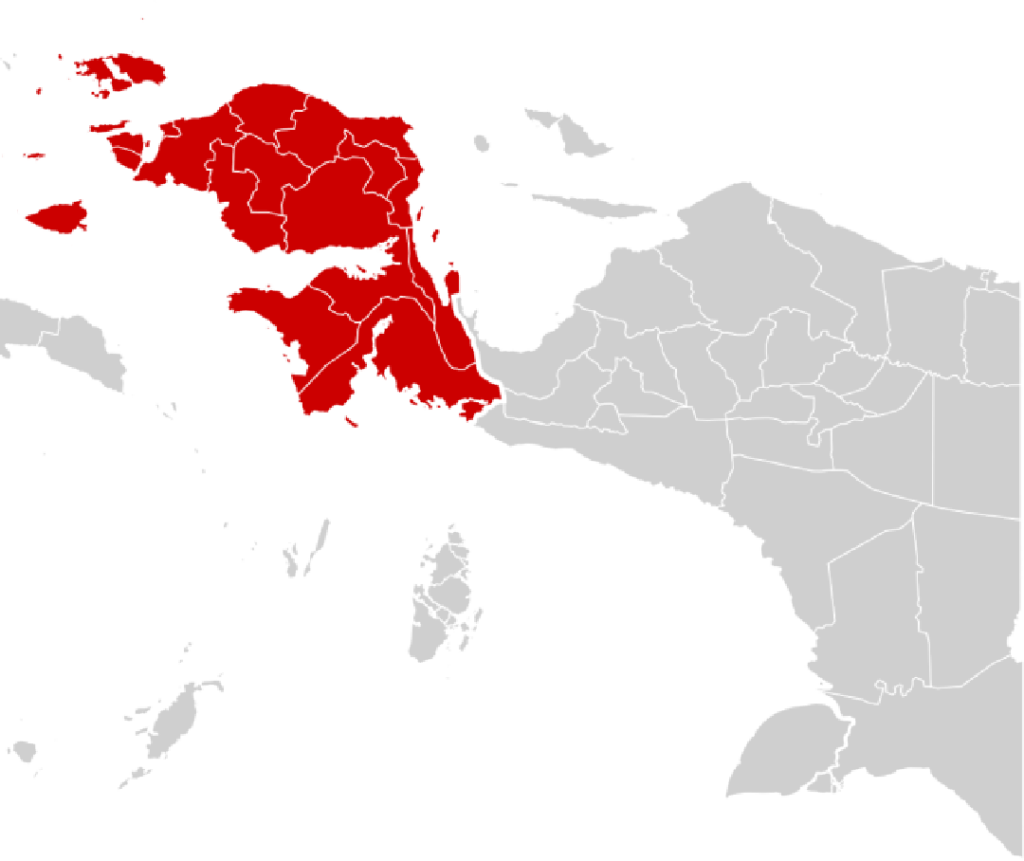
Jayapura is separated from many communities in Papua by difficult terrain and long distances. Along the international frontier with Papua New Guinea, access to reliable information can be particularly important because residents live far from major administrative centres.
RRI Jayapura Head Jony Iskandar Baso said the station has continued to strengthen its broadcast reach, including by placing transmission facilities in border areas with Papua New Guinea.
The purpose, he said, is to strengthen RRI’s signal while providing information to people living in the country’s outermost areas.
The approach reflects the continuing relevance of radio in places where internet access may not always be consistent.
Radio does not require the same level of individual connectivity as a smartphone-based service. A broadcast signal can reach households, public spaces and communities simultaneously, making it particularly useful when information needs to travel across large geographical areas.
For Papua, that remains significant.
The region’s development is taking place across a landscape that includes highlands, coastal settlements, islands and border communities. Reaching people in those different environments requires more than a single communications strategy.
RRI’s answer is increasingly a combination of traditional broadcasting and digital distribution.
From Terrestrial Radio to Digital Platforms
The expansion is not based solely on conventional radio transmission.
Jony said RRI Jayapura is also adapting to technological change through media convergence.
The station now distributes content through platforms including YouTube, Facebook and Instagram. This means that listeners are no longer limited to receiving RRI programmes through a conventional radio receiver.
The change is particularly relevant to younger audiences.
Papua’s younger generation increasingly consumes information through smartphones and social media. Maintaining a public information service therefore requires broadcasters to meet audiences where they already spend time.
RRI’s digital transition also creates an opportunity to extend the lifespan of its reporting.
A programme broadcast over the radio can subsequently become digital content, allowing audiences to access it at different times and on different devices.
Jony said the station would continue innovating to provide information and public enlightenment for communities in Papua.
The strategy is therefore not about choosing between radio and digital media.
It is about using both.
Why Trusted Information Matters in Papua
The importance of RRI’s role becomes clearer when viewed against the speed of today’s information environment.
Social media has made it possible for information to travel across Papua within minutes. But speed does not automatically mean accuracy.
Rumours, incomplete information and misleading claims can spread alongside legitimate news.
For the Papua provincial government, this is one reason public media remains important.
Jeri Agus Yudianto, Head of the Papua Provincial Communication and Information Agency, said RRI should provide information that is timely, accurate and balanced.
He also stressed the importance of public media remaining professional and independent while giving communities room to express aspirations and ideas openly.
That expectation creates a delicate but important role for RRI.
As a public broadcaster, it is expected to communicate information about government programmes and public policy. At the same time, it is also expected to provide a space where citizens can express concerns, discuss problems and respond to development policies.
That balance is particularly valuable in a region as diverse as Papua.
RRI as a Space for Public Dialogue
The Papua provincial government has called on RRI Jayapura to become a stronger public dialogue space.
Jeri said RRI’s role should extend beyond simply transmitting news. It should serve as a bridge between government and society.
That includes helping communities understand government programmes while also bringing public concerns back to policymakers.
The provincial government also wants RRI to highlight Papua’s potential, cultural diversity and local identity.
This matters because development is not only about infrastructure and economic indicators.
It’s also about how communities perceive their changing environment and how local experiences fit into the larger development discussion.
Jeri said RRI had already contributed significantly to disseminating development programmes and providing educational information, including to communities in remote areas.
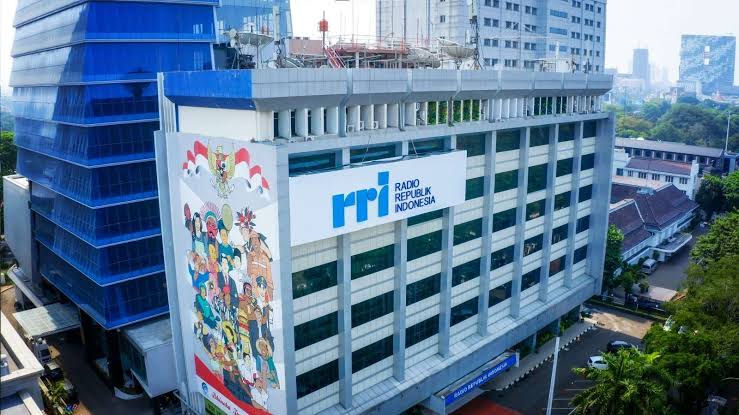
The newly inaugurated RRI Jayapura building is expected to support that role by improving the broadcaster’s services.
The July 2026 inauguration was attended by RRI President Director Hendrasmo, Jayapura Mayor Abisai Rollo, and Papua Police Public Relations Chief Kombes Pol. Cahyo Sukarnito and other partners.
The provincial government said the stronger RRI service should provide faster, more accurate and balanced information to the public.
Papua Tengah Wants RRI to Carry Local Voices
The same expectation is emerging farther west in Papua Tengah.
Governor Meki Nawipa has called on RRI to strengthen coverage of citizens’ needs, aspirations and experiences as part of the region’s development process.
Speaking during the 81st anniversary of RRI Nabire on September 11, Meki described the broadcaster as a bridge between government and communities, including people living in inland, coastal and highland areas.
His message was notable for its emphasis on listening.
Meki said RRI should not focus only on government activities. It should also report on how development affects people on the ground, including both communities that benefit from programmes and those who continue to face problems.
He specifically encouraged greater coverage of education, healthcare, the people’s economy, culture, tourism, agriculture, fisheries and young people.
He also pointed to successful community initiatives in villages that could provide examples of local development.
For a region as large and geographically varied as Papua Tengah, that approach can help bring local experiences into a wider public conversation.
Criticism Has a Place in Development
Meki went further by encouraging RRI to provide space for public criticism and ideas.
He said the Papua Tengah provincial government was open to constructive criticism based on data, arguing that useful criticism could help the government improve public services.
That statement gives the concept of public broadcasting a broader meaning.
A government does not only need a channel for explaining what it has done. It also needs mechanisms for learning what is not working.
Radio can play a role in that process when citizens are provided opportunities to explain problems affecting their communities.
For example, a farmer may know that a particular agricultural program has not reached a village. A health worker may identify a gap in service delivery. A young person may explain why an educational programme is not attracting students.
Such information may not appear in formal government reports.
Public media can help bring those experiences into the public sphere.
Meki said RRI should continue to maintain journalistic independence and professionalism while working with the provincial government.
That distinction is important.
Collaboration between government and public media does not have to mean that journalism becomes government communication.
Instead, the strongest public information system can combine accurate reporting, government explanations and space for citizens to respond.
Development Information Is Also Economic Information
The role of RRI also extends into the economy.
Information about agriculture, fisheries, small businesses, tourism and local markets can have direct practical value.
In remote areas, people may have limited access to information about government assistance, agricultural programmes, business opportunities, health services or educational initiatives.
Reliable broadcasting can reduce that information gap.
The same applies to disaster and emergency information.
Although the three ANTARA reports do not provide a detailed account of RRI’s emergency broadcasting operations, the broader principle is clear: reliable communication becomes especially valuable when communities are geographically isolated.
In development terms, information is infrastructure.
A road connects communities physically.
A telecommunications network connects them digitally.
A trusted broadcaster can connect them through information.
For Papua, all three are important.
The Border Has a Special Importance
The decision to strengthen RRI’s reach toward the Indonesia-Papua New Guinea border also carries a broader national significance.
Border communities are part of Indonesia’s social and economic landscape. Their access to information can influence how residents understand government programmes, public services, economic opportunities and developments in surrounding areas.
The border is not simply a line on a map.
It is a living environment where people work, trade, maintain family relationships and participate in community life.
Providing reliable Indonesian-language public information in such areas can therefore strengthen social connectivity between remote communities and the national information system.
RRI Jayapura’s decision to strengthen transmission infrastructure in the border area reflects this strategic role.
At the same time, public broadcasting can help ensure that border communities are not treated merely as security zones.
They are communities with schools, families, farmers, entrepreneurs, cultural traditions and young people.
Their information needs are therefore much broader than security.
Culture and Papua’s Local Identity
The Papua provincial government has also asked RRI to highlight local culture and regional potential.
That request reflects another important function of broadcasting.
For communities whose traditions have developed across generations, radio can become an archive of voices, stories, music, language and local experiences.
Jeri Agus Yudianto said RRI should help promote Papua’s potential, culture and diversity so that they become more widely known and contribute to strengthening regional identity.
The opportunity is particularly significant in an era when local cultural material can reach audiences outside Papua through digital platforms.
A story first recorded in Jayapura can now potentially be accessed by listeners elsewhere in Indonesia and by international audiences through online channels.
That creates a bridge between local identity and the global information environment.
Reaching Young Papuans
Digital transformation is likely to become increasingly important as Papua’s population becomes more connected.
RRI Nabire Head Surya S. Thalib said the station is preparing a production station in Mimika and hopes to expand opportunities for people across Papua Tengah to communicate information and issues from their respective areas.
The move is significant because Papua Tengah currently has only one RRI station, located in Nabire.
Expanding production capacity could allow more local voices to appear in RRI programming.
Meki also asked RRI to strengthen digital transformation so that the broadcaster remains close to younger audiences and can reach communities through multiple platforms.
But he emphasised that technology should not become the ultimate goal.
The most important asset, he said, is public trust.
That may be the central challenge for RRI’s future in Papua.
A larger signal is useful.
More digital platforms are useful.
But both are irrelevant if audiences distrust the information they receive.
A Public Service Role in a Changing Papua
The expansion of RRI’s reach comes at a time when Papua is experiencing significant political, economic and administrative change.
The region has undergone provincial restructuring, expanded development programmes and continued efforts to improve public services.
At the same time, parts of Papua continue to face security challenges, geographical isolation and unequal access to infrastructure.
In that environment, information becomes an essential part of governance.
Communities need to know what policies are being introduced.
Governments need to understand what communities are experiencing.
And citizens need credible sources that can help distinguish verified information from rumours.
RRI’s role sits at the intersection of these needs.
Its strongest contribution may not be simply the number of programmes it broadcasts, but its ability to maintain a reliable connection between communities and the broader public sphere.
From Jayapura to the Frontier
The recent anniversary activities in Jayapura offered a symbolic backdrop to this expanding role.
During the Tri Prasetya torch-lighting ceremony on September 11, RRI Jayapura reflected on its history and commitment to public service.
The moment was a chance for Jony Iskandar Baso to reaffirm the broadcaster’s dedication to delivering positive information and education to the communities of Papua.
He said he hoped RRI Jayapura would continue improving so that the information and education it provides could become a positive resource for listeners and the people of Papua.
That objective is particularly meaningful in the border areas where the broadcaster is trying to extend its reach.
There, a radio signal can mean more than entertainment.
It can mean access to national news.
It can mean educational programming.
It can mean information about public services.
And it can provide a connection to the wider Indonesian community.
Conclusion
The expansion of RRI Jayapura’s broadcast reach toward Indonesia’s border with Papua New Guinea represents more than a technical effort to strengthen radio signals.
It is part of a wider attempt to make reliable information more accessible to communities across Papua, including people living in remote and frontier areas.
The strategy combines transmission infrastructure with digital platforms such as YouTube, Facebook and Instagram. At the provincial level, government leaders are also asking RRI to become a stronger bridge between government and citizens, reporting not only official programmes but also community needs, development impacts and local achievements.
Papua Tengah’s Governor Meki Nawipa has framed the challenge in particularly practical terms: people need information that is fast, accurate, balanced and trustworthy, while government needs to hear the concerns of citizens.
That is where public broadcasting can make its most important contribution.
The future of Papua’s information landscape will not be determined by radio alone. Internet connectivity, social media and digital platforms will continue to change how people consume news.
But the need for trusted information will remain.
For communities in the highlands, coastal areas, villages and border settlements, access to reliable information can support education, economic activity, public participation and awareness of government services.
For the government, it can provide a channel to explain policies while also listening to criticism and local experiences.
And for Papua itself, it can help ensure that development is not only reported from the administrative centres but also heard from the communities living through it.
RRI’s expanding presence from Jayapura toward the Indonesia-Papua New Guinea frontier therefore carries a simple but important message: connectivity is not only about moving people and goods. It also involves ensuring that individuals can access reliable information and have their voices heard.
Read Also
128 Papua Villages Gain Electricity in 2026
Russia Backs Indonesia’s Biak Spaceport Plan