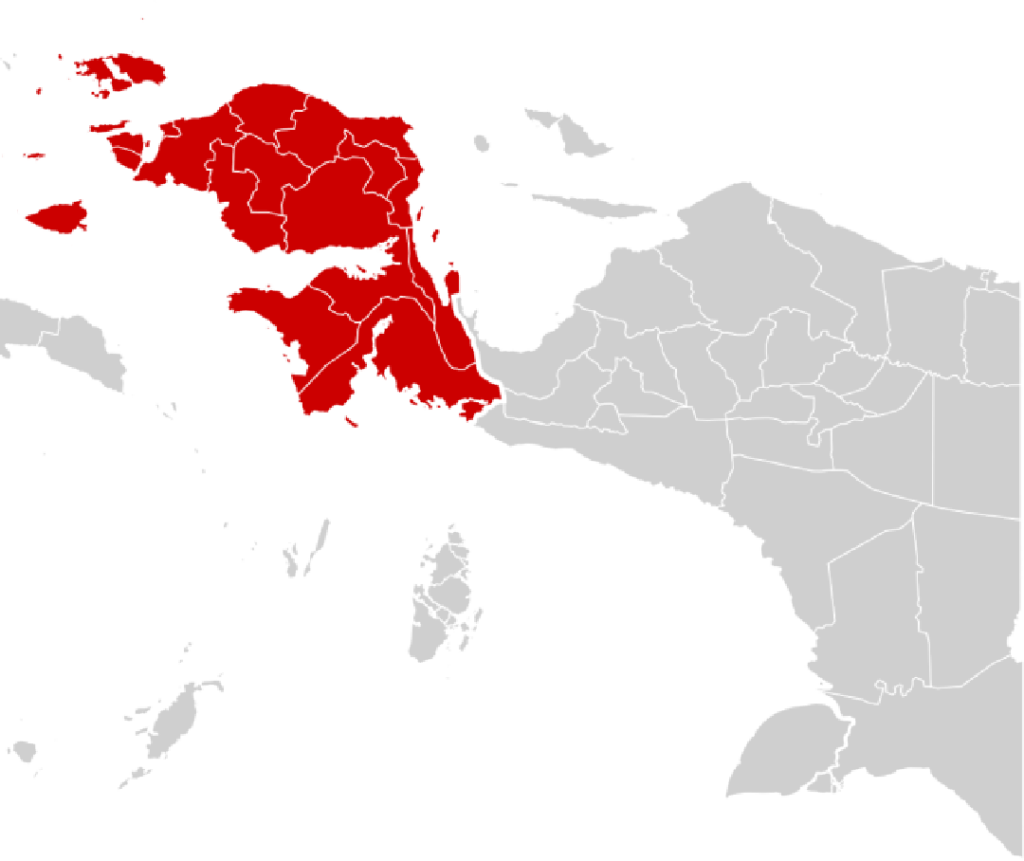
The Papua Tengah Provincial Health Office has intensified efforts to improve HIV prevention and treatment services by strengthening the capacity of healthcare professionals through an expanded clinical mentoring program. The initiative reflects Indonesia’s broader commitment to enhancing healthcare quality across Papua while ensuring that people living with HIV receive timely diagnosis, effective treatment, and comprehensive medical support.
Health officials described the program as an important investment in human resources, emphasizing that improving healthcare outcomes depends not only on expanding medical facilities but also on continuously strengthening the knowledge and clinical competence of doctors, nurses, laboratory personnel, pharmacists, and other frontline health workers.
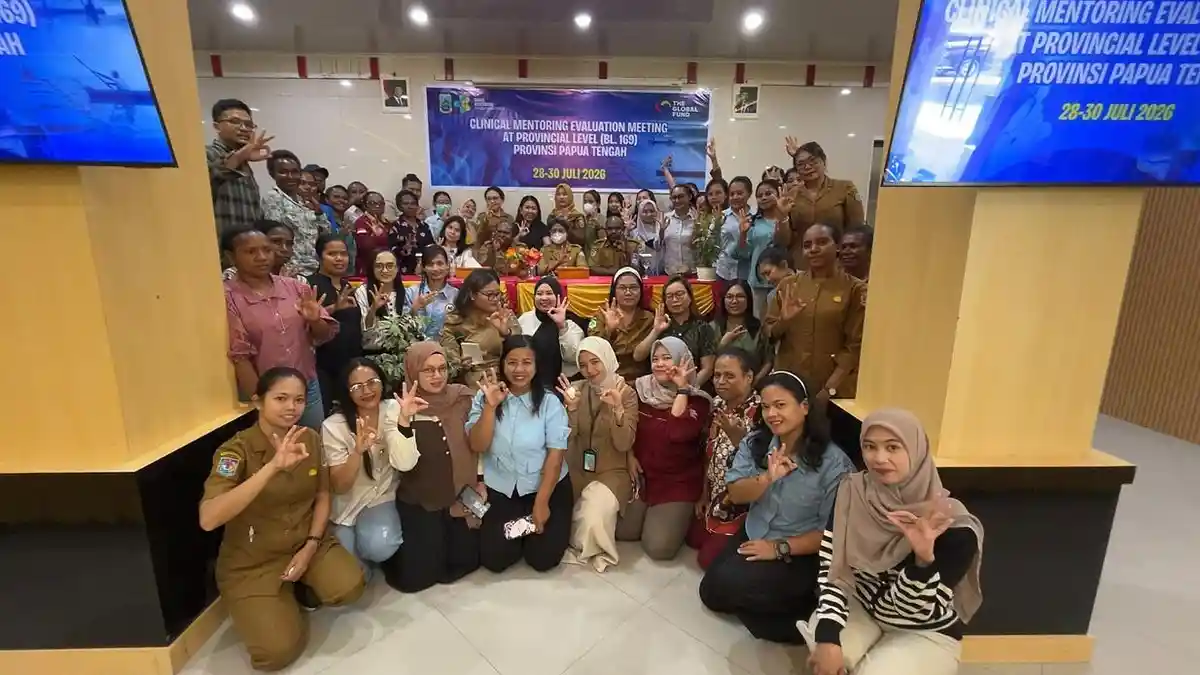
The initiative was highlighted during the Clinical Mentoring Evaluation Meeting in Nabire, where healthcare providers, provincial officials, and medical partners reviewed progress made over recent months while identifying strategies to further improve HIV services throughout Papua Tengah.
For a region characterized by vast distances, mountainous terrain, and scattered communities, strengthening the capacity of healthcare personnel represents a practical approach to improving access to quality medical services.
Building Stronger Clinical Capacity
Clinical mentoring has become one of the key strategies adopted by the Papua Tengah Provincial Health Office to improve the quality and consistency of HIV care.
Unlike conventional classroom training, clinical mentoring focuses on practical guidance delivered directly in healthcare settings. Experienced clinicians work alongside healthcare workers, providing case-based learning, technical supervision, treatment consultation, and continuous professional support.
According to provincial health officials, this approach enables medical personnel to strengthen their clinical decision-making while improving confidence in diagnosing, managing, and monitoring HIV patients.
The mentoring program also encourages collaboration among hospitals, community health centers, laboratories, and referral facilities, allowing healthcare professionals to exchange experiences and adopt best practices more effectively.
Officials emphasized that continuous mentoring is particularly valuable because HIV treatment guidelines continue evolving alongside advances in medical science.
Ensuring that healthcare workers remain updated on the latest clinical standards helps improve treatment quality while reducing disparities in healthcare delivery between urban and remote facilities.
Improving Early Diagnosis and Quality Treatment
Health authorities explained that strengthening clinical capacity ultimately aims to improve patient outcomes.
Timely diagnosis remains one of the most important components of HIV management because early detection enables patients to begin antiretroviral therapy (ART) before serious complications develop.
Medical professionals participating in the mentoring program reviewed clinical procedures covering HIV testing, counseling, laboratory monitoring, treatment initiation, management of opportunistic infections, adherence support, and long-term patient follow-up.
Officials noted that improving the confidence and competence of frontline healthcare workers encourages earlier diagnosis while helping patients remain engaged in treatment.
International public health experts consistently emphasize that effective HIV programs require a continuum of care extending from prevention and testing through lifelong treatment and community support.
Clinical mentoring therefore seeks not only to improve medical knowledge but also to strengthen communication between healthcare providers and patients.
By enhancing professional skills across multiple aspects of HIV care, Papua Tengah aims to improve both the quality and continuity of health services.
Addressing Healthcare Challenges Across Papua Tengah
Providing healthcare in Papua Tengah presents unique logistical and geographical challenges.
Many districts are separated by rugged mountains, dense forests, and limited transportation infrastructure, making access to medical facilities more difficult than in many other parts of Indonesia.
Healthcare workers serving remote communities often operate with limited resources while managing diverse public health needs.
Under these conditions, strengthening professional capacity becomes especially important because frontline personnel frequently serve as the primary providers of diagnosis, treatment, counseling, and preventive health education.
Provincial health officials explained that clinical mentoring helps reduce differences in service quality between larger hospitals and smaller healthcare facilities by ensuring that all medical personnel receive ongoing technical guidance.
The program also supports stronger referral systems by encouraging closer coordination among healthcare providers across districts.
Development specialists note that investing in human resources is one of the most effective ways to strengthen healthcare systems in geographically dispersed regions.
Rather than relying solely on physical infrastructure, capacity-building initiatives help improve service delivery through better clinical decision-making, stronger teamwork, and more consistent adherence to national treatment standards.
Human Resources at the Center of Public Health Reform
The Papua Tengah Provincial Government has repeatedly emphasized that healthcare professionals remain the foundation of successful health system development.
Medical facilities, equipment, and pharmaceutical supplies all depend upon qualified personnel capable of delivering high-quality patient care.
For this reason, the provincial health office continues prioritizing professional development through mentoring, technical training, supervision, and performance evaluation.
Officials participating in the Clinical Mentoring Evaluation Meeting stressed that improving healthcare services requires continuous learning rather than one-time training activities.
Regular mentoring enables healthcare workers to discuss complex cases, receive expert feedback, and strengthen interdisciplinary collaboration while remaining responsive to emerging public health challenges.
This approach aligns with Indonesia’s broader healthcare transformation agenda, which places increasing emphasis on strengthening human resources alongside improvements in healthcare infrastructure and digital health systems.
Supporting National Efforts to Improve HIV Care
The mentoring initiative also contributes to Indonesia’s broader strategy of improving HIV prevention, diagnosis, treatment, and patient support across the country.
National health policies continue encouraging expanded access to HIV testing, increased treatment coverage, strengthened laboratory capacity, and improved quality of care.
Provincial programs such as those implemented in Papua Tengah complement these national objectives by adapting healthcare strategies to local geographical conditions and community needs.
Public health specialists frequently note that successful HIV programs require sustained collaboration among government institutions, hospitals, primary healthcare centers, civil society organizations, community leaders, and development partners.
The Papua Tengah mentoring program demonstrates how strengthening healthcare workers can become a practical foundation for improving broader public health outcomes.
Reducing Stigma Through Better Healthcare
One of the most important objectives of strengthening HIV services in Papua Tengah is improving patient confidence in accessing healthcare while reducing the stigma that often discourages individuals from seeking early diagnosis and treatment.
Public health experts consistently emphasize that HIV should be managed as a chronic medical condition through evidence based healthcare, rather than through fear or misinformation. Early diagnosis, regular clinical monitoring, and uninterrupted access to antiretroviral therapy (ART) significantly improve long-term health outcomes while reducing the risk of further transmission.
Healthcare workers participating in the clinical mentoring program are therefore encouraged not only to strengthen their medical competencies but also to enhance communication skills, patient counseling, confidentiality, and compassionate care.
Officials from the Papua Tengah Provincial Health Office noted that quality healthcare extends beyond clinical procedures. Patients are more likely to remain engaged in lifelong treatment when they receive respectful, non-discriminatory, and supportive services from healthcare professionals.
Improving trust between patients and healthcare providers is particularly important in geographically remote districts, where healthcare facilities often serve as the primary source of medical information and community health education.
By strengthening both clinical expertise and patient-centered care, the mentoring program supports Indonesia’s broader commitment to improving the quality and accessibility of public health services across Papua.
Collaboration Strengthens the Provincial HIV Response
Health officials emphasized that improving HIV services requires close collaboration among multiple institutions rather than relying solely on individual healthcare facilities.
The Clinical Mentoring Evaluation Meeting brought together representatives from provincial hospitals, community health centers, district health offices, laboratory personnel, and healthcare professionals to review progress, identify operational challenges, and exchange practical experiences.
Such collaboration helps ensure that healthcare workers across Papua Tengah apply consistent clinical standards while strengthening referral systems for patients requiring specialized treatment.
Officials also highlighted the importance of cooperation with Indonesia’s Ministry of Health, professional medical associations, development partners, and public health organizations in supporting continuous professional development.
Public health specialists frequently observe that sustainable HIV programs depend upon integrated healthcare systems where laboratory services, pharmacies, counseling units, clinicians, and public health officials operate as a coordinated network.
Clinical mentoring therefore serves not only as an educational activity but also as a mechanism for strengthening institutional cooperation throughout the provincial healthcare system.
Investing in Healthcare for Papua’s Future
The Papua Tengah Provincial Government views investments in healthcare personnel as an essential component of broader regional development.
Improved health outcomes contribute directly to stronger educational attainment, higher workforce productivity, reduced poverty, and improved quality of life.
For this reason, strengthening healthcare services complements ongoing government investments in education, transportation infrastructure, digital connectivity, clean water, and community development.
Officials explained that enhancing the capacity of healthcare workers today will generate long-term benefits by improving disease prevention, expanding access to quality medical services, and strengthening the resilience of local healthcare systems.
Medical education, professional mentoring, and continuous clinical supervision also help retain qualified healthcare personnel in remote districts where experienced professionals are often most needed.
Development economists increasingly recognize that human capital, including health and education, represents one of the most important drivers of sustainable economic growth.
By strengthening healthcare capacity alongside infrastructure development, Papua Tengah seeks to build a healthier and more productive society capable of supporting long-term regional progress.
Public Health as a Shared Responsibility
The HIV mentoring initiative also highlights that improving public health requires participation from multiple stakeholders.
Healthcare providers, government institutions, educational organizations, religious leaders, community groups, families, and civil society all contribute to creating an environment where individuals feel comfortable accessing healthcare services.
Preventive education, community outreach, voluntary testing, and accurate health information remain important components of Indonesia’s broader HIV response.
Public health professionals emphasize that sustained progress depends upon combining medical treatment with health promotion, disease prevention, and community engagement.
By encouraging cooperation across sectors, Papua Tengah continues strengthening an integrated healthcare approach that prioritizes prevention, early diagnosis, quality treatment, and long-term patient support.
Looking Ahead
The Papua Tengah Provincial Health Office is expected to continue expanding clinical mentoring activities while strengthening monitoring and evaluation to ensure consistent improvements in HIV services across the province. Future initiatives are likely to focus on enhancing healthcare worker competencies, expanding access to HIV testing and treatment, improving referral systems, and strengthening collaboration among healthcare facilities. As Indonesia continues implementing broader healthcare transformation reforms, capacity-building programs such as clinical mentoring are expected to play an increasingly important role in improving health outcomes throughout Papua.
Conclusion
The Papua Tengah Provincial Health Office’s clinical mentoring initiative demonstrates a practical commitment to strengthening HIV services through continuous investment in healthcare professionals. By improving the clinical competencies of doctors, nurses, laboratory personnel, and other frontline health workers, the province seeks to enhance early diagnosis, improve treatment quality, strengthen patient support, and expand access to comprehensive HIV care across geographically challenging areas. Beyond improving individual medical services, the program reinforces Indonesia’s broader healthcare transformation agenda, recognizing that skilled healthcare workers remain the foundation of resilient public health systems. Continued collaboration, professional development, and patient-centered care will be essential to improving long-term health outcomes and supporting healthier communities throughout Papua Tengah.