
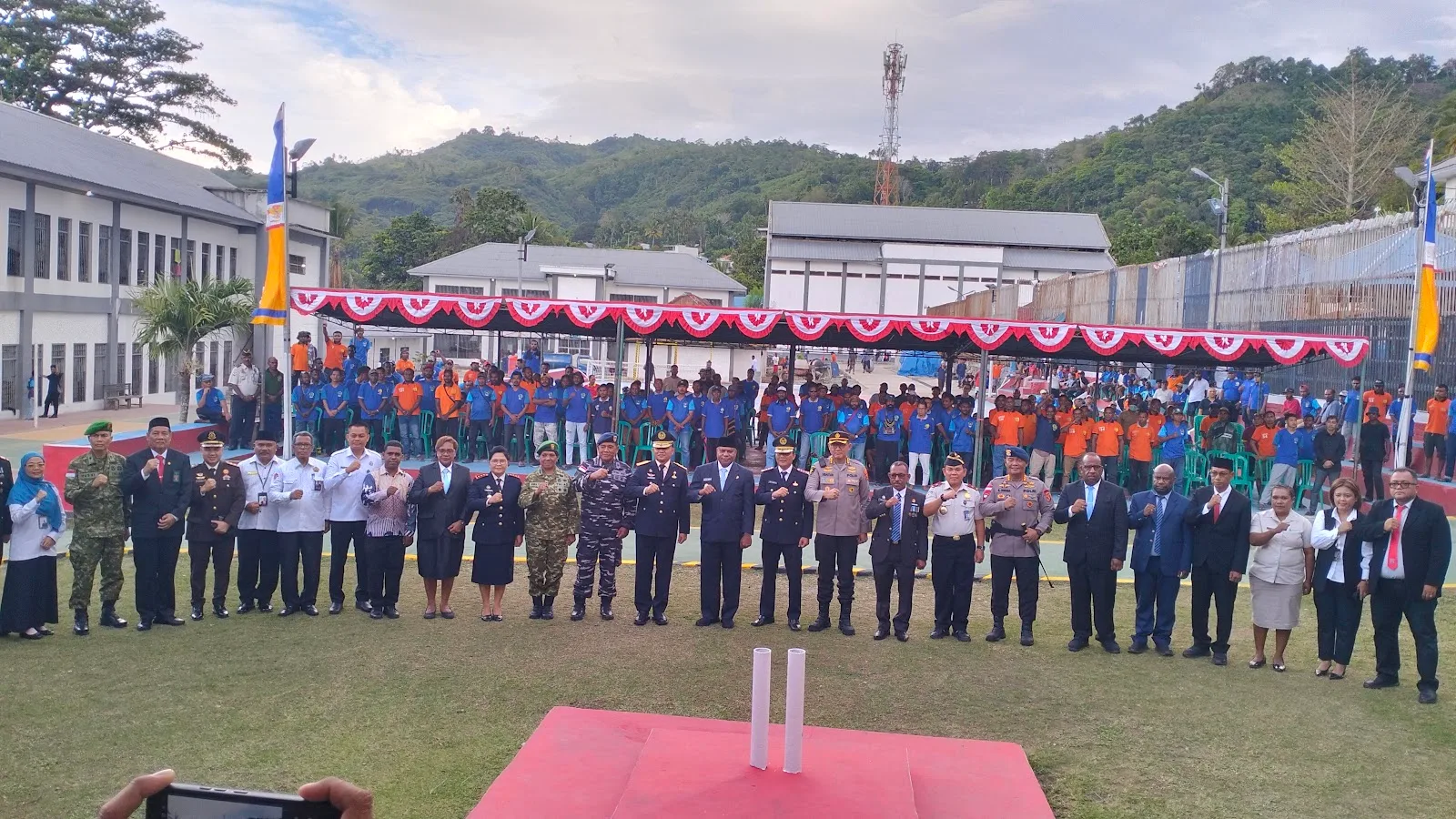
As Indonesia marked its 81st Independence Day on 17 August, 2,006 prisoners in Papua received sentence reductions, with 36 inmates immediately released after their remaining prison terms were fully reduced. The annual remission program brought a different dimension to the national celebration, placing rehabilitation, second chances, and social reintegration alongside the traditional ceremonies marking Indonesia’s independence.
The figures were reported by local and national media, including Lelemuku and Kompas.com, which highlighted the number of inmates receiving remission across correctional facilities in Papua. The measure forms part of Indonesia’s correctional system, in which eligible prisoners can receive reductions in their sentences based on established legal and administrative requirements.
For Papua, the policy carries significance beyond the prison walls. Successful reintegration can affect families, local communities, and the wider social environment, particularly in a region where improving access to public services, employment, and social opportunities remains an important part of the development agenda.
A National Celebration With a Human Dimension
Independence Day in Indonesia is usually associated with flag ceremonies, public gatherings, and celebrations across the country. Yet for thousands of people inside correctional facilities, 17 August can also become a moment when the future changes in a very practical way.
For the 2,006 inmates in Papua who received remission this year, the reduction of their sentences represents recognition of their eligibility under the correctional system. For 36 of them, the remission brought an immediate end to their imprisonment.
The distinction is important. Not every prisoner receiving remission is automatically released. Some receive a reduction in the length of their sentence while continuing to serve the remaining period. Those whose remission eliminates their remaining sentence can leave the correctional facility and begin the next stage of their lives outside prison.
This approach reflects the principle that imprisonment is not intended solely as punishment. Indonesia’s correctional framework also places emphasis on rehabilitation and preparing inmates to return to society.
Under Indonesian regulations, remission is linked to specific requirements. Existing regulations establish that eligible prisoners must, among other requirements, demonstrate exemplary conduct and satisfy minimum periods of imprisonment.
That framework matters because remission is not simply an unconditional reduction of punishment. It is part of a regulated process involving correctional authorities and established criteria.
What Remission Means for Papua
More Than a Reduction in Prison Time
The significance of remission becomes clearer when viewed from the perspective of social reintegration.
A person leaving prison faces challenges that can extend well beyond the legal sentence. Finding employment, rebuilding relationships with family members, and regaining trust within the community can be difficult. For that reason, the period leading to release is important for preparing inmates to live responsibly after imprisonment.
Indonesia’s correctional system has increasingly emphasized the idea that inmates should be prepared for eventual reintegration rather than remaining permanently disconnected from society.
The 2,006 remission recipients therefore represent not simply a statistical category. They are individuals who will return to families and communities at different stages of their sentences. The 36 people released immediately face the most significant transition.
For local authorities, that transition creates both an opportunity and a responsibility. Effective reintegration requires cooperation between correctional institutions, families, communities, and relevant government agencies.
The objective is straightforward: people who complete their sentences should have a realistic opportunity to rebuild their lives without returning to crime.
Families Also Feel the Impact
Imprisonment often affects more than just the individual serving a sentence. Families can experience financial pressure, emotional strain, and disruption in household responsibilities.
When an eligible inmate receives a sentence reduction, the effect can therefore extend to relatives waiting outside the correctional system.
For the 36 prisoners released on 17 August, reunification with families may be one of the most immediate consequences. In practical terms, that can mean returning to parents, spouses, children, or other relatives and beginning the process of restoring ordinary family life.
The broader value of the remission program will depend on what happens after release. A reduction in imprisonment can become a meaningful second chance only if it is accompanied by responsible behavior, family support, and opportunities to earn a legitimate livelihood.
Remission and Indonesia’s Correctional Philosophy
Rehabilitation Alongside Accountability
Indonesia’s remission policy illustrates a balance between accountability and rehabilitation.
A prison sentence remains a legal consequence of a criminal conviction. Remission does not erase the underlying conviction. Instead, it provides an eligible prisoner with a reduction in the period of incarceration after meeting requirements established by law.
Indonesian correctional regulations have long recognized remission as one of the rights available to prisoners who meet the prescribed conditions. Government regulations also distinguish certain categories of crimes and establish additional requirements for particular offenses.
This distinction is particularly important for international audiences seeking to understand the policy. Remission should not be interpreted simply as an administrative decision to release prisoners early without safeguards. It operates within a legal framework and is connected to conduct and participation in correctional programs.
Historical information from Indonesia’s correctional authorities similarly shows that remission has been used as part of the country’s prison management system, including during previous Independence Day commemorations.
The principle is therefore not new. What changes each year is the number of eligible inmates and the circumstances of individual cases.
Papua’s Wider Development Context
The remission program also sits within a larger discussion about social development in Papua.
Papua’s development challenges are often discussed through infrastructure, education, healthcare, economic growth, and security. Yet social development also includes the ability of people who have completed criminal sentences to return to productive community life.
A former inmate who finds legitimate employment, supports a family, and avoids reoffending contributes to community stability. Conversely, inadequate reintegration can increase the risk of social exclusion and repeat offending.
This makes rehabilitation relevant to the wider development agenda.
Employment Can Be Decisive
For newly released prisoners, employment is often one of the most important factors determining whether reintegration succeeds.
A person leaving prison without income or a clear livelihood can face difficult choices. Government agencies and communities therefore have an interest in creating pathways that allow former inmates to develop practical skills and participate in the legal economy.
Vocational training during imprisonment can help, but post-release support can be equally important. Local businesses, community organizations, and families can all contribute to the process.
For Papua, where economic opportunities vary significantly between urban centers and remote communities, reintegration policies need to reflect local conditions.
The 36 people released through the Independence Day remission program will therefore become an important test of how effectively the correctional process connects with the broader community.
Independence Day and the Idea of a Second Chance
There is also a symbolic dimension to the timing.
Indonesia’s Independence Day commemorates the country’s declaration of independence in 1945. Across Papua, as elsewhere in Indonesia, 17 August is marked through official ceremonies and community activities.
For prisoners who received remission on the same occasion, however, the day carries a more personal meaning. For those whose sentences were reduced but not completed, it represents progress toward freedom. For the 36 who were released, it marks an actual transition from incarceration to community life.
That symbolism should not obscure the legal basis of remission, but it helps explain why the policy is often highlighted during national celebrations.
Independence can be understood not only as a historical event but also through everyday concepts such as responsibility, dignity, and the opportunity to rebuild one’s life.
For the released inmates and their families, 17 August may consequently be remembered not only as a national holiday but also as the day a new chapter began.
Maintaining Public Trust
Any remission policy must also maintain public confidence.
Victims of crime and the wider community have legitimate interests in justice, safety, and accountability. Consequently, the administration of sentence reductions needs to remain transparent and consistent with applicable regulations.
The credibility of the correctional system depends on the public understanding that remission is based on clear requirements rather than favoritism.
That is why positive conduct and participation in correctional programs are important components of the framework. Existing Indonesian regulations explicitly link remission eligibility to requirements such as acceptable behavior and the completion of specified periods of imprisonment.
A credible remission system can serve two purposes simultaneously. It can encourage positive behavior among inmates while preserving public confidence in the justice system.
The challenge is to ensure that these principles are applied consistently across correctional facilities.
A Broader Human Development Perspective
Papua’s development cannot be measured only through roads, bridges, investment figures, or economic growth. Human development also involves the ability of individuals to change direction after making mistakes.
For eligible prisoners, rehabilitation offers that possibility.
The 2,006 remission recipients are entering different stages of that process. Most will continue serving their sentences after receiving reductions, while 36 have reached the point of immediate release.
Their experiences after 17 August will be significant.
If they are able to return to their families, secure legitimate livelihoods, and participate positively in their communities, the remission program will have achieved something beyond reducing prison populations. It will have helped convert a correctional measure into an instrument of social reintegration.
That outcome requires sustained effort. Correctional authorities can provide rehabilitation programs, but successful reintegration ultimately depends on cooperation outside prison as well.
Connecting correctional policy with community development
The Papua context makes the issue particularly relevant.
Government development programs increasingly emphasize human capital, employment, and social inclusion. Former prisoners are part of that social landscape. Their successful return to society can contribute to household stability and reduce the risk of repeated offending.
For local governments and communities, the priority should therefore be practical: ensuring that released individuals understand their responsibilities, have access to lawful employment opportunities, and can reconnect with families and community networks.
This is not about ignoring past wrongdoing. It is about recognizing that punishment eventually has an endpoint and that society must prepare for what comes afterward.
Looking Ahead
The remission of 2,006 prisoners during Indonesia’s 81st Independence Day provides Papua with an opportunity to examine the relationship between justice, rehabilitation, and social development.
The release of 36 inmates is particularly significant because their next steps will take place outside correctional institutions. Their ability to rebuild their lives will depend on personal responsibility, family support, and the availability of constructive opportunities.
For Indonesia, the broader lesson is that a functioning correctional system requires more than confinement. It must also encourage behavioral change and prepare eligible inmates to return to society.
For Papua, that objective fits within a wider development agenda centered on stronger communities, greater social stability, and improved human welfare.
The success of the policy will ultimately not be measured only by the number of months removed from prison sentences. It will be measured by what happens afterward: whether people remain law-abiding, rebuild their families, find productive work, and contribute to the communities to which they return.
Conclusion
The remission granted to 2,006 prisoners in Papua, including 36 who were immediately released, adds a human dimension to Indonesia’s 81st Independence Day celebrations. More importantly, it demonstrates how correctional policy can combine accountability with the possibility of rehabilitation and a second chance.
For Papua, the next stage is crucial. Those released must be supported in rebuilding their lives, while communities and government institutions must continue to uphold public safety and the rule of law. If remission is followed by effective reintegration, vocational opportunities, and family support, the policy can contribute to stronger communities rather than simply reducing prison sentences.
In that sense, the 17 August remission program is not an endpoint. It is the beginning of a new responsibility for those returning to society. Their success can become a practical measure of whether rehabilitation has translated into lasting social change.

