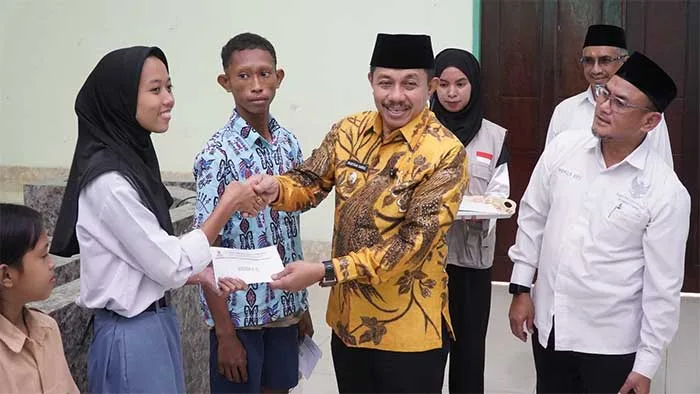
As the sun rises over Jayapura, students in neat school uniforms gather in the courtyard of a local school. Their faces are lit by hope, not the cool Pacific breeze. They hold on to envelopes that community leaders and officials from the Indonesian National Amil Zakat Agency (Baznas) give them. There is more than just money in these envelopes. They stand for hope, support, and the idea that education can open up new doors for people, families, and communities all over Papua.
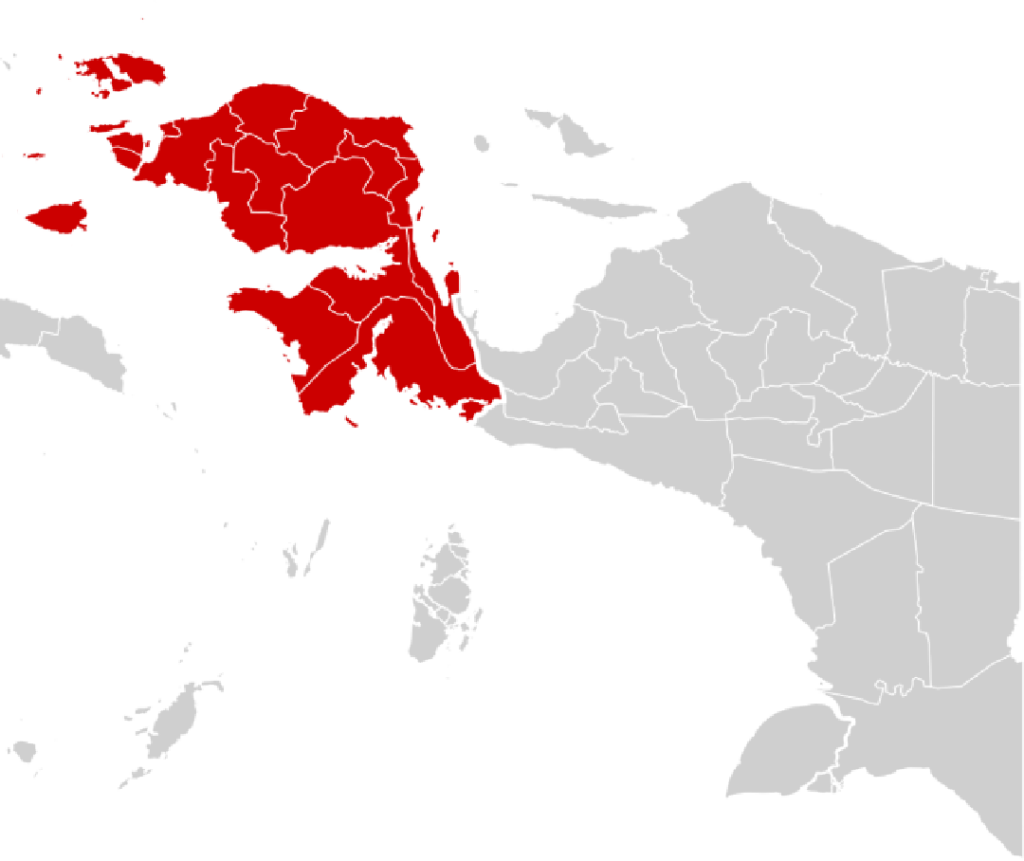
This event in Jayapura is part of a bigger one happening all over Papua Province on February 12, 2026. As part of a long-term effort to help people in this part of Indonesia get an education and develop their skills, Baznas has given scholarships to 1,070 students, from elementary school to college.
The scholarship is more than just money for the students and their families. It is full of stories of perseverance, sacrifice, and shared dreams.
A Program Based on Kindness and a Goal
People often say that education is a way to get to a better life. But that bridge has been full of problems for a long time in Papua. Many districts are far away and hard to get to. Families live far from places where they can make money and rely on subsistence activities. Cost is still a big reason why kids drop out of school, even when they are very ambitious and talented.
The Baznas scholarship program understands these facts and wants to help families who want their kids to do well by making it easier for them to pay for school. The help is meant to make sure that a student’s dreams of becoming a doctor, teacher, engineer, or community leader don’t die because of money problems.
Official reports say that the scholarships were given out in the first phase of Baznas’s 2026 program. In early February, at least 370 students in Jayapura got direct help. Coordinated efforts across the province helped the students who were still there.
This shows how big a program can be that is based on kindness and a real need.
People Behind the Numbers
The headline number of 1,070 students hides individual stories of struggle and hope.
For example, Rani is a smart young girl from a small coastal village in Papua. Her family makes a living by fishing and growing seasonal crops. Rani’s parents were worried about the costs of sending her to secondary school in the city, including uniforms, books, transportation, and school fees. They thought education was important, but they couldn’t get it without help.
When Baznas told her mother about the scholarship, she cried with joy. The scholarship is proof to Rani, who has always been at the top of her class, that her hard work pays off.
Then there is Samuel, a teenager from a highland area. He wants to be a teacher so he can go back to his village and help kids who don’t have as much money as he did learn. His father was a subsistence farmer and couldn’t pay for secondary school. Samuel said that when he found out his name was on the scholarship list, it felt like “a burden lifted off my family.”
These personal stories can be heard in villages, towns, and border areas all over Papua. Every student has a story to tell. Every family represents a small victory over hardship.
Tackling Problems with Education in Papua
Giving scholarships to so many students shows that the people who made the decision really understand the problems that education in Papua is having. People who work in education in this area say that students here face a unique set of problems:
Being far away from other places. A lot of communities are far away from cities where schools and other resources are located.
Hard times financially. People often rely on small trade, fishing, or subsistence farming to get by. School costs can put a strain on families with tight budgets.
Infrastructure that isn’t very good. In many places, roads, transportation, and access to higher education facilities are still not very good.
Cultural duties. Some families put community and family roles ahead of formal education because of tradition or necessity.
With this in mind, the scholarship program tries to help students directly by letting them continue their education without worrying about having to drop out because they can’t afford it.
A Joint Effort Across the Province
Giving out scholarships is not something that happens just once. Baznas has set up the program in phases, starting with important areas like Jayapura and then moving on to other districts over time.
Local Baznas offices work closely with leaders in the community to find students who qualify. Most of the time, the criteria are based on how much money you need, how well you do in school, and how involved you are in your community. The goal is to make sure that help gets to the people who need it most, like students from rural and remote areas.
Hundreds of students got their scholarship packages in the first phase alone. These packages include not only money but also chances to get advice. Tutors or educational advisors help scholarship winners set and reach their academic goals.
Helping With the Growth of Human Resources
The Baznas scholarship program is more than just giving money to charity. It fits with the goals of the country and the province to improve Papua’s human resources.
Officials in Papua’s local government have stressed that the region’s long-term growth depends on having a skilled and educated workforce. This includes making it easier for people to get an education from elementary school to college and vocational training.
Papua has a lot of natural and human resources, but they won’t be used to their full potential unless people invest in education and skills. The scholarships help people who want to achieve their goals get there.
One of the best ways to break the cycle of poverty and get more people involved in economic growth is through education. The program helps students stay in school and go on to higher education, which will help them become future leaders, professionals, and innovators in the community.
A Feeling of Duty and Thankfulness
For many people who get scholarships, the help makes them feel more responsible. It’s not just a gift. It is a requirement to work hard and give back.
At the Jayapura event that gave out the first phase of scholarships, a number of students said they were determined to do well in school. They said they wanted to use what they learned in school to help other people, make services better in their communities, and be good examples for younger kids in their villages.
Parents also showed their support and thanks. Some parents said that the scholarship gave their families peace of mind because they didn’t have to worry about school costs all the time and could focus on their kids’ academic progress.
Teachers who went to the event also said that the scholarship would probably lead to more students participating in school and doing better in school. Students are more likely to be involved in school when they have financial support. Teachers said they hoped the program would help create a culture of learning that would spread to other communities.
Support From the Community and the Whole Country
The scholarship program is a good example of Indonesia’s values of community solidarity and shared responsibility. As a national zakat agency, Baznas has a special job of directing social contributions to areas that will have an impact on development, like education, health, and helping people make a living.
In Papua, where different cultural traditions mix with national identity, projects like this one are very popular. They show that education is not just a personal journey, but also a way for everyone to invest in the future of the country.
The agency’s commitment to reaching rural and coastal communities where need is greatest is also shown by the wide range of distribution across Papua. In some areas, the fact that Baznas representatives were there during distribution events showed that the national community hasn’t forgotten about these areas.
Bringing Together Voices
After the scholarship events, people talked about how education brings people together over and over again.
Older people talked about how they had lived through times when going to school was a luxury. Parents talked about their kids’ dreams. Students talked about wanting to be teachers, doctors, engineers, and leaders in their communities. These talks were not private. They showed that they all had hope.
In this sense, educational advancement isn’t just about doing well in school. It means a lot to generations. When a child gets a scholarship, it affects the whole family. Everyone in the community comes together to celebrate a student’s graduation.
Tracking Progress and Looking Ahead
The Baznas scholarship program is still going on. Officials plan to keep an eye on progress and see how it affects learning outcomes. They want to keep an eye on not only how well students do in school, but also how their lives change as a result of continuing their education.
Officials are putting in place mid-term reviews, community feedback, and academic tracking systems to make sure that the support stays useful and relevant.
In the long run, Papua hopes to see more and more people signing up for school, fewer people dropping out, and more skilled workers coming from the area.
Challenges Remain
The scholarship program is a helpful way to help, but there are still problems. Some students need more help from a mentor or therapist. Others have trouble getting to school or have problems with the school’s infrastructure.
Baznas and the local education authorities know about these problems. Collaboration with schools, community groups, and local governments is important to make sure that broader support systems work well with financial support.
A New Generation Is Coming Up
The future is not set in stone in Papua. Children study by lamplight in classrooms, living rooms, and community halls, or in mosques early in the morning after prayers. The Baznas scholarships help people in real ways, but they also show that people have faith in their own potential.
For the 1,070 students, each name on the distribution list represents ambition, courage, and a step toward a brighter tomorrow.
When a student opens an envelope with a scholarship certificate, they get more than just a piece of paper. They have the trust of their community, the hopes of their family, and their own dreams.
They walk in the footsteps of those who came before them when they walk onto a school campus. They walk toward a future that holds their hopes, stories, and contributions to Papua’s growing human potential.
The Baznas scholarship program is helping to write new chapters in villages where the sea meets the hills, where forests touch the horizon, and where kids come together to learn. These chapters are about respect, chances, and the idea that education can change people’s lives.
The story goes on for Papua and Indonesia.