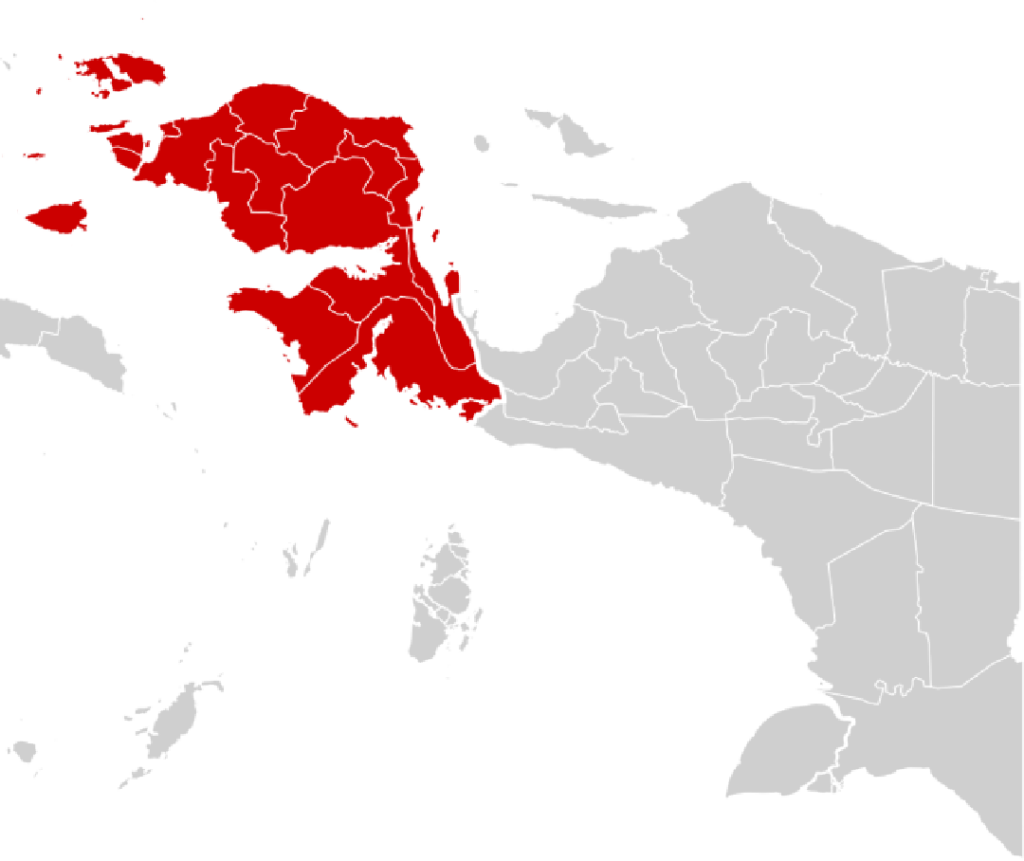
On morning February 27, 2026, in Weghete, the capital of Deiyai Regency in Papua Tengah (Central Papua) province, the yard of State High School (SMA Negeri) 1 Weghete usually echoes with the routine sounds of school life. Students hurry to class. Teachers call attendance. The bell rings sharply across the hills.
But on the day the school held its Festival Seni Budaya Suku Mee, everything felt different.
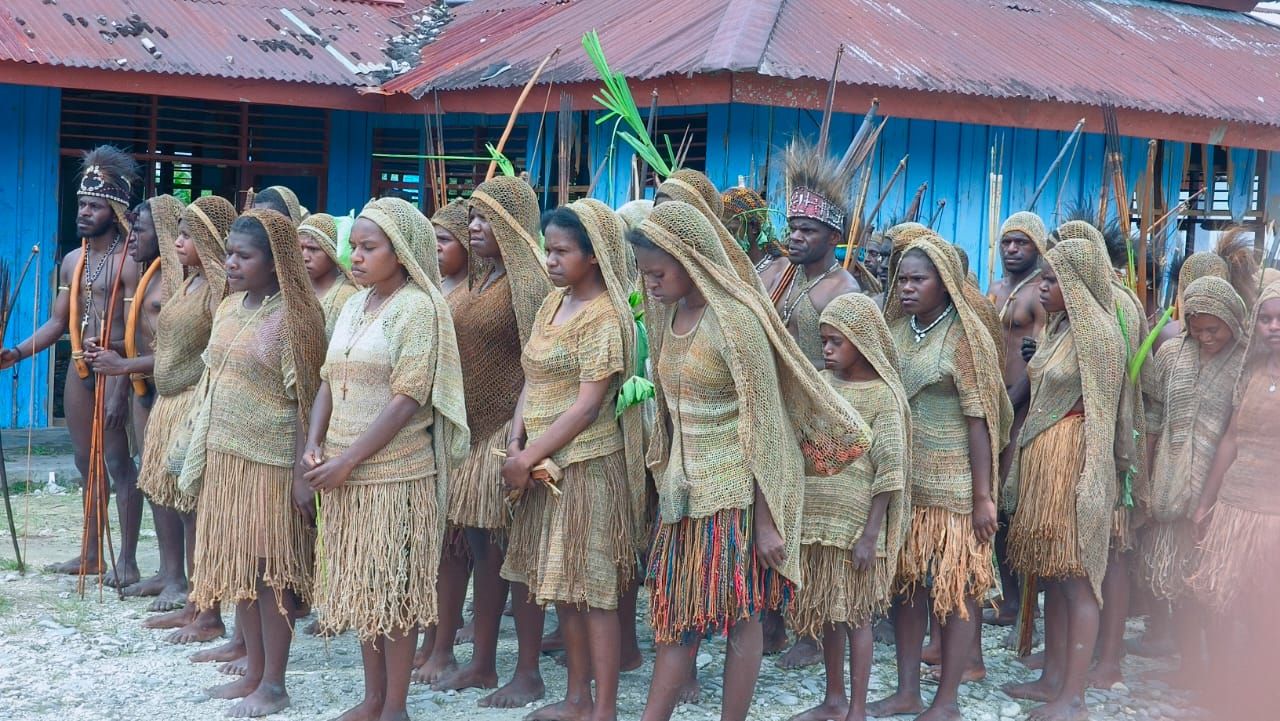
Instead of uniforms, students wore traditional attire decorated with feathers, woven fibers, and earthy tones that reflected the highland landscape. The quiet murmur of morning study was replaced by the steady rhythm of traditional drums. Laughter mixed with the scent of freshly prepared local food brought by parents and relatives who came to witness something meaningful.
It was not just a performance. It was a homecoming of identity.
According to coverage by local media, SMA Negeri 1 Weghete organized the festival with a clear purpose. The school wanted to plant a deep sense of love and pride for the Mee tribe among its students. In a time when global influences reach even remote highland communities through smartphones and social media, teachers felt it was urgent to remind young people where they come from.
Remembering Who We Are
The Mee tribe is one of the indigenous communities of Papua Tengah. For generations, their lives have been closely tied to the land, the mountains, and shared communal values. Their traditions speak about cooperation, respect for elders, and harmony with nature.
Yet many educators in Deiyai have noticed a quiet shift. Some students can easily recite international song lyrics but hesitate when asked about the meaning of traditional Mee rituals. Modern life moves quickly, and without conscious effort, cultural knowledge can fade.
That concern became the spark behind the festival.
In the weeks leading up to the event, students were asked to research their own heritage. They interviewed grandparents about traditional ceremonies. They learned the significance of certain dances. They practiced speaking in their local language with more confidence.
One teacher involved in the preparation explained that the goal was not to criticize modern influences. Instead, it was to balance them. “Our children can dream globally,” he said. “But they must stand firmly on their own cultural ground.”
The Stage Becomes a Storybook
When the festival officially began, the school courtyard turned into a living storybook.
Groups of students performed traditional dances that once accompanied harvest celebrations and community gatherings. Each step had meaning. Each movement reflected centuries of inherited wisdom.
Some students recited traditional poetry, their voices strong and steady despite visible nerves. Others displayed handicrafts such as noken woven bags and carved wooden tools that symbolize ancestral livelihoods.
What made the event powerful was not only the artistry but also the explanation behind it. After each performance, students described what they had learned. They explained how certain songs were once sung to celebrate unity. They spoke about rituals that mark important stages of life.
For many parents in the audience, the moment felt emotional.
An elderly man sitting near the front wiped his eyes quietly after watching a group of teenagers perform a dance he had not seen since his youth. “I never thought I would see this again in a school,” he said softly. “This is our soul.”
Learning Beyond the Textbook
Education in Papua, like elsewhere, often focuses on academic achievement. Exams, grades, and university aspirations dominate conversations.
But at SMA Negeri 1 Weghete, teachers believe education must also nurture identity.
The festival became part of a broader effort to integrate cultural knowledge into school activities. In history classes, students discussed the origins of the Mee tribe. In language lessons, they practiced local vocabulary. Art sessions incorporated traditional design patterns.
Rather than treating culture as a separate subject, the school made it part of everyday learning.
A female student who participated in a dance performance shared her experience afterward. She admitted that before the festival, she felt shy about wearing traditional attire. “Now I feel proud,” she said. “I want people to know that being Mee is something beautiful.”
Her statement reflected the quiet transformation happening among her peers.
A Community Gathering
The festival did not belong only to the students. It belonged to the entire community.
Parents contributed traditional clothing and prepared food. Community elders offered guidance to ensure that rituals were represented accurately. Local leaders attended to show support.
The atmosphere felt less like a school program and more like a communal celebration.
In regions like Deiyai, schools serve as more than educational institutions. They are meeting points, cultural centers, and places where generations intersect. By hosting the festival, SMA Negeri 1 Weghete strengthened that bond.
One mother watching her son perform said she felt relieved. “Sometimes we worry our children will forget our traditions,” she explained. “Today I see that they remember.”
Culture as Confidence
For many students, the festival did more than teach tradition. It built confidence.
Standing on stage in traditional dress required courage. Explaining cultural meanings required understanding. Through preparation and performance, students gained both.
Teachers observed that students who rarely spoke in class found their voices when discussing their heritage. The connection to personal identity made participation feel natural.
Cultural pride, educators believe, can shape character. When young people understand their roots, they are less likely to feel lost in a rapidly changing world.
In Papua, where cultural diversity is vast and deeply valued, this sense of belonging becomes especially important.
Preserving Heritage in a Changing World
Papua is home to hundreds of indigenous groups, each with unique languages and traditions. Preserving this diversity is not simply a local concern. It is part of Indonesia’s national heritage and global cultural richness.
Events like the Mee Cultural Festival demonstrate that preservation does not require grand institutions. It can begin in a school courtyard with committed teachers and enthusiastic students.
The initiative also sends a broader message. Cultural preservation is not about resisting progress. It is about ensuring that progress does not erase identity.
Students at SMA Negeri 1 Weghete use digital technology daily. They dream of higher education and careers beyond their village. Yet through the festival, they also affirmed that their cultural roots remain strong.
As the event concluded and the final applause echoed across the hills, students gathered for photographs. Laughter filled the air. Feathers and woven patterns shimmered in the afternoon light.
The day ended, but its meaning lingered.
A Promise to the Future
What happened at SMA Negeri 1 Weghete was more than a cultural exhibition. It was a promise.
A promise that the Mee language will continue to be spoken. A promise that traditional dances will not disappear. A promise that young Papuans will carry their heritage with pride wherever life takes them.
In a world where cultural identities often struggle to survive under global pressure, this small highland school offered a hopeful example.
Heritage lives when it is practiced. Identity strengthens when it is celebrated.
And in Weghete, on that vibrant festival day, the youth of Deiyai proved that the spirit of the Mee tribe is not fading. It is being renewed.