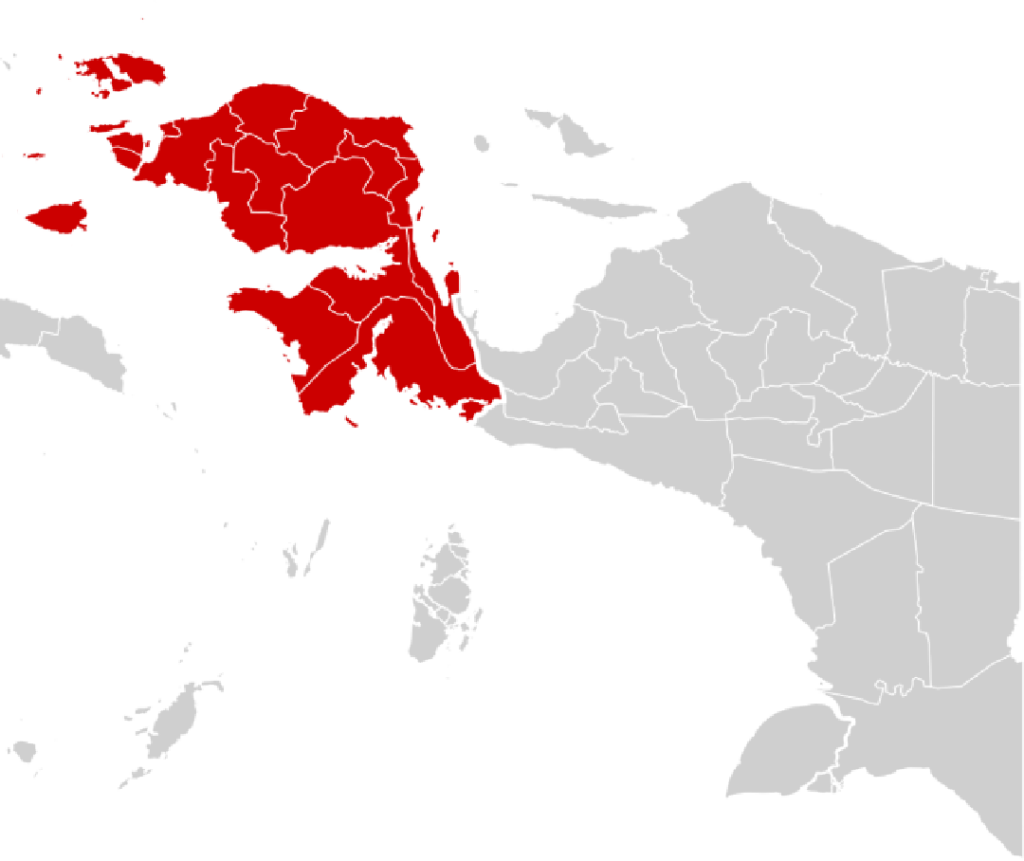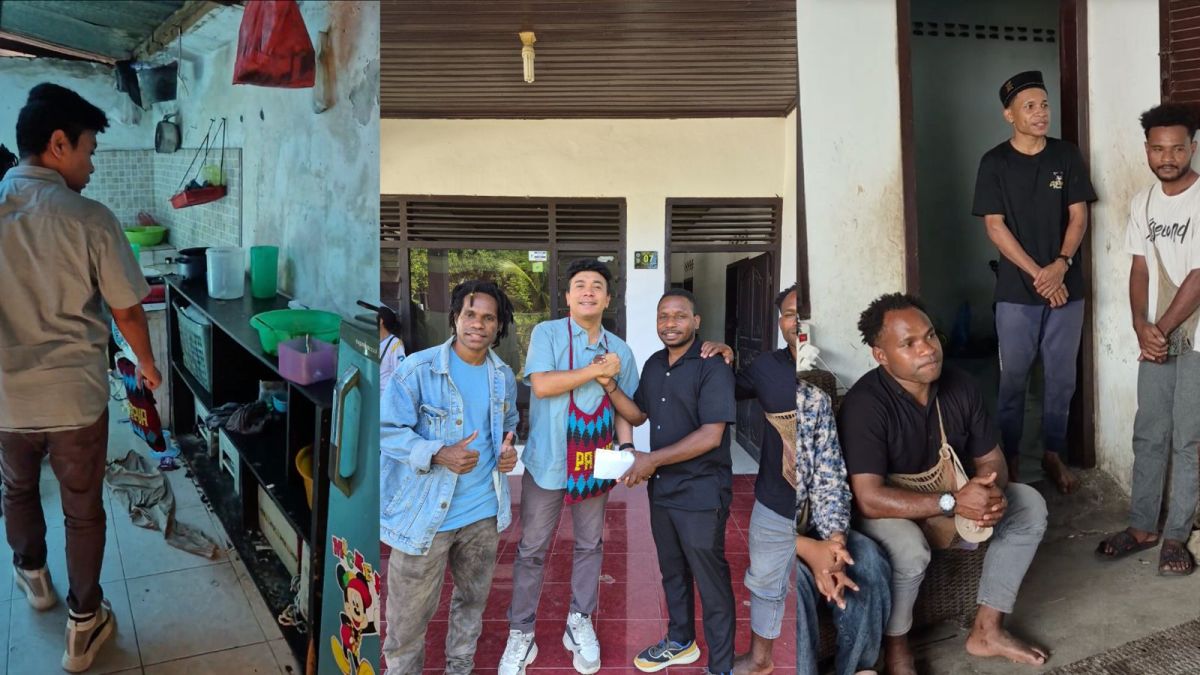
The flash floods that ravaged parts of Aceh on January 26, 2026, didn’t just impact the local population. Papuan students, studying far from home, were among those most severely affected. Many of these students, living in rented accommodations and already facing financial constraints, suddenly found themselves with damaged homes, disrupted studies, and an uncertain future.
This disaster compounded the difficulties for Papuan students, who were already adjusting to life away from Papua. Unlike the local residents, they lacked the support of extended family and had limited access to informal networks. For days after the floods, several students were crammed into damaged boarding houses, facing poor sanitation, unreliable electricity, and unsafe living conditions. Some lost personal items and study materials, while others struggled to find food and clean water.
The visit took on both symbolic and practical significance against the backdrop of the situation. Billy Mambrasar, a member of the Executive Committee for the Acceleration of Papua Development, journeyed to Aceh to meet with Papuan students impacted by the disaster. His presence was widely interpreted as an indication that the Indonesian government was concerned about the well-being of Papuan citizens, even when they were far from home and facing challenges beyond Papua.
Confronting the Students’ Circumstances
Billy Mambrasar toured the rented accommodations where Papuan students were residing after the floods. Media accounts painted a troubling picture of the conditions. Several rooms suffered from overcrowding, dampness, and inadequate ventilation. Floodwaters had wreaked havoc on walls, floors, and furniture.
In certain instances, students were compelled to rest on rudimentary mats or share confined quarters with numerous others.
Mambrasar’s visit transcended a mere formal inspection; he engaged directly with the students, attentively hearing their narratives and inquiring about their daily hardships following the calamity. Students detailed how the floods had impeded their academic progress and exacerbated their financial difficulties. They were still obligated to pay rent, while the disaster had curtailed their prospects for part-time employment.
One student articulated that, despite the arrival of some aid, it was insufficient to sustain basic necessities over an extended timeframe. Another student underscored the emotional strain of being separated from family during a crisis, particularly for those whose parents depended on their academic success.
The visit illuminated that the disaster constituted not only a physical impediment but also a psychological one.
Many students voiced their worries about falling behind academically or dealing with financial strains that might force them to go back home.
Humanitarian Aid and Immediate Support
During the visit, Mambrasar was present for the distribution of humanitarian aid, a collaboration with various civil society groups. Students received basic necessities: food, hygiene kits, and other daily essentials. The aid came from donations and coordinated efforts with community organizations.
While the assistance addressed immediate needs, Mambrasar made it clear that emergency aid wasn’t enough. He believed the students required a lasting solution to ensure their education could proceed without interruption.
He underscored that students shouldn’t be condemned to long-term hardship because of a lack of institutional backing in the wake of natural disasters.
Education, he emphasized, must stay at the forefront, even when things get tough.
Education: A Long-Term Investment
A key takeaway from the visit was the need to view education as a long-term commitment for Papua. Mambrasar stressed to students and local leaders alike that Papuan students studying elsewhere are the key to the region’s future.
Many students seized the chance to voice their hopes for scholarships and structured support. They explained that financial aid would free them to concentrate on their studies, rather than just getting by.
In reply, Mambrasar pointed out that Papua’s Special Autonomy framework already provides for education funding. He noted that a substantial portion of the Special Autonomy funds is legally designated for education and human resource development.
He urged provincial governments throughout Papua to guarantee these funds are utilized efficiently, specifically targeting students studying outside Papua, particularly those impacted by crises.
Provincial governments’ varied reactions were a significant focus of the visit. Some areas had offered some assistance, while others had not yet taken significant action.
Mambrasar explicitly called on provincial governments to take responsibility for their students, no matter where they were. He emphasized that administrative divisions shouldn’t dictate the level of concern for Papuan youth seeking education elsewhere in Indonesia.
He maintained that coordination among provincial governments is critical to ensure equitable support for Papuan students. He advocated for institutionalizing disaster response for students, rather than relying on sporadic charitable efforts.
This wasn’t a reprimand, but a gentle nudge toward a shared goal. He framed supporting students as both a moral duty and a smart move for Papua’s future.
Special Autonomy Funds and Policy Direction
The visit also refocused attention on the use of special autonomy funds. Mambrasar stressed that education spending shouldn’t just be about buildings but also about the well-being of students.
He noted that regulations require a substantial portion of these funds to be dedicated to education. He believes these funds should be adaptable enough to address crises affecting students, even those studying outside of Papua.
The Aceh floods, in his opinion, highlighted weaknesses in the current system.
While financial resources are available, the systems for swiftly addressing student crises are still lacking. He pointed out the pressing need for policy enhancements in this regard.
Aceh Floods and National Solidarity
The Aceh disaster prompted a nationwide effort, bringing together various government bodies, local officials, and civil society groups. Mambrasar’s visit further underscored this response, highlighting the difficulties faced by migrant student populations.
His presence underscored the collective duty inherent in being an Indonesian citizen. Natural calamities don’t care where you come from, and assistance should reach all citizens impacted.
For Papuan students, the visit was especially meaningful.
Their challenges, it became clear, resonated nationally, and their perspectives had the power to shape policy.
Students as Catalysts for Tomorrow
During the visit, Mambrasar consistently emphasized a key point: Papuan students aren’t just recipients of assistance; they’re architects of the future. He stressed that their education was a tool for fostering peace, progress, and social advancement in Papua.
He urged them to stay strong and dedicated to their studies, even when faced with adversity. He also recognized that personal fortitude needed to be complemented by institutional backing.
This blend of encouragement and expectation characterized the visit. It wasn’t a mere formality but a genuine attempt to link individual struggles with larger developmental objectives.
A Message Beyond Aceh
The visit’s significance reaches far beyond the immediate aftermath of the Aceh floods. It brought to light the structural hurdles Papuan students face throughout Indonesia: housing instability, inadequate access to emergency aid, and inconsistent coordination between provinces.
Mambrasar’s visit conveyed a clear message: these issues demand a systematic response. Though natural disasters are inherently unpredictable, we can certainly bolster our preparedness and support systems.
Furthermore, the visit underscored the government’s overarching commitment to inclusive development. Papua’s advancement, he stressed, hinges not just on infrastructure and economic initiatives, but also on how well the nation safeguards and empowers its youth.
Conclusion
Billy Mambrasar’s visit to Papuan students in Aceh demonstrated that government presence matters, especially in times of crisis. By stepping into damaged living spaces and listening directly to students, he transformed abstract policy commitments into tangible action.
The visit underscored that disaster response must include vulnerable groups such as students who are far from home. It also highlighted the importance of using existing policy tools, such as Special Autonomy funds, to support education even during emergencies.
For Papuan students in Aceh, the visit offered reassurance that they are not alone. For policymakers, it served as a reminder that development is ultimately about people, their dignity, and their ability to pursue a better future despite adversity.
In the broader narrative of Papua’s development, this visit stands as a small but meaningful chapter. It demonstrated that not only do grand projects build inclusive development, but also empathy, responsibility, and timely action when citizens need it most.