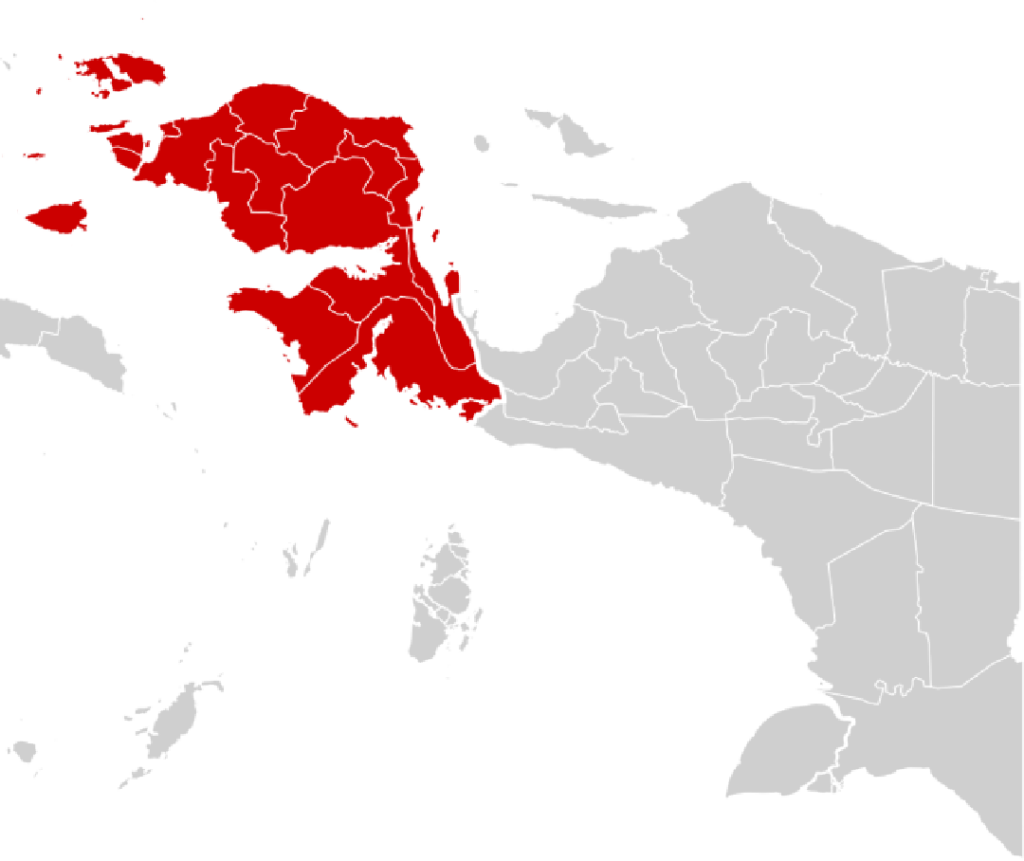
The operation began quietly in the forests of Pegunungan Bintang after Indonesian security forces received reports from local residents about suspicious farming activity hidden deep in mountainous terrain.
When soldiers and joint personnel finally reached the site in early May 2026, they said they found rows of cannabis plants spread across remote hillsides difficult to access without hours of travel on foot.
According to Indonesian military officials, around 2,000 cannabis plants were eventually secured during the operation.
But what drew even greater national attention was the allegation that the plantations were connected to the West Papua National Liberation Army, armed faction of the Free Papua Movement (TPNPB OPM), which authorities accuse of using illegal cannabis cultivation as a source of operational funding in Papua’s highlands.
The allegations reopened long-standing concerns in Indonesia about how armed separatist groups operating in isolated regions may increasingly rely on illicit economic activities to sustain logistics and influence local communities.
Discovery of Cannabis Plantations in Papua Highlands
The case gained national attention after Indonesian military officials announced the discovery of multiple cannabis fields in remote forest areas of Pegunungan Bintang Regency during operations conducted in May 2026.
Security personnel said the plantations were intentionally hidden far from populated settlements and located in terrain difficult to monitor regularly.
Photographs released after the operation showed cannabis plants growing across steep forested areas surrounded by dense vegetation.
Authorities also detained two individuals during the operation while investigations continued into possible links between the plantations and separatist networks operating in the region.
Military officials described the discovery as one of the larger cannabis cultivation findings in the Papua Highlands this year.
Indonesian Military Alleges OPM Involvement
Lucky Avianto Says Civilians Were Pressured
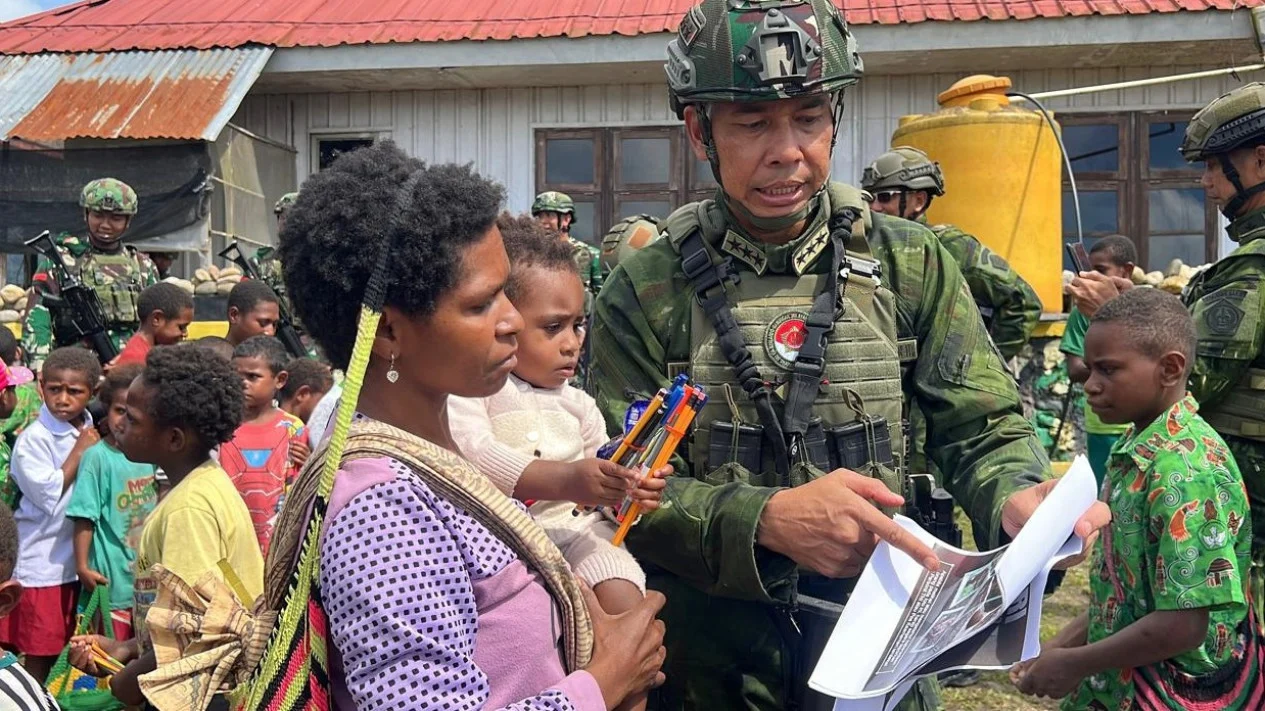
On May 15, Commander of the Joint Defense Region III Command Lieutenant General Lucky Avianto publicly alleged that members connected to the TPNPB OPM had pressured local residents to cultivate cannabis inside remote forest areas.
According to statements published by Indonesian media, Avianto said armed groups operating in isolated districts sometimes force villagers to cooperate because communities have limited protection and difficult access to state institutions.
The military commander argued that cannabis cultivation had become more than a criminal issue alone.
“It is connected to separatist financing and security disruption,” he said during remarks cited by several reports in May 2026.
Authorities believe profits from illegal cannabis activity may help fund weapons purchases, logistics, food supplies, and transportation for armed groups operating in mountainous regions of Papua.
“Pablo Escobar Style” Image Sparks Public Attention
Public discussion intensified further after Lieutenant General Lucky Avianto circulated photographs allegedly showing a senior separatist figure posing with a style Indonesian media compared to Colombian drug trafficker Pablo Escobar.
The image spread rapidly across Indonesian news portals and social media.
Military officials argued the photographs illustrated what they described as growing overlap between separatist activity and illegal narcotics economies in Papua’s remote regions.
Separatist representatives have not publicly admitted involvement in the cannabis plantations cited by Indonesian authorities.
Geography Makes Enforcement Difficult
Remote Highlands Remain Hard to Monitor
Much of Pegunungan Bintang consists of isolated mountains, dense forest, and valleys reachable only by aircraft or long overland travel.
In several districts, roads remain limited and transportation still depends heavily on small aircraft and footpaths.
Security officials say those conditions make surveillance extremely difficult.
Cannabis plantations hidden inside forest areas can remain undetected for long periods because authorities cannot easily conduct continuous patrols across all remote regions.
That isolation also creates challenges for local communities themselves.
Several villages in the Papua Highlands remain geographically separated from larger administrative centers and public services.
Conflict Areas Complicate Operations
Security operations in the Papua Highlands are further complicated by continuing armed conflict in several districts.
Indonesian authorities say separatist groups continue operating in remote mountainous regions where terrain advantages make military pursuit difficult.
Because of those conditions, authorities increasingly view illegal narcotics cultivation not simply as criminal activity but as part of broader instability affecting Papua’s security environment.
Officials also worry isolated cultivation sites could evolve into wider trafficking networks extending beyond Papua itself.
Cannabis Cultivation and Separatist Financing
Authorities See Financial Pattern Emerging
Indonesian security institutions have warned repeatedly in recent years that armed separatist groups may seek alternative funding sources as operations become more expensive.
Maintaining armed activity in isolated regions requires food, transportation, communication equipment, and weapons procurement.
Authorities believe illegal cannabis cultivation offers one possible funding channel because of the high market value of narcotics.
The issue mirrors patterns seen in several international conflict zones where armed organizations have allegedly relied on illicit commodity trade to sustain operations.
In Papua, officials fear prolonged instability could allow underground economies to expand further if enforcement weakens.
Local Communities Often Become Most Vulnerable
Military officials also stressed that civilians living in isolated, conflict-affected areas often become the most vulnerable group.
Authorities allege some residents cooperate with cannabis cultivation not necessarily out of ideological support but because of pressure, fear, or economic necessity.
Several analysts note that poverty and limited economic opportunity in remote highland districts can create conditions where illicit cultivation becomes easier to sustain.
Government officials argue this is one reason development and infrastructure programs remain important alongside security operations.
Papua’s Economic and Security Challenges Intersect
The cannabis plantation case reflects broader challenges still facing several regions in the Papua Highlands.
Many remote districts continue struggling with transportation limitations, uneven development, and restricted market access.
Some villages remain difficult to reach during bad weather conditions.
Healthcare, education, and employment access also vary sharply between urban centers and isolated mountain communities.
Indonesian officials argue these structural conditions can contribute to instability and increase vulnerability to illegal activities, including narcotics cultivation.
Because of that, authorities increasingly describe Papua’s security challenges as connected not only to armed conflict but also to development gaps and economic pressure.
Earlier Reports Had Already Raised Alarm
The recent discovery did not emerge entirely without warning.
Previous investigations and reports had already highlighted concerns about hidden cannabis plantations operating inside Papua’s forest regions.
Several analyses published earlier this year warned that isolated cultivation sites in Oksibil and surrounding districts could potentially contribute to separatist financing structures if left unchecked.
The May 2026 operation in Pegunungan Bintang strengthened those concerns among Indonesian security institutions.
Authorities say investigations remain ongoing regarding possible distribution channels and organizational links connected to the plantations.
Public Reaction Inside Indonesia
The discovery generated strong public reaction because it combined several highly sensitive issues simultaneously.
Separatist conflict.
Illegal narcotics.
Security instability.
And civilian vulnerability in remote regions of Papua.
For many Indonesians outside Papua, the operation also highlighted how geographically isolated some highland districts remain despite years of infrastructure development efforts.
Several commentators argued the case demonstrates why security operations alone may not fully resolve instability in Papua without parallel economic and social development.
Conclusion
The discovery of large cannabis plantations in Pegunungan Bintang during May 2026 has intensified Indonesian concerns regarding alleged links between illegal narcotics cultivation and separatist financing networks connected to the TPNPB OPM.
Military officials, including Lieutenant General Lucky Avianto, publicly alleged that armed elements pressured some residents to cultivate cannabis in remote forest areas while using profits to support separatist activity.
The allegations remain sensitive and politically charged.
But the operation has once again revealed how Papua’s long running security challenges increasingly overlap with economic vulnerability, remote geography, and illegal underground activity developing far from Indonesia’s major urban centers.