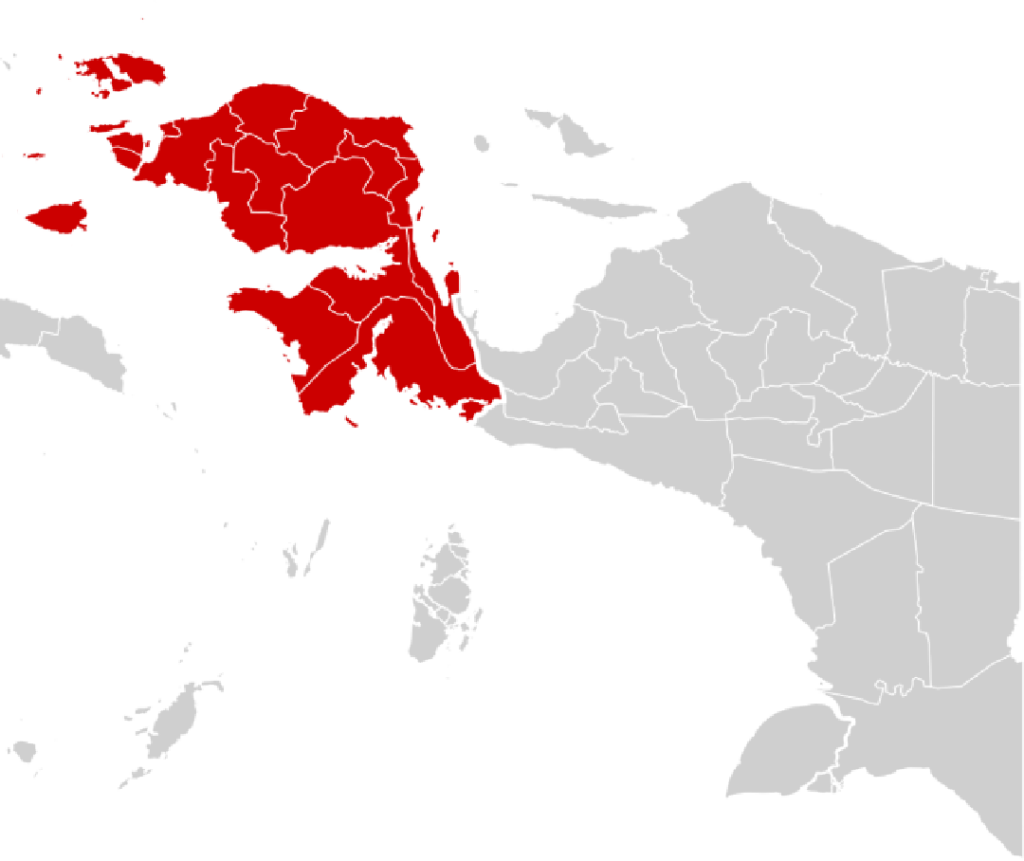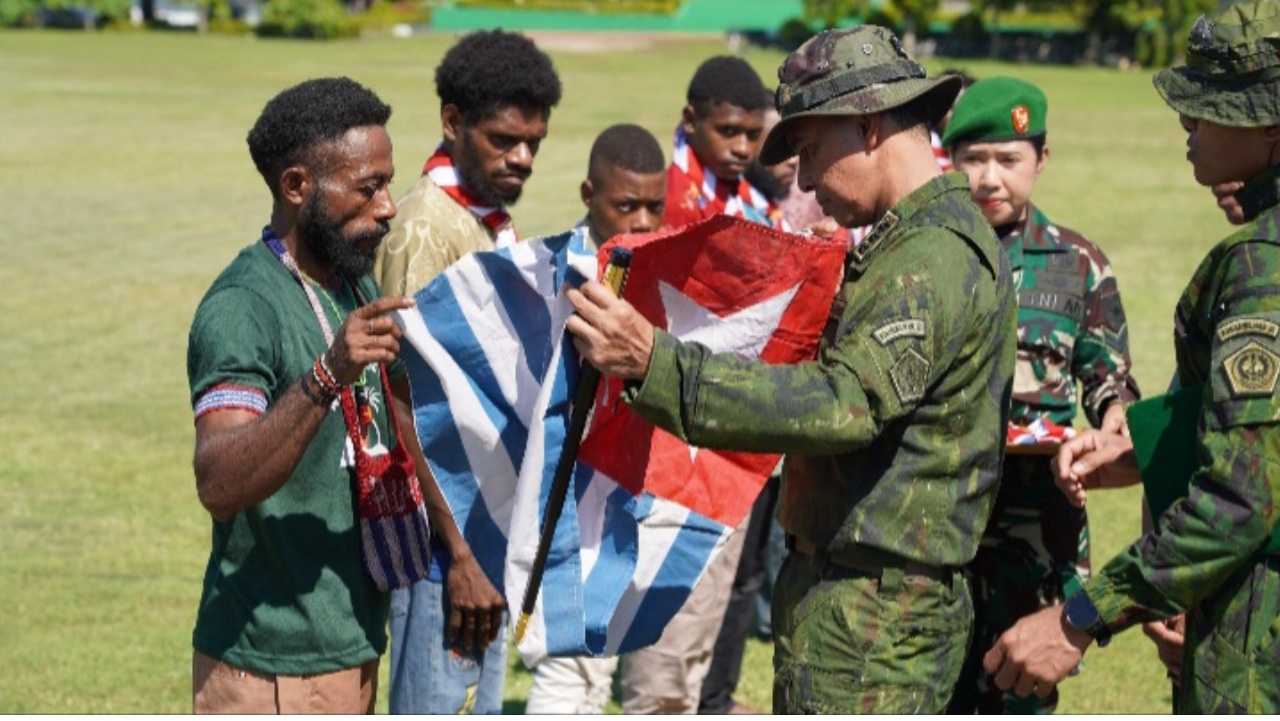
Indonesian military and government officials said on 25 June 2026 that a total of 37 former members of the West Papua National Liberation Army (TPNPB) of the Free Papuan Movement (OPM) from the Sorong Raya region pledged loyalty to the Republic of Indonesia in a ceremony in Manokwari, West Papua.
It was one of the biggest reintegration ceremonies involving former members of the armed group reported in years. The participants were two former battalion commanders, eight members of the Kodap IV Sorong Raya, and 27 of their families, many of whom were from Teluk Bintuni Regency, officials said.
Senior officials attended the event, including the commander of Joint Regional Defense Command III (Kogabwilhan III), military officers, local government representatives, religious leaders, and community figures. During the ceremony, participants surrendered several firearms and separatist attributes and pledged to return to civilian life.
The development was part of a broader approach to security, dialogue, and community development in Papua, authorities said.
Reintegration Ceremony Held in Manokwari
Thirty-seven Participants Joined the Declaration
Military officials said the ceremony of 37 former members included 27 of their families.
Participants pledged in public to obey Indonesian law, support peace, and return to their communities.
Military officials reported that the process involved the voluntary surrender of several guns and symbols associated with the organization previously linked to the armed group.
Authorities reported that community leaders, security personnel, and family members voluntarily made the statements after speaking with them.
Officials Emphasize Human-Centered Approach
Reintegration Combined with Community Development
The return of former members after the ceremony demonstrated that dialogue and humanitarian engagement can coexist with security operations, according to Commander of Kogabwilhan III Lieutenant General Lucky Avianto.
He thanked the participants for their decision to reintegrate into civilian life and urged other armed group members who wanted to leave violence to consider the same options.
“But we still need to improve public services, infrastructure, education, healthcare, and economic opportunities to maintain long-term stability in Papua,” the commander said.
Military officials also acknowledged the role played by local governments, religious leaders, tribal elders, and community members in helping to communicate throughout the reintegration process.
Community Support Considered Important
Local leaders at the event said family support and acceptance by neighboring communities are vital for successful reintegration.
They emphasized the importance of providing ex-combatants with an opportunity to rebuild their lives through jobs, education, farming, and vocational skills training to decrease the chances of a relapse into conflict.
Security and Development Continue Side by Side
The Indonesian authorities have said repeatedly that their approach to Papua is to combine law enforcement against armed violence with social and economic development programs.
Recently the government has accelerated infrastructure projects, education initiatives, health services, food security programs, and village economic development across Papua.
Officials say that opening up access to public services supports wider efforts to increase welfare and reduce circumstances that could lead to extended instability.
Others note that long-term cooperation among government agencies, security institutions, local communities, and civil society organizations is also key for successful reintegration.
Challenges Remain
The ceremony is a milestone, but authorities concede security problems persist in parts of Papua.
Armed attacks, civilian displacement, and logistical challenges continue to affect some remote districts.
Analysts often point out that sustainable peace depends on a range of factors, including effective governance, economic opportunities, the protection of civilians, and continued dialogue between communities and government institutions.
Officials said they will continue to encourage dialogue as they carry out security operations against individuals responsible for acts of violent crime.
Conclusion
The return of 37 former TPNPB members, and their families from the region of Sorong Raya is an important milestone in the efforts to reduce violence and strengthen stability in Papua. Indonesian authorities described the event as a result of collaboration between security institutions, local governments, community leaders, and families and of a more general increase in investment in regional development. While challenges remain, officials say continued dialogue, improved public services, and inclusive economic opportunities will remain central components of long-term peace and community resilience across Papua.