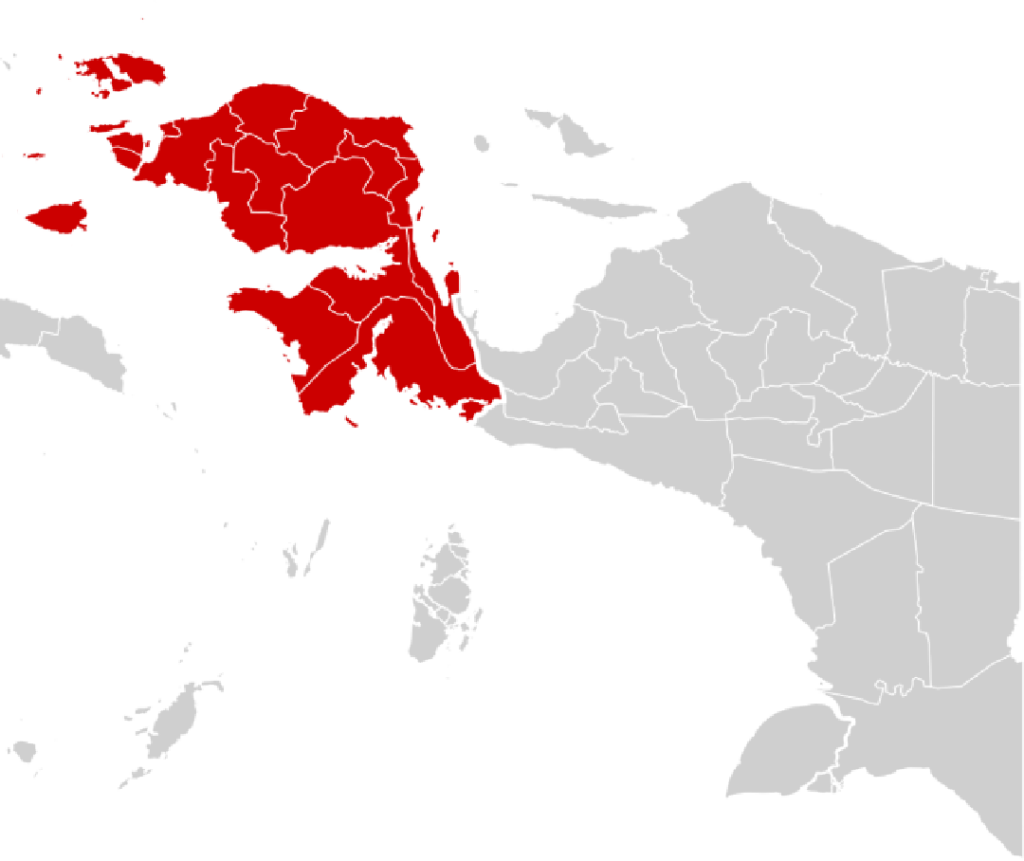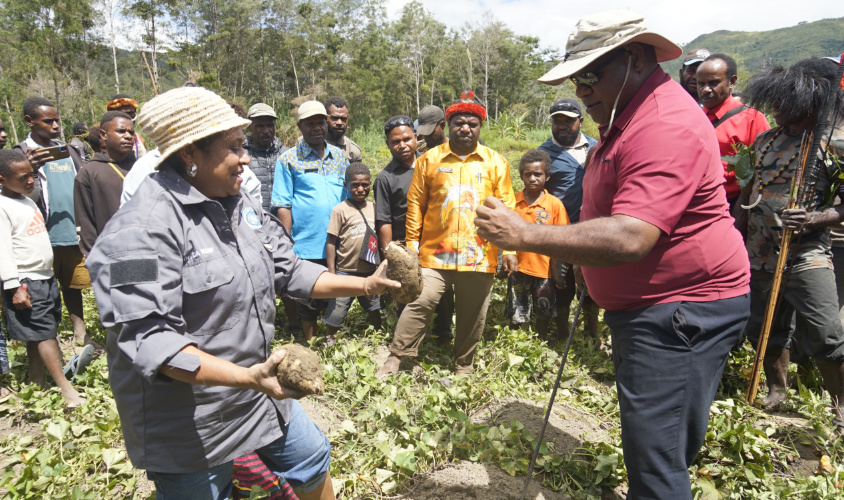
A cool wind blows through the green hills of Pyramid District in Jayawijaya Regency, Papua Pegunungan (Papua Highlands) Province, at dawn in Beam Village. The air is thick with the smell of dirt and plants growing. Behind rows of green leaves, farmers and young people gather. They don’t start their day with machines or markets; they start it by digging with their hands.
They pull sweet potatoes out of the ground one at a time, smiling as the dusty orange roots come out. It’s time to harvest, but it’s also something else. It serves as a reminder that food doesn’t come from stores. It comes from working hard on the land.
For generations, sweet potato, or ubi jalar, has been a main crop in Papua. In an area where the land is rough and hard to get around, it feeds families and keeps life going. People have learned to rely on what grows around them.
There were more than just family gatherings in Beam to celebrate the local harvest on this day, 7 February 2026. Regent Atenius Murip joined the farmers to appreciate their work and reinforce a powerful message about local food security and community resilience. His presence brought together government and grassroots efforts to work together to strengthen what many people call Papua’s most important defense against hunger and uncertainty: local farming.
Farmers and young people didn’t think of the visit as just a formality. For them, it was affirmation that their hard work mattered in the larger picture of community well-being. In Beam, the harvest was both a real thing and a symbol.
A Harvest with a Deeper Meaning
In Beam, the harvest was more than just a bunch of crops. It showed how local resources can be used to make food stable over time. Sweet potatoes grow well in the Papua Highlands because they can live in different types of soil and weather. They need less water than rice and can be picked more than once a year in different places.
Farmers in this area have been growing sweet potatoes along with corn and other root vegetables for many years. In this part of the world, farming is more than just a way to get food. It shows cultural knowledge and how to adapt to the land in a way that lasts. Families plant seeds passed down through the years, discussing crops as if they were alive, brimming with memory and hope.
Regent Murip said at the event that the harvest was both a celebration of tradition and an investment in the future.
He talked about more than just the crops. He said that it is important to use land that is already available instead of waiting for outside help. Strengthening local agriculture is not something he can choose to do. It is a must, especially in remote areas where food supplies from outside can be unreliable.
The Regent asked young people in particular to get involved in farming in his speech. He told them that farming was not just work for older villagers but also a way to live and be proud of their work.
He told them, “You are the future of this land.” “When you grow sweet potatoes, corn, and other crops, you feed our families, keep our traditions alive, and make us more independent.”
How a Community Relates to the Land
Farming is a part of everyday life for the people who live in Beam. Kids help their parents plant seeds. Families work together to clear fields and keep pests away from crops. This soil is not just dirt to be tilled. The earth is alive and supports life.
There was laughter and conversation mixed with the smell of sweet potatoes during the harvest. Farmers told stories about past seasons, including times with too much or too little rain, and times when crops thrived or failed. They talked about how happy they were to see a good harvest and how nice it was to feed their neighbors and family.
One farmer talked about how sweet potatoes are beneficial for you and can be used in many ways. You can boil, roast, or mash them. They feed kids at school and adults who work in the field. During celebrations, families share sweet potatoes as part of bigger meals.
In Beam, the harvest was also a chance to make social ties stronger. Neighbors helped each other out by giving each other advice and support. Young people in the village learned from older people. The experience became useful and passed down through generations.
Food becomes more than just food when people work together like this. It turns into a connection.
Getting Young People to Farm Again
One of the most intriguing things about the event was how involved young people were. Young people in many parts of the world are leaving farming to look for work in towns and cities. They think that education and technology are ways to move forward, but they often believe that farming is hard work with few rewards.
But leaders in Papua, like Atenius Murip, have done things differently. He doesn’t tell young people to stop farming; instead, he tells them to go back to the field with new ideas. Farming isn’t something you do for the sake of farming. Farming can work with new ideas, schools, and community needs.
A group of young men and women stood in the rows during the harvest, looking serious and focused. Some people had brought gloves and smartphones. Some people had come with tools they had borrowed from older people. They weren’t there to watch. They were there to take part.
The regent told young people that farming is a respected job that can help the economy stay stable if it is done well. He talked about helping them by giving them training, seeds, and chances to make value-added products from their crops.
In Beam, young people did more than just work. They helped keep track of the harvest, posted pictures of the event online, and talked about their hopes of starting small businesses related to farming.
A young woman stood next to her uncle as he dug up a sweet potato and said she wanted to learn how to plant crops and then turn them into things that could be sold at city markets. Her eyes lit up when she spoke about combining tradition with entrepreneurship.
This combination of traditional and modern practices, along with the connection between agriculture and future opportunities, demonstrated how farming influences various aspects of life in places like Beam.
Local Food Security as a Broader Strategy
The harvest celebration in Beam wasn’t a one-time thing. It showed that the government in Papua Highlands was putting more emphasis on food security in communities.
Papua still has trouble feeding its people on a regular basis. Being far away from other places, having to pay a lot for transportation, and relying on imported food staples can all put strain on local budgets and resilience. Leaders say that boosting local agricultural production is not only good for the economy but also a way to make the area less vulnerable to shocks from outside.
This plan includes Regent Murip’s support for the harvest event. By talking about how important crops like sweet potatoes and corn are, he keeps the conversation focused on not just feeding families today, but also building systems that will support communities in the long run.
When a community has staples that grow well in the local soil and can be harvested often, they don’t have to rely on supply chains that are far away. When young people in the area work on farms, they put their time and creativity into the future of their communities. When leaders celebrate the harvest with their communities, they stress that everyone is responsible for growing food.
Talks Between Farmers and Leaders
For many farmers, the regent’s presence was a big show of support. It wasn’t just a ceremony. Leaders heard questions about seeds, getting water, pest control, and chances to sell things.
Farmers at the harvest site talked about how they needed better roads to get their crops to bigger markets. They talked about how they wanted more cold storage to keep extra fruits and vegetables. Young people asked for workshops on how to sell things on a small scale and how to grow different kinds of crops.
Atenius Murip didn’t respond like a distant official; he responded like someone who had walked among the rows with them. He said he would bring up their worries in planning meetings with the government departments in charge of infrastructure, trade, and education.
When leaders talk to farmers in person, the conversation is based on facts instead of rhetoric.
A Common Goal for Strength
One phrase repeated at the event was “ketahanan pangan lokal,” or local food resilience. This idea is more than just a policy slogan. It talks about how people live in Beam and other villages in Papua. People in communities work together to make sure they have enough food by growing sweet potatoes, corn, and other staples.
There are also cultural aspects to local food resilience. People in the Papua Highlands have been growing root crops in the mountains for a long time. This knowledge is a part of who they are. When modern development talks about these crops, it shows that old traditions are still useful for dealing with today’s problems.
For people in Indonesia, this focus represents more of a continuation than a break, especially for those who have witnessed waves of change sweep across other parts of the country.
Getting Hope and Action
The piles of sweet potatoes got bigger as the day of harvest turned into the afternoon. Kids were curious about the roots, older people told stories about past harvests, and young adults took pictures to remember the day.
For families in Beam, the harvest was a real success. It gave leaders useful information about what works in the real world. For young people, it gave them the feeling that they could change the world with their actions.
The crowd came together for a meal when the sun finally went down behind the green hills. They were boiling sweet potatoes over an open flame and seasoning vegetables with fresh herbs from the nearby gardens. People kept talking and laughing long after the formal speeches were over.
One thing that stood out in every version of the story was that community is important.
This harvest wasn’t just about getting food. It was about belonging, having a purpose, and working together to ensure the land serves future families.
Conclusion
The sweet potato harvest in Beam Village was more than just a sign of farming success. It told a story about how people can connect with each other, whether they are leaders or citizens, young or old, or traditional or modern.
Atenius Murip’s presence sent a message that goes beyond just this one event. Policy alone does not make food resilient. It grows from the ground with the help of people who care for it, leaders who show up to support it, and young people who are given real work to do instead of being pushed toward uncertain futures.
The lessons learned during Beam’s harvest celebrations will stay with them even as the work of the next season begins. It’s not just about crops when it comes to making food more resilient. It’s about people, their dreams, and the idea that communities can make life safer and better.
In the highlands of Papua, where the soil meets the sky and people come together to eat, this harvest was the first part of a bigger story about renewal, dignity, and hopeful change.