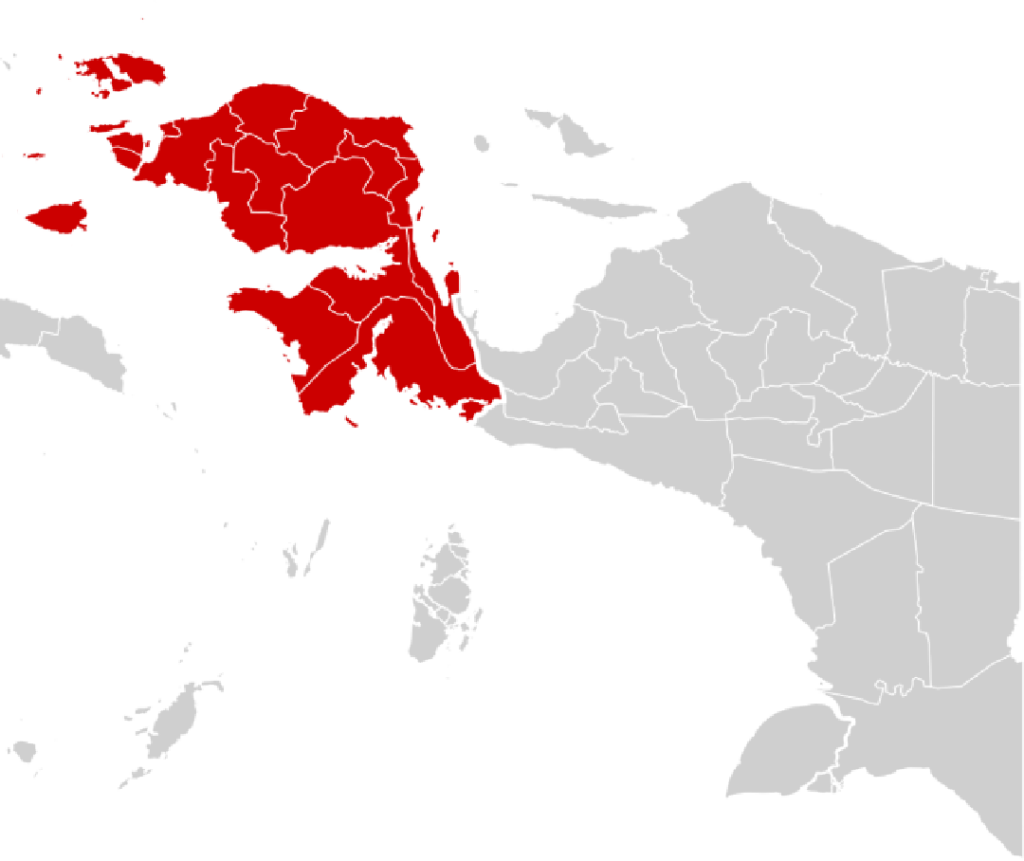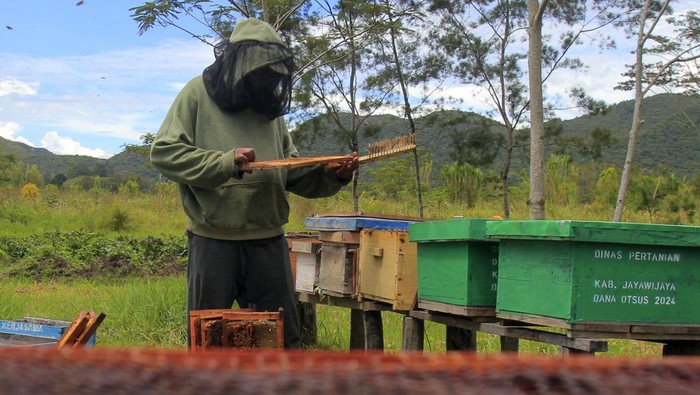
In the remote highlands of Papua, where mist settles gently over steep valleys and dense forests breathe ancient rhythms, an unexpected form of economic empowerment is taking root. For generations, villagers relied on subsistence farming, forest gathering, and small-scale trading to support their families. But over the past several years, something subtle yet transformative has begun to change daily life in places like Kampung Pugima in Jayawijaya Regency, Papua Pegunungan (Highland Papua) Provinces. That change hums quietly—sometimes almost imperceptibly—beneath the sound of wind rustling through eucalyptus trees. It is the sound of bees.
Beekeeping in Papua is no longer a casual activity or a practice tied only to traditional harvesting from wild nests. What was once a supplemental pursuit has grown into an organized, community-wide effort that supports household income, promotes environmental stewardship, and strengthens local pride. Today, the highland communities are discovering a new relationship with their land—one built on patience, cooperation, and the sweet promise of honey.
This is the story of how honey cultivation is reshaping both the economy and the identity of Papua’s highland villages, and how the government’s backing has become a vital element in helping this golden opportunity flourish.
The Land Where Bees Thrive
Papua Pegunungan are more than a picturesque backdrop; they are a unique ecological haven where diverse flowering plants flourish throughout the year. The altitude creates a cool microclimate, allowing local bee species to thrive naturally, without the stressors often found in lowland environments. Villagers say the bees in these highlands are “anak tanah”—children of the soil—because they are deeply connected to the forest’s unspoiled ecosystems.
These natural conditions mean beekeepers don’t need industrial interventions or synthetic feeding regimens. Instead, they rely on the abundance of the surrounding forests. Each hive becomes a tiny biodiverse universe, visited daily by bees that collect nectar from mountain blossoms, forest shrubs, and wild orchids. The result is honey with a distinct flavor profile—rich, aromatic, and highly valued by consumers across Papua and beyond.
This natural advantage has helped beekeepers grow their production. In Pugima, for instance, local farmers have begun harvesting an impressive 100 kilograms of honey each month, a scale once considered impossible in such remote terrain. This consistency has allowed communities to move beyond subsistence and into structured livelihoods with dependable income streams.
From Wild Honey Tradition to Organized Beekeeping
For many Papuans, honey is not new. Traditionally, people harvested madu hutan—wild forest honey—by locating nests in tall trees or cliff sides, often climbing with minimal safety equipment. While deeply rooted in cultural identity, this method carried risks and offered no guarantee of supply.
The transition to structured beekeeping marked a profound shift. With the introduction of wooden hive boxes, protective gear, and better training, villagers began managing colonies rather than simply gathering from the wild. They learned how to monitor hive health, ensure colony survival through seasonal changes, and harvest honey ethically without harming the bees.
This approach did more than improve production; it fostered a sense of ownership and professionalism within the community. Villagers now speak of beekeeping not as a side activity, but as an honored trade—one that requires keen observation, patience, and care. The younger generation, in particular, has shown enthusiasm for learning hive management techniques, blending modern knowledge with traditional ecological understanding passed down by elders.
What used to be a solitary pursuit often undertaken by a few individuals has grown into a communal endeavor. Neighbors assist each other during harvests, share hive-building tips, and collaborate to transport honey for distribution. In this way, beekeeping has become a focal point of social cohesion, strengthening ties within the community.
Economic Transformation and the Rise of High-Value Honey
The economic impact of this beekeeping movement is felt deeply in households across Jayawijaya. With monthly yields reaching dozens of kilograms, honey sales can support essential needs—from school fees and medicines to staple food supplies. The honey itself is sold in a range of packaging formats, from small jars for local markets to premium bottles tailored for urban consumers. Prices vary widely, but highland honey often commands a premium due to its purity and unique flavor.
Some farmers now earn more from honey than from traditional crops such as sweet potatoes or coffee. Beekeeping also requires smaller land areas compared to agriculture, making it ideal for communities with limited arable land. As more buyers from larger cities such as Jayapura and Sorong seek authentic highland honey, demand continues to grow.
Villagers who once relied heavily on unpredictable seasonal income now enjoy a steadier financial foundation. Mothers report being able to keep their children in school without interruption. Fathers speak of being able to save—something rare in areas where cash flow is often sporadic. Beekeeping has even provided opportunities for women to play more active roles in household economics, as honey processing and product packaging are tasks that many women have embraced enthusiastically.
Beyond individual households, beekeeping has contributed to broader village development. Revenue circulates locally, supporting small shops, transport services, and other micro-enterprises. In essence, honey has become not just a product, but an economic catalyst that uplifts entire communities.
Government Support: A Lifeline for Scaling Up Production
While community initiative has been central to success, government support has played an equally significant role. Recognizing honey as one of Papua’s valuable natural commodities, local authorities began providing beehive boxes, training programs, and technical assistance to rural beekeepers. These interventions helped residents transition from traditional methods to more efficient systems.
The government’s decision to supply hive boxes tailored to Papuan conditions—rather than relying on imported designs—proved particularly effective. Local bees are acclimated to the region’s climate and flora, making species-appropriate hives essential for colony survival. Training sessions conducted by agricultural extension workers have equipped farmers with vital skills in hive inspection, disease prevention, and sustainable harvesting.
In past development initiatives, support from provincial forestry and agriculture offices even enabled one beekeeper to expand operations to roughly a thousand hive boxes—an achievement that demonstrated the immense potential for scaling up production. Such success stories inspire other villages and affirm that honey can become a flagship commodity for the highlands.
Regional leaders emphasize that beekeeping is not only profitable but also environmentally aligned with long-term conservation goals. Encouragement from policymakers reinforces the idea that sustainable, community-based enterprises can be key pillars of Papua’s future economy.
Environmental and Cultural Significance
Beekeeping in Papua does more than generate income—it strengthens the link between people and the natural world. Healthy bee colonies require thriving ecosystems. This motivates communities to protect forests, avoid destructive land practices, and preserve biodiversity. Villagers understand that clear streams, healthy soil, and abundant flora are not abstract environmental concepts; they are necessities for their livelihood.
This awareness nurtures a culture of stewardship, where conservation becomes a communal value. Protecting the environment is no longer seen as a top-down directive but as a shared responsibility rooted in economic reality.
At the same time, beekeeping reinforces cultural identity. Local wisdom about flowering cycles, forest behavior, and weather patterns has always guided Papuan life. Integrating traditional ecological knowledge with modern beekeeping enhances community pride. The work itself becomes a bridge between generations, with elders sharing insights while youth introduce new techniques and management practices. In this harmony of old and new, beekeeping becomes part of the living cultural fabric.
Challenges Ahead and the Path Toward Sustainability
Despite its success, beekeeping in Papua faces several challenges that must be addressed to ensure long-term sustainability. Limited access to quality equipment, ongoing training, and affordable transport remain obstacles for remote communities. Fluctuating market prices and inconsistent packaging standards can also make it difficult for small producers to compete in larger markets.
To overcome these challenges, stakeholders are encouraged to explore cooperative systems that allow beekeepers to pool resources, standardize product quality, and negotiate better prices. Supporting infrastructures—such as honey processing centers, quality testing facilities, and distribution networks—will also be crucial.
Environmental changes pose additional risks. Deforestation, climate variability, and habitat degradation could threaten nectar sources and disrupt bee behavior. Maintaining the health of the surrounding forests must therefore remain a top priority. Conservation education, community monitoring, and stronger environmental regulations will be essential components of sustainable growth.
Yet even with these challenges, the momentum remains strong. Communities are committed, government agencies are supportive, and consumers continue to value the unique qualities of highland honey. With strategic planning and collaborative effort, beekeeping can evolve from a promising livelihood into a long-term economic pillar for Papua.
Conclusion
The transformation taking place in Papua Pegunungan is a testament to human resilience—and the unexpected pathways to prosperity that emerge when communities harness their natural resources thoughtfully. Beekeeping has not only provided income but has also inspired pride, unity, and ecological awareness. It has redefined what economic development can look like when it grows from the ground up, respecting both people and the environment.
Today, the gentle hum of bees in Jayawijaya is a symbol of possibility. From wooden hive boxes scattered along terraced slopes to families bottling honey in their homes, every step in the beekeeping process reflects the community’s determination to build a better life. And as demand continues to rise, the villagers of Papua Pegunungan find themselves connected to broader markets and new opportunities.
Honey may be sweet, but the story behind it is even sweeter: a narrative of empowerment, sustainability, and hope—crafted one hive, one harvest, and one family at a time.