
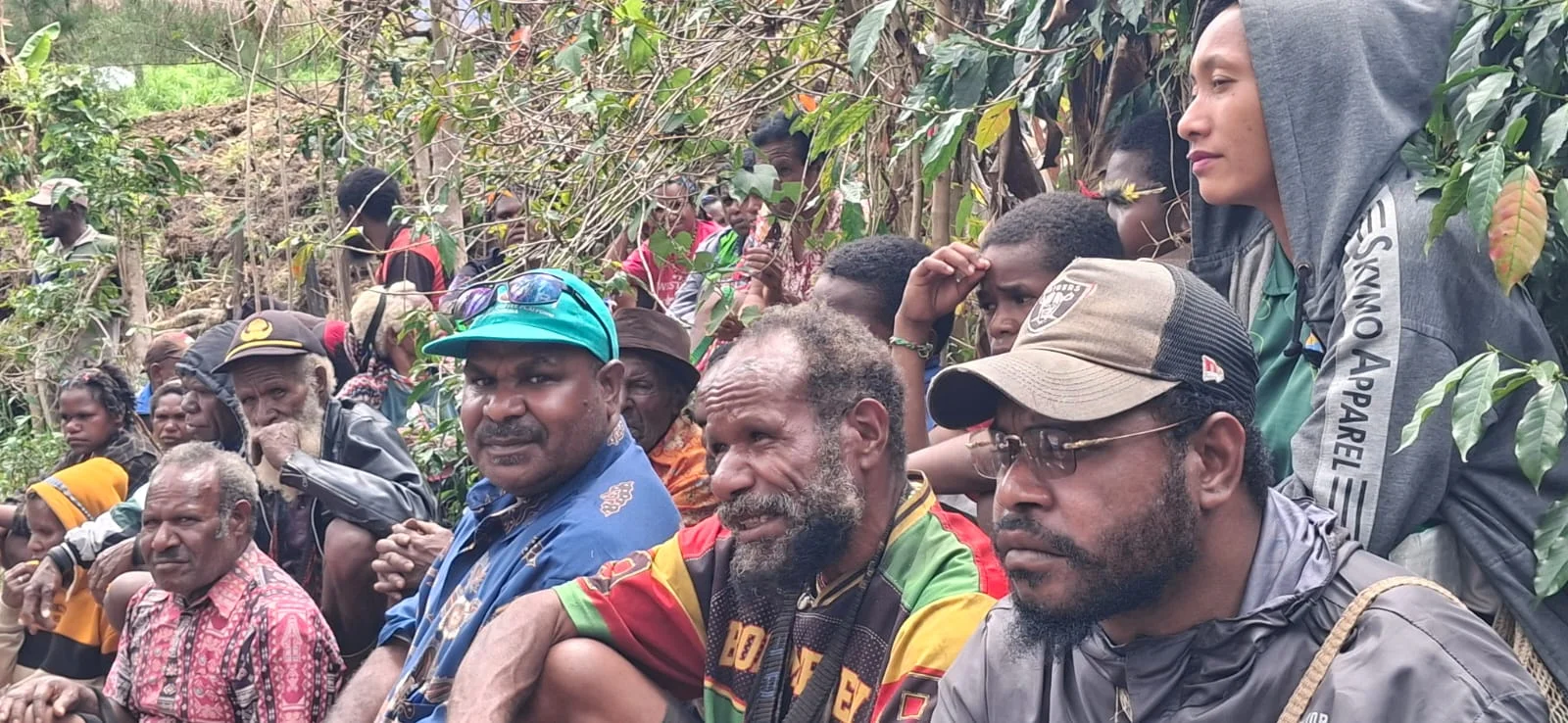
The Papua Tengah (Central Papua) provincial government is expanding its efforts to turn locally grown coffee into a more competitive agricultural product, targeting around 350 farmers for training in cultivation and post-harvest management as it seeks to open wider domestic and international markets.
The program, led by Governor Meki Fritz Nawipa, focuses on developing farmers’ practical skills, improving the quality of Arabica and Robusta beans, and strengthening the local coffee business ecosystem. It covers Arabica coffee farmers in six regencies and Robusta producers in Nabire Regency.
The initiative marks a shift in emphasis from simply increasing production to improving the consistency and quality of coffee from the plantation to the final product. Through cooperation with the Sustainable Coffee Platform of Indonesia (SCOPI), the provincial government is using national training modules and curricula to help farmers apply better cultivation and post-harvest practices.
The training is designed to take place not only in classrooms but also directly on coffee farms, where participants can learn by observing plants, practicing cultivation techniques, and understanding how harvesting and post-harvest decisions affect the quality of the beans.
For Papua Tengah, the program represents an effort to build a stronger agricultural economy around a commodity that already carries a recognizable regional identity. The challenge now is to ensure that the reputation of Papua coffee is supported by consistent quality, reliable supply, and stronger access to buyers.
From Coffee Festival to a Wider Farmer Development Program
The latest initiative developed from a series of government activities and policy discussions that began in October 2026.
On October 29, the Papua Tengah provincial government opened its first Papua Tengah Coffee Festival at the Kristus Sahabat Kita Parish Hall in Bukit Meriam, Nabire. Organized through the provincial Plantation and Livestock Office, the two-day event brought together coffee farmers, business operators, coffee shops, baristas, and micro, small, and medium-sized enterprises.
The festival was intended to promote local agricultural products while creating direct connections between producers and the businesses that could help bring their coffee to consumers.
At the opening, Governor Meki Nawipa symbolically watered a coffee seedling, signalling the administration’s commitment to revitalizing coffee plantations and developing the commodity as an important source of income for local communities.
The event also provided an opportunity for farmers to exchange information with coffee businesses and other industry participants. Rather than treating coffee solely as an agricultural product, the provincial government sought to introduce farmers to the wider value chain, including processing, presentation, promotion, and marketing.
Nawipa said the development of coffee plantations required a long-term commitment. Farmers could not be expected to build successful businesses individually without access to knowledge, networks, and cooperation with other actors in the industry.
He therefore encouraged the development of business networks connecting farmers with coffee entrepreneurs, processors, and buyers. Such cooperation, he argued, could help farmers exchange knowledge, improve their bargaining position, and respond more effectively to changes in coffee prices.
The festival became the starting point for a more structured farmer development program.
October Target: 300 Farmers Across Six Regencies
Following the festival, the provincial government announced a program to provide technical guidance to 300 coffee farmers in six regencies.
On October 30, Andreas Gobay, Head of the Plantation Division at the Papua Tengah Plantation and Livestock Office, explained that the initial program would target 50 farmers in each participating regency.
The six regencies identified were Puncak, Puncak Jaya, Intan Jaya, Paniai, Dogiyai, and Nabire.
Gobay said the program was one of Governor Nawipa’s priorities and would focus on improving farmers’ knowledge of coffee cultivation, from planting and maintaining trees to selecting quality coffee beans.
The provincial government would act as a facilitator, while technical assistance was to be provided by the Indonesian Coffee Association (ASKI). The cooperation had been formalized through a memorandum of understanding.
Gobay acknowledged that Papua already had a strong reputation for coffee, but that the reputation needed to be supported by better product quality.
He explained that the program was intended to give farmers a structured curriculum rather than relying on traditional practices alone. The objective was to help them understand the correct techniques needed to produce better and more consistent coffee.
The government allocated more than Rp1 billion for the farmer development program, with an emphasis on ensuring that the activities provided direct benefits to participants.
Nawipa also stressed that the development of coffee plantations required cooperation beyond government institutions. Farmers needed access to business networks and opportunities to exchange information, particularly when dealing with marketing challenges and fluctuating farm-gate prices.
He warned that farmers working independently could be more vulnerable to the influence of middlemen and unstable pricing arrangements.
The government, therefore, viewed farmer empowerment as an initial step towards building a more organized and competitive coffee sector.
November Training Takes the Program to Puncak Jaya
The program moved into practical implementation in the highland areas in early November.
On November 6 and 7, the Papua Tengah provincial government, working with the Indonesian Coffee Association, conducted a two-day training program for coffee farmers in Puncak Jaya Regency.
The training, held in Mulia, focused on sustainable coffee cultivation and post-harvest management.
Andreas Gobay said the highland areas of Papua Tengah had considerable potential for Arabica coffee because of their growing conditions. Lower-altitude areas, meanwhile, offered opportunities for Robusta cultivation.
Puncak Jaya was identified as one of the areas with potential for Arabica development.
Gobay emphasised that this potential needed to be managed through planned and sustainable cultivation practices. Increasing production alone would not be sufficient if farmers could not maintain the quality of their beans.
The training introduced participants to the different stages of coffee production, including cultivation, plant maintenance, harvesting, and post-harvest processing.
The emphasis on post-harvest management was particularly important. Coffee quality is influenced not only by the condition of the trees or the maturity of the fruit but also by how the harvested cherries and beans are handled afterwards.
Improper handling can reduce the quality of the final product even when the coffee is grown in favorable conditions.
By providing practical instruction, the government and its technical partners aimed to help farmers understand how decisions made at each stage could affect the final result.
The Puncak Jaya program also illustrated the importance of bringing training closer to producing communities. Farmers in remote highland areas need access to technical knowledge that can be applied directly to their own plantations.
New Programme Targets Around 350 Farmers
The latest development was announced on November 24, when the provincial government outlined a program targeting approximately 350 farmer cadres in Arabica and Robusta cultivation and post-harvest management.
According to the announcement published by Salam Papua, the initiative covers Arabica coffee farmers in six regencies and Robusta farmers in Nabire.
The program is being implemented through cooperation between the provincial Plantation and Livestock Office and SCOPI, using national training modules and curricula for Arabica and Robusta coffee cultivation and post-harvest management.
The involvement of SCOPI provides a structured training framework for farmers, helping connect local agricultural practices with broader standards used in the Indonesian coffee sector.
Nawipa said the objective was to develop farmers who were skilled, independent, and productive, while improving the ability of their products to compete in wider markets.
He stressed that the program was not limited to classroom instruction.
Learning directly from the plantation
The government is prioritizing a field-school approach, allowing farmers to learn through direct practice in coffee plantations.
Participants are expected to develop practical knowledge by observing plant conditions, applying cultivation techniques, maintaining coffee trees, and understanding harvesting and post-harvest procedures.
This approach is important because agricultural training is most effective when farmers can apply the lessons to the conditions of their land.
Differences in altitude, soil, rainfall, plant varieties, and plantation management can influence the way coffee grows. Direct field learning allows farmers to connect technical guidance with the realities they encounter in their plantations.
The program also seeks to encourage farmers to apply the techniques consistently after the training has ended.
Nawipa said that government planning and technical instruction alone could not guarantee success. The long-term development of the coffee sector would depend on farmers’ commitment, discipline, and willingness to continue applying the knowledge they had gained.
He expressed the ambition of seeing Papua Tengah coffee recognized internationally, with opportunities to reach markets in Asia, the Americas, Europe, Japan, and China.
He said he wanted the name of Papua Tengah to become known internationally through the quality of coffee produced directly by local communities.
The governor’s message was clear: the region’s reputation should be built on the actual quality of its coffee rather than its geographical name alone.
Arabica and Robusta Offer Different Opportunities
The provincial program gives attention to two major coffee varieties, Arabica and Robusta.
Arabica development is focused on the highland areas, where the growing environment offers potential for distinctive coffee characteristics. Puncak Jaya is among the regencies identified for this opportunity, alongside other highland-producing areas.
Robusta development is directed toward Nabire, where lower-altitude conditions provide a different agricultural environment.
This distinction is important because coffee cultivation requires techniques suited to the location and variety being developed.
Farmers need to understand suitable planting materials, seedling management, plant maintenance, and harvesting practices. Applying the same approach indiscriminately across different environments may not produce the desired results.
The government’s training program is therefore intended to improve technical knowledge while helping farmers recognize the specific requirements of their crops.
The use of national curricula also offers a common foundation for training, making it easier to communicate good cultivation and post-harvest practices across different districts.
However, national standards need to be applied with attention to local conditions. Technical assistance must remain relevant to the geographical characteristics and production systems of each farming community.
Building a Complete Coffee Business Ecosystem
The provincial government recognizes that improving farm production is only one part of making local coffee competitive.
Nawipa has called for cooperation involving universities, non-governmental organizations, state-owned and regional-owned enterprises, media organizations, business operators, community organizations, and coffee communities.
He said the development of Papua Tengah’s coffee sector should be treated as a shared responsibility rather than a program managed by the government alone.
The proposed collaboration covers the entire coffee value chain, beginning with quality planting materials and plantation development, followed by productivity improvements, post-harvest processing, farmer organization, financing, and marketing.
Protecting the identity and competitiveness of Papua Tengah coffee is also part of the government’s broader ambition.
This approach is important because high-quality agricultural production does not automatically translate into higher farmer incomes.
Farmers also need access to buyers, reliable transportation, appropriate processing facilities, and information about market prices. Without these connections, even high-quality coffee may struggle to reach consumers at a competitive value.
The development of farmer groups and business networks could help address some of these barriers.
Organized farmers may be better positioned to share equipment, exchange information, coordinate production, and negotiate with buyers.
Stronger connections with coffee shops, roasters, and processors could also create opportunities for products to be marketed under a clearer regional identity.
The earlier Coffee Festival in Nairobi demonstrated the value of bringing producers and buyers together. The next challenge is to maintain those relationships after the event has ended.
From Local Farms to International Markets
Nawipa’s ambition to introduce Papua Tengah coffee to international markets reflects the wider potential of the region’s agricultural sector.
The international coffee market offers opportunities, but it also requires producers to meet demanding expectations.
Buyers look beyond the origin of a product. They consider bean quality, consistency, processing methods, supply reliability, and the ability of producers to meet agreed standards.
For farmers in Papua Tengah, this means that technical improvements must be supported by reliable post-harvest management and stronger marketing arrangements.
The field-school approach can help build the production skills needed for this process. Meanwhile, partnerships with industry organizations and business operators can provide access to technical knowledge and potential market connections.
Certification and quality assurance may also become relevant as farmer groups develop more organized production systems. Such measures would need to follow appropriate technical procedures and be supported by reliable documentation.
The government has not yet announced a confirmed export contract or a specific volume of coffee destined for overseas markets. Its current ambition is to strengthen the foundations needed for local coffee to compete in national and international markets.
This distinction matters. International recognition will be earned through consistent product quality, dependable supply, and long-term cooperation across the value chain.
Coffee Development as a Source of Rural Prosperity
Beyond its commercial potential, coffee development has broader implications for communities in Papua Tengah.
For smallholder farmers, improved cultivation and post-harvest knowledge can contribute to better management of their plantations and potentially improve the value of their harvests.
Coffee production can also create economic activity beyond farming itself.
Processing, packaging, transportation, retail, coffee shops, and tourism-related activities can all provide opportunities for local businesses and workers.
In areas where employment options are limited, a stronger agricultural value chain can help diversify household income and create additional economic opportunities.
The government initiative also highlights the importance of investing in people rather than focusing exclusively on physical infrastructure or production targets.
Training farmers to manage their crops, understand quality standards, and engage with markets can build capabilities that remain within communities long after individual training sessions have concluded.
For that reason, the continuity of the program will be important. Follow-up assistance, field monitoring, and access to business networks will help determine whether the knowledge gained during training translates into lasting improvements.
Conclusion
The Papua Tengah provincial government’s program to develop around 350 coffee farmer cadres represents an important effort to strengthen the region’s agricultural economy.
From the Coffee Festival in Nabire in October to the technical training in Puncak Jaya in November and the latest program announcement on November 24, the government has gradually expanded its approach from promotion towards practical farmer development.
The involvement of SCOPI, the use of national training curricula, and the field-school method provide a framework for improving cultivation and post-harvest practices.
The earlier program involving 300 farmers also established an initial foundation for technical assistance across six regencies, while the latest initiative extends the training focus to around 350 farmers working with Arabica and Robusta coffee.
The next challenge is to maintain continuity. Farmers will need regular technical assistance, suitable planting materials, better processing facilities, organized business networks, and access to buyers who recognize the value of quality coffee.
The government, meanwhile, will need to ensure that its support reaches individual farmers and produces measurable improvements in productivity, product quality, and household income.
Papua Tengah already has a strong name in Indonesia’s coffee landscape. Turning that reputation into international competitiveness will require patience, investment, and consistent standards.
The ambition is not simply to produce more coffee but to ensure that every improvement in quality creates greater value for the farmers and communities who cultivate it. From the plantations of Papua Tengah to consumers in international markets, the future of the region’s coffee industry will depend on the skills, cooperation, and determination of its people.
Read Also
Wiringgambut Coffee Agrotourism Takes Shape in Papua
Papua Tengah Trains Puncak Jaya Coffee Farmers

