
Papua is preparing for a new chapter in its maritime transport development as the provincial government moves closer to operating the Belibis 9 express vessel. Designed to improve connections between coastal communities and island destinations, the ship is expected to reduce travel times significantly and make passenger journeys more efficient. The service is scheduled to begin in early January 2027, offering a new transport option for residents travelling between Jayapura, Biak, and Serui.
The initiative reflects the importance of maritime connectivity in a province where the sea remains a vital part of everyday life. For communities spread across islands and coastal areas, reliable passenger transport is not simply a matter of convenience. It can influence access to economic opportunities, public services, family connections, and regional mobility.
According to a report published by ANTARA News Papua on November 3, 2026, the provincial government has been preparing the Belibis 9 for its planned operation. The vessel has undergone speed trials in Tanjung Pinang, while its final completion work is approaching the finishing stage.
With a reported maximum speed of 31 knots, Belibis 9 is expected to shorten journeys that previously took approximately 27 to 28 hours to around 10 to 11 hours. If the planned service begins as scheduled, the reduction could make a substantial difference for passengers travelling between several important destinations in Papua.
A New Maritime Link for Papua
The Papua Provincial Government is positioning Belibis 9 as part of its efforts to strengthen interregional maritime transport. The initial service is planned to cover two routes: Jayapura-Biak and Jayapura-Serui.
These connections are important because they link Jayapura, the provincial capital, with other destinations that depend on sea transport for passenger movement. A faster service could give residents more flexibility when planning journeys, particularly those who need to travel for work, education, business, or personal matters.
The provincial government’s plan also highlights the strategic role of maritime transport in supporting development across Papua. While road and air transport remain important, sea routes provide another means of connecting communities and facilitating movement between islands.
For many passengers, travel time is a decisive factor. A journey lasting more than a full day can require additional preparation and impose practical difficulties, particularly for people travelling with family members or carrying personal belongings. Reducing the journey to approximately 10 or 11 hours could make travel more manageable.
However, the actual benefits will depend on the vessel’s operational schedule, ticket prices, service reliability, and the consistency of departures. These details will be important as the provincial government moves from preparation to the launch of regular services.
From Preparation to Sea Trials
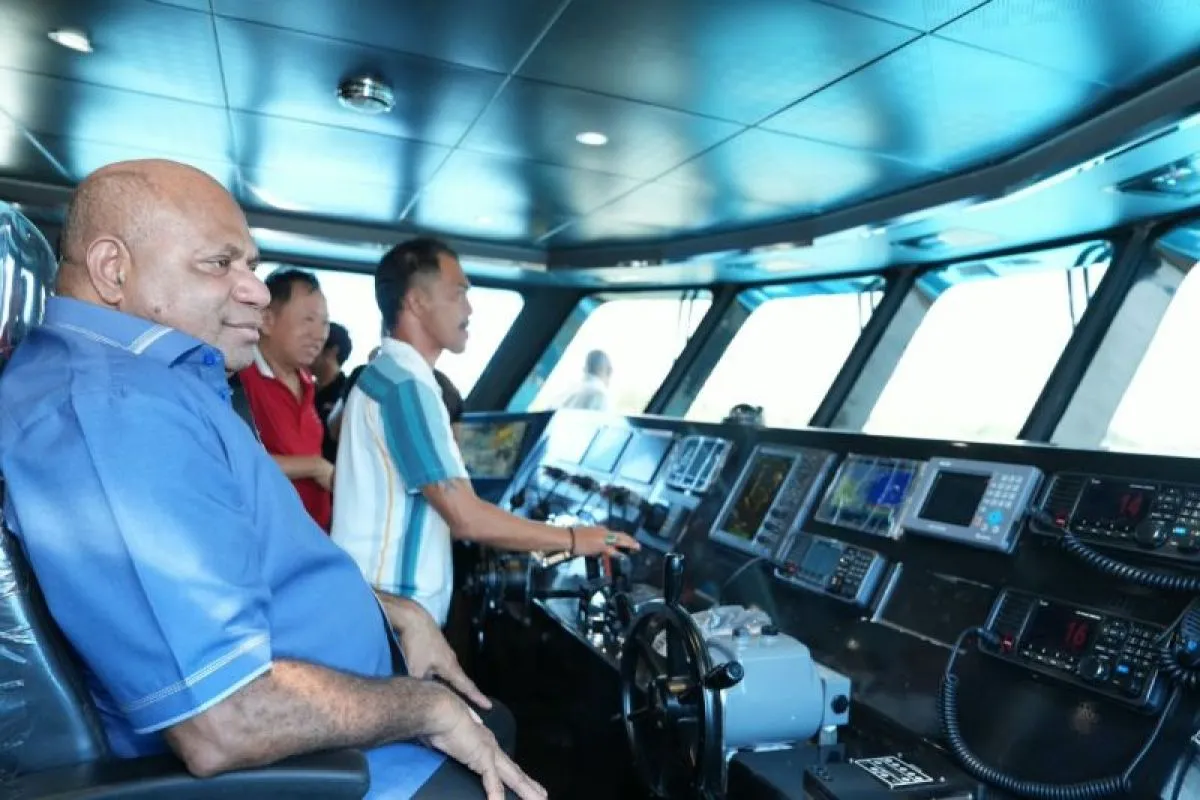
The latest progress became clearer on November 2, when Papua Governor Mathius D. Fakhiri visited Tanjung Pinang with the provincial transportation authorities and other relevant parties.
The visit provided an opportunity for the governor and officials to inspect the vessel directly and observe its speed trial. Rather than relying solely on technical reports, the delegation was able to see the ship’s performance during the testing process.
Head of the Papua Transportation Agency, Mathius Hartono Wally, explained that the visit was part of the preparation for the vessel’s planned operation.
According to Wally, the test indicated that Belibis 9 could reach a speed of 31 knots. The result is expected to support the government’s objective of reducing travel time on the planned routes.
He said the vessel’s speed was one of its main advantages because it could help passengers travel between regions more quickly while supporting faster economic activity.
The expected reduction from approximately 27 to 28 hours to around 10 to 11 hours represents a major improvement in the journey time reported by the provincial authorities. It also provides a practical indication of why the vessel is being introduced as an express service rather than a conventional passenger connection.
Nevertheless, speed alone will not determine the overall quality of the service. Passenger safety, maintenance, weather conditions, port readiness, and operational management will remain essential considerations once the vessel begins carrying the public.
Vessel Nears Completion Ahead of Its Arrival in Jayapura
The project has also reached an advanced stage of technical preparation.
H. Misbahuddin, president director of PT Belibis Papua Mandiri, reported that the completion of Belibis 9 had reached 99 percent. Only final works and the installation of several accessories remained at the time of his statement.
He also outlined the vessel’s planned delivery schedule. Belibis 9 was scheduled to depart from Sulawesi on November 15, 2026, before arriving in Jayapura on December 1 or 2.
The arrival would mark an important transition from the vessel’s preparation phase to the final arrangements for its operation in Papua. Once in Jayapura, the ship would be closer to the communities expected to use the service.
The timeline is significant because the provincial government is targeting the beginning of January 2027 for commercial operations. The planned arrival in early December would leave a period for final preparations before the service is introduced.
Those preparations are likely to be important for ensuring that the vessel is ready to serve passengers. Operational readiness involves more than completing the ship itself. It also requires arrangements for passenger handling, crew readiness, safety procedures, and coordination with the relevant port authorities.
The provincial government has not yet detailed all of these arrangements in the reported announcement. Further information on the final operational schedule and passenger services will therefore be important for residents planning to use the vessel.
Capacity and Engine Performance
Belibis 9 is designed to accommodate a substantial number of passengers. Misbahuddin said the vessel has a reported total capacity of 430 passengers, with 85 VIP-class seats and approximately 360 executive-class seats.
The vessel is also equipped with three Caterpillar C32B engines, each producing 1,700 horsepower. According to the company director, the engines support the ship’s high-speed sailing capability.
The combination of passenger capacity and engine power is intended to provide a faster transport option while accommodating a significant volume of travelers.
For Papua, the availability of a vessel with this capacity could help expand passenger transport options on the planned routes. It may also provide an alternative for people who need to travel between Jayapura, Biak, and Serui but prefer sea transport.
The different passenger classes indicate that the service is being prepared with more than one level of accommodation. However, the company and provincial government have not yet provided detailed information about ticket prices, onboard facilities, or the specific services available in each class in the ANTARA report.
Clarification of these details will help the public understand how the new service will operate and what passengers can expect when purchasing tickets.
Connectivity as a Foundation for Regional Economic Activity
The importance of Belibis 9 extends beyond reducing the time spent at sea. Better transport connections can help support economic activity by making movement between destinations more efficient.
For traders and small business operators, transport availability can influence how easily they travel to meet suppliers, customers, and business partners. For workers and families, a faster journey can reduce the time and logistical effort required to reach another destination.
The same principle applies to people travelling for education, public administration, and other essential activities. A more efficient passenger service could make regional mobility easier, although the extent of its impact will depend on how accessible and reliable the service becomes.
The Papua provincial government has specifically linked the vessel’s speed with improvements in passenger mobility and economic activity. This reflects a broader understanding that transport infrastructure is an important part of regional development.
In an archipelagic province, connectivity is particularly relevant because communities are not always connected through continuous road networks. Maritime transport can therefore serve as a practical link between population centers, supporting interaction and the movement of people across geographical boundaries.
The introduction of Belibis 9 may also encourage stronger coordination between transport operators, local authorities, and port management. Such coordination will be important to ensure that the new service operates consistently and responds to passenger needs.
The Challenges Beyond the Launch
Despite the progress reported so far, the success of Belibis 9 will ultimately depend on its performance after entering service.
First, operational reliability will be essential. Passengers need predictable departure times and clear information about schedule changes. Delays or irregular services could reduce the advantages offered by a faster vessel.
Second, ticket affordability will influence public access. A high-speed service can save considerable time, but its benefits will be limited if fares are beyond the reach of many residents. Transparent ticketing arrangements and clear information about passenger classes will therefore be important.
Third, safety and maintenance must remain central priorities. High-speed maritime operations require professional crew management, regular technical inspections, and compliance with applicable maritime safety standards. The vessel’s engines and other critical systems must be maintained to ensure reliable operations over the long term.
Finally, the service will need to respond to the practical requirements of the communities it is intended to serve. Passenger feedback, service evaluation, and effective coordination with local stakeholders can help identify improvements after the initial launch.
These considerations do not diminish the significance of the project. Instead, they underline the work required to turn a new transport asset into a sustainable public service.
A Step Forward for Papua’s Maritime Development
The planned operation of Belibis 9 represents a significant addition to Papua’s passenger transport preparations. With a target launch in early January 2027, a reported speed of 31 knots and planned routes connecting Jayapura with Biak and Serui, the vessel is expected to offer a faster alternative for inter-island travel.
Governor Mathius D. Fakhiri’s direct involvement in observing the sea trial, alongside the work of the Papua Transportation Agency and PT Belibis Papua Mandiri, demonstrates the coordination taking place ahead of the service’s introduction.
The next milestone will be the vessel’s expected arrival in Jayapura in early December, followed by the final preparations required before operations begin.
Ultimately, the success of Belibis 9 will not be measured only by its speed or passenger capacity. Its real contribution will be reflected in whether people can travel more easily, whether businesses benefit from improved mobility, and whether the service operates safely, affordably, and consistently.
If the January 2027 target is achieved and the service meets these expectations, Belibis 9 could become an important part of Papua’s maritime connectivity network. More importantly, it would demonstrate how improvements in transportation can support broader efforts to strengthen regional integration, expand economic opportunities, and improve access for communities across the province.
Conclusion
The planned operation of Belibis 9 marks an important step in the Papua Provincial Government’s efforts to strengthen maritime connectivity and improve inter-island mobility. By reducing travel time between Jayapura, Biak, and Serui, the express vessel is expected to make passenger journeys more efficient while supporting economic activity and access to essential services. However, its long-term success will depend on reliable schedules, affordable fares, strict safety standards, and effective operational management. If these priorities are maintained, Belibis 9 could become more than a new passenger vessel. It could serve as a practical instrument for strengthening regional integration, expanding economic opportunities, and accelerating development across Papua.
Read Also
Nabire Airport Expansion Strengthens Papua Connectivity
Ship Ticket Discount Boosts Connectivity in Papua

