
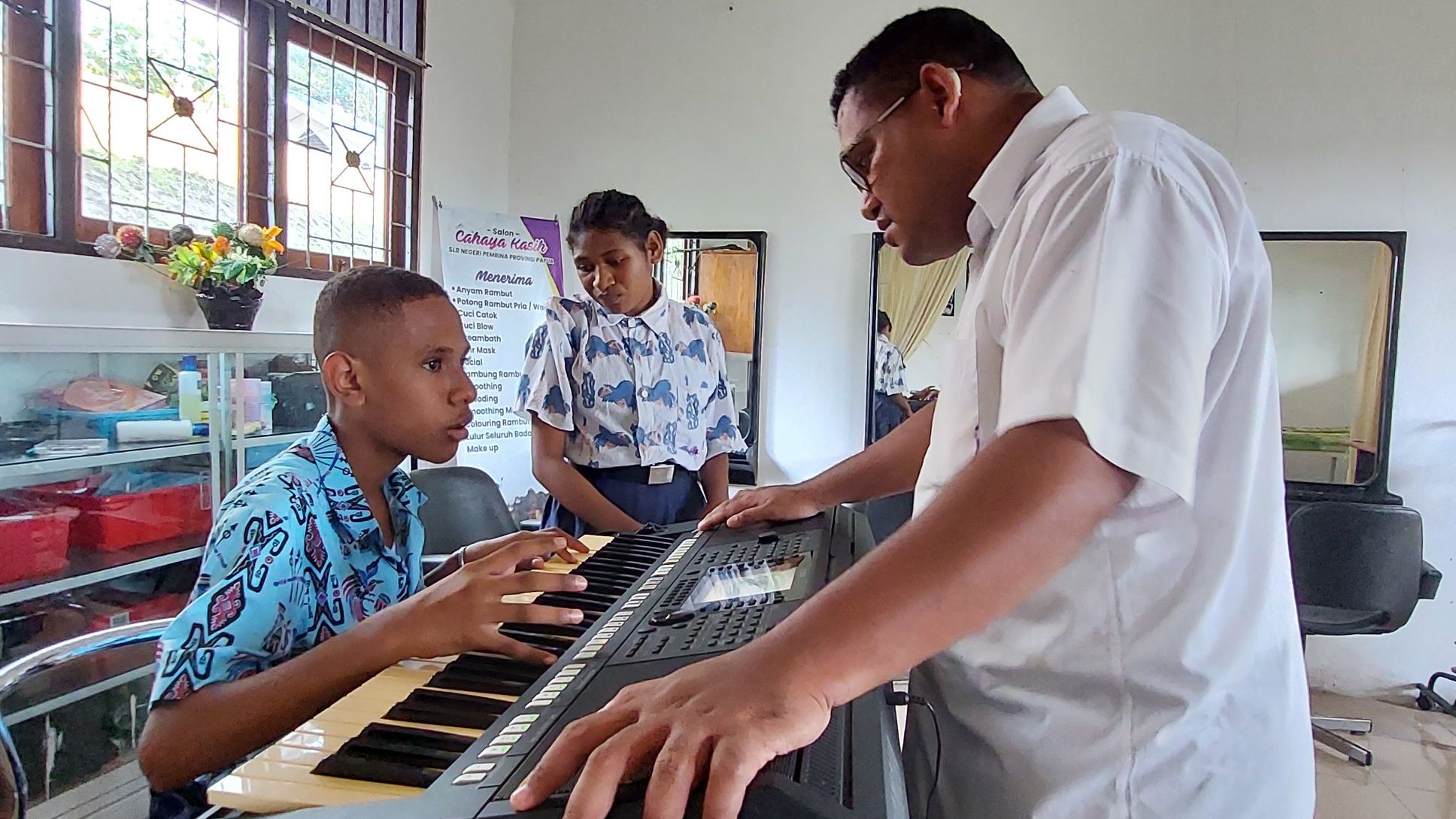
Papua’s plan to build new special education schools in Jayapura Regency and Supiori in 2027 could mark an important step towards making education more accessible to children with disabilities across the province. The initiative, announced by Papua’s Education Office, seeks to address gaps in educational provision and ensure that children with special educational needs have opportunities to learn, develop their abilities and prepare for independent lives.
Papua Special Education School Development is part of a wider effort to extend educational services beyond the areas where facilities are already available. According to a report published by Indonesia’s state news agency ANTARA on October 25, 2026, the provincial government intends to establish the two schools to widen access to appropriate learning opportunities for children with special needs. Papua Education Office head Marthen Medlama announced the news in Jayapura on October 24.
The plan addresses a challenge that extends beyond the construction of school buildings. For children with disabilities, access to education also depends on the availability of trained teachers, suitable learning environments, family support and opportunities to continue studying after completing basic education. The provincial government has identified improved facilities and adequate teaching personnel as essential elements of a more equitable education system.
Although the proposed schools are not yet completed projects, the plan signals an intention to extend services to areas that need greater access to special education. Its long-term value will depend on whether construction is followed by adequate staffing, sustained funding and support that enables students to remain in education.
A Plan to Close Gaps in Special Education
Papua currently has seven special education schools, known in Indonesia as Sekolah Luar Biasa (SLB). Two are located in Jayapura City, three in Biak, one in Waropen and one in Yapen. The planned facilities in Jayapura Regency and Supiori would expand the province’s existing network if the projects proceed as intended.
The current distribution illustrates why the location of new schools matters. The provincial administration is seeking to broaden the geographical reach of special education services, as existing facilities are concentrated in a limited number of areas. For families living outside established school centres, the availability of a school closer to home could make regular attendance more practical.
However, the number and location of schools alone cannot establish the full scale of unmet demand. A more comprehensive assessment would require information about the number of children with disabilities who are not enrolled in school, the distances families must travel, the types of educational support available and the capacity of existing institutions.
The proposed expansion nevertheless provides an opportunity for the provincial government to assess those needs more systematically. Consulting with parents, disability organisations, local communities, and education professionals can inform decisions about school locations, staffing, and facilities.
For families, the central question is straightforward: can their children obtain an education that recognises their abilities and gives them a realistic opportunity to progress?
Education as a Right, Not a Privilege
Speaking in Jayapura, Marthen Medlama stressed that children should have equal access to education regardless of their circumstances.
“Every child has the same right to receive an education without discrimination,” he said, according to ANTARA’s report. He added that this right needed to be supported by adequate school facilities and teaching personnel.
The statement places the proposed construction programme within a broader principle of educational equality. Children with disabilities should not be excluded from learning because appropriate facilities or support services are unavailable. Public policy must therefore consider not only whether a school exists but also whether it can accommodate the educational needs of the children it serves.
For Papua, implementing that principle requires attention to local conditions. The province’s existing school network is spread across several locations, and the planned projects would need to respond to the practical circumstances of students and their families in the areas concerned.
The availability of suitable facilities is one part of the answer. Teachers also need the skills and resources to support students with different learning requirements. Depending on the needs of individual pupils, this may involve adapted teaching materials, accessible classrooms, appropriate learning equipment and coordination with families.
The government’s stated intention to provide adequate facilities and teaching staff is therefore significant. Turning that commitment into an effective service will require those elements to be considered together rather than as separate administrative tasks.
Encouraging Families to Send Children to School
Medlama also called on parents to give children with special educational needs the opportunity to attend school, stressing that they should not remain at home when educational services could help them develop their abilities.
“Children who should be attending special education schools should not simply remain at home. They also have the right to receive an education,” he said, as quoted by ANTARA.
The appeal highlights the role families play in educational access. Parents and carers are often responsible for deciding whether a child can attend school, arranging transport and helping them navigate the education system. Their decisions may be influenced by the distance to the nearest school, the availability of suitable support and their confidence that the institution can meet the child’s needs.
Building schools closer to communities could help address some practical barriers. Yet physical proximity is not enough on its own. Families also need reliable information about enrolment, available learning programmes and the support children can receive.
Public communication will therefore be important as the proposed projects advance. Local education authorities could help families understand the enrolment process, explain the services offered by special education schools and encourage early engagement between parents and teachers.
The aim should be to ensure that children are not overlooked simply because their educational needs require a different approach. When children receive appropriate support, their opportunities to develop academic, social and practical skills can expand.
Looking Beyond School Construction
The provincial government has said the planned schools are intended to make education more accessible and improve opportunities for children with special needs. Medlama also outlined a longer-term ambition: helping students continue their education to higher levels or enter employment.
That ambition is important because educational inclusion cannot be measured solely by enrolment. A school can provide a crucial starting point, but students also need pathways to progress as their abilities and interests develop.
For some students, that may mean continuing to secondary or higher education. For others, it may involve acquiring practical skills that support future employment. Effective programmes should recognise that students have different strengths and goals rather than assume that every child will follow the same route.
This makes the quality of teaching and the continuity of support particularly important. Students benefit when schools can identify their learning needs, track their progress and help them prepare for the next stage of education or working life.
The provincial government’s stated interest in further education and employment suggests that its approach is not limited to providing classroom access. The next challenge will be to translate that ambition into practical support, including appropriate teaching programmes and clear opportunities for students to continue developing their skills.
Scholarships Could Support Students Who Excel
Alongside the proposed construction programme, Medlama said the provincial government would consider opportunities to provide scholarships to high-achieving SLB students who wish to continue their education at a higher level.
According to ANTARA, the proposed scholarship support would be developed through the Mace programme. Medlama presented the initiative as a way to encourage students with disabilities to develop their abilities when they receive adequate guidance and opportunities.
The announcement offers a further dimension to the government’s plans. New school facilities could help children enter education, while scholarship opportunities could provide additional support for students who are ready to advance. Together, these measures point towards an approach that considers both access and progression.
Details about eligibility, funding, participating institutions and implementation arrangements were not specified in the report. Those details will matter in determining how many students could benefit and how effectively the programme reaches pupils who need assistance.
A transparent scholarship framework could help families and schools understand the opportunities available. Clear selection criteria, accessible application procedures and information about the range of eligible study programmes would help ensure that support is practical and fair.
For students with disabilities, the possibility of continuing education can also influence how families view schooling. When educational pathways extend beyond the immediate classroom, school attendance becomes more closely connected to longer-term personal and professional goals.
What the 2027 Plan Will Need to Deliver
The proposed schools in Jayapura Regency and Supiori represent a planned expansion, rather than completed infrastructure. Their eventual impact will depend on the implementation process and the resources available to operate them.
First, the provincial government will need to establish the practical requirements for each project, including suitable locations, facilities and teaching personnel. The needs of prospective students should guide those decisions, with local consultation helping identify the barriers families currently face.
Second, construction must be accompanied by an operational plan. A school building cannot deliver educational services without teachers, learning materials, suitable equipment and an adequate budget for continuing operations. Recruitment and preparation of staff should therefore be treated as central to the programme.
Third, the government will need a way to assess whether the new facilities are making a measurable difference. Relevant indicators could include student enrolment, attendance, retention, availability of trained teachers and progression into further education. Such information would help authorities identify gaps and adjust their approach as necessary.
Finally, coordination with parents and communities will be important. Families should be able to obtain clear information about enrolment and available services, while local stakeholders can help identify obstacles that may not be apparent from administrative planning alone.
These steps would help connect the government’s policy announcement with the everyday experience of children who need appropriate educational support.
A Broader Investment in Papua’s Future
Papua’s proposed special education schools reflect a development priority that is sometimes less visible than infrastructure projects or economic investment but no less important: ensuring that children have the opportunity to participate in education and develop their potential.
The plan is also a reminder that equitable development requires services to reach people with different needs. Expanding educational access means considering children who may otherwise struggle to find an appropriate school, as well as the families who support them.
For the provincial administration, the proposed 2027 projects provide an opportunity to strengthen the existing network of special education facilities. The scholarship initiative could complement that effort by offering a possible route for high-achieving students to continue studying.
Neither initiative should be judged by announcements alone. Their value will ultimately depend on implementation, the quality of educational services and the opportunities available to students after enrolment.
If the planned schools are built and adequately staffed, they could make it easier for more children in Jayapura Regency and Supiori to access appropriate education. If the wider support system also develops, the benefits could extend beyond classrooms to further study, skills development and employment.
The central objective is clear: a child’s disability should not prevent that child from receiving an education. By translating its plans into accessible facilities, capable teaching teams and sustained support for students, the Papua provincial government has an opportunity to make that principle more tangible for families across the province.
Conclusion
Papua’s plan to build special education schools in Jayapura Regency and Supiori in 2027 represents an important opportunity to make education more accessible to children with disabilities. However, the initiative’s success will depend on more than new buildings. Adequate funding, qualified teachers, accessible learning facilities and sustained support for students will be essential to ensure that the schools deliver meaningful results.
By combining expanded school access with potential scholarship opportunities, the Papua provincial government has the opportunity to help children with special educational needs progress towards higher education, skills development and employment. The next step is to translate these plans into concrete services, with transparent implementation and measurable outcomes. Ultimately, inclusive education will be judged not by the number of schools announced, but by whether more children can learn, develop their abilities and pursue a better future.
Read Also
Indonesia Targets 214 Schools Revitalisation in Papua
Mimika People’s School Expands Education Access in Papua

