
For children growing up in some of Papua’s most remote communities, a nutritious meal at school can be about more than food. It can determine whether a child enters the classroom ready to learn or begins the day hungry. The Indonesian government is now seeking to address that challenge on a much larger scale, with a target of 2,472 MBG kitchens across the six provinces of Tanah Papua.
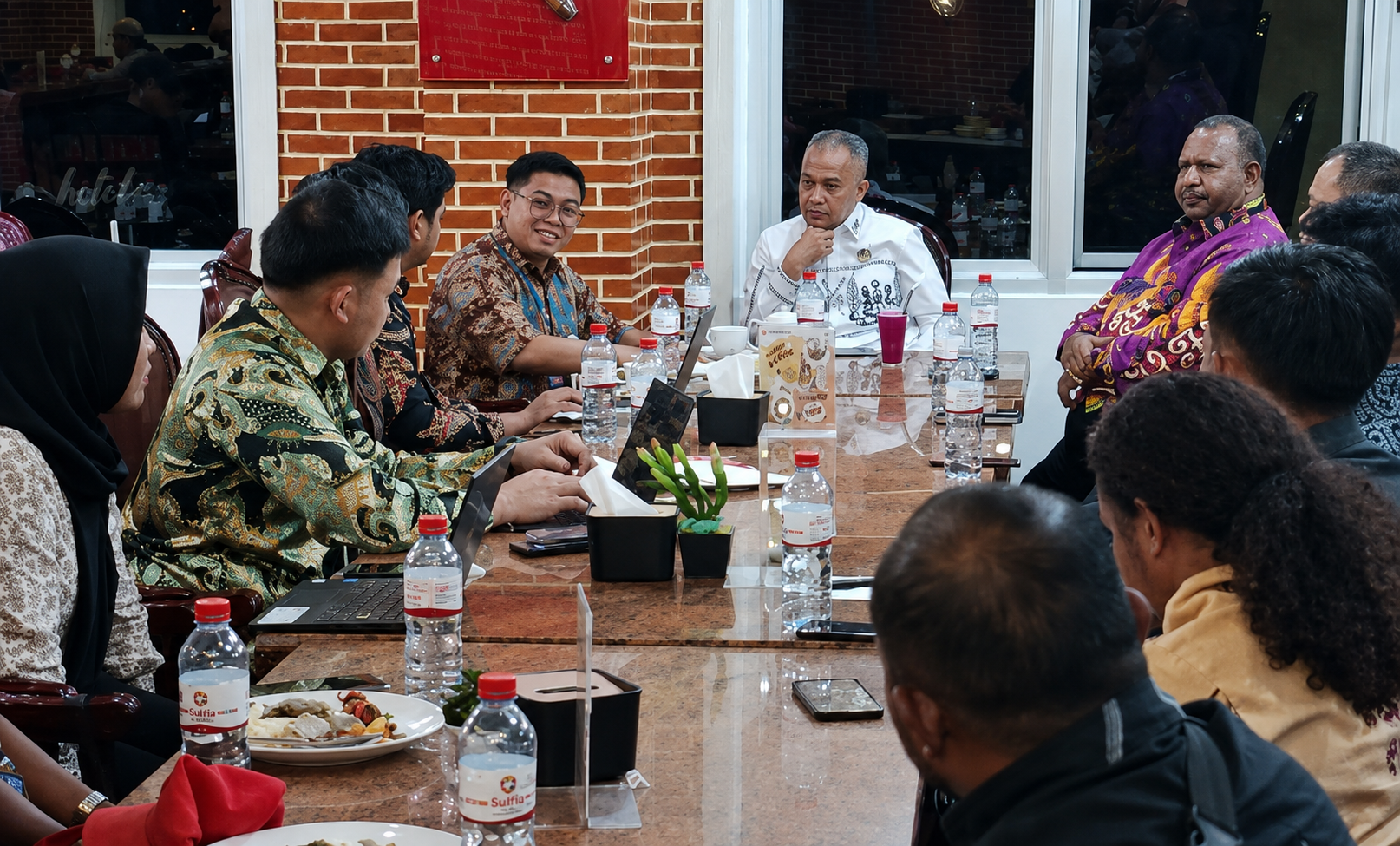
The target was outlined by Velix V. Wanggai, chairman of the Executive Committee for the Acceleration of Special Autonomy Development in Papua, or KEPPOKP. The kitchens are intended to support hundreds of thousands of children while also generating employment and creating new markets for local agricultural products.
The plan places Indonesia’s Makan Bergizi Gratis, or Free Nutritious Meals program, within a broader development strategy for Papua. Rather than treating the initiative solely as a school feeding program, officials say it can become part of a local economic ecosystem connecting farmers, food suppliers, kitchen workers, schools, and communities.
That approach is particularly significant in Papua, where distance, mountainous terrain, and limited transport infrastructure can make the movement of food and other essential goods considerably more difficult than in Indonesia’s more densely populated regions.
A National Program Takes a Papua-Specific Shape
The 2,472 kitchen target covers all six provinces in Papua’s land: Papua, Papua Barat (West Papua), Papua Selatan (South Papua), Papua Tengah (Central Papua), Papua Pegunungan (Highland Papua), and Papua Barat Daya (Southwest Papua).
According to ANTARA, Wanggai said the scale of the target reflects the large number of children expected to benefit from the program. He emphasized that KEPPOKP is working to ensure that the national program can be implemented effectively in Papua, with particular attention to Highland Papua, where geographical and logistical challenges are especially pronounced.
RRI similarly reported that the program is expected to reach hundreds of thousands of children and contribute to improving the quality of human resources, particularly among Indigenous Papuan communities.
The government’s challenge is therefore not simply to construct thousands of kitchens. It is to make sure that those facilities can operate reliably once they are built.
That distinction matters.
A kitchen in a major urban center can rely on relatively established supply chains. A facility in a remote Papuan community may face difficult roads, expensive transportation, limited storage capacity, and seasonal variations in the availability of agricultural products. The same national policy can therefore require entirely unique implementation strategies from one district to another.
Wanggai described the proposed approach as “MBG rasa Papua,” or an MBG program adapted for Papua. The concept is intended to take local geography, social conditions, food availability, pricing, and management models into account rather than simply reproducing an identical system across Indonesia.
From School Meals to Local Economic Growth
The economic dimension of the program may prove just as important as its nutritional objective.
In an interview published by Suara Papua, Wanggai said MBG should not be viewed merely as a free meal initiative. He described the kitchens as potential “off-takers” that could purchase agricultural products produced by communities in Papua.
That could create a more predictable market for farmers who often face difficulties selling perishable produce beyond their immediate communities.
Tomatoes, cabbage, potatoes, chicken, and locally produced meat were among the commodities identified as potential supplies for MBG kitchens.
The idea is straightforward. Instead of farmers producing food and then searching for buyers after harvest, the existence of regular institutional demand could provide a more stable destination for their products.
For Papua’s rural economy, that could be meaningful.
Agriculture remains closely connected to household livelihoods across many communities. Yet physical distance from major markets can limit the commercial value of what farmers produce. Transportation expenses can make it difficult to compete with products arriving from outside the region, particularly when producers have no guaranteed buyers.
An MBG kitchen situated nearer to communities could alter this dynamic.
The kitchen becomes a consumer of local agricultural output. Farmers become suppliers. Local workers participate in food preparation and distribution. Children receive meals at school. Money spent through the program circulates within local communities.
This is the economic chain that policymakers hope to build.
Creating Jobs for Papuan Women
The employment potential is another notable element.
Wanggai said each MBG kitchen could absorb around 30 local workers, including Papuan women and young people. If implemented across thousands of facilities, the employment implications could be substantial, although the precise number of jobs that will ultimately be created will depend on how many kitchens become operational and how each facility is managed.
The reference to mama-mama Papua, or Papuan women, is particularly important because women are central to household food production and local commerce in many Papuan communities.
By bringing women into the preparation, management, and supply networks surrounding MBG kitchens, the program could provide an additional income source while strengthening community participation in a national development initiative.
The same applies to young people. Kitchen operations can require workers involved in food preparation, logistics, administration, hygiene, and distribution. Over time, these activities could provide practical employment experience for young Papuans.
The broader objective is, therefore, not simply to distribute meals but to connect nutrition policy with local economic participation.
Why Geography Matters in Papua
Highland Communities Face Distinctive Challenges
Papua’s geography makes the implementation of a nationwide nutrition program unusually complex.
Highland Papua is characterized by mountainous terrain and communities that can be separated from major population centers by difficult transportation routes. In some areas, air transport remains important for the movement of people and goods.
Wanggai has therefore called for specific strategies covering implementation schedules, regulations, management arrangements, pricing, and partnerships. The objective is to ensure that kitchens can be established and supplied despite local constraints.
RRI reported that KEPPOKP considers Papua’s six provinces to have different geographical characteristics and therefore requires careful planning of transportation, food availability, and distribution.
This initiative is where the concept of “MBG rasa Papua” becomes more than a slogan. If the program is to succeed, local conditions have to influence decisions about what food is served, where ingredients are purchased, and how kitchens are supplied.
Local Food Can Reduce Logistical Pressure
One possible advantage is greater use of local food.
On the ground, communities may have access to products that are better suited to their environment than a standardized national menu. In Highland Papua, for example, local staples such as sweet potatoes and taro can form an important part of the diet.
Wanggai and Highland Papua Deputy Governor Ones Pahabol have both emphasized the importance of adapting MBG to local food resources.
Pahabol told Suara Papua that MBG should not necessarily depend on rice as the principal staple. He pointed to sweet potatoes, taro, and other garden products as examples of food that could be incorporated into the program. He also said kitchens could provide a direct market for produce grown by local women, reducing the need to transport those products long distances to urban markets.
Such an approach could have two benefits at once: preserving elements of local food culture while strengthening local agricultural demand.
Nutrition and the Quality of Human Resources
At its core, however, MBG remains a nutrition program.
KEPPOKP says the initiative is intended to help improve the quality of human resources by ensuring that children receive adequate nutrition. Wanggai has also linked the program to efforts to reduce stunting and support the development of younger generations in Papua.
This is particularly relevant to education.
A child who arrives at school hungry faces an immediate barrier to learning. Nutrition does not automatically guarantee educational success, but it is a basic condition that supports children’s ability to concentrate, participate, and develop.
Pahabol offered a personal perspective on the issue. According to Suara Papua, he recalled growing up in a remote area where children could sometimes go to school without breakfast after food at home had run out the previous evening. Some children also had to walk considerable distances to reach school.
That experience illustrates why food access and education cannot always be treated as separate policy questions in remote Papua.
For families living far from markets and public services, the distance between a government program and the community it is supposed to serve can be as important as the program itself.
A Test of Policy Delivery
The ambition behind the 2,472 kitchen target is considerable, but its success will ultimately depend on implementation.
The government will need to ensure that facilities meet appropriate food safety and nutritional standards, workers receive adequate training, supply chains remain reliable, and local suppliers can meet demand consistently.
There is also a practical question about sustainability.
Building a kitchen is only the beginning. The facility must have reliable supplies, trained personnel, adequate sanitation, storage capacity, and a functioning management structure. In remote locations, these requirements can become significantly more difficult and expensive.
That is why KEPPOKP’s emphasis on coordination is important. The program involves national institutions, provincial and district governments, nutrition authorities, local communities, and potential private or community-based partners.
The six provinces also cannot necessarily be treated as one market.
Six Papua’s provinces have different transportation networks, population patterns, agricultural systems, and economic conditions. A successful MBG strategy will therefore require flexibility rather than a one-size-fits-all model.
Building a Stronger Local Supply Chain
If implemented effectively, the program could gradually create a more integrated food supply chain in Papua.
A local farmer could supply vegetables to an MBG kitchen. A local poultry producer could supply eggs or chicken. A community-based enterprise could provide other ingredients. Papuan women could work in food preparation. Young people could become involved in logistics and administration.
The school then becomes the final point in a chain that begins with local production.
That model could help the MBG program move beyond welfare delivery toward a broader development mechanism.
It could also complement other government efforts focused on improving connectivity, agriculture, education, and health across Papua. Infrastructure remains essential because local economic participation depends partly on the ability to move people and goods efficiently.
We should, however, view the potential economic impact realistically. The creation of 2,472 kitchens does not automatically guarantee a transformation of Papua’s agricultural economy. Local producers will need the capacity to meet procurement requirements, while government agencies will need effective oversight to ensure that economic opportunities reach communities rather than becoming concentrated among a small number of suppliers.
A Development Policy with Multiple Objectives
The Papua MBG initiative reflects a wider evolution in how social programs are increasingly expected to produce multiple benefits.
The first objective is nutrition. The second is human capital. The third is local economic activity. The fourth is employment.
In Papua, those objectives are closely connected.
Better nutrition can support children’s development. Stronger human capital can improve future educational and employment outcomes. Stable demand from institutional kitchens can support farmers. Local employment can generate household income. Greater circulation of money within communities can strengthen local economic activity.
None of these outcomes is automatic. But the structure of the program creates an opportunity to pursue them simultaneously.
The government has framed the initiative as part of its broader national development agenda, while KEPPOKP’s role is to help adapt that agenda to Papua’s distinctive circumstances. ANTARA reported that Wanggai sees the committee’s presence in Papua as a means of ensuring that national priority programs, including MBG, are implemented effectively in the region.
That coordination function will be particularly important in areas where geography makes conventional approaches less effective.
Conclusion
The planned 2,472 Papua MBG kitchens represent an ambitious attempt to connect two issues that are often discussed separately: children’s nutrition and local economic development.
For the Indonesian government, the challenge now is to translate the target into functioning facilities that can reliably serve children while creating meaningful opportunities for Papuan communities. The strongest version of the program would not simply deliver meals from outside Papua. It would increasingly draw on farmers, women, young workers, and local food traditions within Papua itself.
The idea of “MBG rasa Papua” captures that ambition. Its success will depend on whether local realities genuinely shape implementation, from procurement and menus to transportation, pricing, and kitchen management.
If those elements are aligned, the program could become more than a national nutrition initiative operating in Papua. It could become a practical bridge between better nutrition, stronger human resources, and a more active local economy.
For communities in remote areas, that distinction matters. A meal delivered to a child today addresses an immediate need. A reliable market for farmers, employment for families, and better nutrition for the next generation can begin to shape the economic and human foundations of Papua for years to come.

